Infertility Treatment in China: How We Match You to a Specialist
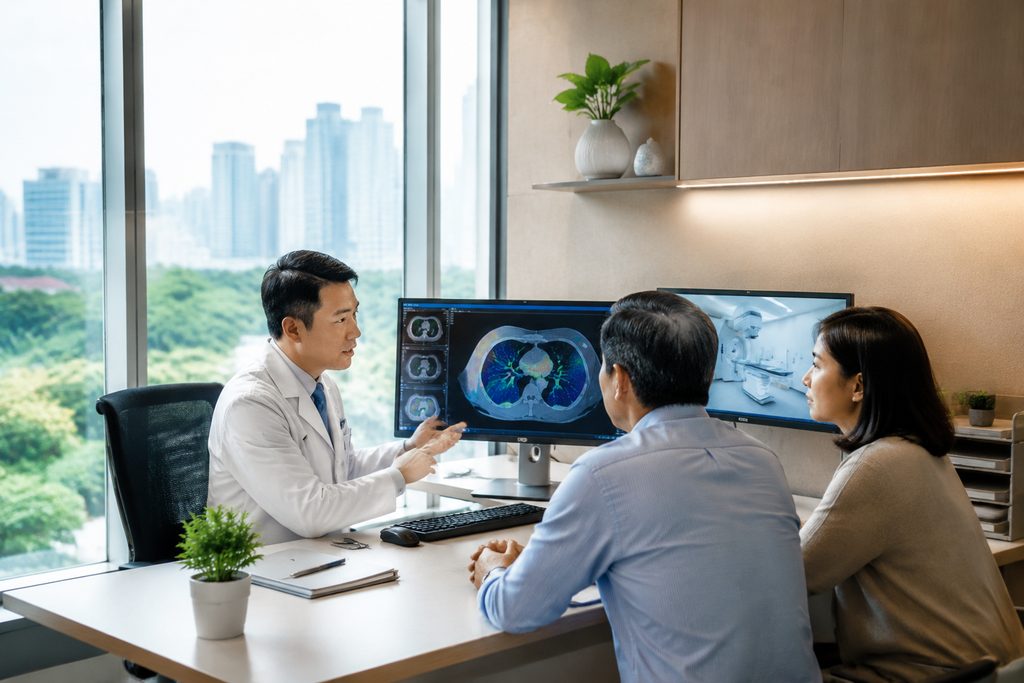
When 38-year-old Sarah from Manchester started researching IVF abroad, she had a spreadsheet with twelve clinics across four countries. The data was overwhelming. Success rates didn’t compare cleanly. Prices were hidden behind consultation walls. And she had no way to know whether a doctor in Shanghai was genuinely excellent or just well-marketed. That matching problem — connecting a specific patient’s diagnosis to the right specialist — is where most international fertility journeys stall before they begin. Our team exists to solve exactly that.
Infertility Treatment in China: The Short Answer
The infertility treatment cost China typically runs 60-75% lower than comparable care in the United States or United Kingdom. A standard IVF cycle at a top-tier public hospital in Beijing or Shanghai costs between $4,000 and $8,000, versus $15,000 to $25,000 in the US. But the real question is not price alone. The harder part is knowing which specialist actually fits your diagnosis — age-related decline, PCOS, male factor, repeated implantation failure, or something rarer.
That is where the matching work happens. We do not simply book you into the first hospital with an open slot. We review your medical records, identify which of China’s 340+ top-ranked hospitals has genuine depth in your specific fertility issue, and connect you with that department. The cost advantage matters. The matching matters more.
Who This Is Right For — and Who It Isn’t
Fertility treatment abroad is a serious commitment. Some patients benefit enormously. Others should stay close to home.
Good candidates for treatment in China:
- Women under 40 with a clear diagnosis (tubal factor, mild to moderate male factor, PCOS, unexplained infertility) who have not yet exhausted multiple IVF cycles elsewhere
- Patients facing long wait times for donor eggs or embryos in their home countries
- Couples seeking PGT-A (genetic screening of embryos) at a fraction of Western prices
- Those who want access to high-volume fertility centers — some Chinese hospital reproductive departments perform 5,000+ cycles annually, which builds procedural experience
- Patients comfortable with a structured, protocol-driven approach rather than heavy one-on-one hand-holding
Who should think twice:
- Women over 44 using their own eggs — success rates are low everywhere, and traveling does not change biology
- Patients with complex immunological or hematological conditions requiring integrated multi-specialty care during pregnancy
- Anyone needing donor eggs in China should understand the regulatory environment: China permits egg donation only from other IVF patients who have surplus oocytes, which can mean longer waits than commercial donor programs elsewhere
- Couples who cannot commit to 3-4 weeks in-country for a full stimulation and retrieval cycle
The Options, Compared
Where you pursue treatment changes everything about cost, protocol, and experience. Here is how the main routes compare for international patients considering China.
| Factor | Chinese Public Hospital (International Dept) | Chinese Private International Hospital | US/UK Clinic (for reference) |
|---|---|---|---|
| IVF cycle cost | $4,000 – $8,000 | $8,000 – $15,000 | $15,000 – $25,000 |
| Language support | Varies; international dept usually has English-speaking coordinators | Full English-speaking staff | Native language |
| Cycle volume per year | 3,000 – 8,000+ at major centers | 500 – 2,000 | 500 – 3,000 |
| Wait time to start | 2 – 6 weeks after records review | 1 – 3 weeks | Often 2 – 6 months |
| Donor egg availability | Limited; shared-oocyte model only | Limited; same regulatory framework | Commercial donor banks, shorter waits |
| Insurance billing | Mostly self-pay, reimbursement later | Direct billing with some international insurers | Often partially covered |
Public hospital international departments offer the strongest combination of clinical volume and price. Private international hospitals in China provide a more familiar Western-style experience but at roughly double the price. If your priority is maximizing cycles per dollar while accessing genuinely high-volume labs, the public route usually wins. If you want minimal friction and English everywhere, private is the answer.
How We Match You to a Specialist — Not Just a Hospital
Anyone can Google “best infertility specialist Shanghai” and get a list of hospital names. That list does not tell you which doctor has deep experience with diminished ovarian reserve. Or which lab has the strongest blastocyst culture rates. Or which department handles male factor infertility with urology integration rather than treating it as an afterthought.
Our matching process works in three stages. First, you send us your existing records — hormone panels, semen analyses, previous cycle summaries if you have them, any surgical history. We translate and organize these into a format Chinese reproductive departments can review efficiently. Second, we identify candidate departments based on your specific diagnosis, not general reputation. A hospital famous for oncology does not necessarily have a top fertility lab. We look at cycle volume, PGT capability, embryology lab standards, and the specific sub-specialty you need.
Third, we arrange either a written second opinion or a video consultation with the department before you commit to travel. This step costs between $300 and $800 depending on the specialist tier. It lets the Chinese team review your case, tell you honestly whether they can help, and propose a protocol. You are not flying blind.
That pre-travel consultation matters enormously. It is where unrealistic expectations get corrected and where you learn whether the clinic’s approach fits your situation. Some patients discover they need donor eggs. Others learn their previous clinic’s protocol was suboptimal. Either way, you know before you book a flight.
What Infertility Treatment Costs in China — Line by Line
The headline infertility treatment cost China figure only tells part of the story. Here is what you actually pay for, using a standard IVF cycle at a public hospital international department as the reference point.
A baseline IVF cycle including stimulation medications, monitoring ultrasounds, egg retrieval, fertilization, and fresh embryo transfer typically lands between $4,000 and $8,000. Medication costs vary widely — $1,500 to $3,500 depending on your protocol and whether you need imported or domestic gonadotropins. ICSI (intracytoplasmic sperm injection) adds $800 to $1,500. PGT-A genetic testing of embryos runs $2,000 to $4,000 per cycle depending on the number of embryos biopsied. Frozen embryo transfer cycles cost $1,500 to $3,000 each.
If you are comparing the IVF price Beijing against Shanghai, expect similar ranges. Beijing’s public hospital international departments and Shanghai’s are within 10-15% of each other. Private international clinics in both cities charge more — typically $8,000 to $15,000 per cycle — but bundle more services and offer fully English-speaking environments.
What is not included: your flights, accommodation (budget $60-150 per night for a comfortable hotel near major hospitals), meals, local transport, and any pre-treatment testing you have not already completed. A typical 3-4 week stay for one full IVF cycle adds $3,000 to $6,000 in living costs. Still, the all-in figure rarely exceeds $15,000 — roughly the cost of a single cycle in the US before medications.
And the 90-day credit applies here too. If you pay for a video consultation or written second opinion and then proceed to on-the-ground coordination within 90 days, that consultation fee is credited in full toward our coordination service. Not toward hospital charges — toward our service fee.
Practical Considerations: Records, Visas, and the Reality of Chinese Hospitals
Let us be direct about what this process involves. Chinese public hospitals are high-volume environments. A reproductive medicine department at a major Shanghai or Beijing hospital may see hundreds of patients daily. Without Chinese language ability, you will struggle to navigate registration, payment queues, ultrasound scheduling, and pharmacy pickup on your own. This is not a criticism — it is the reality of a system optimized for domestic patients at scale.
Your medical records matter. Bring everything: previous IVF cycle summaries, hormone panels from the last six months, semen analysis reports, hysterosalpingogram results, any surgical reports. Incomplete records slow down the review and may require repeating tests in China, which adds cost and time.
For visas, you will need an S2 visa for a short-term medical stay. This is the category used for private affairs including medical treatment, and it requires supporting documentation from the hospital — typically an invitation letter or treatment confirmation from the international department. Accompanying family members apply for S2 as well. The M visa is for commercial and trade activities and is not appropriate for medical travel. Visa processing times vary by country, so start this at least 6-8 weeks before your intended travel date.
Payment is almost always self-pay upfront at public hospitals, with reimbursement claimed from your insurer afterward if your policy covers overseas treatment. Private international hospitals in China sometimes offer direct billing with major international insurers — check before you commit. Either way, bring a payment method that works internationally; many hospital payment systems accept foreign credit cards at international department counters, but not always at every window.
Follow-up after you return home is manageable. Most clinics provide written cycle summaries and will do remote consultations for subsequent frozen embryo transfer cycles if you have embryos stored. Embryo storage fees in China are modest — typically $300 to $600 per year. But think carefully about the logistics of returning for a transfer cycle, which requires 1-2 weeks in-country rather than a full month.
Is IVF Safe in China?
The question comes up constantly: is IVF safe in China? The honest answer is that safety standards at top-tier accredited hospitals are comparable to good Western clinics. China’s National Health Commission regulates assisted reproductive technology strictly. Hospitals must be licensed for ART, and the licensing process is rigorous. The top reproductive departments — those in Fudan-ranked hospitals and JCI-accredited facilities — follow international protocols for ovarian stimulation, embryo culture, and laboratory quality control.
Where variance exists, it is between hospital tiers. A top-ranked public hospital in Shanghai or Beijing operates at a different standard than a small private clinic in a second-tier city. This is why the matching step matters. We only work with hospitals in our database of 340+ top-ranked institutions — the top 5% of China’s 35,000+ hospitals, ranked by Fudan University‘s hospital rankings and JCI accreditation where applicable.
Complication rates for egg retrieval — bleeding, infection, ovarian hyperstimulation syndrome — are low across reputable centers worldwide, and Chinese top-tier hospitals report similar rates. What differs is the patient experience: communication density, English availability, and the expectation that patients advocate for themselves through a coordinator or companion.
How to Choose a Fertility Doctor in China
If you are asking how to choose a fertility doctor in China, you are already ahead of most. The answer has layers.
Start with the department, not the individual. In China’s public system, you are treated by a team — the named doctor oversees your protocol, but embryologists, ultrasound technicians, and nurses execute the daily work. So evaluate the lab as much as the doctor. Ask about blastocyst conversion rates, PGT capability, and annual cycle volume. High-volume departments see more unusual cases, which means more pattern recognition when your cycle does not go as planned.
Then look at the doctor’s specific focus. Some specialists concentrate on repeated implantation failure. Others on diminished ovarian reserve or male factor. A generalist with a good reputation may be less useful to you than a focused clinician whose published work and clinical load match your diagnosis. This is where our matching process earns its value — we know which departments have which sub-specialty strengths.
Finally, insist on a pre-travel consultation. A video call or written second opinion reveals whether the doctor communicates clearly, whether the proposed protocol makes sense for your case, and whether the department’s logistics work for an international patient. You are not choosing a doctor from a brochure. You are choosing a clinical partner for one of the most emotionally and financially significant decisions of your life.
Frequently Asked Questions
No reputable hospital will sell you a fixed “package” before reviewing your records and conducting a consultation. What you can do is book a video consultation or written second opinion, get a proposed protocol, and then arrange your treatment timeline. Anyone offering a guaranteed all-inclusive IVF package sight unseen is not operating through a legitimate hospital international department. Be wary.
Expect to pay $4,000 to $8,000 per IVF cycle at a top Chinese public hospital versus $15,000 to $25,000 in the US. Including travel, accommodation, and medications, a full cycle in China typically totals $10,000 to $15,000 all-in. That is still roughly half to two-thirds less than the US figure for the cycle alone. The gap narrows if you choose a private international hospital in China, where cycles run $8,000 to $15,000.
Failed cycles happen everywhere. In China, the protocol for a failed cycle is typically a review consultation to adjust the stimulation protocol, medication timing, or embryo transfer strategy. Frozen embryo transfer cycles are significantly cheaper than full retrieval cycles, so if you have embryos banked, subsequent attempts cost $1,500 to $3,000 each. If you have no embryos remaining, you face another full cycle. No clinic anywhere can guarantee success, and you should be skeptical of any that imply otherwise.
Plan for 3 to 4 weeks. The timeline runs roughly: day 1-10 ovarian stimulation with monitoring every 2-3 days, day 11-14 egg retrieval, day 16-19 embryo transfer (fresh) or embryo freezing for later transfer. Some patients do a frozen transfer in a separate, shorter trip of 1-2 weeks. Your specific protocol may differ, but do not book a 10-day trip expecting a full cycle.
Generally yes, especially from top-tier hospitals. Chinese reproductive departments provide cycle summaries, embryology reports, and hormone panels in standardized formats. Some Western doctors may want to repeat certain tests, particularly genetic screening, to satisfy local regulatory requirements. Bring all original documents and request English translations from the hospital before you leave.
Your Next Step
Choosing to pursue fertility treatment abroad is already a heavy decision. The matching step — finding the right specialist for your specific diagnosis — is where the outcome is often determined before treatment even begins. Our team at China Medical Services handles that matching work: records review, specialist identification, consultation arrangement, and on-the-ground coordination when you travel. We are not a hospital, and we do not provide medical advice or diagnoses. What we provide is navigation — the bridge between your medical records and the right Chinese fertility department. If you want to understand your options before committing to anything, start with a free consultation. We will review your situation and tell you honestly whether treatment in China makes sense for you.
The right specialist changes everything. The right match starts with a conversation.
For more medical information and treatment options in China, visit chinamedservices.com (China Medical Services).
