Inpatient Companion: Getting You Home After Surgery in China
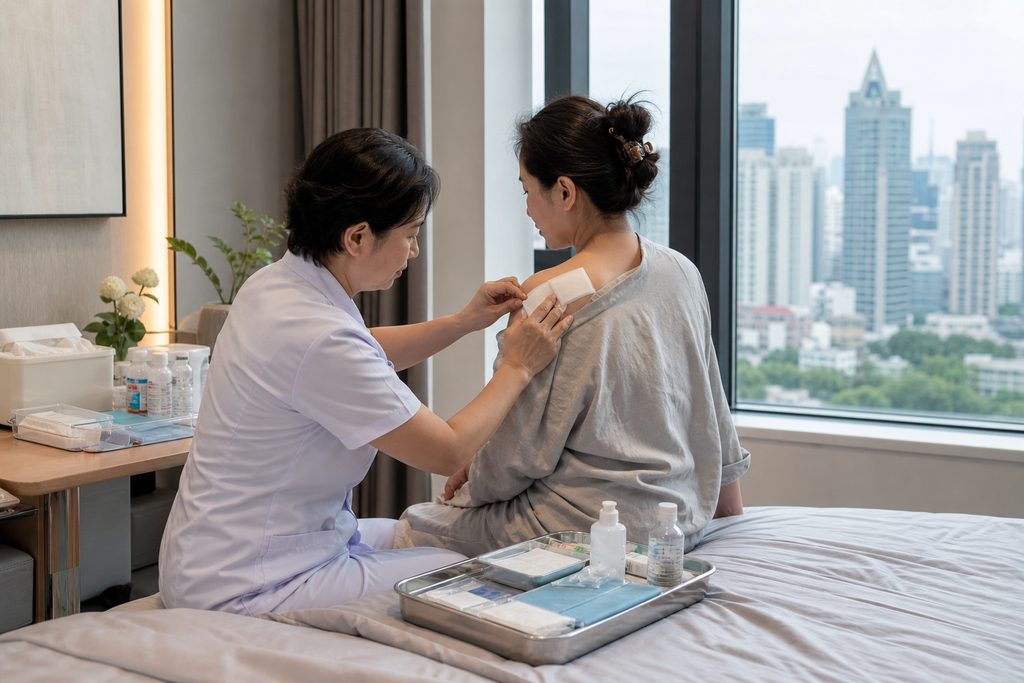
Inpatient Companion Service China Medical Tourism: The Short Answer
An inpatient companion service China medical tourism provides a bilingual professional who stays with you during your hospital admission, coordinates between you and the nursing staff, manages daily logistics, and arranges your safe discharge and transport home. The cost typically starts around $300 per day, with full coordination packages ranging from $5,000 to $8,000 depending on case complexity and hospital tier. That is the core value: one person who bridges the language gap, tracks your medication schedule, communicates with your family back home, and gets you from the hospital bed to your front door without you having to manage a single administrative detail.
The caveat: a companion is not a nurse, not a doctor, and not a decision-maker for your care. They coordinate, translate, and advocate. You still need your surgical team for clinical decisions.
Who This Is Right For — and Who It Isn’t
Traveling abroad for surgery is a major decision. Adding a companion service makes sense for specific situations. Here is who typically benefits:
- Patients traveling alone for a procedure that requires at least 2-3 days of inpatient recovery
- Older patients who need help navigating a large Chinese hospital campus with limited mobility
- Family members who cannot stay for the full admission but want someone present at discharge
- Patients undergoing complex procedures like cardiac surgery, orthopedic joint replacement, or major abdominal surgery
- Anyone with zero Mandarin proficiency facing a multi-day hospital stay
Who should not pursue this? If your procedure is outpatient and you are staying at a private international hospital with English-speaking nursing staff, a companion may be redundant. If you have a family member traveling with you who speaks Mandarin and understands hospital processes, you can manage. And if your budget is extremely tight, the companion fee may be better spent on a higher-tier hospital with more built-in English support.
The Options, Compared
Not all companion arrangements are equal. Some patients hire a local freelance translator. Others use a hospital’s internal international department. A dedicated inpatient companion service is a third option. Here is how they stack up:
| Option | Daily Cost | Clinical Knowledge | Discharge Coordination | Insurance Billing Help |
|---|---|---|---|---|
| Freelance translator | $50–100 | Minimal | No | No |
| Hospital international dept. staff | Often included in VIP package | Moderate | Partial | Yes, if hospital handles direct billing |
| Inpatient companion service | from $300/day | Moderate-high (case-trained) | Full — including transport and follow-up | Coordination support, not direct billing |
Freelance translators are cheapest but leave you managing your own discharge. Hospital staff know the facility but disappear once you leave the building. A dedicated companion service covers the full arc: admission, inpatient stay, discharge paperwork, pharmacy runs, transport to your hotel or the airport, and even a follow-up call after you land. For patients who want one accountable person throughout, the companion service is the clear fit.
How Does a Hospital Companion Help After Surgery Abroad?
This is the question every solo patient asks: what exactly does this person do while I’m in the bed? The honest answer: more than translation. A trained companion tracks your medication timing, confirms with nurses when your next dose is due, and raises concerns if something seems off. They handle meal ordering according to your dietary restrictions. They update your family via a daily summary. They confirm with the surgeon when you can be discharged and what the wound care instructions actually mean — not just what the written English translation says.
After discharge, the companion’s role shifts. They escort you to your hotel, help you settle in, and arrange a follow-up visit if needed. For international patients, they also coordinate with the hospital’s international department to ensure your discharge summary and medical records are translated properly. That paperwork matters when you see your doctor back home.
Best Hospitals in Shanghai With International Patient Companion Services
Shanghai hosts 18 of China’s Fudan-ranked top 100 hospitals. For international patients, the two most relevant tiers are public hospitals with dedicated international departments and private international hospitals with English-speaking staff. The public tier includes Zhongshan Hospital Fudan University, known for cardiac and thoracic care, and Ruijin Hospital, a leader in endocrinology and hematology. These institutions run international medical centers that can pair with an external inpatient companion service for full coverage.
The private tier includes United Family Shanghai, Jiahui International Hospital, and Parkway Health. These facilities employ English-speaking nurses and often handle insurance billing directly. You can browse our guide to Fudan-ranked hospitals across China or look at private international hospitals with JCI accreditation to understand which tier fits your procedure and budget.
What It Costs
Let’s be direct about money. A bilingual medical companion starts at $300 per day for an 8-hour shift. Half-day coverage (4 hours) is possible. Airport transfer runs $200 round-trip. If you want a written second opinion from a top specialist before you commit to surgery, that is $300–500. A video consultation with a top specialist costs $500–800. A multidisciplinary team video consultation runs $1,500–2,000.
For patients who want end-to-end coordination — visa document support, hospital appointment scheduling, companion service throughout the admission, discharge logistics, and follow-up — the VIP package starts at $5,000 and can reach $8,000. That figure varies by hospital and case complexity. What is not included: the actual hospital treatment charges, medications, and any additional nights in a hotel.
Practical Considerations: Documents, Visa, and Follow-Up
For medical travel to China, you need an S2 visa with a note indicating the purpose of treatment. Accompanying family members also apply for S2. The hospital’s international department provides an invitation letter and treatment confirmation documents that you submit with your visa application. Requirements change, so confirm with the nearest Chinese embassy or consulate before booking flights.
Payment is typically required upfront at public hospitals. Private international hospitals may offer direct insurance billing. Bring a credit card with a high limit and inform your bank of international charges. For follow-up after returning home, request your complete medical record, discharge summary, imaging files on a USB drive, and a translated medication list before you leave China. Your companion should verify all of this before you board the plane.
Is It Safe to Travel Alone for Surgery in China?
The short answer: yes, with preparation. China’s top hospitals perform high volumes of complex procedures. Fuwai Hospital in Beijing alone completes over 14,000 cardiac surgeries annually — more than any other center globally. That volume translates to experienced surgical teams. But volume does not replace communication. A solo patient who cannot ask a nurse for pain medication or clarify a discharge instruction faces real risk.
A companion service reduces that risk. Not to zero — no service can. But a trained bilingual companion who knows how Chinese hospitals operate, who can read a medication label, who can call your family when you are too tired to talk — that changes the equation. For many patients, it is the difference between a stressful, isolating recovery and a smooth one.
Frequently Asked Questions
A companion acts as your on-the-ground advocate: translating nurse instructions, tracking medications, coordinating meals, and updating your family daily. After discharge, they arrange transport, help you settle into your hotel, and ensure you have translated discharge documents for your home doctor.
Expect to pay from $300 per day for a bilingual medical companion. Freelance translators charge less, typically $50–100 per day, but offer no clinical coordination or discharge support. Full VIP coordination packages that include companion service run $5,000–8,000 depending on case complexity and hospital.
Yes. Most coordination services are arranged in advance — typically 2-4 weeks before your admission date. You provide your medical records, the hospital confirms your treatment plan, and the companion service aligns its schedule with your surgical date and expected discharge window.
Your companion escalates concerns to the nursing station and your surgical team immediately. They do not make clinical decisions. If a serious complication arises, they contact your family and the hospital’s international department. For any medical emergency, the hospital’s own emergency protocols take precedence.
Your Next Step
Choosing to have surgery in China is a significant decision. A companion service does not make the surgery safer — your surgical team does that. What a companion does is make the experience navigable: someone who speaks the language, understands the system, and gets you home with the right paperwork and the right follow-up plan. Our team at China Medical Services coordinates bilingual medical companions, hospital appointments, and discharge logistics for international patients across 37 cities. We are not a hospital and we do not provide diagnoses or treatment recommendations. If you are considering treatment in China and want to understand your options, request a free consultation and we will walk through what applies to your case.
For more medical information and treatment options in China, visit chinamedservices.com (China Medical Services).
