IUI Treatment in China: How We Coordinate Your Fertility Procedure
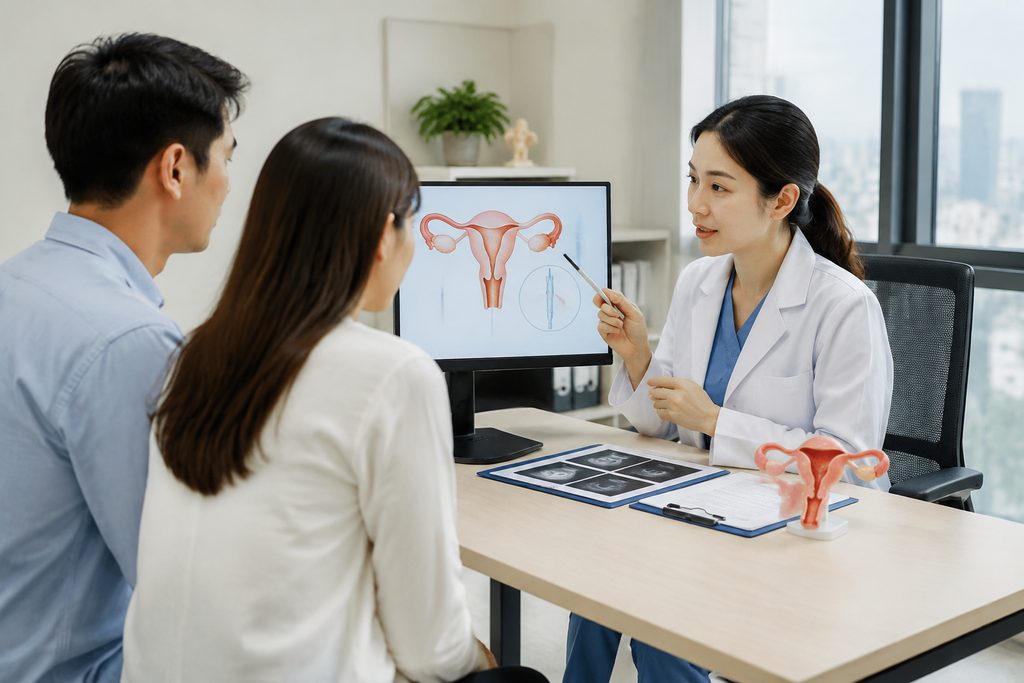
When 34-year-old Emma from Manchester first searched for fertility options abroad, she had already been through two failed IUI cycles at home. The clinic quoted her £1,800 per cycle. She wondered if there was a way to access quality care without draining her savings. She typed “IUI treatment cost China” into Google. What she found surprised her.
This guide explains how intrauterine insemination works in China, what it costs, which hospitals perform it well, and how our coordination service helps international patients navigate the process. We are not a hospital. We do not diagnose or treat. We connect you with accredited medical institutions and handle the logistics.
IUI Treatment in China: The Short Answer
An IUI cycle at a top-tier Chinese hospital typically costs between $300 and $800, excluding medication. That compares with $1,500 to $4,000 per cycle in the United States or United Kingdom. The procedure itself is straightforward: washed sperm is placed directly into the uterus around ovulation. The caveat: success rates vary significantly by age, underlying diagnosis, and the specific clinic’s laboratory standards. A low price means nothing if the lab is weak.
Who This Is Right For — and Who It Isn’t
IUI is not for everyone. The procedure works best when the fallopian tubes are open, sperm parameters are reasonable, and ovulation can be predicted or induced. Here is who typically benefits:
- Couples with unexplained infertility of less than two years
- Women with mild ovulatory disorders who respond to oral stimulation drugs
- Couples using donor sperm where the female partner has no tubal blockage
- Patients who want a lower-intervention first step before considering IVF
Who should not pursue IUI in China — or anywhere:
- Women with both fallopian tubes blocked. IUI cannot bypass tubal obstruction. IVF is the appropriate route.
- Men with severe sperm abnormalities (very low count, poor motility, high DNA fragmentation). ICSI may be necessary.
- Women over 40. IUI success rates drop below 5% per cycle at this age in most published data.
- Patients with untreated uterine pathology such as polyps, fibroids distorting the cavity, or severe endometriosis.
Being honest about who should not do this matters. We have turned away patients whose clinical profile made IUI a poor use of time and money.
The Options, Compared
Patients considering IUI abroad often weigh China against their home country, Thailand, or India. Here is how the core variables line up:
| Factor | China (Top Public) | China (Private International) | United States | Thailand |
|---|---|---|---|---|
| Cost per IUI cycle | $300–$800 | $800–$1,500 | $1,500–$4,000 | $600–$1,200 |
| English-speaking staff | Limited; interpreter needed | Yes, standard | Yes | Common in major clinics |
| Lab accreditation | Provincial health authority; some JCI | Often JCI or CAP | CLIA, CAP | JCI common |
| Wait time for first consult | 1–3 weeks | 3–7 days | 2–8 weeks | 1–3 weeks |
| Regulation of donor sperm | Strict national screening | Strict national screening | FDA-regulated | Thai Red Cross oversight |
If your priority is the lowest possible cost and you can manage language barriers with a companion, a top public hospital in Beijing or Shanghai delivers strong value. If you want a Western-style experience with direct insurance billing and English throughout, a private international hospital like United Family is the better fit — at a higher price. Patients who want the lowest cost without language friction sometimes choose Thailand. But China’s top reproductive centers handle enormous patient volumes, which builds procedural experience that smaller markets cannot match.
How Does IUI Procedure Work in China
The workflow at a Chinese reproductive medicine center follows a familiar sequence, but the timing and documentation differ from Western clinics. Here is what a typical cycle looks like:
Day 2–3 of your cycle: baseline ultrasound and blood work. If you are using oral stimulation medication (letrozole or clomiphene), you start it now. The hospital’s reproductive department issues a treatment plan document. You will need to sign consent forms — in Chinese. Our bilingual companion translates and explains each form before you sign.
Day 10–12: transvaginal ultrasound to track follicle growth. In China, ultrasound monitoring is often done every other day rather than every day, which reduces cost. The doctor decides when to trigger ovulation with an hCG injection. That injection is usually self-administered or given at the hospital.
Day of insemination: your partner produces a semen sample on-site, or thawed donor sperm is prepared. The lab performs sperm washing. The actual IUI takes about 10 minutes. You rest for 15–20 minutes, then leave. There is no anesthesia, no recovery room, no drama.
Two weeks later: blood pregnancy test. The hospital will not release results by phone to an international number in most cases. You either stay in China for the two-week wait or arrange follow-up testing at home and send results back via our coordination service.
One thing patients often miss: Chinese public hospitals require a physical registration card for every visit. You cannot just walk in with a passport and expect to be seen. We create that card in advance and handle appointment scheduling through the hospital’s official channels.
IUI Success Rates China Hospitals
Published success rates for IUI in Chinese academic hospitals range from 10% to 18% per cycle for women under 35. That aligns with global data. For women 35–39, rates fall to 7–12%. Over 40, expect under 5% per cycle.
But here is what nobody tells you: the success rate number is almost meaningless without knowing the lab’s sperm preparation protocol. Chinese hospitals use density gradient centrifugation as standard. Some also offer swim-up preparation. The difference matters for sperm DNA integrity, which affects fertilization and early embryo development. Ask the clinic which method they use and whether they perform post-wash sperm analysis. A good lab will show you the post-wash motility and count before insemination. A weak lab will not.
Also consider cumulative pregnancy rates. Three cycles of IUI in a well-selected patient population produce a cumulative pregnancy rate of 30–40% in published Chinese cohort studies. That is why most Chinese reproductive specialists recommend up to three cycles before moving to IVF — unless age or diagnosis dictates otherwise.
What IUI Costs in China — and What Drives the Variance
The headline number for iui treatment cost China is $300–$800 per cycle at a top public hospital. That covers the ultrasound monitoring, sperm washing, and the insemination procedure itself. It does not include:
- Oral stimulation medication: $20–$80 per cycle
- Injectable gonadotropins (if needed): $150–$400 per cycle
- Initial fertility workup (semen analysis, tubal patency check, hormone panel): $200–$500
- Donor sperm (if applicable): $300–$600 per vial, with strict national screening requirements
- Bilingual companion service: from $300 per day
At a private international hospital, expect $800–$1,500 per cycle all-inclusive of basic monitoring. The difference buys you English-speaking staff, faster appointment turnaround, and a more familiar clinic environment. Whether that premium is worth it depends on your comfort with navigating a public hospital — which is where our service changes the equation.
One cost factor unique to international patients: you are paying out of pocket. Chinese public hospitals require prepayment for each visit. You load money onto your hospital card, and every test, ultrasound, and procedure deducts from that balance. Unused funds are refundable at discharge. Insurance reimbursement is handled after you return home — Chinese public hospitals do not bill international insurers directly. Private international hospitals often do.
Practical Considerations: Documentation, Visa, and Follow-Up
Before you book anything, gather your records. Chinese reproductive specialists want to see: previous cycle summaries, semen analysis reports (within 6 months), HSG or tubal assessment results, and a letter from your home physician summarizing your diagnosis. All documents should be translated into Chinese. We handle that translation as part of our coordination service.
Visa: you will apply for an S2 visa with a note indicating medical treatment purposes. The hospital’s international department issues an invitation letter and treatment plan confirmation. Your partner or companion applies for the same S2 category. Processing takes 1–4 weeks depending on your home country’s Chinese embassy. We provide the document checklist and guide you through the application, but we do not guarantee approval.
Timing matters enormously. IUI is cycle-dependent. You cannot schedule it for a random date. You need to arrive in China by day 2–3 of your menstrual cycle, or you need to coordinate a medicated cycle start date with the clinic. Most international patients do a remote video consultation first to establish the plan, then time their travel to match the treatment calendar. That remote consult costs $100–300, and the fee is credited in full toward on-the-ground coordination if you proceed within 90 days.
Payment: bring a credit card that works internationally (Visa or Mastercard). Cash in RMB is also accepted. Wire transfers are rarely practical for small amounts. We advise patients on payment logistics before they arrive.
Follow-up after you return home: the two-week pregnancy test can be done locally. Send the result to the Chinese clinic through us. If the cycle fails, the clinic will advise on adjustments for a second attempt. Many patients do two or three cycles in China, spacing travel around their cycles.
Is IUI Safe for International Patients in China
Yes — when performed at a licensed reproductive medicine center. China’s National Health Commission strictly regulates assisted reproductive technology. Sperm donor screening follows mandatory infectious disease testing protocols. Single-use catheters and sterile technique are standard. The main safety consideration for international patients is not medical; it is administrative. Getting lost in a 10,000-patient-per-day hospital, signing forms you cannot read, or missing an appointment because you could not find the right building — these are the real risks. A bilingual companion mitigates them.
But be realistic about what IUI cannot do. It cannot fix tubal blockage. It cannot overcome severe male factor infertility. It cannot reverse age-related egg quality decline. And it cannot guarantee pregnancy. Any clinic that promises otherwise should be avoided.
Best Fertility Clinic for IUI in Shanghai
Shanghai has several strong options for IUI. Public hospitals with high-volume reproductive departments include the obstetrics and gynecology hospital affiliated with Fudan University and the International Peace Maternity and Child Health Hospital. Both rank among China’s top reproductive medicine centers in the Fudan specialty rankings. Private options include Jiahui International Hospital and United Family Shanghai, both with English-speaking staff and JCI accreditation.
Which one is best for you depends on your budget and your tolerance for a public hospital environment. The public hospitals see thousands of fertility patients monthly. Their labs are excellent. But the corridors are crowded, the signage is in Chinese, and the staff may not speak English. That is exactly the gap our bilingual medical companion service fills. We handle registration, payment, queueing, and translation while you focus on the treatment.
For a broader look at hospital rankings, see our reproductive medicine department rankings and the top hospital database.
Book IUI Treatment Package China
We do not sell packages in the e-commerce sense. Fertility treatment is not a product. What we offer is coordination: a structured process that starts with a remote consultation, moves to a written treatment plan, and culminates in on-the-ground support when you arrive. If you want to book an IUI treatment package in China, the first step is a conversation. We assess your records, recommend two or three hospitals that fit your clinical profile and budget, and give you a realistic cost projection. Then you decide.
Here is what that process looks like:
- You send your existing fertility records and a brief medical history
- We arrange a video consultation with a reproductive specialist (cost: $100–300, credited toward coordination if you proceed)
- The specialist reviews your case and advises whether IUI is appropriate or whether IVF is a better use of resources
- If you proceed, we coordinate the hospital registration, medical card creation, appointment scheduling, and bilingual companion
- You travel to China for the treatment cycle
Coordination fees start at $300 for appointment and registration support. Full bilingual companion service starts at $300 per day. VIP end-to-end coordination for complex cases runs $5,000–$8,000. All costs vary by hospital and case complexity. We give you a written estimate before you commit to anything.
Frequently Asked Questions
IUI costs roughly one-tenth to one-fifth of a single IVF cycle in China. While IUI runs $300–$800 per cycle at public hospitals, IVF typically costs $3,000–$6,000 per cycle including medication. That cost difference is why many patients try IUI first — but only when their clinical profile supports a reasonable chance of success.
China’s sperm banks operate under strict national regulations. Donor sperm is available to married heterosexual couples with a medical indication. Single women and same-sex female couples face legal restrictions on accessing donor sperm in China. If this applies to you, discuss your specific situation with us before making travel plans. We will be direct about what is and is not possible under current law.
No. Medical treatment outcomes are never guaranteed, and no reputable clinic offers refunds for failed IUI cycles. What we do offer is a transparent review process: after a failed cycle, the specialist will review the cycle data with you and recommend next steps. That may mean adjusting medication, repeating IUI, or moving to IVF. Our coordination fee for the next cycle is reduced for returning patients.
Plan for 10–14 days. You need to be present for baseline testing on day 2–3 of your cycle, ultrasound monitoring around day 10–12, and the insemination itself. You can return home the day after insemination and do the pregnancy test locally two weeks later. Some patients choose to stay for the full two-week wait; that is a personal choice, not a medical requirement.
Public hospitals generally do not bill international insurers directly. You pay upfront and submit claims yourself. Private international hospitals like United Family and Jiahui often have direct billing arrangements with major insurers. Check with your insurer before committing. We can provide itemized receipts and translated medical records to support your claim.
Your Next Step
IUI in China offers genuine value: competent labs, experienced clinicians, and a fraction of Western prices. The trade-off is logistical complexity — language, navigation, documentation, and timing. That is our job. China Medical Services is not a hospital, we do not diagnose or treat, and we never promise outcomes. We coordinate. If you are considering IUI in China, start with a free consultation. Send us your records. We will tell you honestly whether this path makes sense for you — and if it does, we will handle the rest.
The core message: IUI treatment cost China is low enough to make multiple cycles affordable, but the real value lies in matching the right patient to the right clinic. Do that well, and you give yourself the best possible chance.
For more medical information and treatment options in China, visit chinamedservices.com (China Medical Services).
