Top Jaw Tumor Hospital: Shanghai Ninth Hospital Costs and Access
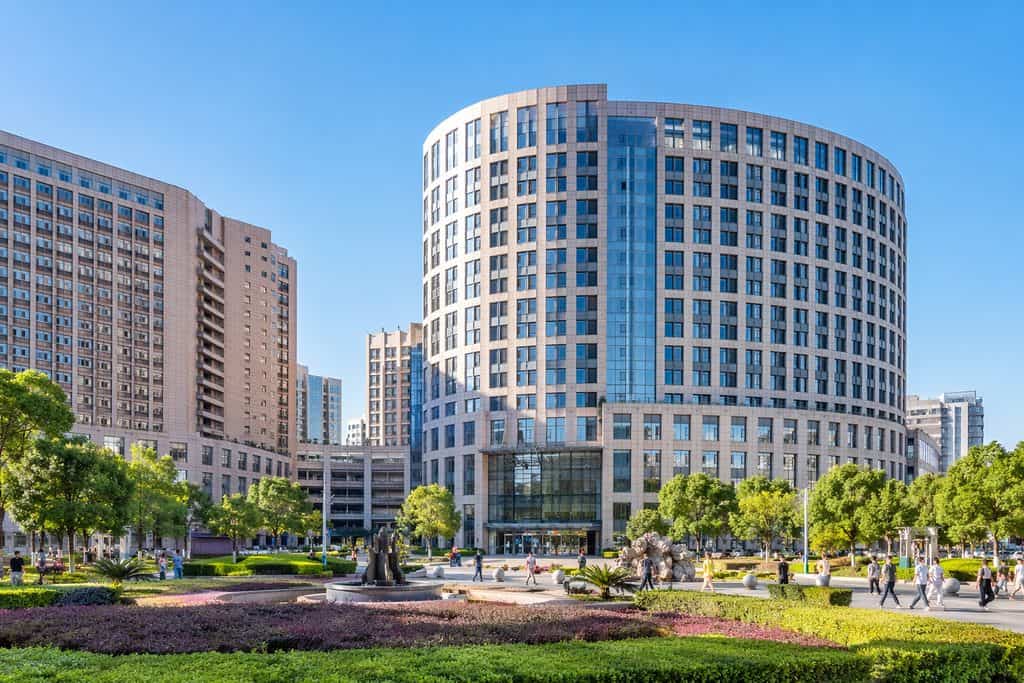
When 47-year-old Daniel from Manchester first heard the word “ameloblastoma,” he had no idea where to start. His local NHS referral meant a 9-week wait just to see a consultant. A private quote in London came back at £28,000. Then a colleague mentioned something that sounded almost too specific to be real: a hospital in Shanghai that performs more jaw tumor surgeries in a year than most European centers do in a decade. That hospital is Shanghai Ninth People’s Hospital. And the maxillofacial tumor surgery cost Shanghai patients actually pay is, in most cases, a fraction of what Western hospitals charge.
Our team at China Medical Services has walked dozens of international patients through this exact decision. The hospital is real. The expertise is real. The logistics, however, are not what most foreigners expect. Here is what you need to know before you book a flight.
How This Actually Works, Step by Step
You do not simply email Shanghai Ninth Hospital and ask for a surgery date. That is not how Chinese public hospitals operate — not for domestic patients, not for international ones. The process is sequential, and skipping steps will cost you time.
First, you send us your existing records: biopsy report, CT or MRI scans (DICOM files preferred), any prior surgical notes, and a brief medical history. We translate these into Chinese and submit them through the hospital’s international department or a designated specialist channel. A maxillofacial surgeon reviews the file. That review typically takes 3 to 7 working days.
What comes back is either a written second opinion (from $300–500) or an invitation to schedule a video consultation with the treating team (from $500–800). The written opinion states whether your case is operable, what approach the surgeon recommends, and whether additional imaging is needed before you travel. It is not a prescription. It is a directional document that tells you if spending money on a flight makes sense.
If the surgeon says yes, we move to appointment coordination. You apply for an S2 visa — the short-stay category used for medical treatment and private affairs in China. Processing times vary by consulate, but plan for 2 to 4 weeks. Meanwhile, we lock in your outpatient consultation date. You fly to Shanghai, meet the surgeon in person, and only then is a surgery date assigned. No reputable Chinese hospital will schedule an operation without a face-to-face consultation first. That rule is non-negotiable.
Shanghai Ninth Hospital: Why It Shows Up in Every Jaw Tumor Search
Shanghai Ninth People’s Hospital, affiliated with Shanghai Jiao Tong University School of Medicine, is not just “a good hospital.” In oral and maxillofacial surgery, it is the reference center. The hospital’s Department of Oral and Maxillofacial–Head and Neck Oncology is consistently ranked among China’s top 10 for oncology in the Fudan University hospital rankings — the most authoritative hospital ranking system in China. You can browse the full specialty breakdown on our department rankings page.
The numbers are what make international patients pause. The department performs over 3,000 major oral and maxillofacial tumor surgeries annually. Surgical teams handle everything from benign ameloblastomas to advanced squamous cell carcinomas requiring microvascular free flap reconstruction. Fibula flaps, iliac crest grafts, radial forearm flaps — procedures that require 8 to 14 hours of operating time — are routine weekly cases here, not rare events.
Volume matters in jaw tumor surgery. A surgeon who performs 200 mandibular reconstructions a year has seen complications a surgeon doing 20 a year has only read about. That is not marketing language. That is the core argument for traveling.
A Realistic Timeline
Here is what the full journey looks like when nothing goes wrong. Ranges are honest, not optimistic.
| Stage | What Happens | Realistic Duration |
|---|---|---|
| Document preparation | Gather scans, biopsy slides, translate records | 1–2 weeks |
| Remote review | Written second opinion or video consultation | 1–2 weeks |
| Visa application | S2 visa with hospital invitation letter | 2–4 weeks |
| Travel and initial consultation | Fly to Shanghai, meet surgeon, complete any additional imaging | 3–5 days on the ground |
| Surgery scheduling | Hospital assigns OR slot after face-to-face consult | 1–3 weeks wait, sometimes longer |
| Inpatient stay | Surgery plus initial recovery in hospital | 7–14 days typical |
| Local recovery before flying | Stay in Shanghai for follow-up and suture removal | 2–4 weeks |
| Return home | Fly back with translated discharge summary and imaging | Day of departure |
Total time from first email to walking out of the hospital: roughly 8 to 12 weeks. Anyone promising faster is either cutting corners or lying. The visa alone can take a month.
What Can Go Wrong — and What Happens Then
Let us be direct about the failure modes. They exist, and you should know them before you commit.
The surgeon declines your case. This happens more often than you would think. If the tumor has invaded the skull base, or if prior radiation has destroyed the tissue bed, or if your medical comorbidities make a 10-hour free flap too risky — the answer may be no. What happens then? You get a written explanation and, in many cases, a referral to a more appropriate center. You are not stranded. But you may have spent $300–500 on a second opinion that told you to stay home. That is the cost of due diligence, and it is cheaper than flying to Shanghai to hear the same thing in person.
The surgery is more extensive than expected. Frozen section pathology during the operation can reveal positive margins, forcing a wider resection. Your 6-hour surgery becomes a 10-hour surgery. Your 7-day stay becomes 14. Your $8,000 estimate becomes $14,000. We prepare patients for this by insisting on a contingency buffer of 30–40% above the quoted range.
You need reconstruction you did not plan for. Segmental mandibulectomy almost always requires bony reconstruction. If your home surgeon told you a plate would suffice, but the Shanghai team recommends a fibula free flap, that changes everything: cost, recovery time, hospital stay. The written second opinion should flag this. If it does not, ask explicitly before you travel.
What Determines the Price You Actually Pay
The Shanghai Ninth Hospital jaw tumor treatment price is not a fixed menu item. It is a function of four variables: tumor type, resection extent, reconstruction method, and whether you use the standard public pathway or the hospital’s international/VIP channel.
A simple enucleation or curettage of a small ameloblastoma might run $3,000 to $6,000. A segmental mandibulectomy with fibula free flap reconstruction typically lands between $12,000 and $25,000. Complex resections involving the maxilla, orbit, or skull base can exceed $35,000. The international department adds a premium — usually 1.5 to 2 times the standard rate — but includes English-speaking coordination, priority scheduling, and private rooms. For most foreign patients, the international channel is the only realistic option, because navigating the standard public pathway without fluent Chinese is nearly impossible.
Compare that to the United States, where a comparable free flap reconstruction routinely bills $80,000 to $150,000. In the UK, private quotes for major maxillofacial oncology surgery start around £30,000 and climb steeply. Even with flights, accommodation, and our coordination fees, the total is typically one-third to one-fifth of Western private rates.
So what about the question everyone asks: what is the success rate of jaw tumor surgery in China? Published data from Shanghai Ninth’s department reports 5-year survival rates for oral squamous cell carcinoma in line with top Western centers — typically 60–75% for stage III and IV disease treated with surgery plus adjuvant therapy. For benign tumors like ameloblastoma, recurrence rates after adequate resection are reported below 10% at experienced centers. But “success” depends on your definition. If you mean “will I survive the operation,” the answer at this hospital is overwhelmingly yes. If you mean “will I be cured,” that depends on your tumor biology, not the hospital’s marketing.
How Long Is Recovery After Maxillary Tumor Removal
Recovery is not a single number. It is a staircase with distinct landings.
The first landing is the hospital stay: 7 to 14 days. You will have drains, a feeding tube if reconstruction was extensive, and significant facial swelling. Pain is managed with patient-controlled analgesia. By day 5, most patients are walking. By day 10, the feeding tube usually comes out and you start a soft diet.
The second landing is local recovery in Shanghai: 2 to 4 weeks after discharge. You will return for suture removal, wound checks, and possibly early speech or swallowing therapy. Flying home before this window closes is risky — a wound infection at 30,000 feet with no Chinese hospital nearby is not a scenario anyone wants.
The third landing is functional recovery at home: 3 to 6 months. Swelling subsides gradually. Speech normalizes. If you had a free flap, the donor site (leg or arm) needs its own rehabilitation. Return to work typically happens at 6 to 12 weeks for desk jobs, longer for physical work.
The honest answer to how long is recovery after maxillary tumor removal: expect 6 months before you feel like yourself again. Anyone who tells you 6 weeks is selling you something.
Practical Considerations: Records, Visa, Payment, Language
Bring everything. Original biopsy slides are more useful than reports alone — the Shanghai pathologists will want to re-read them. Bring the actual glass slides or paraffin blocks if your home hospital will release them. Bring a CD or USB with DICOM imaging, not just printed films. Bring a list of every medication you take, including doses. Bring a family member. You will not be in any condition to negotiate logistics alone after surgery.
The visa is S2, not M. The M visa is for commercial and trade activities. Medical treatment falls under S2, which covers private affairs including medical visits. You will need an invitation letter from the hospital, proof of appointment, and sometimes proof of funds. Requirements shift by consulate. We handle this paperwork for our patients, but the approval decision rests with the visa officer. No one can guarantee approval.
Payment is upfront. Chinese public hospitals require a deposit before admission, typically 50–100% of the estimated cost. You settle the balance at discharge. Most international insurance policies require you to pay first and claim reimbursement later, so bring a credit card with a high limit. Some private international hospitals in Shanghai offer direct billing, but Shanghai Ninth’s international department generally does not.
Language is the hidden cost. The surgeons may speak some English. The nurses, the billing office, the pharmacy, the CT technicians — almost certainly not. A bilingual medical companion is not a luxury at a hospital that sees 10,000 outpatient visits a day. It is the difference between a 3-hour queue in the wrong building and walking straight to the right window. Our companion service starts at $300 per day and covers registration, queue management, payment, translation, and navigation. You can learn more on our patient services page.
Frequently Asked Questions
No. The hospital requires an in-person consultation before any surgery is scheduled. You can complete a remote written second opinion or video consultation first to confirm your case is operable, but the actual surgery date is only assigned after you meet the surgeon face-to-face. This is hospital policy, not a service limitation.
In oral and maxillofacial surgery, it is widely considered the top center in China and one of the highest-volume centers globally. The Fudan University specialty rankings consistently place its oral and maxillofacial oncology department among China’s top 10. For certain reconstructive procedures, no other Chinese hospital matches its case volume. But “best” depends on your specific tumor. Some skull base cases are better served at neurosurgery-focused centers. A remote review helps determine fit.
This is rare after a proper remote review, but it happens. You would receive a written explanation and, where possible, a referral to another center in Shanghai or elsewhere in China. You would not be abandoned. But you would have spent money on travel for a consultation that did not lead to surgery. This is the risk of any medical travel, and it is why we recommend the written second opinion as a low-cost first step.
Most Western insurance plans treat Chinese hospitals as out-of-network. You pay upfront and submit for reimbursement. Some international plans with global coverage may reimburse a significant portion, especially if the procedure is substantially cheaper than the in-network alternative. Check with your insurer before committing. We can provide the documentation they will need: itemized invoices, translated medical records, and a letter from the treating surgeon.
Pudong International Airport is about 45 minutes from the hospital by car. We arrange airport transfers ($200 round-trip) and can recommend hotels within walking distance of the Huangpu campus. Many patients stay in serviced apartments near the hospital, which are cheaper than hotels for stays longer than two weeks. Your companion can help with check-in and local errands during the first days.
Your Next Step
Shanghai Ninth Hospital is a legitimate destination for jaw tumor surgery — arguably the highest-volume maxillofacial oncology center in the world. The maxillofacial tumor surgery cost Shanghai patients pay is typically one-third to one-fifth of Western private rates, with outcomes that hold up against any international benchmark. But the path from diagnosis to discharge is not a straight line. It involves document translation, visa paperwork, in-person consultation, and a recovery period measured in months, not weeks.
Our team at China Medical Services handles the coordination: record translation, hospital communication, visa guidance, and bilingual companionship on the ground. We do not perform surgery, we do not guarantee outcomes, and we do not promise access that the hospital does not offer. What we do is make a complex process navigable for someone who does not speak Chinese and has never set foot in a Chinese hospital.
If you are considering this path, start with a written second opinion. It costs $300–500 and tells you whether traveling makes sense at all. Send us your records, and we will take it from there.
For more medical information and treatment options in China, visit chinamedservices.com (China Medical Services).
