Jiangsu Province Hospital Nanjing Guide for International Patients: What Fudan Rank 22 Actually Means
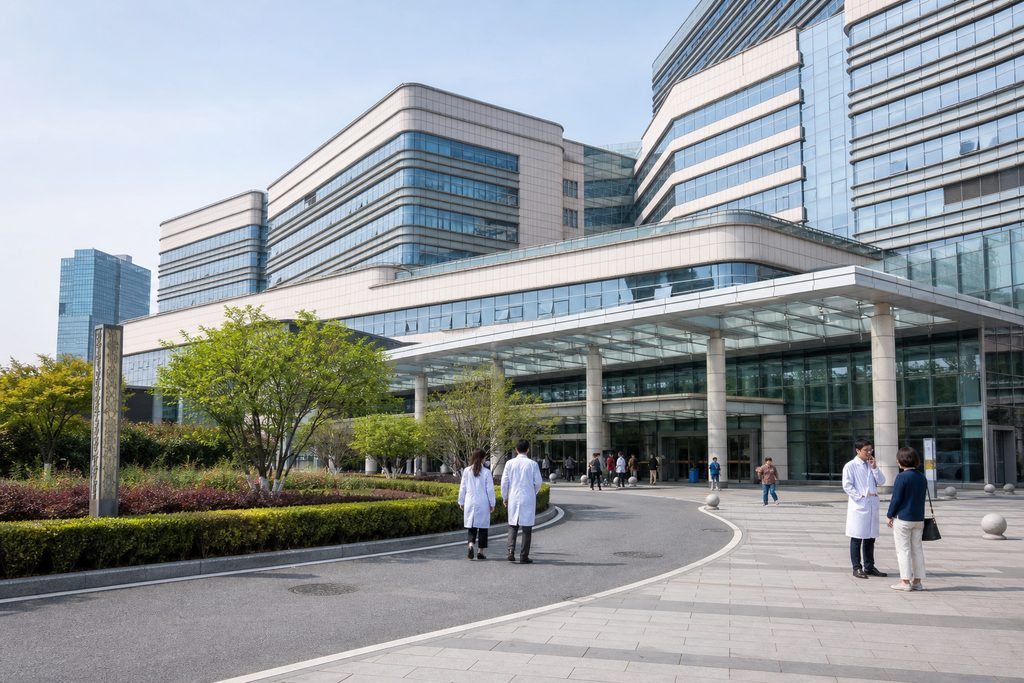
You have probably seen the number. “Fudan National Rank 22.”
It sounds precise. It sounds like a finish line. And if you are an international patient trying to decide whether Jiangsu Province Hospital (JPH) in Nanjing is worth the journey, that number might be the reason you click—or the reason you hesitate.
Here is the reality that changes everything: the Fudan hospital rankings do not actually assign individual numbers like 22 to comprehensive hospitals. The “Top 100” general hospitals are sorted into tiers—A++++ down to A. Jiangsu Province Hospital consistently lands in the top tier. The specific “22” you see on third-party sites is an extrapolation, often from older methodology or specialty-specific rankings.
That does not make the hospital weaker. It makes the ranking system more nuanced than most people realize. JPH is one of the most powerful medical centers in eastern China. Our team has coordinated care here for patients from 11 countries. Here is what you genuinely need to know before you book a flight to Nanjing.
How This Actually Works, Step by Step
You cannot simply email the hospital and book a surgery slot. That is not how Chinese public hospitals function, even the elite ones.
The real sequence starts with remote evaluation. You send us your existing medical records—imaging, pathology reports, blood work, current medication list. We translate everything into clinical Chinese and route it to the relevant department at Jiangsu Province Hospital’s International Medical Center. A specialist reviews your file. This takes 5 to 10 business days depending on complexity.
What comes back is a written second opinion. It tells you whether the proposed treatment plan makes sense, whether the hospital can take your case, and what the rough timeline looks like. No promises yet. Just clinical alignment.
If you decide to proceed, we coordinate a video consultation with the specialist. You speak face-to-face. You ask your questions. The doctor explains their approach. After that call, if both sides agree to move forward, we shift into logistics: visa support documents, appointment scheduling through the International Medical Center channel, and on-the-ground coordination.
You do not fly to Nanjing hoping someone will see you. You fly with a confirmed plan.
What the Fudan Ranking Actually Tells You About Jiangsu Province Hospital
The Fudan rankings are China’s most authoritative hospital evaluation system, compiled by the Hospital Management Institute of Fudan University. They survey over 5,000 clinical experts nationwide. General hospitals get tiered. Specialty departments get ranked 1 through 10.
Jiangsu Province Hospital sits in the A++++ tier for general hospitals. That puts it in the same league as Peking Union Medical College Hospital and West China Hospital—the absolute top bracket of China’s 35,000-plus hospitals.
But the specialty rankings are where the picture sharpens. JPH’s rehabilitation medicine department is ranked among China’s top 3 nationally. Its cardiology, respiratory medicine, and oncology departments consistently appear in the top 10 or top 15 specialty lists. For an international patient considering treatment in Nanjing, this means you are not choosing a “good general hospital.” You are choosing specific departments with verified, peer-reviewed excellence.
The hospital houses over 5,000 beds. It handles more than 5 million outpatient visits annually. The scale is staggering—and that scale translates directly into clinical volume. Surgeons here perform procedures they have done thousands of times before.
Does that guarantee your outcome? No. No honest institution makes that guarantee. But it means the team has seen your condition, or something very close to it, more times than most Western counterparts will see in a career.
A Realistic Timeline
People underestimate the waiting. They budget for the surgery and forget the invisible weeks of preparation.
| Stage | What Happens | Typical Duration |
|---|---|---|
| Week 1–2 | Medical record collection, translation, and submission to JPH International Medical Center | 7–14 days |
| Week 3–4 | Specialist review and written second opinion returned | 5–10 business days |
| Week 5–6 | Video consultation scheduled and completed; treatment plan confirmed | 7–14 days |
| Week 7–10 | S2 visa application with hospital invitation letter; travel arrangements | 2–6 weeks depending on embassy |
| Week 11–12 | Arrival in Nanjing; in-person consultation and pre-operative testing | 3–7 days |
| Week 13+ | Treatment or surgery; inpatient recovery | Varies by procedure |
This timeline assumes no major complications in record review and a responsive embassy. Real cases sometimes stretch to 16 weeks from first contact to treatment start. Plan for the range, not the best-case scenario.
What Can Go Wrong—and What Happens Then
Records get rejected. It happens. Chinese specialists are particular about imaging quality and pathology detail. If your MRI slices are too thick or your biopsy report lacks certain immunohistochemistry markers, the reviewing doctor will ask for new studies. That resets the clock.
What we do: we tell you exactly what is missing and why it matters. You get the repeat study done locally. We resubmit. No additional coordination fee for the re-review.
The visa gets delayed. Embassy processing times fluctuate unpredictably. The hospital’s invitation letter helps—it is a required supporting document for the S2 visa used for medical treatment and private affairs—but it does not override embassy scheduling.
What we do: we work with the hospital to adjust your appointment window. If the delay pushes beyond the original plan, we re-coordinate. You are not charged for a second appointment coordination if the delay is visa-related.
The specialist recommends against the treatment you expected. This is actually a success, not a failure. A written second opinion that says “we do not recommend this surgery for your specific presentation” saved you from a bad outcome. But it is disorienting.
What we do: we help you understand the reasoning. If an alternative approach exists at JPH or another center in our network of top-ranked hospitals, we present that option. If not, you have an honest answer you can take back to your home physician.
is Jiangsu Province Hospital good for international patients
The honest answer: it depends on what you mean by “good for international patients.”
If you mean English-speaking staff at every counter, Western-style patient portals, and direct insurance billing—no. Jiangsu Province Hospital is a Chinese public hospital first. The International Medical Center has English-capable coordinators and some English-speaking specialists, but the broader hospital runs in Mandarin. You will not navigate registration, payment, or pharmacy pickup alone without help.
If you mean clinical quality, specialist expertise, and access to high-volume surgical teams—then yes, absolutely. The doctors here are among the best-trained in China. Many completed fellowships in the US, Germany, or Japan. The hospital participates in international clinical trials. Its rehabilitation medicine program is genuinely world-class.
The gap is the experience layer. That is where coordination services exist. A bilingual medical companion handles registration queues, translates real-time during consultations, explains discharge instructions, and makes sure your pharmacy prescription is filled correctly. Without that layer, a non-Mandarin-speaking patient will struggle. With it, the clinical access is remarkable.
Jiangsu Province Hospital international patient cost: What to Budget
Let us address the question that drives most search queries. What does treatment actually cost?
Jiangsu Province Hospital’s International Medical Center pricing sits above standard public ward rates but well below US or European private hospital fees. For a complex cardiac procedure, expect $15,000 to $25,000 all-inclusive of hospital stay, surgeon fees, and standard medications. The same procedure in the United States routinely exceeds $120,000.
A knee replacement through the international channel typically runs $12,000 to $18,000. Oncology treatment costs vary too widely for a single range—chemotherapy regimens, targeted therapy, and immunotherapy create enormous spread—but as a reference point, a course of standard chemotherapy with hospitalization often lands between $8,000 and $20,000.
These are cash-pay prices. Jiangsu Province Hospital does not directly bill international insurers. You pay upfront and seek reimbursement from your insurance carrier afterward. Some patients negotiate single-case agreements with their insurers before travel. We provide the itemized invoices and medical documentation your insurer will require.
The coordination service fees are separate from hospital charges. A written second opinion from a JPH specialist typically ranges from $300 to $500. Video consultation with the treating specialist adds $500 to $800. On-the-ground bilingual companion services start from $300 per day. VIP end-to-end coordination—which includes record translation, appointment scheduling, airport transfer, daily companion service, and discharge coordination—runs $5,000 to $8,000 depending on case complexity and duration.
Any consultation fee you pay applies as a credit toward future coordination services if you proceed to treatment within 90 days. That means the second opinion and video consultation are effectively folded into your total coordination cost if you move forward.
Practical Considerations: Records, Visa, Payment, and Follow-Up
Medical records determine everything. Chinese specialists expect imaging on CD or DICOM format, not just printed reports. Pathology slides may need to be shipped physically. We handle the logistics, but you need access to your original materials—not just summaries.
The visa category for medical treatment is S2. Not M. M visas are for commercial and trade activities. Applying with the wrong category delays everything. The hospital provides an official invitation letter and treatment confirmation that supports your S2 application. Processing times vary by country. Budget 2 to 6 weeks and do not book non-refundable flights until the visa is in hand.
Payment at JPH is upfront. You deposit an estimated amount at admission. The hospital draws from that deposit as services are provided. If the deposit runs low, you top up. If there is a surplus at discharge, it is refunded. Bring a payment method that works in China—international credit cards are accepted at the International Medical Center but not at every hospital payment counter. We advise patients to set up Alipay or WeChat Pay with international card linking before arrival, or to carry sufficient funds via wire transfer.
Follow-up after you return home is the most overlooked piece. Chinese specialists will provide a discharge summary and treatment report in Chinese. We translate it into English. You take that to your local physician. The JPH doctor may offer one follow-up video consultation to review recovery progress, but ongoing long-term management transfers back to your home medical team. Plan for that handoff before you travel.
Frequently Asked Questions
Can I get treatment at Jiangsu Province Hospital without speaking Chinese?
Technically yes, practically no. The International Medical Center has some English-speaking staff, but the broader hospital—radiology, pharmacy, billing, inpatient nursing—operates in Mandarin. Without a bilingual companion or coordinator, you will hit a language barrier at every step beyond the consultation room. Most international patients use a coordination service specifically to bridge this gap.
How do I know which specialist at JPH is right for my case?
You do not choose the specialist directly. The International Medical Center triages your records to the appropriate department head or senior attending based on your diagnosis. If your case requires a specific sub-specialty, the department assigns the relevant expert. This is different from the Western model of researching individual doctors and booking directly. The system works well when your records are complete and clearly documented.
What if I arrive and the hospital determines I am not a surgical candidate?
This happens. The remote review and video consultation reduce the probability significantly, but the in-person examination sometimes reveals contraindications that imaging alone did not capture. If surgery is ruled out, the specialist may recommend alternative treatment—medical management, a different interventional approach, or palliative care. You are not obligated to proceed with anything. You pay for the services already rendered and make decisions from there. Coordination fees for cancelled surgical plans are handled case-by-case, but we do not charge full end-to-end coordination if no treatment occurs.
Are the costs at Jiangsu Province Hospital negotiable?
No. Chinese public hospital pricing is government-regulated. The International Medical Center charges set rates for consultations, procedures, and inpatient stays. There is no negotiation. The variability comes from treatment complexity and length of stay, not from haggling. What you can control is whether you use the international channel or the standard public channel—the former costs more but provides English coordination, shorter wait times, and private or semi-private rooms.
Can my family member accompany me and stay at the hospital?
Yes. The S2 visa covers both the patient and accompanying family members. The International Medical Center’s inpatient rooms typically allow one family member to stay overnight. Standard public wards are more restrictive. If having a family member present is important to you, specify this during coordination so the appropriate room type is arranged. Nearby accommodation is also available for family members who cannot stay in-room.
Your Next Step
Jiangsu Province Hospital is a legitimate top-tier institution with specific, verifiable strengths in rehabilitation medicine, cardiology, respiratory disease, and oncology. Accessing it as an international patient is possible. It requires structured coordination, honest timeline expectations, and a clear-eyed understanding of the language and cultural gaps.
Our team handles the bridge work—record translation, specialist matching, visa support documentation, appointment coordination, and on-the-ground bilingual companionship. We do not practice medicine. We do not guarantee outcomes or promise access that does not exist. What we do is remove the logistical obstacles between you and an informed treatment decision.
If you want to understand whether Jiangsu Province Hospital is the right fit for your specific case, start with a free consultation. Send your records. We will tell you honestly what is possible and what it will cost. No pressure. Just clarity.
For more medical information and treatment options in China, visit chinamedservices.com (China Medical Services).
