Guizhou Medical University Hospital: A Southwest Mountain Province Medical Center for International Patients
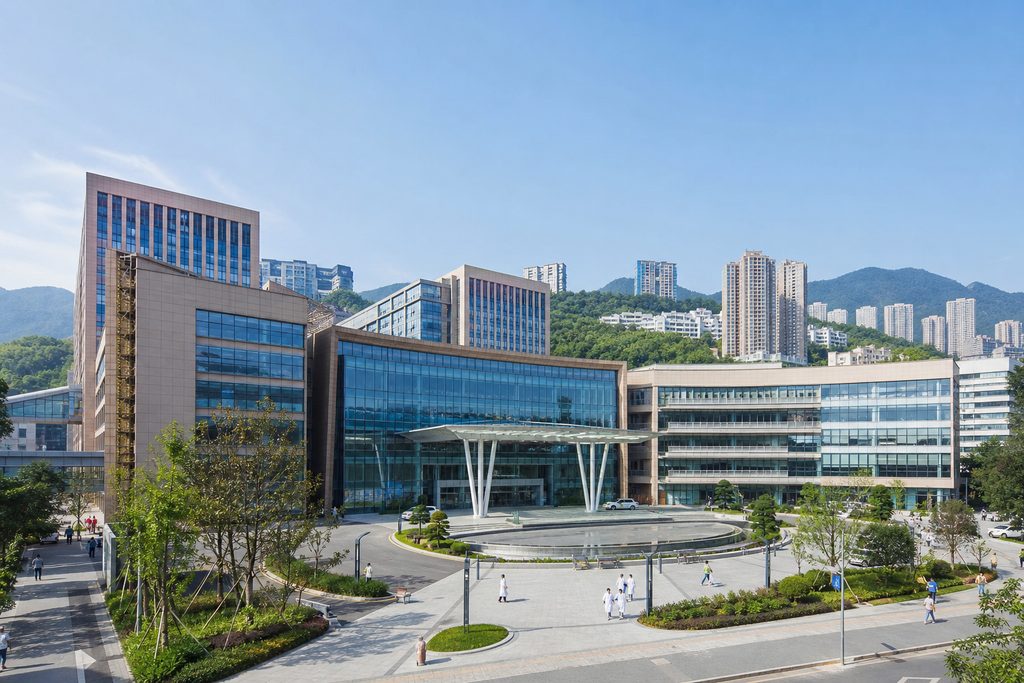
A patient in the United States facing a complex neurosurgical procedure might be quoted $80,000 to $150,000 and wait weeks for a surgical slot. At the Affiliated Hospital of Guizhou Medical University (GMU), the same category of procedure, performed with comparable modern techniques, often falls in the $15,000 to $30,000 range. The gap is not a reflection of quality. It is a structural difference in how healthcare is priced and delivered.
Key Takeaways
- Guizhou Medical University Affiliated Hospital is the undisputed clinical giant of Southwest China’s mountain provinces, handling over 3 million outpatient visits annually across a network that includes its main facility and specialized branches.
- The hospital delivers sophisticated tertiary care—including organ transplantation, complex cardiac interventions, and advanced neurosurgery—at costs typically 70-80% lower than equivalent US procedures, without the prolonged wait times seen in many Western public systems.
- This is not a JCI-accredited facility, and English-speaking staff are scarce. Navigating it without a bilingual medical coordinator who understands the internal referral and payment systems can be genuinely disorienting for an international patient.
- Before committing to travel, you need a clear, written confirmation of your treatment pathway and costs through the hospital’s official international liaison channel—never arrive expecting a walk-in appointment with a senior specialist.
The Problem: When Your Diagnosis Demands a Level of Care Your Local System Cannot Deliver Quickly or Affordably
About 1 in 10 patients in countries with single-payer systems waits longer than six months for elective surgery. In the UK, the NHS reported over 7.6 million people on waiting lists in 2024, with some orthopedic and neurosurgical referrals stretching past the one-year mark. For a patient with a progressive condition, that kind of delay is not an inconvenience. It is a clinical threat.
Private alternatives in the same countries often carry price tags that wipe out savings or exceed insurance caps. People start searching for options they had never considered before. They look at Thailand, India, Singapore. And increasingly, they look at China—not just Beijing and Shanghai, but the powerful provincial medical centers that anchor healthcare for tens of millions of people. The Affiliated Hospital of Guizhou Medical University sits at the center of that conversation for anyone asking: what is the best hospital in Guizhou province China for serious, complex care.
Who We Are
We are not a hospital. We do not provide medical treatment, clinical diagnoses, or second opinions that substitute for a physician’s judgment. Our team functions as your logistical architects for accessing China’s top-tier medical institutions—we handle hospital matching, appointment coordination through official international department channels, bilingual medical companion services, visa guidance, and local stay arrangements. Think of us as the bridge between your clinical needs and a system that can deliver the care, at a cost structure that often makes treatment possible when it otherwise would not be.
Why the Affiliated Hospital of Guizhou Medical University Commands Attention
Most international patients fixate on Beijing and Shanghai. That instinct is understandable but incomplete. China’s provincial medical hubs often run surgical volumes that dwarf Western centers, and they do it with equipment that is frequently newer than what you would find in a mid-tier European hospital. GMU Affiliated Hospital is the definitive example for China’s vast southwestern interior.
Clinical Volume That Creates Deep Specialization
The hospital operates over 3,500 beds across its network. Its emergency department alone handles more than 10,000 patients per month. When a surgical team performs a high volume of a specific procedure, complication rates tend to drop. This is not speculation. A 2020 study in The Lancet examining surgical outcomes across 22 countries found a strong inverse relationship between hospital procedure volume and 30-day mortality for complex abdominal and vascular surgeries. A neurosurgeon here who performs 200 tumor resections a year has encountered clinical variations that a lower-volume surgeon might see once in a decade. That depth of experience matters.
For a foreign patient exploring medical tourism packages Guiyang China, the value proposition is not a spa-like recovery suite. It is access to that concentrated clinical repetition, at a price that reflects local economics rather than US or European billing structures.
Technology and Infrastructure That Rival Coastal Megacities
Walk through the hospital’s main surgical building and you will see the same da Vinci surgical systems, 3.0T MRI units, and hybrid operating theaters that populate the lobbies of Shanghai’s elite hospitals. The difference is the cost per use. Guiyang’s lower operational overhead—staff salaries, facility maintenance, sterilization logistics—flows directly into the procedure pricing.
Also, the hospital has invested heavily in its organ transplantation program, which now covers kidney, liver, and hematopoietic stem cell transplants. It houses a provincial-level key laboratory for reproductive medicine and a stroke center that treats patients from across Guizhou, Yunnan, and even northern Guangxi. When someone asks what is the best hospital in Guizhou province China, the answer is not based on branding. It is based on clinical range and patient volume. This hospital is the referral endpoint for a province of 38 million people.
The Cost Structure: Why the Numbers Work
We are often asked about Guizhou Medical University Hospital international patients price comparisons. Here is what you need to understand. A coronary artery bypass graft that costs $120,000 in the United States, or €35,000 in Germany, typically lands between $14,000 and $22,000 here. A total hip replacement: $8,000 to $15,000, versus $40,000 to $65,000 in the US. A craniotomy for tumor resection: $15,000 to $30,000, compared to $80,000 and up in many Western private hospitals.
These are not low-quality bargain-basement rates. They reflect a system where physician labor costs are a fraction of Western levels, hospital construction is government-subsidized, and the sheer patient volume spreads fixed equipment costs across thousands of cases. The hospital’s international patient pathway adds a coordination surcharge—typically 1.5 to 2 times the standard local rate—which still leaves the total bill at a fraction of what you would pay at home.
What You Need to Know Before Going Alone
We tell every patient the same thing: this hospital is not set up for walk-in international visitors. It is a high-volume public institution serving a massive local population. That means real barriers exist. Knowing them in advance prevents wasted trips and dangerous misunderstandings.
- JCI Accreditation Status: A direct question we receive is: is Guizhou Medical University Hospital JCI accredited? No, it is not. JCI accreditation is relatively rare among Chinese public hospitals outside of a handful of elite international departments in Beijing and Shanghai. The hospital is accredited by China’s National Health Commission and holds all requisite domestic certifications for its tertiary A-grade ranking. Its clinical standards are rigorous, but the administrative processes and language environment are built for a Chinese-speaking population. Expecting JCI-style English-language handholding without a companion will lead to frustration.
- Visa Requirements: You need an S2 visa for medical treatment, annotated specifically for your purpose. The hospital must issue a formal invitation letter confirming your treatment plan. This is not a document you can generate yourself, and a generic hotel booking will not satisfy the consulate. The letter must come through the hospital’s official international affairs channel.
- Payment Systems: The hospital requires prepayment for inpatient stays and major procedures. International credit cards are not reliably accepted at the cashier windows. You will need to transfer funds into a Chinese bank account or use a verified third-party coordination service that can handle the hospital deposit on your behalf. Alipay and WeChat Pay dominate the local ecosystem, and linking a foreign card to these platforms can fail unpredictably.
- Language and Navigation: Signage in the main outpatient hall is partially bilingual. Clinical consultations, surgical consent forms, and post-operative instructions are almost exclusively in Chinese. A single missed instruction about fasting before anesthesia or medication timing can derail a procedure. This is not a theoretical risk. We have seen it happen.
How We Help You Navigate This
These barriers exist for structural reasons, not malice. The hospital was built to serve Guizhou’s population, not to cater to international medical tourists. That is where our team becomes essential. We translate your medical records into the precise format the hospital’s specialists expect. We coordinate with the international liaison office to secure a confirmed appointment with the relevant department head—not just a generic registration ticket. On the ground, our bilingual medical companions handle registration, payment deposits, queue management, and real-time translation during consultations. We also manage the S2 visa invitation letter process so that the document trail is correct the first time.
For patients researching how to get treatment at Guizhou hospital as foreigner, the answer is straightforward: do not attempt it as a solo walk-in. The hospital’s clinical capabilities are real, but the pathway to accessing them requires a structured, pre-arranged approach. Our case management covers everything from pre-departure imaging review to post-discharge pharmacy runs and follow-up scheduling. We do not promise to make the hospital feel like a Western private clinic. We promise to make it navigable, safe, and clinically coherent.
Frequently Asked Questions
No, it is not JCI accredited. JCI accreditation is a specific international certification that few Chinese public hospitals pursue, largely because their patient base is domestic. The hospital holds China’s highest domestic rating (Grade A, Class 3) and its clinical outcomes in high-volume specialties like organ transplantation and interventional cardiology are publicly reported and audited by national health authorities. Safety is driven by surgical volume and institutional experience, not by a specific international badge. If JCI accreditation is a non-negotiable requirement for your peace of mind, we will help you look at JCI-accredited private international hospitals in other Chinese cities instead.
Prices vary by procedure and case complexity. For international patients routed through the hospital’s formal coordination channel, expect to pay roughly 1.5 to 2 times the standard local rate. A cardiac bypass: $14,000–$22,000. A total hip replacement: $8,000–$15,000. A complex spinal fusion: $18,000–$30,000. These figures include the hospital’s facility fee, surgeon’s fee, standard ward stay, and basic medications. They do not include our coordination fee, travel, accommodation, or treatment for unexpected complications. We provide a detailed line-item estimate before you commit to travel.
The phrase best hospital in Guiyang for foreigners cost implies a facility that balances price, clinical quality, and foreigner-friendly service. In Guiyang, that balance is tricky. The Affiliated Hospital of Guizhou Medical University offers the highest clinical capability but the lowest foreigner-specific infrastructure. There are smaller private clinics in Guiyang that offer English-speaking staff and a more familiar patient experience, but they refer complex surgical cases back to GMU Affiliated Hospital anyway. If you need serious surgery, this is the clinical endpoint. The cost savings come from the procedure pricing, not from the service ambiance. We help you accept that trade-off with eyes wide open.
This is the hardest question, and we answer it directly. The hospital has a standard adverse event reporting and management protocol governed by Chinese medical regulations. As your coordinators, we ensure that any complication is communicated to you and your family in real time, in clear English, without medical jargon or deflection. We stay on-site as your advocates. We do not provide clinical care, but we ensure that you are never left alone in a system where you cannot understand what is being said about your body. We also strongly recommend that all international patients carry medical evacuation insurance that covers repatriation in the rare event of a catastrophic complication.
Your Next Step
The Affiliated Hospital of Guizhou Medical University represents something specific: deep clinical capability in a province-level powerhouse, at a cost structure that makes treatment financially possible for patients who are priced out or waitlisted in their home countries. It is not the easiest place to navigate. But for the right patient, with the right coordination, it solves a problem that no amount of waiting at home will fix. If you want to understand whether your specific case fits, reach out to our team for a free consultation. We will review your medical records, give you an honest assessment of suitability, and map out exactly what the journey would require. No pressure. Just clarity.
For more medical information and treatment options in China, visit chinamedservices.com (China Medical Services).
