The Overnight Queue for a Chinese Specialist: Skipping the Line Without Breaking Rules
The Overnight Queue for a Chinese Specialist: The Short Answer
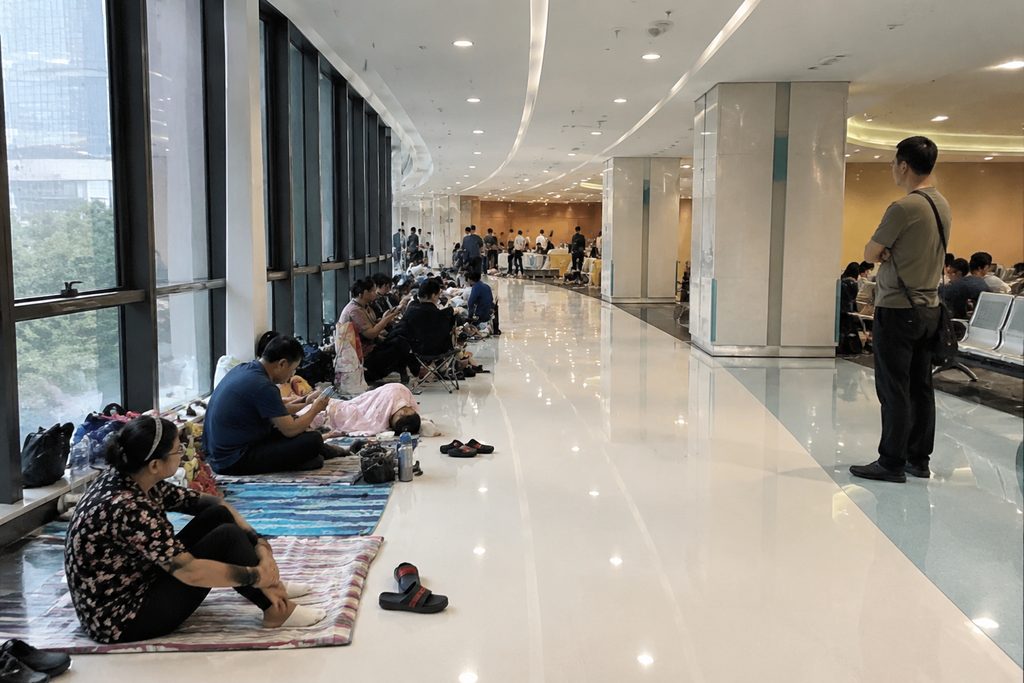
When 52-year-old Daniel from Manchester was told he needed a complex cardiac evaluation, his UK waiting list stretched past four months. His daughter had read about Fuwai Hospital in Beijing — the highest-volume cardiac center on earth. But every forum post she found mentioned the same thing: patients sleeping outside hospital gates. The top specialist doctor queue overnight China is real. People do camp out. They arrive at 10 p.m. for a 7 a.m. registration window. And for the most famous names, even that doesn’t guarantee a number.
So can a foreign patient skip that line? Yes — but not by walking past it. The legitimate route runs through hospital international departments and VIP channels, not the public queue. The trade-off is cost. Expect to pay 1.5 to 2 times standard rates. The queue disappears, but the price tag changes. That’s the honest short answer.
The longer answer involves understanding which hospitals offer what, what “fast” actually means in a system that handles 10,000+ outpatient visits daily at a single facility, and why showing up without Chinese language support can cost you more time than the queue itself.
Who This Is Right For — and Who It Isn’t
International patients who benefit most from pursuing expedited specialist access in China fall into a few clear categories. You’re a good candidate if you have a confirmed or suspected serious diagnosis that requires a top-tier specialist’s judgment, and your home country’s wait time would meaningfully delay diagnosis or treatment. You’re also a good fit if you already have imaging, lab work, and medical records organized — the more complete your file, the faster a Chinese specialist can act on it.
And you’re a strong candidate if you can absorb the cost difference. VIP and international department pricing is transparently higher than public channel pricing. That’s the mechanism that makes the speed possible.
Who should not pursue this:
- Patients with mild, stable conditions that a local specialist can manage perfectly well
- Anyone expecting a guaranteed specific surgery date before an in-person consultation — Chinese public hospital rules require a face-to-face assessment first, even through VIP channels
- Travelers who cannot manage a deposit or prepayment structure, since public hospitals in China require upfront payment with insurance reimbursement handled afterward
- Patients whose condition makes long-haul travel medically risky without a physician’s clearance
If you’re in that last group, written second opinions and video consultations exist precisely for you. You can access Chinese specialist expertise without leaving home.
The Options, Compared
There are genuinely different paths to a Chinese specialist. They are not equal in speed, cost, or experience. Here’s how they stack up.
| Path | Typical Wait | Cost Indicator | Language Support | Best For |
|---|---|---|---|---|
| Public outpatient queue | Same-day registration, often overnight camping for famous names | Lowest (e.g., $15–$80 consultation fee) | None — Chinese only | Mandarin-speaking locals or very budget-constrained patients |
| Hospital international department | Days to 2 weeks, booked in advance | 1.5–2x public rates | English-speaking staff common | Foreign patients who want official hospital channels |
| VIP/special-need clinic | Often within the same week | 2x public rates or higher | Varies; interpreter may be needed | Patients who need senior specialists fast |
| Private international hospitals (e.g., United Family, Jiahui) | Same day to a few days | Highest consultation fees, Western-style billing | Full English environment | Patients prioritizing comfort, insurance direct billing, and English |
| Remote video consultation | Days, no travel | $100–$800 depending on specialist tier | Arranged by coordinating service | Patients evaluating whether travel is worthwhile |
Which column fits you? If you need a definitive in-person assessment from a specific senior specialist at a top public hospital, the international department or VIP route is your answer. If you want the smoothest possible experience and your insurance covers private care, a JCI-accredited private hospital like those listed on our private international hospitals page makes sense. If you’re still deciding whether China is the right destination at all, start with a video consultation — it’s the cheapest way to test the waters before buying a plane ticket.
What “Skipping the Queue” Actually Means Inside a Chinese Hospital
Here’s the part most articles gloss over. The overnight queue is not a single line. It’s a sequence of physical checkpoints: the registration window, the department reception desk, the specialist’s consulting room door, the payment counter, the imaging center, and back again. Each checkpoint has its own queue. A foreign patient who miraculously gets a registration number at 7 a.m. still faces four more lines before seeing the doctor.
That’s why how to see a famous Chinese doctor fast is less about one hack and more about removing the entire queue architecture. VIP and international department channels do exactly that. Your appointment is pre-booked. A staff member meets you at the entrance. Your registration, payment, and queue number are handled before you arrive. You wait in a separate lounge. The specialist sees you at an assigned time. The whole visit might take two hours instead of twelve.
But here’s the constraint that surprises people: even a top specialist doctor queue overnight China situation doesn’t disappear because you paid. It disappears because you entered a different service tier with different capacity. Those tiers have limits too. A famous oncologist at Peking Union Medical College Hospital might have VIP slots only two mornings per week. If those are full, you wait until next week — not overnight, but not instantly either.
So the realistic promise is not “see anyone, anytime.” It’s “see a senior specialist within days to two weeks, with an appointment, without camping outside.” For most international patients, that’s the difference between feasible and impossible.
What It Costs
Let’s put numbers on the table. Public channel registration fees at top-tier Chinese public hospitals typically range from $15 to $80 depending on the specialist’s seniority. That’s the fee people camp overnight to pay. International department consultations at the same hospitals commonly run $100 to $300. VIP specialist consultations can reach $500 to $800 for the most senior names.
Coordination services — the people who book the appointment, prepare your translated records, and meet you at the hospital — typically start from $300 for appointment coordination. A bilingual medical companion runs from $300 per day. If you want end-to-end coordination for a complex multi-day visit, expect $5,000 to $8,000 for the full package. None of these coordination fees include hospital treatment charges. They cover the logistics and language support.
One cost question international patients often ask directly: what is the cost to skip the line at Beijing hospital? The honest answer is that you’re not paying to skip — you’re paying for a different service tier. The fee structure reflects longer consultation times, English-speaking staff, dedicated waiting areas, and priority scheduling. At a top Beijing hospital, an international department specialist consultation typically lands between $150 and $300. If a coordination service quotes you a “guaranteed appointment with Dr. X on Tuesday,” be skeptical. Legitimate services promise effort and refund if they fail, not guaranteed outcomes.
What drives cost variance? Three things: the hospital’s prestige tier, the specialist’s seniority, and whether you need additional services like imaging interpretation, multi-day accompaniment, or multidisciplinary team review. A written second opinion from a top specialist runs $300 to $500. A full MDT video consultation runs $1,500 to $2,000. These are reference ranges, not fixed prices — every case gets quoted individually based on hospital and complexity.
Practical Considerations: Records, Visas, and the Language Wall
You cannot book a specialist appointment at a Chinese public hospital without medical records. The more complete your file, the faster the process. Bring or send: all imaging (CT, MRI, PET scans — ideally on CD or DICOM format), pathology reports, blood work, current medication list, and a summary letter from your referring physician. Have key documents translated into Chinese. A coordinating service handles this, but if you’re going solo, translation is on you.
Visa reality check: for medical treatment in China, the applicable short-stay category is the S2 visa, annotated for medical purposes. Accompanying family members also apply for S2. Processing times vary by embassy and your nationality, so start early. You’ll need supporting documents from the hospital — an appointment confirmation or treatment invitation letter helps considerably. No legitimate service can guarantee visa approval; they can only help you assemble the strongest possible application.
Payment: Chinese public hospitals operate on prepayment. You deposit funds at admission or before major procedures, and costs are deducted as you go. International insurance is typically reimbursement-based — you pay upfront, then claim. Private international hospitals like United Family and Jiahui often offer direct insurance billing, which changes the cash-flow picture entirely. If that matters to you, check our private hospital listings before deciding.
Language: this is the hidden cost. A top Chinese public hospital might see 10,000 outpatients in a single day. Signage is increasingly bilingual in Beijing and Shanghai, but the actual workflow — where to pay, which window to visit, what the lab technician is asking — runs on Mandarin. A bilingual medical companion doesn’t just translate. They know the building, the sequence, and the unspoken rules. For many patients, that’s the difference between a two-hour visit and a full day of confusion.
Follow-up after returning home: Chinese specialists will provide written reports and treatment recommendations. You’ll need to relay these to your home physician. If surgery was performed in China, plan for remote follow-up consultations — most major hospitals now offer these through their international departments. Ask before you leave what the follow-up protocol looks like.
Frequently Asked Questions
Yes. The overnight queue applies to the public registration channel. International departments, VIP clinics, and private international hospitals operate on appointment systems. You’ll wait days to two weeks, not overnight. But you pay 1.5 to 2 times the public rate for that access.
Sometimes. It depends on the specialist’s schedule and which channel you use. Private international hospitals and VIP clinics can often accommodate same-week bookings. A famous specialist at a public hospital’s international department might need 7 to 14 days. Booking before you fly is always smarter than arriving and hoping.
A VIP medical concierge China specialist appointment service is a third-party coordinator. The hospital international department is the hospital’s own staff. Concierge services handle translation, record preparation, appointment booking, and on-the-ground accompaniment. The hospital international department provides the clinical service and English-speaking administrative staff. They work together — the concierge navigates, the hospital treats.
Reputable coordination services refund the coordination fee if they cannot secure the appointment they committed to. The hospital’s own consultation fee is separate and refundable per hospital policy. Before paying anyone, ask: what exactly is refundable, under what conditions, and in what timeframe? Get it in writing.
Usually not directly. Most international insurers reimburse you after treatment, and they may or may not accept the elevated VIP consultation fee. Private international hospitals with direct billing agreements are the cleaner path for insurance. Check with your insurer before committing to a specific hospital tier.
Your Next Step
The overnight queue for a Chinese specialist is real, but it’s not your only option. International departments, VIP clinics, and private hospitals exist precisely so that foreign patients don’t have to camp outside a gate. The trade-off is cost, and the prerequisite is preparation — complete records, the right visa category, and language support.
We’re China Medical Services. We maintain a database of 340+ top-ranked hospitals across 37 cities and help international patients navigate the system — from hospital matching to appointment coordination to bilingual accompaniment. We are not a hospital and we do not provide diagnoses or treatment. We’re the bridge between your medical needs and Chinese clinical expertise.
If you’re considering a trip, start with a conversation. Tell us your diagnosis, your records, and your timeline. We’ll tell you honestly whether China makes sense for your case, which hospitals fit, and what it would cost. Visit our patient services page to begin. No obligation, no pressure — just a clear-eyed assessment of your options.
For more medical information and treatment options in China, visit chinamedservices.com (China Medical Services).
