First Affiliated Hospital of Kunming Medical University Cardiology for International Patients
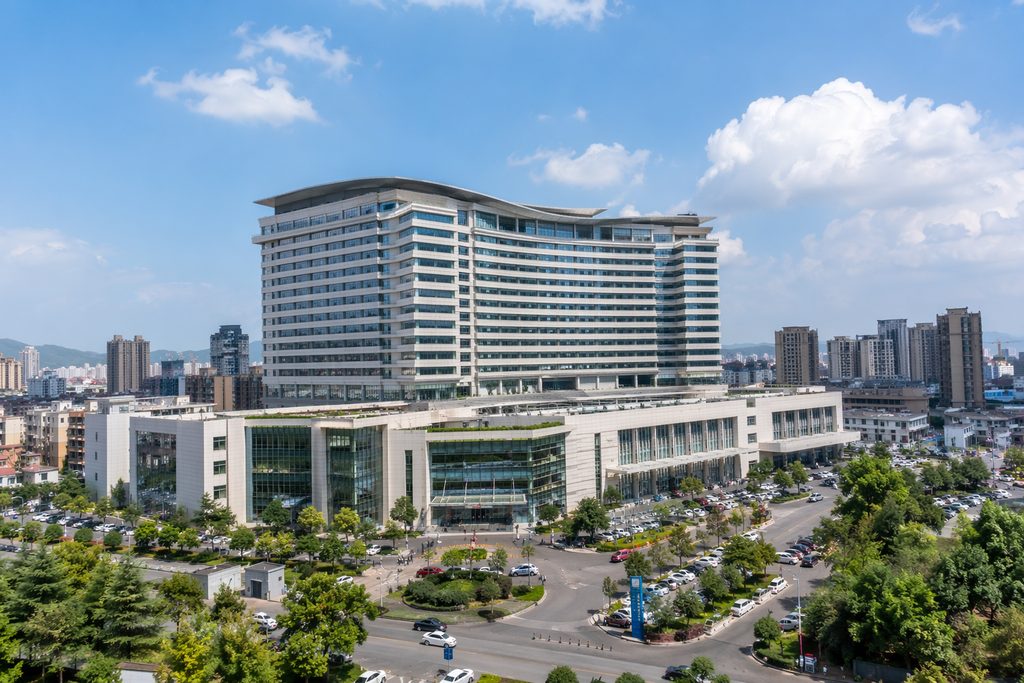
You’ve probably heard that getting heart treatment in China means gambling with quality. The data tells a different story. Fuwai Hospital in Beijing performs over 14,000 cardiac surgeries annually — the highest volume on the planet. And while Kunming doesn’t have Fuwai’s scale, the First Affiliated Hospital of Kunming Medical University runs one of the most established cardiology programs in southwestern China. For patients facing $120,000 bypass quotes in the US, understanding the real heart surgery cost at Kunming Medical University matters more than most people realize.
We coordinate care for international patients across China’s top-tier hospital network. Here’s what you actually need to know about this hospital’s cardiology capabilities, how the process works, and what to expect financially.
How This Actually Works, Step by Step
The sequence from where you are now to sitting in a cardiologist’s office in Kunming is not complicated, but it has specific requirements. Here’s the real flow.
First, you send us your existing cardiac records — echocardiograms, angiograms, stress test results, blood work, and any prior surgical notes. A Chinese cardiology team reviews these documents. This is a written second opinion that typically costs between $300 and $500. The specialists assess whether your case is appropriate for treatment in China and what specific interventions might apply.
What comes back is a written analysis. It includes treatment direction, suggested procedures, and a realistic assessment of whether traveling to Kunming makes clinical sense. The team may recommend additional imaging or tests before any commitment.
If you decide to proceed, we coordinate a video consultation with the cardiology department. This runs $500 to $800 for top-specialist access. You speak directly with the physicians who would manage your case. They review your images, ask about symptoms, and explain their proposed approach.
Only after both steps do we move to in-person coordination. That means scheduling the outpatient visit, arranging the hospital medical card, and preparing your documents for the S2 visa application. The hospital’s international department handles foreign patients, but you still need someone on the ground who speaks both languages.
Why International Patients Look at Kunming Medical University for Cardiology
The First Affiliated Hospital of Kunming Medical University is a large tertiary teaching hospital. Its cardiology department handles interventional procedures, electrophysiology, and cardiac surgery. The hospital is not on the Fudan comprehensive Top 100 list at the A++++ tier, but its cardiology program has a strong regional reputation. For patients from Southeast Asia, the Middle East, and parts of Europe, Kunming offers something Beijing and Shanghai cannot: a lower-cost operating environment that translates into lower treatment bills.
That geographic advantage matters. The price of angioplasty in Yunnan China runs significantly below the rates at top-tier coastal hospitals. A standard percutaneous coronary intervention with one stent might cost $6,000 to $10,000 at a hospital in Kunming, versus $8,000 to $15,000 at comparable institutions in Shanghai. Those are rough ranges — final numbers depend on lesion complexity, stent type, and whether you need additional imaging.
But cost is not the only factor. The hospital sees a high volume of cardiac cases because it serves a massive catchment area covering Yunnan province and parts of neighboring regions. Volume drives competence. Interventional cardiologists here perform hundreds of procedures annually. That repetition matters when complications arise.
For a cardiologist at First Affiliated Hospital Kunming for foreigners, the pathway runs through the hospital’s international medical service. English-speaking coordination exists, but it is thinner than what you’d find at Peking Union Medical College Hospital or United Family. That’s the honest trade-off: lower prices, solid clinical volume, but more logistical friction without local support.
A Realistic Timeline
People consistently underestimate the waiting steps. Document translation alone can eat a week. Here’s what a typical timeline looks like for a foreign patient pursuing cardiac care at this hospital.
| Stage | Duration | What Happens |
|---|---|---|
| Document collection & translation | 5–10 days | Gather angiograms, echo reports, prior surgical notes. Translate to Chinese. Medical translation requires precision — a mistranslated “left anterior descending” changes everything. |
| Written second opinion | 7–14 days | Cardiology team reviews records. Returns written analysis with treatment direction. |
| Video consultation scheduling | 3–10 days | Coordinate a time slot with the specialist. Time zone differences add friction. |
| S2 visa application | 2–6 weeks | Requires hospital invitation letter, treatment plan, proof of funds. Processing time varies by embassy. |
| Travel & arrival | 1–3 days | Fly into Kunming Changshui International Airport. Jet lag and altitude (Kunming sits at 1,900 meters) affect cardiac patients — plan a rest day. |
| Outpatient consultation & pre-op testing | 3–7 days | Face-to-face evaluation, blood work, repeat imaging if needed. Surgery is scheduled only after this step. |
| Procedure & hospital stay | 3–10 days | Angioplasty: 2–4 days. Bypass surgery: 7–14 days in hospital. |
| Recovery in Kunming before flying home | 7–21 days | Doctors typically want a follow-up visit and stable vitals before clearing you for a long-haul flight. |
Total realistic window from first contact to walking out of the hospital: 8 to 14 weeks. Anyone promising faster is cutting corners you don’t want cut.
What Can Go Wrong — and What Happens Then
Let’s be blunt about failure modes, because patients deserve to know what they’re walking into.
The records you send are incomplete or low-quality. Cardiac imaging from a small clinic in Ohio might not meet the resolution standards Chinese surgeons expect. What happens: the second opinion team requests a repeat CT angiography or cardiac MRI. That adds cost and time before any treatment decision. Recourse: we coordinate the imaging at a partner facility and forward results directly.
The visa gets delayed. Embassies in some countries take longer to process S2 applications, especially during peak travel seasons. What happens: your scheduled consultation and surgery dates slip. Recourse: we reschedule with the hospital — this is where having a coordinator on the ground matters. The hospital’s international department responds faster to a local contact than to an overseas email.
Post-operative complications occur. Any honest cardiac team will tell you that even routine angioplasty carries risks — bleeding at the access site, contrast-induced kidney injury, stent thrombosis in rare cases. What happens: the hospital’s cardiac ICU manages complications on-site. This is a full tertiary center with 24/7 interventional coverage, not a boutique clinic. Recourse: your treatment plan includes a defined follow-up window before you fly home. We coordinate that follow-up and communicate with your home cardiologist.
The language barrier is worse than expected. Nurses on the general ward may not speak English. What happens: you feel isolated during recovery. Recourse: a bilingual medical companion for $300 per day handles translation, medication instructions, and communication with the care team. It’s not a luxury — it’s the difference between confusion and clarity.
Is Cardiac Care Safe in China for International Patients?
The question deserves a direct answer. Yes — at accredited tertiary hospitals, cardiac care in China meets international safety standards. But the qualifier matters: accredited tertiary hospitals. China has over 35,000 hospitals. The top 5% — roughly 1,700 institutions — are where foreign patients should be treated. The First Affiliated Hospital of Kunming Medical University falls into this category as a major provincial teaching hospital.
What does “safe” mean in concrete terms? It means the interventional cardiology lab runs under strict radiation and sterility protocols. It means the cardiac surgery team performs enough annual volume to maintain competency. It means the ICU has the monitoring equipment and staffing ratios to catch deterioration early. These are verifiable, structural facts — not marketing language.
But safety also depends on what you bring to the table. A patient with unstable angina who flies 14 hours to save money is making a dangerous choice. A stable patient with documented coronary artery disease who travels for an elective angioplasty is making a reasonable one. The distinction is clinical, and it’s exactly what the written second opinion evaluates before you book anything.
Recovery time after heart bypass in China mirrors global standards. Expect 6 to 8 weeks before returning to normal activities, with 3 to 6 months for full sternal healing. Chinese cardiac rehab programs are less developed than in the US or Europe — you’ll likely do most of your rehabilitation at home. Plan for that gap.
Practical Considerations: Records, Visa, Payment, and Follow-Up
Here’s what genuinely applies to this specific hospital and this specific journey.
Medical records must be translated into Chinese. Not casually translated — professionally, with attention to anatomical terminology. A bilingual medical companion can review translations for accuracy before submission. Budget 5 to 10 days for this step.
The visa category is S2, issued for short-term private affairs including medical treatment. Your accompanying family members apply for their own S2 visas. Processing requires an invitation letter from the hospital, your treatment plan, and proof of financial means. Do not apply for an M visa — that’s for commercial and trade activities, not medical travel. We guide every patient through this documentation.
Payment at public hospitals in China is prepaid. You deposit funds at admission, and the hospital deducts as services are rendered. International insurance is typically reimbursed after the fact, not billed directly — unless you’re at a private international hospital. Bring a credit card with a high limit or arrange a wire transfer ahead of time. The heart surgery cost at Kunming Medical University ranges from roughly $12,000 to $20,000 for bypass surgery, compared to $120,000 or more in the US. Angioplasty with stenting runs $6,000 to $12,000 depending on stent count and type. These numbers vary by hospital and case complexity.
Follow-up at home requires coordination with your local cardiologist. The Kunming team provides discharge summaries, medication lists, and imaging files. Your home physician manages long-term care. We facilitate this handoff so nothing gets lost between systems.
Language is the friction point you cannot ignore. The hospital’s international department has some English capability, but ward staff, pharmacy, and billing departments operate in Chinese. A bilingual companion eliminates this variable entirely.
Frequently Asked Questions
You cannot book surgery directly from overseas. The path is: submit records for a written second opinion, complete a video consultation with the cardiology team, then travel to Kunming for an in-person outpatient evaluation. Only after that face-to-face visit can surgery be scheduled. We coordinate each step and handle the hospital’s international department communication.
Bypass surgery at this hospital typically runs $12,000 to $20,000. The same procedure in the US averages over $120,000. Angioplasty with stenting costs $6,000 to $12,000 in Kunming versus $30,000 to $50,000 in the US. These are ranges, not quotes — final pricing depends on your specific case, stent selection, and hospital fees at the time of treatment.
At accredited tertiary teaching hospitals like the First Affiliated Hospital of Kunming Medical University, yes. These institutions maintain international-standard protocols for interventional cardiology and cardiac surgery. The key is choosing the right hospital tier — and that’s exactly what our hospital matching process evaluates.
Expect 7 to 14 days in the hospital after bypass surgery, followed by 6 to 8 weeks of restricted activity. Full sternal healing takes 3 to 6 months. Chinese hospitals typically clear patients for international flights after a stable follow-up visit, usually 2 to 3 weeks post-discharge.
Public hospitals in China require prepayment. You submit claims to your insurer for reimbursement after treatment. Some international insurance plans have direct billing arrangements with private hospitals, but the First Affiliated Hospital of Kunming Medical University operates on a prepaid model. Verify your policy’s overseas coverage before committing.
Your Next Step
Choosing where to have heart surgery is one of the most consequential decisions you’ll make. The First Affiliated Hospital of Kunming Medical University offers solid cardiac care at a fraction of Western prices — but only if your case is appropriate for treatment there and you have the right support on the ground.
We’re China Medical Services, a team that connects international patients with top-tier Chinese hospitals. We don’t perform surgery, we don’t guarantee outcomes, and we don’t promise access that doesn’t exist. What we do is handle the coordination, translation, and logistics so you can focus on getting better. Start with a free consultation at our patient services page — tell us about your cardiac condition, and we’ll tell you honestly whether Kunming or another Chinese hospital makes sense for you.
For more medical information and treatment options in China, visit chinamedservices.com (China Medical Services).
