Lingual Braces in China: What to Know Before You Commit
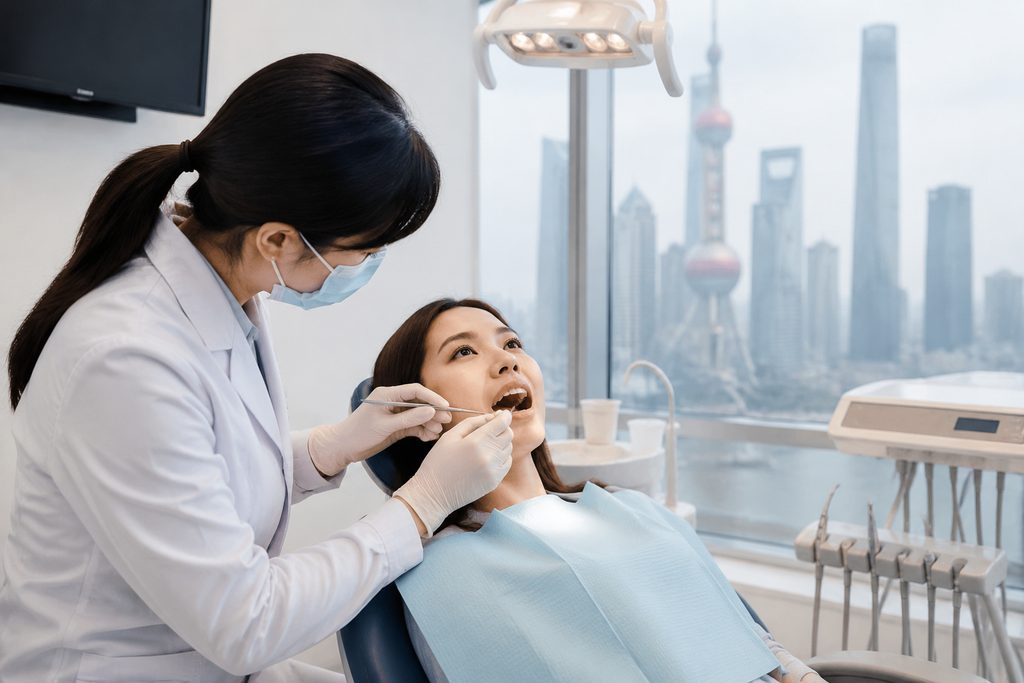
A full set of lingual braces in the United States routinely runs $8,000 to $12,000. In China’s top-tier orthodontic departments, the same hidden-appliance treatment often lands between $3,500 and $6,500 — and roughly 1 in 4 adults worldwide now seeks orthodontic care, according to the American Association of Orthodontists. That gap is why so many international patients ask us about lingual braces in China. But cost is only the first question. The real ones are about safety, timelines, and whether you can realistically manage treatment across two countries.
This guide answers those questions honestly. We are not orthodontists. We are the team that helps international patients find the right hospital, book the right appointment, and navigate a system that rarely speaks English. Here is what you actually need to know.
How This Actually Works, Step by Step
Lingual braces sit on the back of your teeth, so nobody sees them. That is the appeal. The catch is that they demand more from your orthodontist than standard braces, and they demand more planning from you if you live abroad.
Here is the real sequence, from first inquiry to final retainer.
Step one: you send records. Before anyone quotes you a price, a Chinese orthodontist needs your panoramic X-ray, lateral cephalometric X-ray, intraoral photos, and impressions or a digital scan. If you do not have these, you can often get them done locally and send the files. Without them, any quote is guesswork.
Step two: a specialist reviews your case. The orthodontist evaluates your bite, crowding, and root positioning. Lingual braces are not right for every case. Severe rotations or certain skeletal issues may need a different approach. This review usually happens as a written second opinion or a video consultation.
Step three: you get a treatment plan and a cost estimate. This includes the appliance type, estimated duration, and the number of in-person visits required. That last number matters enormously for foreign patients.
Step four: you travel for fitting. The brackets are bonded in person. This is typically a multi-day visit, because custom lingual brackets are fabricated from a digital model of your teeth.
Step five: adjustments. Here is the honest part. Lingual braces need tightening every 6 to 8 weeks. If you fly home after fitting, you need a local orthodontist willing to take over adjustments. Many will. Some will not, especially for a system they did not place.
What Lingual Braces Cost in China — and Why the Range Is Wide
When patients ask about lingual braces cost China pricing, they usually want one number. There isn’t one. The range depends on the appliance brand, the complexity of your case, and whether you use a public hospital‘s international department or a private clinic.
| Setting | Typical Total Cost (USD) | Notes |
|---|---|---|
| Public top-tier hospital, standard lingual system | $3,500 – $5,000 | Lower fee, longer waits, limited English |
| Public hospital international/VIP department | $5,000 – $7,500 | English service, faster scheduling, roughly 1.5–2x standard fees |
| Private international clinic | $6,500 – $10,000 | Direct insurance billing possible, Western-style care |
| United States (for comparison) | $8,000 – $12,000 | Varies by city and orthodontist |
These figures are estimates only and vary by hospital and case complexity. They typically cover the appliance, fitting, and a set number of adjustment visits. They usually do not cover X-rays, retainers, or travel.
One more thing worth knowing: the appliance brand matters. Custom lingual systems cost more than semi-custom ones. Ask specifically which system the clinic uses, and whether replacement brackets are available if one debonds mid-treatment.
A Realistic Timeline
Treatment duration is the question patients underestimate most. Lingual braces are not faster than standard braces. If anything, complex cases can run slightly longer because the mechanics are trickier.
| Stage | Typical Duration | What Happens |
|---|---|---|
| Records collection | 1–2 weeks | X-rays, photos, scans done locally or in China |
| Specialist review and quote | 3–10 days | Written opinion or video consultation |
| Visa processing (S2) | 1–3 weeks | Depends on your consulate; hospital documents required |
| First trip: fitting | 3–7 days in China | Bracket bonding, initial wire placement |
| Active treatment | 12–24 months | Adjustments every 6–8 weeks |
| Retention phase | 12+ months | Retainer wear, periodic checks |
So how long do lingual braces take to straighten teeth? For mild to moderate crowding, 12 to 18 months is common. Complex cases with bite correction can run 24 months or more. Anyone promising you six months is selling something.
Notice the waiting steps people forget. Document translation. Appointment lead time at busy public hospitals, which can stretch weeks. And the visa, which you cannot start until you have hospital supporting documents in hand.
What Can Go Wrong — and What Happens Then
Let’s talk about failure modes, because this is where trust is either earned or lost.
Your local orthodontist refuses to take over. This is the most common problem. Recourse: find a clinic that uses the same appliance system, or plan to return to China for adjustments. Some patients fly back every three months. It works, but budget for it.
A bracket debonds. It happens. If you are abroad, a local orthodontist can usually reattach it temporarily. If you are in China, the treating clinic handles it, often same-day.
Your case turns out to be unsuitable. Lingual braces have limits. If the specialist review says a different appliance would serve you better, take that seriously. Getting a second opinion before committing is cheap. Getting it wrong is not.
Language and follow-through break down. Chinese public hospitals are enormous. A single top-tier hospital can see over 10,000 outpatient visits a day. Without Chinese, you will struggle to book, pay, and find the right floor. This is not a sales pitch — it is simply what the system looks like.
You need a refund or a plan change. Public hospitals generally require prepayment, and refund policies vary. Private international clinics are often more flexible and may bill your insurer directly. Ask about the refund policy in writing before you pay.
Is Lingual Braces Treatment Safe in China?
Yes, when it is done at a properly accredited hospital or clinic. China’s top orthodontic departments handle very high patient volumes, and their clinical standards track international guidelines. Many are affiliated with universities and publish in peer-reviewed journals.
But “safe” depends on three things you control.
Choose the right setting. For complex cases, a public top-tier hospital with an experienced orthodontic department is a strong choice. For convenience and English service, a JCI-accredited private international clinic may suit you better. Both are legitimate. They solve different problems.
Verify the clinician, not just the hospital. Ask who will actually place your brackets and who handles adjustments. At large teaching hospitals, senior specialists supervise, but residents may do some of the hands-on work. That is normal in teaching hospitals worldwide. Just know it going in.
Plan the aftercare before the fitting. Safety in orthodontics is largely about continuity. Braces that get no adjustments for six months can cause root problems or unwanted tooth movement. If you cannot commit to the adjustment schedule, lingual braces may not be the right choice for you right now.
If you want to compare departments, our specialty rankings by department list the leading hospitals for orthodontics and dental care across China.
Practical Considerations: Records, Visas, Payment, and Follow-Up
Records first. Get your X-rays and scans in digital format before you travel. Bring them on a USB drive and in the cloud. Chinese clinics can redo them, but why pay twice?
Visas next. For medical treatment, the applicable short-stay category is the S2 visa, subject to the latest embassy and consulate requirements and supporting hospital documents. If your stay will exceed 180 days, the S1 applies. Accompanying family members also apply for S2. Note clearly: the M visa is for commercial and trade activities and has nothing to do with medical treatment. Do not let anyone tell you otherwise.
Payment. Public hospitals generally require prepayment, with insurance reimbursed afterward. Private international hospitals often bill insurers directly. Confirm which model applies to you before you commit.
Insurance. Most Western insurers do not cover treatment abroad without prior authorization. Call yours before you book. Get any approval in writing.
Follow-up at home. Line up a local orthodontist before you leave China. Get a written treatment summary and the appliance system name from your Chinese clinic so your local provider knows exactly what they are working with.
If you want to explore hospital options by city, our ranked hospital directory groups China’s top facilities by location, and the main site covers the full range of services for international patients.
Frequently Asked Questions
Expect roughly $3,500 to $7,500 at a public hospital, depending on whether you use the standard or international department. Private international clinics run $6,500 to $10,000. Comparable US treatment typically costs $8,000 to $12,000. Final quotes vary by hospital and case complexity.
Sometimes, but it requires planning. You need a local orthodontist who will accept an in-progress case, and not all will. Find that person before you book your fitting in China. If you cannot, plan to return for adjustments every 6 to 8 weeks.
Most mild to moderate cases take 12 to 18 months. Complex cases with bite correction can take 24 months or longer. Lingual braces are not faster than traditional braces — they are simply less visible.
At accredited hospitals and clinics, yes. China’s leading orthodontic departments follow international clinical standards and treat high volumes of patients. Safety depends heavily on choosing a qualified clinician and keeping up with your adjustment schedule.
Yes. The S2 visa is the applicable short-stay category for medical treatment, subject to current consulate requirements and hospital supporting documents. Stays over 180 days require the S1. Family members accompanying you also apply for S2.
Your Next Step
Lingual braces in China can deliver excellent results at a fraction of Western prices — but only with the right hospital, the right specialist, and a realistic plan for follow-up care. The cost advantage is real. The logistics are the part that trips people up.
Our team helps international patients match with appropriate hospitals, coordinate appointments, arrange bilingual medical companions, and prepare visa documentation. We do not provide medical advice, and we never promise a specific clinical outcome. What we do is make a complicated system navigable.
If you are weighing your options, start with a conversation. Send us your records or your questions, and we will help you understand what is realistic for your case. You can request a free consultation here — no pressure, no obligation.
For more medical information and treatment options in China, visit chinamedservices.com (China Medical Services).
