Medical Records Privacy in China: How We Protect Your Data
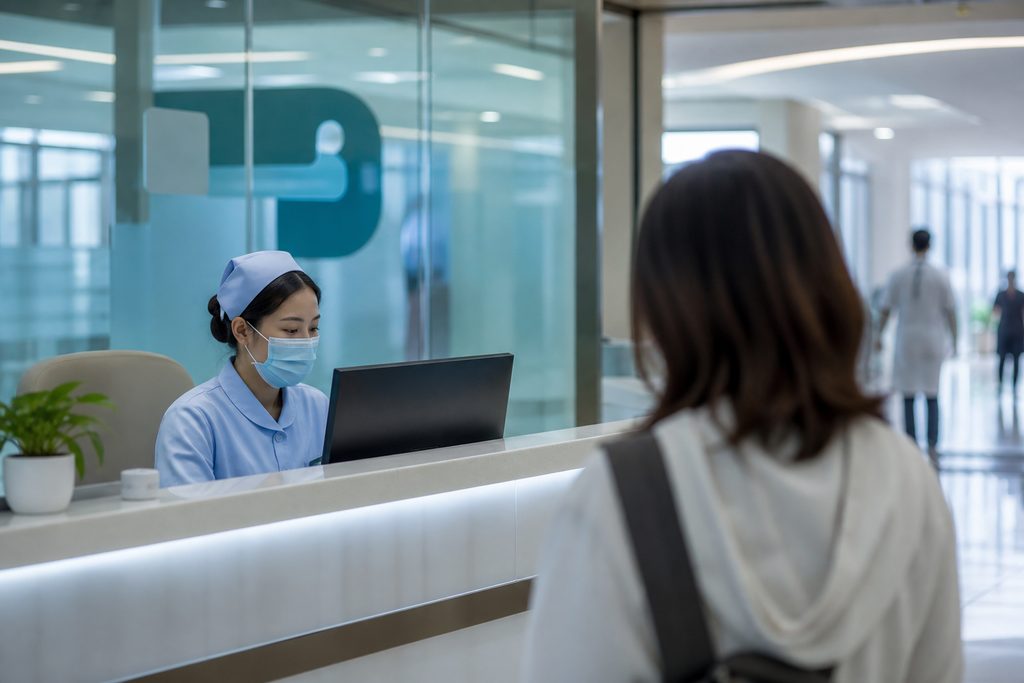
Can Foreigners Access Medical Records in China? Understanding Privacy Protections
Have you ever handed over a passport at a hospital registration desk in a foreign country and felt a quiet wave of uncertainty? That moment captures a question we hear constantly from patients considering treatment abroad: can foreigners access medical records in China, and more importantly, what happens to that information once it enters the system? The short answer is yes, you can access your records. The longer answer involves a layered framework of national laws, hospital protocols, and operational practices that most international patients never see but absolutely should understand.
We coordinate medical care for patients from over 30 countries across our network of 340+ top-ranked hospitals in 37 Chinese cities. Privacy questions come up in nearly every initial consultation. Parents worry about a child’s oncology scans. Executives ask about cardiac imaging before a board meeting. Retirees considering orthopedic surgery want to know who sees their pre-existing condition list. These are reasonable concerns, and the answers are more reassuring than most people expect.
Key Takeaways
- China’s Personal Information Protection Law (PIPL), effective November 2021, classifies medical records as “sensitive personal information” requiring separate, explicit consent for processing.
- Foreign patients have the legal right to access and obtain copies of their own medical records from Chinese hospitals, though the process requires specific documentation and often in-person verification.
- Hospital information systems in top-tier Chinese facilities use role-based access control, meaning a dermatology nurse cannot view your cardiology file.
- Real risks exist — fragmented digital systems and inconsistent enforcement across lower-tier hospitals — so choosing a highly ranked institution matters for data security.
The Problem: Medical Data Travels Further Than Patients Do
Under Article 28 of the PIPL, medical and health information is explicitly classified as “sensitive personal information.” This classification triggers stricter requirements than ordinary personal data. Hospitals may only process sensitive information when they have a specific purpose, sufficient necessity, and strict protection measures in place. Crucially, they must obtain separate, explicit consent from the patient. A general consent form covering all data uses does not satisfy the legal requirement for sensitive data.
That means when you sign a treatment consent form at a top-tier Chinese hospital, the section authorizing use of your medical records for treatment purposes is legally distinct from any authorization for research, teaching, or secondary use. You can consent to treatment while declining to have your case used in academic publications. This is a meaningful distinction that many patients do not realize they control.
The Data Security Law and Hospital Obligations
The Data Security Law, effective September 2021, establishes a classification and grading system for data. Hospitals must classify their data by importance and implement protections accordingly. Patient medical records fall into categories requiring elevated safeguards. The law also imposes obligations on “important data processors” — a designation that includes large public hospitals — to conduct regular risk assessments and appoint dedicated data security personnel.
In practice, this means hospitals like Peking Union Medical College Hospital and Zhongshan Hospital Fudan University employ dedicated information security teams. These are not part-time IT staff. They are specialists whose sole responsibility is protecting systems that house tens of millions of patient records.
Medical Records Privacy Laws for International Patients in China: What Actually Applies to You
Foreign patients often ask whether China’s privacy laws actually protect them, or whether these protections are designed for Chinese citizens. The answer is unambiguous. The PIPL applies to the processing of personal information of all natural persons within China’s territory, regardless of nationality. If you are physically in China receiving treatment, your data is protected under the same statutes that protect a Chinese citizen’s data.
This matters because some countries have privacy laws with nationality or residency requirements. China’s framework is territorial. Walk into any hospital in Shanghai or Beijing, and your medical record receives the same legal classification as everyone else’s.
There is a second layer worth understanding. The PIPL also has extraterritorial reach in specific circumstances. If a hospital processes data about you while you are outside China — for example, during a follow-up video consultation after you have returned home — the law can still apply if the processing activity is conducted by an entity operating within China. This creates continuity of protection that extends beyond your physical stay.
Is My Health Information Safe in China Hospitals? The Operational Reality
Laws provide the foundation. Operations determine what actually happens when a nurse pulls up your chart or a billing clerk processes your invoice. And this is where the gap between top-tier and lower-tier hospitals becomes significant.
Role-Based Access Control in Practice
In hospitals ranked among the top in the Fudan University hospital rankings, electronic medical record (EMR) systems use granular, role-based access control. A physician in the oncology department can access records for patients currently under their care. They cannot browse the records of a patient in the orthopedic ward two floors down. A registration clerk can see your name, passport number, and appointment time. They cannot see your diagnosis, lab results, or imaging reports.
Every access event is logged. The system records who viewed what, when, and from which terminal. Unauthorized access attempts trigger alerts to the hospital’s information security team. This is not theoretical. Hospitals have terminated employees for inappropriately accessing patient records — including cases involving celebrity patients whose medical details leaked to tabloids. The logging systems are what made those terminations possible.
What Privacy Protections Exist for Foreign Patients in Shanghai Specifically
Shanghai deserves specific attention because it is the most common entry point for international patients. The city’s top hospitals — including Zhongshan, Ruijin, and Huashan — operate under both national law and Shanghai municipal health commission regulations. The municipal regulations add requirements for hospitals serving international patients, including mandatory English-language privacy notices and dedicated international patient service desks.
Shanghai hospitals that treat significant numbers of foreign patients have also invested in staff training around cross-cultural privacy expectations. A patient from Germany may have different expectations about who should be present during a consultation than a patient from Saudi Arabia. The better hospitals have learned to ask rather than assume. This is not a legal requirement. It is a service standard that distinguishes hospitals experienced with international patients from those that are not.
For a deeper look at hospital options in the city, our Shanghai hospital guide breaks down the differences between public international departments and private facilities.
China Hospital Data Security for Medical Tourists: What You Should Ask Before You Commit
Medical tourists often evaluate hospitals on clinical reputation, cost, and location. Data security rarely makes the shortlist. It should. The questions below are ones we ask on behalf of patients before they commit to a facility.
Who Can See My Records and When?
Ask the hospital’s international patient coordinator directly: “Which staff members can access my full medical record, and under what circumstances?” A good hospital will give a specific answer. They will explain that your primary physician and their immediate care team have access during your treatment episode. They will explain that consulting specialists can access relevant portions with your treating physician’s authorization. They will tell you that administrative staff see only billing and registration data, not clinical details.
A vague answer — “only authorized personnel” — is a warning sign. It suggests the hospital either does not know its own access protocols or does not want to explain them. Top-tier hospitals with established international programs answer this question confidently because they have documented procedures.
What Happens to My Data After I Leave?
Chinese regulations require hospitals to retain medical records for a minimum period — generally 30 years for inpatient records and 15 years for outpatient records. Your data does not get deleted when you fly home. It remains in the hospital’s system under the same protections that applied during your treatment.
If you later need records for follow-up care in your home country, you can request copies. The process requires submitting a written request, providing identification (your passport), and sometimes appearing in person or designating an authorized representative. Hospitals typically provide records within 15 working days of a complete request, though many process requests faster.
Is My Data Used for Research Without My Knowledge?
This is a legitimate concern, particularly at academic medical centers where research is part of the institutional mission. Under Chinese law, using patient data for research requires either explicit consent or formal ethics committee approval with a waiver of consent under specific conditions. Hospitals cannot simply mine patient records for research without one of these two pathways.
When you sign admission paperwork at a teaching hospital, you may see language about research use of anonymized data. Read it. You have the right to decline without affecting your treatment. Some patients are comfortable contributing anonymized data to research. Others are not. The choice is yours.
Important: Privacy protections at top-tier hospitals in major cities are generally strong. However, enforcement is less consistent at smaller, lower-ranked facilities, particularly in remote areas. If data security is a priority for you, choose a hospital with a documented international patient program and ask the questions above before you travel.
Practical Considerations: Documentation, Access, and Follow-Up
If you decide to pursue treatment in China, several practical matters affect your ability to access and control your medical records. Understanding these before you travel saves frustration later.
What Documentation Do You Need to Access Your Records?
To obtain copies of your medical records from a Chinese hospital, you generally need three things: a written request form (available at the hospital’s medical records department), your passport as identification, and proof of your relationship to the records — meaning you are the patient. If someone else is requesting on your behalf, they need a notarized authorization letter and their own identification.
Some hospitals now offer online record access through patient portals, though this is more common at private international hospitals like United Family and Jiahui than at public facilities. Public hospitals are gradually digitizing patient-facing services, but the pace varies by institution.
Translation and Continuity of Care
Records you receive from a Chinese hospital will be in Chinese. For follow-up care in your home country, you will need certified translations. This is a service our team provides as part of care coordination, but you can also arrange it independently through certified medical translation services. Budget for this. A complete medical record — imaging reports, lab results, operative notes, discharge summary — can run 50 to 200 pages. Professional medical translation costs vary widely but expect to pay a meaningful amount for accurate work.
Payment Records and Insurance Claims
Your financial data — what you paid, what insurance covered, what remains outstanding — is part of your hospital record. Public hospitals in China require prepayment for services, and your insurance company will need itemized invoices to process reimbursement. These invoices contain diagnostic codes and treatment details. They are part of your medical record and receive the same legal protections.
Private international hospitals with direct billing arrangements may share data with your insurer as part of the billing process. This sharing is governed by the consent you sign at admission. Review what you are authorizing.
Frequently Asked Questions
Can I get a copy of my medical records after I have returned to my home country?
Yes. Chinese hospitals are legally required to provide patients with access to their own medical records. The process typically requires a written request, a copy of your passport, and in many cases either an in-person visit or an authorized representative who can collect the records on your behalf. Some hospitals offer international courier services for record delivery, though this is not universal. Expect the process to take anywhere from a few days to three weeks depending on the hospital and the volume of records requested.
Does China share my medical data with my home country’s government?
No. There is no routine data-sharing mechanism between Chinese hospitals and foreign governments. Your medical records are held by the hospital where you received treatment, not by the Chinese government. Cross-border data transfer is restricted under the PIPL and requires either a security assessment, certification, or a standard contract. Hospitals do not share patient data with foreign governments as a matter of course, and doing so without legal basis would violate Chinese law.
What happens if there is a data breach at a Chinese hospital?
Under the PIPL, hospitals must notify the relevant regulatory authority and affected individuals when a data breach occurs that may harm individuals’ rights. The notification must include the cause of the breach, the types of data affected, and the remedial measures taken. Hospitals that fail to report breaches face significant penalties. That said, breach notification practices in China are less mature than in jurisdictions like the EU with its GDPR. If you suspect your data has been compromised, you have the right to file a complaint with the Cyberspace Administration of China or pursue civil remedies.
Are private international hospitals in China more secure with my data than public hospitals?
Not necessarily. Private international hospitals like those on our private hospital directory often have more polished patient-facing systems and English-language portals, which can make data management feel more transparent. But public top-tier hospitals invest heavily in information security infrastructure, often more than smaller private facilities. The key variable is not public versus private. It is the size, resources, and international patient volume of the specific institution. A major public hospital with a dedicated international department typically has robust data security. A small private clinic may not.
Do I need to give consent for every use of my medical data?
For sensitive personal information like medical records, yes. The PIPL requires separate, explicit consent for each distinct purpose. Treatment is one purpose. Research is another. Billing is a third. You can consent to some uses and decline others. In practice, hospitals bundle these consents into admission paperwork, which can make it feel like an all-or-nothing proposition. It is not. You have the right to strike through sections you do not agree with, though hospital staff may not proactively explain this to you.
Your Next Step
Medical records privacy in China is governed by a serious legal framework and implemented with real operational rigor at the hospitals where international patients receive care. Understanding your rights — and asking the right questions before you commit — puts you in control of your own information. We help patients navigate these questions every day, from understanding consent forms to coordinating record retrieval after treatment. If you are considering treatment in China and want to understand how your specific case would be handled, request a free consultation with our coordination team. We will walk you through the process, answer your privacy questions directly, and help you evaluate whether a particular hospital meets your standards for data security as well as clinical care.
Your medical information is deeply personal. You deserve to know exactly how it will be treated — in every sense of the word.
For more medical information and treatment options in China, visit chinamedservices.com (China Medical Services).
