Mommy Makeover in China: Real Costs, Top Surgeons, and Safety for International Patients
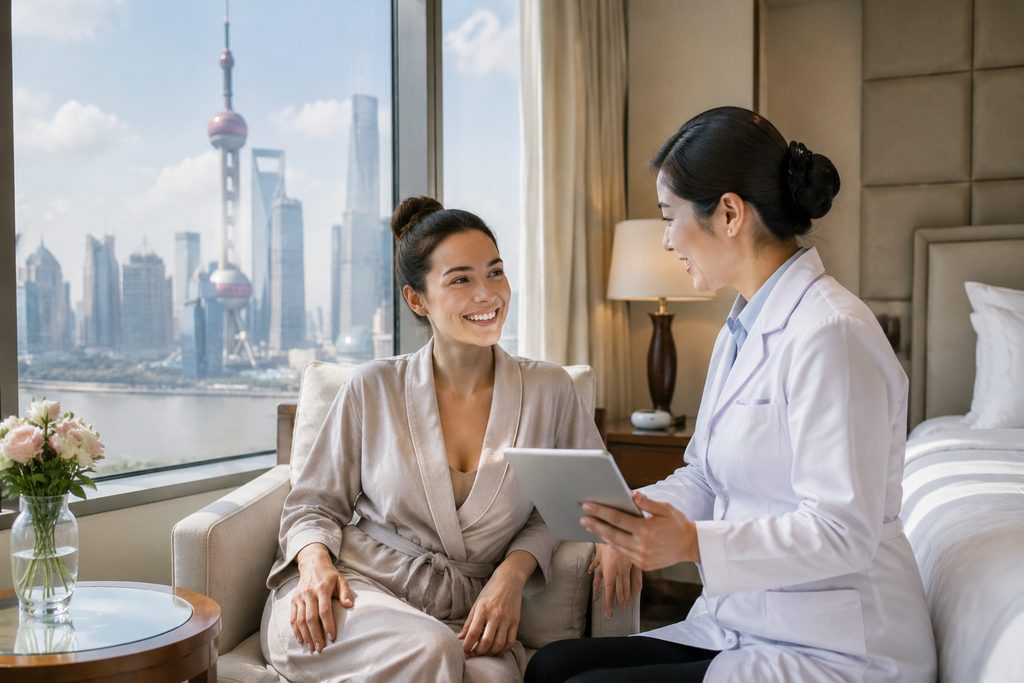
You’ve probably heard that traveling to China for cosmetic surgery means gambling with quality. The reality is messier than that. China’s top-tier plastic surgery departments now perform procedures at volumes that dwarf most Western centers, and the mommy makeover cost China hospitals quote often lands between $8,000 and $18,000 — roughly a third to half of what the same combination surgery costs in the United States or Australia. But price alone tells you nothing about whether this is the right decision for your body.
What actually matters is whether you can identify a genuinely qualified surgical team, understand what the quoted price includes, and plan for a recovery period far from home. We have coordinated care for international patients at public and private hospitals across Shanghai, Beijing, and Guangzhou. This article walks through what we have learned — the numbers, the safety questions, the logistics — without the glossy brochure language.
Key Takeaways
- A combined tummy tuck, breast lift, and liposuction package in China typically ranges from $8,000 to $18,000, versus $20,000 to $40,000+ in the US.
- Top Chinese plastic surgery departments are ranked in the Fudan University specialty reputation list, and several perform over 1,000 body contouring procedures annually.
- Language barriers and post-operative follow-up are the two biggest practical challenges — not surgical competence.
- You should never book a surgery package without first completing a video consultation and receiving a written surgical plan with itemized costs.
The Problem: Mommy Makeover Prices Have Spun Out of Control in Western Markets
The American Society of Plastic Surgeons reported that the average surgeon fee for a tummy tuck alone exceeded $7,000 in 2023. Add a breast lift, which averages around $6,000, plus liposuction and anesthesia, and you are looking at $20,000 to $30,000 before hospital fees. In Australia, the combined procedure routinely exceeds AUD $25,000. For many women — especially those who have finished having children and want their bodies back — this price point simply is not reachable.
Insurance rarely covers any of it. These are classified as elective cosmetic procedures, which means the full financial weight lands on the patient. The result is a growing number of women delaying surgery for years, or worse, seeking cut-rate options in unregulated settings. That second path is where real danger lives.
So the question is not whether you can get a mommy makeover in China. You can. The question is whether you can do it safely, at a price that justifies the travel, with a surgical team whose qualifications you can verify. And that requires understanding how the Chinese system actually works.
Why China Delivers Results for Complex Cosmetic Surgery
Clinical Volume Creates Surgical Muscle Memory
Chinese plastic surgery departments operate at a scale that is difficult to comprehend from a Western perspective. A senior plastic surgeon at a major public hospital in Shanghai may perform 300 to 500 body contouring procedures per year. That includes abdominoplasties, breast lifts, and combined cases. Compare that to a busy US plastic surgeon who might do 80 to 120 such procedures annually. Volume does not guarantee a good result, but it builds the kind of intraoperative judgment that only repetition provides — knowing how to handle tissue that behaves unexpectedly, how to minimize scar tension, how to manage complications before they become serious.
The Fudan University Hospital Ranking, which evaluates China’s 35,000+ hospitals, maintains a specialty reputation list for plastic surgery. The top departments on that list are concentrated in Shanghai, Beijing, and Guangzhou. These are not boutique clinics. They are full-scale academic medical centers with dedicated plastic surgery wards, ICU backup, and anesthesia teams that handle thousands of cases monthly.
Structural Cost Differences — Not Quality Compromises
Why is the mommy makeover cost China hospitals charge so much lower? The answer is structural, not clinical. Chinese hospital systems operate with significantly lower labor costs across the board. A senior anesthesiologist in China earns a fraction of what their US counterpart commands. Hospital overhead, nursing salaries, and administrative expenses are all lower. The surgical instruments, implants, and sutures are often the same international brands used in Western operating rooms.
But there is a catch. Public hospitals in China operate on a high-volume, low-margin model. That means the standard patient pathway involves long waits for outpatient registration and limited English support. The lower price is real, but so is the friction of navigating the system without help. Private international hospitals — such as United Family, Jiahui, and Raffles — offer English-speaking staff, direct insurance billing, and Western-style care coordination. Their prices run higher, typically 1.5 to 2 times the public hospital rate, but still land below US averages for the same procedures.
Is Mommy Makeover Safe in China? What the Data Shows
Safety depends almost entirely on where you go. A 2023 review published in the Chinese Journal of Plastic and Reconstructive Surgery examined complication rates for combined abdominoplasty and breast surgery across major academic centers. The reported rates of major complications — hematoma requiring reoperation, wound dehiscence, deep vein thrombosis — were comparable to published Western benchmarks. That is the key finding: when the surgery is performed at a high-volume academic department with proper patient selection, outcomes track with international standards.
The risk profile changes dramatically at unregulated clinics. China has thousands of cosmetic surgery providers, and not all are equal. The Ministry of Health has cracked down on unlicensed practitioners in recent years, but enforcement is uneven. Your job as a patient is to verify that the surgeon holds credentials from a recognized Chinese medical institution and that the facility is a registered hospital, not a standalone beauty salon offering surgical procedures. This is non-negotiable.
What a Mommy Makeover Package in China Actually Includes
When you search for “book mommy makeover package China,” you will find a confusing mix of offers. Some are legitimate hospital packages. Others are marketing shells that bundle you to a third-party clinic with no verifiable surgeon. Here is what a properly structured package should include, based on how top international departments structure their surgical care:
A standard mommy makeover combines three procedures: abdominoplasty (tummy tuck), breast lift with or without augmentation, and liposuction of the flanks or thighs. Some women also request arm lifts or thigh lifts, though adding procedures increases operative time and risk. The package should itemize each component separately.
| Procedure Component | Public Hospital (Top-Tier) | Private International Hospital | US Average (Surgeon Fee Only) |
|---|---|---|---|
| Tummy tuck (abdominoplasty) | $3,500 – $6,000 | $6,000 – $10,000 | $7,000 – $12,000 |
| Breast lift (mastopexy) | $2,500 – $4,500 | $4,500 – $7,500 | $5,500 – $9,000 |
| Liposuction (flanks/abdomen) | $1,500 – $3,000 | $3,000 – $5,000 | $3,500 – $6,000 |
| Anesthesia + hospital stay (3-5 days) | $1,000 – $2,500 | $2,500 – $4,000 | $3,000 – $6,000 |
| Total estimated range | $8,500 – $16,000 | $16,000 – $26,500 | $19,000 – $33,000 |
These figures are ranges based on what international patients typically encounter. Actual quotes vary by hospital, surgeon seniority, case complexity, and whether you require additional procedures. Always request an itemized written quote before committing to anything.
How Much Is Tummy Tuck and Breast Lift in Beijing? A City-Level Look
Beijing pricing tends to run slightly higher than other Chinese cities, reflecting the concentration of top-ranked academic centers. At Peking Union Medical College Hospital — consistently ranked among the top plastic surgery departments in the Fudan specialty list — a combined tummy tuck and breast lift through the international medical department typically falls in the $10,000 to $15,000 range. That includes surgeon fees, anesthesia, a 4-5 day hospital stay, and basic post-operative follow-up during your time in Beijing.
Shanghai offers comparable quality at similar or slightly lower prices. Zhongshan Hospital and Ruijin Hospital both maintain strong plastic surgery departments, and the private Jiahui and United Family facilities in Shanghai quote combined packages starting around $14,000. The top-ranked hospitals across China are concentrated in these two cities, which means you are choosing among multiple strong options rather than settling for the only available one.
What you are paying for in Beijing specifically is depth of experience with complex cases. The academic departments there handle revision surgeries, patients with prior complications, and cases requiring multi-specialty coordination. If your case is straightforward, you might find better value in Shanghai or Guangzhou. If you have had prior abdominal surgery or significant weight loss, Beijing’s academic centers may be worth the premium.
Choosing the Best Plastic Surgeons in Shanghai for a Mommy Makeover
Shanghai has become the default destination for international patients seeking cosmetic surgery in China, and the reason is practical: the city has the highest concentration of English-speaking medical staff outside of Hong Kong, excellent international flight connections, and a well-developed private hospital sector that caters specifically to foreign patients.
When evaluating best plastic surgeons Shanghai mommy makeover candidates, we look at three things. First, where did the surgeon train? The top Shanghai plastic surgeons typically completed residencies at Fudan University-affiliated hospitals or Shanghai Jiao Tong University medical school, with many holding additional fellowships in South Korea, Japan, or the United States. Second, what is their annual case volume for the specific procedures you need? A surgeon who does 200 breast augmentations but only 20 combined mommy makeovers is not the right fit. Third, can they show you before-and-after photos of patients with body types similar to yours? This is standard practice in reputable departments.
The challenge for international patients is that most of this information is not available in English online. Chinese hospital websites are often outdated, and surgeon directories are frequently incomplete. This is where a structured consultation process becomes essential — you need someone who can verify credentials directly with the hospital’s international department, not just rely on marketing materials.
Practical Considerations: Visas, Payments, and Recovery Logistics
Medical travel to China requires an S2 visa, which is the short-stay category used for private affairs including medical treatment. You will need supporting documents from the hospital where you are scheduled for surgery — typically a treatment invitation letter or admission confirmation. The S2 visa is not the same as the M visa, which is exclusively for commercial and trade activities. Do not apply for an M visa for medical purposes; it will cause delays and possible rejection. Family members accompanying you should apply for their own S2 visas.
Payment is another practical hurdle. Public hospitals in China generally require pre-payment before surgery, and many do not accept foreign credit cards directly. You may need to arrange a bank transfer in advance or carry sufficient funds. Private international hospitals are more flexible, often accepting major credit cards and working with international insurance providers. If you have health insurance, check whether it covers elective surgery abroad — most policies do not, but some premium international plans include medical tourism benefits.
Recovery timing matters more than most patients anticipate. A full mommy makeover typically requires 10 to 14 days in China for initial recovery and suture removal. You should not fly long-haul immediately after surgery due to thrombosis risk. Most surgeons recommend staying at least 10 days post-operatively, with a compression garment worn for several weeks. You will need to arrange follow-up care in your home country before you leave — your Chinese surgeon should provide a written discharge summary and post-operative instructions that your local doctor can follow.
Critical safety check: Never agree to surgery at a facility that cannot provide the surgeon’s full name, medical license number, and hospital affiliation in writing before you travel. If a package price seems too good to be true — under $5,000 for a full mommy makeover — walk away. That price point indicates either unlicensed practitioners or unsafe facility conditions.
Frequently Asked Questions
At a top-tier academic hospital or JCI-accredited private hospital, the safety profile is comparable to Western standards. The key is verifying that your surgeon is board-certified in plastic surgery by a recognized Chinese medical authority and that the facility is a registered hospital with proper anesthesia and ICU backup. Avoid unlicensed clinics at all costs.
Beyond the surgical package of $8,000 to $18,000, budget $2,000 to $4,000 for flights, hotel accommodation for 14 days, food, local transportation, and incidentals. If you want a bilingual medical companion to handle registration, translation, and hospital navigation, add approximately $300 per day for that service. Total trip costs typically land between $12,000 and $25,000 depending on hospital choice and accommodation standards.
Your Chinese surgeon should provide a complete discharge summary, operative notes, and a post-operative care protocol. You will need to identify a local plastic surgeon or general practitioner before you travel who is willing to manage follow-up. Most complications from mommy makeovers — seromas, minor wound issues, suture reactions — can be managed by any competent local surgeon. For anything more serious, your Chinese surgical team should offer remote video consultation to guide your local provider.
Yes, but only through a structured remote consultation process. You should never book surgery sight unseen. A proper pathway involves submitting your medical history and current photos for a written surgical assessment, followed by a video consultation with the surgeon. Only after the surgeon confirms you are a good candidate and provides an itemized quote should you commit. The remote consultation fee — typically $100 to $300 — is a fraction of what you would spend traveling for an in-person assessment.
The price spread reflects the tiered structure of Chinese healthcare. Public academic hospitals charge lower base rates but offer minimal English support and longer administrative processes. Private international hospitals charge more for English-speaking staff, streamlined scheduling, and Western-style amenities. Both can deliver excellent surgical outcomes. The right choice depends on your budget, your comfort with navigating a foreign system, and the complexity of your case.
Your Next Step
Getting a mommy makeover in China is a legitimate option for women who have done their homework. The mommy makeover cost China hospitals charge is real, the surgical expertise at top departments is verifiable, and the safety record at accredited facilities holds up. But this is not a decision to make from a brochure.
Our team at China Medical Services helps international patients connect with ranked plastic surgery departments and JCI-accredited private hospitals across 37 cities. We do not perform surgery, and we do not provide medical advice. What we do is handle the verification, scheduling, translation, and on-the-ground coordination so you can focus on your recovery. If you want to understand your specific options — including a realistic price range for your case — start with a free consultation. We will walk you through what is possible and what is not, without pressure.
For more medical information and treatment options in China, visit chinamedservices.com (China Medical Services).
