Multiple Myeloma Second Opinion in China: Ruijin Hospital Expertise
Multiple Myeloma Second Opinion in China: What Ruijin Hospital Offers International Patients
Multiple myeloma treatment cost China averages between $45,000 and $80,000 for a full first-line therapy cycle including autologous stem cell transplant — roughly one-third to one-fifth of the $200,000 to $400,000 price tag common in the United States. When you are facing a blood cancer diagnosis, that kind of gap changes the conversation. But cost is only one piece of the puzzle. The harder question for many patients is whether they can trust a diagnosis made halfway around the world. That is where a structured second opinion from a center like Ruijin Hospital in Shanghai comes in.
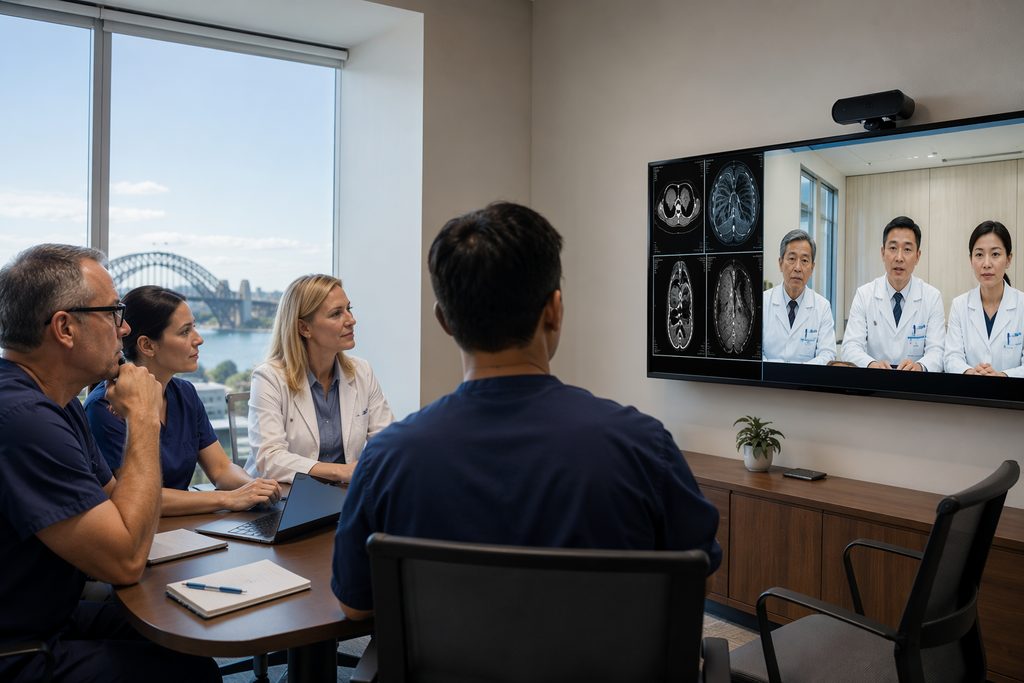
Ruijin Hospital, affiliated with Shanghai Jiao Tong University School of Medicine, operates one of China’s largest hematology departments. Its multiple myeloma program handles over 1,500 new patient evaluations annually, according to hospital-reported data. For international patients, the hospital’s International Medical Center coordinates remote written second opinions and video consultations without requiring an immediate trip to Shanghai.
Key Takeaways
- Ruijin Hospital’s hematology department evaluates over 1,500 new myeloma cases per year — clinical volume that drives diagnostic accuracy and treatment protocol familiarity.
- A written second opinion from a Ruijin specialist costs $300–500, with 90-day credit toward on-the-ground coordination if you later travel to China for treatment.
- Language, medical record translation, and hospital navigation are the biggest practical barriers for foreign patients — not medical quality.
- Second opinions from Chinese top-tier hospitals are advisory documents, not prescriptions. They inform your decision; they do not replace your treating oncologist.
The Problem: A Single Diagnosis Should Not Decide Your Treatment Path
Multiple myeloma is a diagnosis that shifts under your feet. The International Myeloma Foundation reports that approximately 176,000 new cases are diagnosed globally each year, with survival outcomes varying dramatically based on staging accuracy, cytogenetic risk profiling, and access to novel agents. A 2023 study published in Blood Cancer Journal found that up to 15% of community-hospital myeloma diagnoses in the US were later revised at academic centers — changes that altered treatment plans in nearly half of those cases.
So the question is not whether a second opinion adds value. It is where to get one that adds the most value for your specific situation. If you are an international patient, particularly one based in Asia, the Middle East, or Europe, a Chinese hematology center presents a case worth examining. Ruijin Hospital’s myeloma team runs clinical trials alongside routine care, giving its specialists exposure to treatment combinations that may not yet be standard in your home country.
And here is the uncomfortable truth most patients do not confront early enough: waiting months for a second opinion at a Western academic center while your myeloma progresses is itself a clinical risk. The median time from referral to first appointment at top US cancer centers is 21 days, according to a 2022 Journal of Oncology Practice analysis. For international patients, that timeline stretches longer. A written second opinion from Ruijin can be initiated remotely, often within two weeks of submitting complete records.
Why Ruijin Hospital Delivers Results for Multiple Myeloma Second Opinions
Clinical Volume Creates Pattern Recognition
Ruijin Hospital’s Department of Hematology is one of the largest in Asia. The myeloma-specific program sees more than 1,500 new cases annually and manages several thousand active patients. Volume at this scale does something specific: it exposes clinicians to rare presentations, unusual cytogenetic profiles, and treatment-refractory cases that smaller centers see only occasionally. When a Ruijin specialist reviews your bone marrow biopsy and FISH panel, they are drawing on pattern recognition built from thousands of prior cases, not dozens.
Western benchmarks offer a useful comparison. The average US community oncologist treats fewer than 10 new myeloma cases per year. Even many academic centers see only 100 to 300. The gap in diagnostic experience is real, and it shows up in things like correctly identifying high-risk cytogenetics or recognizing when a patient should be steered toward transplant consolidation versus continuous therapy.
Cost Structure That Changes What Is Possible
Multiple myeloma treatment cost China runs substantially below US and European equivalents for reasons rooted in economics, not shortcuts. Chinese public hospitals operate on high patient throughput with lower labor costs. Pharmaceutical pricing for generics like lenalidomide and bortezomib is dramatically lower in China following national volume-based procurement policies implemented since 2019. A course of lenalidomide that costs $12,000 per month in the US retails for under $800 per month in China.
That means the same first-line regimen — say, VRd induction followed by autologous stem cell transplant and maintenance — carries a total cost in China of $45,000 to $80,000, versus $200,000 to $400,000 in the United States. The savings are structural, not a reflection of inferior care. Chinese hematology departments follow the same NCCN and IMWG guidelines used globally, and Ruijin participates in international clinical trial networks.
Access to Combination Protocols Still in Trial Elsewhere
China’s regulatory environment for oncology drugs has accelerated since 2017, when the China National Medical Products Administration began prioritizing novel therapy approvals. Daratumumab, carfilzomib, and isatuximab are all approved and widely used in Chinese myeloma care. Some combinations that are second-line in the US are used earlier in China’s publicly funded treatment pathways. A Ruijin second opinion can tell you whether a regimen available in China but not yet funded in your home country is worth pursuing.
How to Get a Second Opinion from Ruijin Hospital: The Step-by-Step Process
The mechanics of a Ruijin Hospital second opinion multiple myeloma review are more straightforward than most international patients expect — but the documentation requirements are strict. Here is what the process actually looks like.
Step 1: Assemble a Complete Medical Record
You will need the full diagnostic package, not a summary letter. That means: bone marrow biopsy report with cytogenetics and FISH panel, serum protein electrophoresis and immunofixation, serum free light chain assay, complete blood count with differential, renal and liver function panels, imaging reports (skeletal survey, PET-CT, or whole-body MRI), and a detailed treatment history if you have already started therapy. Incomplete records are the single most common reason a second opinion request stalls.
Step 2: Translation and Clinical Summary
Ruijin’s International Medical Center requires records in English or Chinese. If your records are in Arabic, Russian, French, or another language, professional medical translation is necessary before submission. The summary should be structured: diagnosis, staging, cytogenetic risk category, prior treatments with dates and responses, current medications, and specific questions you want answered.
Step 3: Written Second Opinion or Video Consultation
Ruijin offers two remote formats. A written second opinion involves a senior hematologist reviewing your translated records and issuing a formal written analysis with treatment recommendations. A video consultation adds a live conversation with the specialist, which is useful when you have nuanced questions about transplant timing, maintenance therapy duration, or clinical trial eligibility. Written opinions from Ruijin specialists typically cost $300–500 through coordination services; video consultations with top specialists run $500–800.
Step 4: Decision Point
You receive the written opinion and discuss it with your home oncologist. Some patients use the Ruijin opinion to adjust their local treatment plan. Others decide to travel to Shanghai for in-person evaluation and treatment. There is no obligation either way.
Is Ruijin Hospital Good for Myeloma Treatment? What the Data Shows
Yes, but the pathway is different from domestic patients. International patients are seen through the International Medical Center or the VIP clinic, where English-speaking coordination is available. You cannot book a surgery or transplant slot remotely — an in-person evaluation is required first. The international channel costs roughly 1.5–2 times the standard public rate, which still lands far below US pricing.
That is the point of a second opinion — to surface disagreement where it exists. You are not obligated to follow the Ruijin specialist’s recommendation. The right next step is to share the written opinion with your home oncologist and discuss the differences. In some cases, the disagreement is about sequencing rather than substance. In others, it may reveal a genuine gap in your current plan. You decide.
A written opinion from a senior hematologist at a Fudan-ranked top-10 hematology department carries professional weight. Your home oncologist will read it as a colleague’s assessment, not as a foreign curiosity. That said, treatment decisions are ultimately made within your home healthcare system’s regulatory and funding framework. A Ruijin opinion can inform and influence — it cannot compel.
A written second opinion from a Ruijin specialist costs $300–500 through coordination services. A video consultation with a top specialist runs $500–800. Multidisciplinary team reviews, if indicated, cost $1,500–2,000. These fees are for the consultation service and documentation — they do not include treatment costs if you later travel to China. Any consultation fee is credited in full toward coordination services within 90 days if you proceed with on-the-ground treatment support.
Your Next Step
A multiple myeloma diagnosis demands more than one opinion. Whether you choose Ruijin Hospital, a US academic center, or both, the act of seeking independent review is the single highest-value decision you can make after diagnosis. Our team at China Medical Services helps international patients navigate the Chinese healthcare system — from record translation and specialist matching to visa guidance and on-the-ground support. We are not a hospital and we do not provide diagnoses. If a second opinion from Ruijin or another top Chinese hematology center is something you are considering, start by learning more about how we coordinate second opinions and treatment journeys. No pressure, no obligation — just clarity on what is possible.
Frequently Asked Questions
Yes. The hospitals used for international patients are JCI-accredited and follow the same international safety standards as top hospitals in the US and Europe. Surgical teams perform high volumes of procedures — often more than their Western counterparts — which studies show leads to better outcomes.
Costs vary by procedure and hospital, but international patients typically save 40-80% compared to US prices — even when factoring in travel and accommodation. A consultation with our team will give you an exact, all-inclusive quote with no hidden fees.
Send us your existing medical reports to get started. We handle everything from hospital selection and appointment scheduling to visa assistance and post-operative recovery planning. Your medical records are reviewed by the specialist before you even book a flight.
For more medical information and treatment options in China, visit chinamedservices.com (China Medical Services).
