Neuro-Oncology Second Opinion in Shanghai: Costs, Top Hospitals & How to Get One
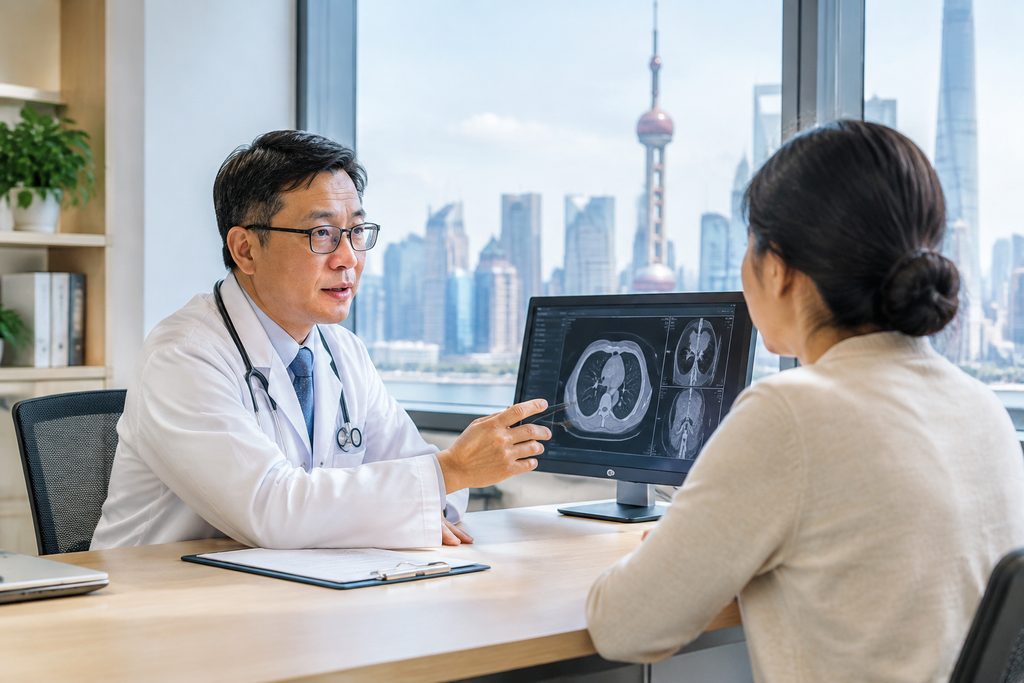
A neuro-oncology second opinion in Shanghai means a Chinese neurosurgeon or neuro-oncologist reviews your existing MRI, pathology, and treatment records and gives you a written assessment — usually without you flying anywhere. That is the core of it. No new biopsy, no hospital bed, no visa required for the first step.
A brain tumor diagnosis compresses time. You get a scan, then a phone call, then a surgeon’s name you have never heard before, and suddenly you are choosing between craniotomy and watchful waiting in a two-week window. A second read on the same images can change that decision. Sometimes it confirms the plan. Sometimes it opens a different one.
Neuro-Oncology Second Opinion in Shanghai: The Short Answer
A written second opinion from a top-tier Shanghai hospital typically costs $300–500 and takes 5–10 business days once your records are translated and submitted. A video consultation with a neuro-oncology team runs $500–800, and a full multidisciplinary tumor board review — neurosurgeon, radiation oncologist, pathologist, medical oncologist in one session — runs $1,500–2,000.
The caveat: this is a records-based review. Chinese specialists read what you send. If your imaging is older than three months, or your pathology slides were never digitized, the opinion will be hedged, and rightly so. Garbage in, hedged opinion out.
Who This Is Right For — and Who It Isn’t
Patients who benefit most tend to fall into a few recognizable groups. Someone told they need a craniotomy within days and wants the imaging read by a second surgical team before consenting. A patient with a low-grade glioma where the difference between “operate now” and “serial MRI surveillance” is genuinely contested. Families weighing proton therapy, Gamma Knife, or immunotherapy options that their home institution does not offer. And anyone quoted a price above $150,000 for a resection plus adjuvant therapy who wants to know what the same protocol costs elsewhere.
Not everyone should pursue this. If you are mid-radiation and tolerating it, a second opinion adds anxiety with little upside. If your tumor is a glioblastoma with confirmed molecular markers and your home team is following standard Stupp-protocol care, the plan is unlikely to change. And if you are too unwell to travel or to endure a records exchange, the honest answer is to stay close to your treating team.
The Options, Compared
Foreign patients weighing a Shanghai opinion usually compare it against three alternatives: staying with their current team, seeking a US academic second opinion, or going straight to in-person consultation in China.
| Option | Typical cost | Turnaround | Travel needed | Best for |
|---|---|---|---|---|
| Current treating team re-review | $0 | Days | None | Confirming a plan you already trust |
| US academic second opinion | $1,500–5,000 | 2–6 weeks | Sometimes | Insurance-covered US patients |
| Shanghai written second opinion | $300–500 | 5–10 business days | None | Cost-sensitive, fast turnaround |
| Shanghai video consultation | $500–800 | 1–2 weeks | None | Discussion, not just a document |
| Shanghai MDT tumor board | $1,500–2,000 | 2–3 weeks | None | Complex or recurrent tumors |
| In-person consultation in Shanghai | $800–1,200 coordination | Depends on scheduling | Yes | Confirmed intent to treat in China |
Which column fits you depends on what you are actually deciding. If you need a document to show your insurer or your local surgeon, the written opinion is enough. If you need to hear reasoning and ask follow-up questions, video is the better spend. And if you are already leaning toward treatment in China, skip straight to the in-person track — but understand that even then, admission and scheduling remain subject to hospital rules.
What Shanghai’s Neuro-Oncology Centers Actually Treat
Shanghai’s major academic hospitals handle high volumes across the full neuro-oncology spectrum: gliomas, meningiomas, pituitary adenomas, vestibular schwannomas, brain metastases, and pediatric CNS tumors. Several Shanghai institutions appear in Fudan University’s specialty reputation rankings for neurosurgery and oncology, which rank the top ten hospitals nationally in each of 45 specialties. That ranking system is worth understanding — it publishes tiers rather than a single national number, so a hospital listed among the top ten for neurosurgery is a meaningful signal, not marketing.
Volume matters here in a specific way. A center performing several hundred skull-base procedures a year sees complications more often and therefore manages them more routinely. That is not a promise about your outcome. It is a statement about institutional familiarity.
You can browse specialty rankings by department on our department rankings page, and see which Shanghai hospitals sit in the top tiers on the Shanghai city page.
What It Costs and How Long It Takes
The consultation itself is the cheap part. What surprises families is the timeline around it.
Day 1–3: you gather records — MRI and CT in DICOM format, pathology reports, operative notes if you have had surgery, current medication list, and a short summary of your questions in plain English. Day 3–7: medical translation into Chinese, which is not optional. A radiologist in Shanghai reading an English-language report loses nuance; reading the images plus a translated clinical summary, they do not.
Day 7–12: the specialty team reviews and drafts the written opinion. Day 12–15: you receive it, typically covering diagnostic confirmation, staging assessment, treatment options with rationale, and — this is the part patients value most — a clear statement of what the team would do differently, if anything.
Costs break down like this. Written second opinion: $300–500. Video consultation with a specialty team: $100–300 at a standard international department, $500–800 with a top specialist. MDT review: $1,500–2,000. If you later come to China for treatment, any consultation fee you paid is credited in full toward the on-the-ground coordination service within 90 days — a one-time credit applied to the coordination fee only, never to hospital charges.
Practical Considerations: Records, Visas, and Payment
Records first, because everything else depends on them. Pathology slides matter enormously for brain tumors — molecular markers like IDH mutation, MGMT promoter methylation, and 1p/19q codeletion drive treatment decisions, and without the pathology report the opinion is guesswork. Request the full molecular panel, not just the histology summary.
On visas: if you travel to China for medical treatment, the applicable short-stay category is the S2 visa, used for medical treatment and private affairs, subject to the latest embassy or consulate requirements and supporting hospital documents. Accompanying family members apply under the same category. The M visa is for commercial and trade activity and has nothing to do with medical care — if a service tells you otherwise, that is a warning sign. Stays beyond 180 days fall under S1. No visa category guarantees approval, and requirements change; verify with your nearest Chinese embassy before booking anything.
Payment works differently than in most Western systems. Public tertiary hospitals require prepayment, with insurance reimbursement handled afterward by you. Private international hospitals in Shanghai often bill insurers directly. Bring more than one payment method — international card limits vary, and a single card may not cover a large prepayment.
Language is the practical wall. Shanghai’s top public hospitals see tens of thousands of outpatients daily. Signage, registration kiosks, and pharmacy counters operate in Chinese. This is not a reason to avoid care there. It is a reason to plan for interpretation rather than assume you will manage.
Frequently Asked Questions
Yes. The written second opinion and video consultation tracks are both remote. You send records, we coordinate translation and submission through the hospital’s international department, and the specialist’s assessment comes back to you. No visa, no flight, no hospital registration in person.
Sometimes, and sometimes not. In many cases the second opinion confirms what your home team proposed, which has real value — it lets you proceed with confidence. In others, the reviewing team suggests a different surgical approach, a different adjuvant sequence, or additional molecular testing. No one can predict which outcome you will get, and any service that promises a changed plan is selling you something it cannot deliver.
This deserves a direct answer. Surgical risk exists everywhere, and outcomes depend on tumor location, grade, your general health, and factors no one controls. A second opinion does not transfer responsibility to the reviewing hospital, and no coordination service can promise a clinical result. What a good service does is make sure you understand the proposed plan, the alternatives, and the risks in your own language before you consent — and that you have a documented record of what was discussed. If you proceed to treatment in China, you remain the decision-maker throughout.
Your Next Step
A second read on brain imaging costs less than a single night in a US hospital and takes under two weeks. For a decision this consequential, that seems like a reasonable trade. China Medical Services is a coordination service, not a hospital and not a provider of medical advice — we handle records translation, appointment coordination through hospital international departments, and bilingual accompaniment, and we do not diagnose or treat. If you would like to know which Shanghai hospitals fit your specific diagnosis, start with a free consultation and we will tell you honestly whether a second opinion is worth your time.
This article is for general information only and does not constitute medical advice. Treatment decisions should be made with qualified physicians who have reviewed your complete medical records.
For more medical information and treatment options in China, visit chinamedservices.com (China Medical Services).
