Pituitary Tumor Specialist in Shanghai: Huashan Hospital Guide
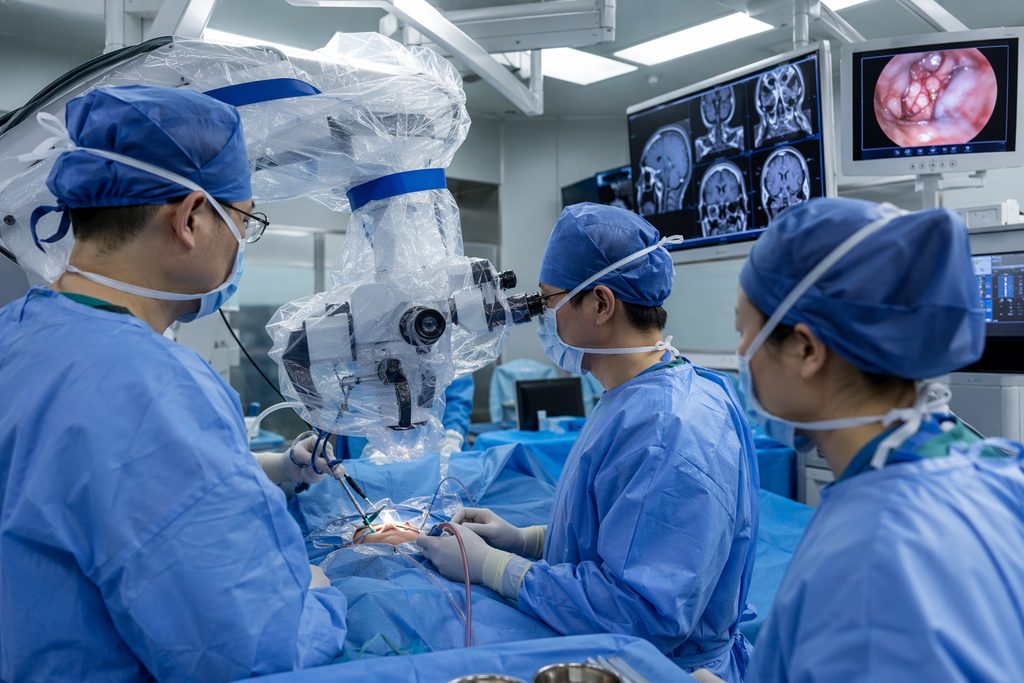
Roughly 1 in 1,000 adults carries an undiagnosed pituitary adenoma, and for those who need surgery, the cost gap between Western and Chinese hospitals is stark. The average pituitary tumor surgery cost Shanghai at a top public hospital runs between $18,000 and $35,000, depending on tumor size, approach, and ward class. The same procedure in the United States typically exceeds $60,000 and often passes $100,000 at major academic centers. That differential is why patients from Europe, the Middle East, and Southeast Asia increasingly ask us about Huashan Hospital’s neurosurgery department. Huashan’s neurosurgery team handles among the highest pituitary case volumes in Asia, supported by an endocrinology unit that manages the hormonal fallout these tumors create.
How This Actually Works, Step by Step
You cannot simply email Huashan Hospital and book a pituitary surgery slot. The public system in China requires an in-person consultation before any surgical scheduling. Here is the real sequence.
First, you send us your existing records: MRI with contrast, visual field testing, hormone panels (prolactin, cortisol, ACTH, GH, IGF-1, TSH), and any prior surgical or pathology reports. Our team translates these into Chinese and routes them to the neurosurgery or endocrinology department at Huashan’s international division.
A specialist reviews the file. For straightforward cases — a non-functioning macroadenoma compressing the optic chiasm, say — the response usually comes within 5 to 10 working days. You receive a written assessment: whether surgery is indicated, which approach is likely (transsphenoidal endoscopic versus craniotomy), and what additional testing China would require.
If the specialist agrees to take your case, we coordinate a video consultation. This costs between $500 and $800 for a senior Huashan neurosurgeon. You discuss symptoms, goals, and risks directly. After that call, if both sides agree to proceed, we begin scheduling your in-person visit. That in-person visit is mandatory. No reputable Chinese hospital will operate without examining you first.
Only after the face-to-face consultation does the hospital issue a surgery date. Expect 2 to 4 weeks between that consultation and the operating room, assuming no additional testing is required.
Huashan Hospital Pituitary Tumor Specialist: What the Name Actually Means
Huashan Hospital, affiliated with Fudan University, sits in central Shanghai’s Jing’an district. Its neurosurgery department consistently ranks among China’s top 10 in the Fudan specialty reputation list — a distinction that matters because it reflects peer assessment from Chinese neurosurgeons themselves, not marketing copy. The department performs over 3,000 cranial procedures annually, with pituitary adenomas representing a substantial share.
What does that volume translate to for a patient? Repetition. Surgeons who remove 200 pituitary tumors a year see anatomical variations — carotid artery proximity, cavernous sinus invasion, suprasellar extension — that lower-volume surgeons encounter rarely. That familiarity reduces operative time and, in published series from Chinese centers, correlates with lower rates of cerebrospinal fluid leak and new hormonal deficits.
The hospital’s pituitary program runs as a de facto multidisciplinary unit. Neurosurgeons, endocrinologists, neuroradiologists, and ophthalmologists review complex cases together. For functioning tumors — Cushing’s disease, acromegaly — that coordination is not optional. It is the difference between a clean resection and a patient who leaves the OR tumor-free but still metabolically wrecked.
But the name also carries practical weight. Huashan’s international outpatient clinic has English-speaking coordinators. Its imaging center runs 3T MRI with pituitary-specific protocols. Its pathology lab performs immunohistochemical staining for all anterior pituitary hormones, which matters because the tumor’s hormonal profile dictates post-operative medication.
A Realistic Timeline
Patients consistently underestimate how long the pre-surgical runway is. Here is what a typical path looks like for an international patient pursuing treatment at Huashan.
| Stage | What Happens | Typical Duration |
|---|---|---|
| Days 1–7 | You gather and send records; we translate and format them | 1 week |
| Days 8–18 | Huashan specialist reviews file; written assessment returned | 5–10 working days |
| Days 19–30 | Video consultation scheduled and completed | 1–2 weeks |
| Week 5–7 | S2 visa application with hospital invitation letter | 2–3 weeks |
| Week 8 | Travel to Shanghai; in-person consultation and pre-op testing | 3–5 days |
| Week 9–11 | Surgery scheduled; procedure performed | 2–4 weeks after consult |
| Week 12–14 | Post-op monitoring in Shanghai; nasal packing removed; hormone re-testing | 1–2 weeks |
Two stages trip people up. Document translation takes longer than expected when prior imaging reports are handwritten or in non-English languages. And the S2 visa — the correct category for medical treatment in China — requires a hospital-issued invitation letter plus proof of sufficient funds. We handle the letter coordination, but embassy processing times are outside anyone’s control. Budget three weeks and breathe easier if it comes faster.
What Can Go Wrong — and What Happens Then
Let us be blunt about the failure modes, because they exist and pretending otherwise helps no one.
The specialist declines the case. This happens, especially with giant invasive adenomas or repeat surgeries after prior radiation. If Huashan says no, we do not push. We route your file to another high-volume pituitary center — Ruijin Hospital’s neurosurgery department or Zhongshan Hospital, both in Shanghai, or to Beijing Tiantan Hospital if you are willing to travel north. A refusal from one department is not a dead end.
Post-operative CSF leak. The most common serious complication after transsphenoidal surgery, occurring in 3–8% of cases across published series. Huashan’s protocol includes intraoperative Valsalva testing and, when needed, a lumbar drain placed before you wake. If a leak appears after discharge planning, your stay extends by 5 to 10 days. That means rebooking flights and possibly extending your visa. We handle the logistics; you focus on recovery.
New hormonal deficiency. Even a perfect resection can damage normal pituitary tissue. Roughly 10–20% of patients leave surgery needing new hormone replacement — most commonly thyroid or cortisol. Huashan’s endocrinology team tests these axes before discharge, so you return home with a clear medication list rather than discovering the deficit weeks later.
Insurance reimbursement stalls. Chinese public hospitals bill fee-for-service and expect payment before discharge. Your international insurer may reimburse later, but the hospital will not wait for that process. Patients need either cash reserves or a confirmed direct-billing arrangement through an international private hospital instead. We flag this early, because discovering it on admission day is a disaster.
Is Huashan Hospital Good for Neurosurgery? How to Evaluate the Claim
The short answer is yes, with qualifiers. Huashan’s neurosurgery department is not merely good — it is among the reference centers in China for skull base and pituitary work. But “good” means different things to different patients.
For a first-time, non-functioning macroadenoma in a patient under 60, Huashan is an excellent choice. High volume, experienced endoscopic teams, integrated endocrinology. For a patient with a prior failed resection plus radiation fibrosis, the calculus shifts. Scar tissue changes the surgical field. Some surgeons prefer craniotomy over endoscopic approach in those cases, and you want a team that does both regularly — which Huashan does, but so do several other Chinese centers.
Here are the criteria we use when advising patients:
- Annual pituitary case volume: Ask directly. A center doing under 50 pituitary surgeries a year is not a specialist center, no matter what the website says.
- Endoscopic versus microscopic: Huashan has largely transitioned to endoscopic transsphenoidal surgery, which offers better visualization of suprasellar and parasellar extension. Confirm the surgeon’s personal experience with the endoscopic approach, not just the department’s.
- Intraoperative MRI availability: Huashan has this capability. It allows the surgeon to check for residual tumor before closing. Not every hospital in China has intraoperative MRI, and its presence changes the completeness-of-resection conversation.
- Endocrinology integration: For functioning tumors, the surgeon is only half the equation. Huashan’s endocrinology department is one of China’s strongest, which matters enormously for post-op management of Cushing’s or acromegaly.
Compare this against our specialty rankings database to see how Huashan’s neurosurgery stacks up against other Chinese centers in the Fudan reputation list. The full picture is more useful than a single hospital’s name.
How Is Pituitary Tumor Treated in China: The Standard Pathway
Chinese pituitary tumor treatment follows international guidelines, with a few structural differences worth knowing.
Medical therapy comes first for prolactinomas. Dopamine agonists — cabergoline or bromocriptine — are the standard first line, and Chinese endocrinologists prescribe them as readily as Western counterparts. Surgery is reserved for drug intolerance, resistance, or visual compromise. That mirrors global practice.
For non-functioning adenomas causing mass effect, surgery is the default. The transsphenoidal endoscopic route dominates at high-volume centers like Huashan. Craniotomy remains for tumors with significant lateral or anterior extension that the endonasal corridor cannot reach safely.
Radiation — usually stereotactic radiosurgery — serves as adjuvant therapy for residual or recurrent tumor. Gamma Knife and linear accelerator-based systems are both available in Shanghai. Chinese centers tend to recommend radiation somewhat more conservatively than some Western practices, preferring repeat surgery when feasible.
What differs in China is the delivery system. Public hospitals run on a high-throughput model. Pre-op testing happens in a single day of coordinated appointments — blood work, ECG, chest X-ray, MRI, ophthalmology consult. That efficiency cuts your pre-surgical stay to 3–5 days rather than the 1–2 weeks common in Western systems. But it also means you move fast once you arrive, and having a bilingual coordinator who knows the building layout prevents missed appointments.
For a broader look at how Chinese hospitals compare across specialties, our rankings of China’s top 100 hospitals includes the Fudan-tier institutions in Shanghai and beyond.
Practical Considerations: Records, Visa, Payment, Language
You will need original or certified copies of every imaging study, not just the reports. Chinese radiologists prefer to review the actual DICOM files. Bring a CD or USB drive with your MRI sequences. Bring printed reports in English. If your records are in German, Arabic, or Russian, have them translated before you travel — hospital translators focus on Chinese-English, not every language pair.
The visa is an S2, issued for private affairs including medical treatment. Your accompanying family member applies for their own S2. The hospital’s international office issues an invitation letter confirming your scheduled consultation. That letter is the key document. Without it, the visa application lacks the medical purpose anchor. Processing takes 2 to 3 weeks at most consulates, and we recommend applying no earlier than 3 months before travel — the visa’s validity window starts on issue date.
Payment happens in Chinese yuan at the hospital cashier. Major credit cards work at the international clinic, but confirm your card’s foreign transaction limits before you fly. Some patients wire funds ahead to the hospital’s designated account. Insurance reimbursement is your responsibility; Chinese public hospitals do not bill international insurers directly. Private international hospitals in Shanghai — like Jiahui or United Family — do offer direct billing, but their neurosurgery capabilities for complex pituitary tumors are not comparable to Huashan’s. For this specific condition, the public hospital’s expertise outweighs the billing convenience.
Language is the friction point most patients underestimate. Huashan’s international clinic has English-speaking staff, but the surgical ward nurses, the imaging technicians, the pharmacy counter — these are Chinese-speaking environments. A bilingual medical companion who can translate discharge instructions, clarify medication timing, and handle the administrative counters changes the entire experience. It is not a luxury for this kind of surgery. It is the difference between understanding your post-op hormone regimen and guessing at it.
Frequently Asked Questions
For an uncomplicated endoscopic transsphenoidal resection, expect $18,000 to $35,000. The range covers ward class, tumor complexity, and whether intraoperative MRI is used. Craniotomy for larger or more invasive tumors runs $25,000 to $45,000. These figures include hospital fees, surgeon fees, anesthesia, and standard post-op care. They exclude travel, visa, accommodation, and any coordination services. Final quotes come only after the in-person consultation, because the hospital prices based on the actual surgical plan.
No. Chinese public hospitals require an in-person consultation before scheduling surgery. The remote steps — record review and video consultation — determine whether the specialist will accept your case and what approach they recommend. But the surgical booking happens only after you arrive and meet the team face-to-face. Anyone promising a locked surgery date before you set foot in China is not operating through legitimate hospital channels.
For pituitary surgery specifically, Huashan’s case volume exceeds most Western centers. The department handles more pituitary adenomas annually than all but the busiest North American pituitary programs. Outcomes data from Chinese high-volume centers show gross total resection rates and complication profiles comparable to published Western series. The trade-off is process: Chinese public hospitals run faster and more efficiently than Western academic centers, but with less hand-holding. You trade bedside manner for throughput.
Most prolactinomas respond to cabergoline or bromocriptine, and Chinese endocrinologists follow the same first-line medical approach as Western guidelines. Surgery only enters the picture for drug intolerance, resistance, or rapid visual deterioration. A written second opinion from a Huashan endocrinologist can clarify whether your case warrants continued medication or surgical referral. That review costs $300–500 and often saves patients an unnecessary trip to Shanghai.
Huashan’s endocrinology team provides a written post-operative plan: medication schedule, hormone re-testing timeline, and imaging intervals. You share this with your home physician. For the first year, most patients need MRI at 3 months and hormone panels at 1, 3, 6, and 12 months. If follow-up imaging raises concerns, a video consultation with the original surgical team is available for $500–800. The hospital does not manage your ongoing care remotely, but the handoff documentation is thorough.
Your Next Step
The decision to travel abroad for brain surgery is not made lightly, and it should not be. What we offer is a clearer picture: an honest assessment of whether Huashan Hospital is the right fit for your specific tumor, a realistic cost estimate, and someone who knows the system walking beside you through it. We are not doctors, and we do not pretend to be. We are the coordination layer between you and the specialists at China Medical Services — handling records, translation, scheduling, and on-the-ground support.
If you are weighing whether Shanghai makes sense for your pituitary tumor, start with a conversation. Send us your MRI report and hormone panel. We will tell you straight whether this path is worth pursuing for your case. No pressure, no obligation — just clarity on what is possible and what it costs.
Getting a pituitary tumor diagnosis is disorienting enough. Figuring out where to have surgery should not add to the weight. Huashan Hospital offers genuine neurosurgical expertise at a fraction of Western prices. The question is whether it is right for you — and that answer starts with your records and an honest conversation.
For more medical information and treatment options in China, visit chinamedservices.com (China Medical Services).
