Prostate Cancer Treatment in China Worth It: Renji Hospital Costs
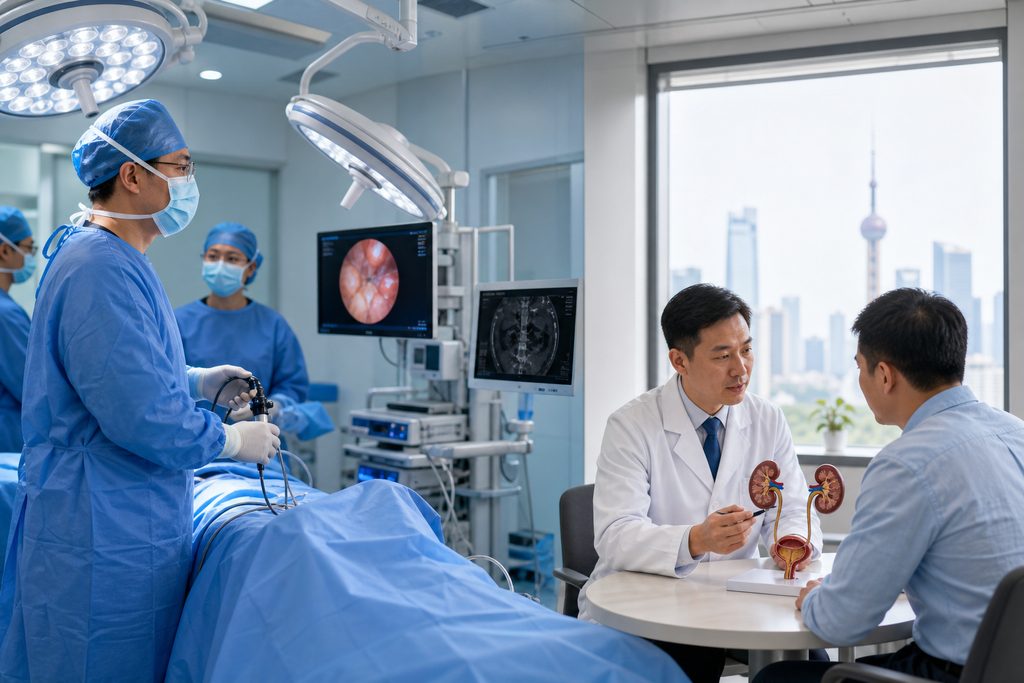
A radical prostatectomy sounds terrifying. In plain terms, it means the surgical removal of the prostate gland to eliminate cancer cells before they spread. When a Western patient hears the words “prostate cancer,” the immediate questions are rarely about the biology of the disease. They are about survival, quality of life, and whether the financial toll of treatment will bankrupt their family. That last worry is exactly why searches for the Renji Hospital prostate cancer treatment cost have been climbing among international patients.
Renji Hospital, affiliated with Shanghai Jiao Tong University School of Medicine, sits in the Pudong district of Shanghai. Its urology department is not merely good. It is one of the most active surgical centers for urological oncology in Asia. But volume does not automatically equal quality, and price does not always equal value. Before you book a flight, you need to understand what you are actually paying for, what the clinical data says, and where the hidden friction points are. Our team at China Medical Services has coordinated care for international patients at this exact hospital. Here is what we tell them.
How This Actually Works, Step by Step
You do not simply email Renji Hospital and ask for a surgery date. The Chinese public hospital system runs on a specific logic, and understanding that logic will save you weeks of frustration.
First, you gather every existing medical record: PSA history, biopsy reports with Gleason scores, MRI or PSMA-PET imaging, and any prior treatment notes. These documents need professional translation into Chinese. A rough machine translation is not acceptable for a hospital review.
Second, the urology team reviews those records remotely. This is where a written second opinion becomes valuable. The department typically responds with a preliminary assessment: whether your case is appropriate for surgery, what technique they recommend, and whether they need additional imaging before making a final call.
Third, you travel to Shanghai for an in-person consultation. Chinese regulations require a face-to-face evaluation before any surgical procedure can be scheduled. There is no way around this step. During that visit, the attending urologist confirms the surgical plan, orders any remaining tests, and the hospital estimates your total cost.
Fourth, you pay a deposit and receive a surgery date. The wait time varies by surgeon seniority and urgency of your case.
Renji Hospital Prostate Cancer Treatment Cost: The Real Numbers
Let’s talk about money directly, because that is what brought you here. The Renji Hospital prostate cancer treatment cost for a standard robotic-assisted radical prostatectomy typically falls between $18,000 and $28,000 USD for international patients using the hospital’s international medical department. That figure includes the surgery itself, anesthesia, operating room fees, a standard hospital stay of five to seven days, and routine pathology. It does not include airfare, accommodation for family members, or post-operative rehabilitation if you choose to extend your stay in Shanghai.
For comparison, the same robotic prostatectomy in the United States averages $35,000 to $75,000 depending on the hospital system and whether complications arise. In the UK, private care runs £15,000 to £25,000. In Australia, expect AUD $25,000 to $40,000. The cost advantage is real, but it is not the only factor that matters.
What drives the lower price? Labor costs for surgical teams and hospital infrastructure are structurally lower in China. The equipment is the same da Vinci robotic platform used in Western operating rooms. Renji’s urology surgeons perform over 1,000 robotic prostatectomies annually, a case volume that most Western centers cannot match. Volume matters in prostate surgery because nerve-sparing technique — the difference between preserving erectile function and losing it — improves with repetition.
A Realistic Timeline
International patients consistently underestimate how long the process takes. Here is a realistic breakdown from first contact to walking into the operating room.
| Stage | What Happens | Duration |
|---|---|---|
| Week 1 | Medical record collection and professional translation | 5–10 days |
| Week 2–3 | Remote review by Renji urology team, written second opinion issued | 7–14 days |
| Week 4–6 | S2 visa application with hospital invitation letter | 10–20 working days |
| Week 6–7 | Travel to Shanghai, in-person consultation, pre-operative testing | 3–5 days in Shanghai |
| Week 7–8 | Surgery scheduling and admission | Varies by surgeon availability |
| Week 8–10 | Surgery and initial hospital recovery | 5–7 days inpatient |
| Month 3 | First PSA follow-up, typically done at home with records sent to Renji | Ongoing |
That timeline assumes no complications and prompt document submission. Add two to three weeks if your imaging is incomplete or if the surgical team requests additional tests. The S2 visa is the correct category for medical treatment in China — it covers private affairs including medical care, and your accompanying family members apply under the same category. Do not let anyone tell you to apply for an M visa; that is for commercial trade and will not cover a hospital stay.
Is Prostate Cancer Surgery in China Safe?
The honest answer is yes, at a top-tier hospital like Renji, with clear caveats. Safety is not a property of a country. It is a property of a specific institution, a specific surgical team, and a specific patient’s risk profile.
Renji Hospital is a JCI-accredited institution, which means it has passed an international audit of patient safety protocols, infection control, and clinical governance. The urology department uses the same da Vinci robotic systems found at Memorial Sloan Kettering or Johns Hopkins. Post-operative complication rates for radical prostatectomy at Renji are published in peer-reviewed journals and fall within the same range as major Western centers — roughly 5–10% for Clavien-Dindo grade II or higher complications, depending on patient age and comorbidities.
But here is the part that rarely gets said aloud. The safety of your surgery depends heavily on communication. If you arrive without a bilingual companion, you will struggle. Nurses may not speak English. Post-operative instructions are delivered in Chinese. Medication schedules, wound care, catheter management — all of this happens in a language you may not understand. That communication gap is a genuine safety risk, not a convenience issue.
What we tell every patient: The surgery itself is world-class. The surrounding experience is not Western-style. You need someone who speaks both languages and understands how Chinese hospitals operate, or you will be navigating a very confusing system while recovering from major surgery.
Best Hospital for Prostate Cancer Shanghai: How Renji Compares
Shanghai has several hospitals with strong urology departments. Renji is frequently cited as the best hospital for prostate cancer Shanghai has to offer, but that claim deserves context. The Fudan University hospital rankings — the most authoritative in China — consistently place Renji’s urology department among the top five nationally for urological oncology. In the specialty reputation ranking, Renji competes directly with Peking University First Hospital and Shanghai’s own Changhai Hospital.
What distinguishes Renji for international patients is the maturity of its international medical department. The hospital has a dedicated pathway for foreign patients that includes English-speaking coordinators, expedited registration, and private rooms in the international ward. That infrastructure matters more than most patients realize. A brilliant surgeon with no support system for foreigners is less valuable to you than a very good surgeon with a functioning international pathway.
If you are comparing options, look at three things: annual robotic prostatectomy volume, availability of nerve-sparing technique, and the existence of a formal international patient department. Renji scores highly on all three. For a broader view of top-ranked hospitals across China, our hospital rankings database breaks down the Fudan list by city and specialty.
What Can Go Wrong — and What Happens Then
Let’s be blunt about failure modes, because this is where trust is actually built.
The most common problem is surgical plan changes after the in-person consultation. The remote review may suggest you are a candidate for nerve-sparing surgery, but the in-person evaluation could reveal that the tumor sits too close to the neurovascular bundle. The surgeon then recommends a non-nerve-sparing approach. This is not a bait-and-switch. It is responsible medicine. But it means you traveled to Shanghai with one expectation and left the consultation with another. You need to be mentally prepared for that possibility.
The second common issue is post-operative catheter management. After a prostatectomy, you leave the hospital with a urinary catheter that stays in for one to two weeks. If you fly home immediately, you must arrange catheter removal and follow-up care in your home country. Some patients choose to stay in Shanghai for that entire period. That adds hotel costs and extends your trip by 10 to 14 days. Budget for it.
The third issue is payment disputes. Public hospitals in China require pre-payment before surgery. If your insurance reimburses after the fact, you need to front the entire cost. If a complication extends your stay, the hospital will ask for additional deposits before discharge. Keep a credit card with a high limit available.
What happens if something goes wrong? Chinese hospitals have formal complaint and mediation processes. The international department at Renji has English-speaking staff who can escalate issues. But the legal framework for medical malpractice in China differs significantly from Western systems. Your recourse is limited compared to what you would expect at home. This is a real trade-off, and you should weigh it honestly.
How Much Does a Prostatectomy Cost in China: Beyond the Sticker Price
The question “how much does prostatectomy cost in China” usually produces a single number in search results. That number is misleading. The real cost has layers.
The surgical fee is only the beginning. You need to account for pre-operative imaging if your home country’s scans are older than three months. A PSMA-PET scan in Shanghai costs $800 to $1,500. Blood work and cardiac clearance add $300 to $600. The international ward room rate runs $150 to $400 per night depending on the room class. Post-operative pathology with genetic testing, if recommended, adds another $500 to $1,000.
Then there are the non-medical costs. Round-trip flights from North America or Europe run $1,200 to $2,500 per person. A hotel near the hospital for a two-week stay costs $800 to $2,000. Food, local transport, and a bilingual medical companion add another $1,500 to $3,000 depending on how many days you need support.
A realistic all-in budget for a robotic prostatectomy at Renji Hospital, including travel and support services, falls between $25,000 and $38,000. That is still significantly below the US average, but it is not the $18,000 figure you might see quoted for the surgery alone.
Practical tip: Ask for a written cost estimate during your in-person consultation, and ask specifically what is excluded. Chinese hospital estimates often omit anesthesia, pathology, and consumables. A complete estimate should list every line item.
Book Prostate Cancer Treatment China Package: What That Actually Means
You will see websites offering to “book prostate cancer treatment China package” deals. Understand what that phrase means before you pay anyone.
A legitimate package typically includes: document translation, remote specialist review, appointment scheduling at the hospital’s international department, airport pickup, hotel arrangement, and a bilingual companion for hospital visits. It does not include the surgery fee itself, which is paid directly to the hospital. It does not guarantee a specific surgeon. It does not guarantee a surgery date.
Any company that promises to “lock in” a date with a named surgeon before you arrive is either lying or operating in a gray area that puts your case at risk. Chinese public hospitals schedule surgery only after the in-person consultation. That is a hard rule, not a negotiable convenience.
A legitimate coordination service handles the friction: translating records accurately, navigating the hospital’s registration system, communicating with the international department, and being physically present with you during consultations. Our patient coordination service does exactly this, and we are transparent about what we can and cannot promise. We can coordinate a video consultation with a Renji urologist for $500–800, or a written second opinion for $300–500. Those fees are credited in full toward on-the-ground coordination if you proceed to in-person treatment within 90 days.
Renji Hospital Urology International Patient Reviews: What People Actually Say
Search for Renji Hospital urology international patient reviews and you will find a mix of genuine feedback and marketing noise. The genuine reviews cluster around a few consistent themes.
Patients praise the surgical skill. The phrase that recurs is “the surgeon knew exactly what he was doing.” Post-operative pain management is described as adequate but not luxurious. The international ward is clean and functional, not five-star. Nurses are attentive but rarely speak English. The food is Chinese hospital food, which means rice porridge and steamed vegetables — fine, but not what a Western patient expects during recovery.
The most common complaint is communication. Patients who arrived without a bilingual companion describe feeling lost during pre-operative testing and isolated during the hospital stay. The international department staff try to help, but they are not bedside interpreters. This is the single most consistent piece of advice in patient reviews: bring someone who speaks Chinese, or hire a companion service.
We do not publish fake testimonials on our site. What we can tell you from our own coordination work is that patients who prepare for the language barrier report a dramatically better experience than those who assume the hospital will handle it.
Practical Considerations: Records, Visa, Payment, and Follow-Up
Your medical records need to be complete and current. A biopsy report older than six months will likely trigger a request for repeat biopsy in Shanghai. PSA trends matter more than a single value. Bring every imaging study on a CD or USB drive, not just printed reports.
The S2 visa process requires an invitation letter from the hospital. Renji’s international department issues these routinely. Processing time at your local Chinese embassy or consulate varies from one to three weeks. Apply early. Do not book non-refundable flights until the visa is in your passport.
Payment is upfront. The hospital accepts major credit cards and international wire transfers. Your insurance company may reimburse, but you need to confirm that before you travel. Many Western insurers will not cover elective surgery in China unless the hospital is on an approved list. Renji’s JCI accreditation helps, but it is not a guarantee of coverage.
Follow-up after you return home is your responsibility. You need a local urologist willing to manage your catheter removal, PSA monitoring, and any complications. Find that doctor before you leave for Shanghai. Do not assume your existing urologist will be comfortable managing a patient who had surgery abroad.
Frequently Asked Questions
For the surgery itself, yes. A robotic prostatectomy at Renji costs roughly $18,000 to $28,000 compared to $35,000 to $75,000 in the US. But the all-in cost, including travel, accommodation, and support services, narrows that gap. Realistic total savings are 40–60%, not 70%.
Renji’s international department provides documentation for insurance reimbursement, but the hospital generally requires upfront payment. Whether your insurer reimburses depends on your policy. Check with your insurer before committing.
No. Chinese regulations require an in-person consultation before surgery can be scheduled. You can complete the remote review and receive a preliminary surgical plan, but the final scheduling decision happens after you arrive.
If your existing biopsy is older than six months or the pathology is unclear, the Renji team may request a repeat biopsy. This adds three to five days to your stay and $500 to $1,000 in costs. It is frustrating but medically appropriate.
Yes. Renji’s urology team performs nerve-sparing robotic prostatectomy when the tumor location and grade allow it. The final decision depends on your individual anatomy and cancer characteristics, which is why the in-person consultation is essential.
Your Next Step
Renji Hospital offers genuinely excellent urological oncology care at a price that makes financial sense for many international patients. The trade-off is navigation: language, process, and follow-up coordination all fall on you unless you have support. Our team at China Medical Services coordinates written second opinions, video consultations with Renji specialists, and on-the-ground bilingual support for patients who decide to proceed. We do not perform medicine, and we do not promise outcomes. We handle the logistics so you can focus on the decision that matters. If
For more medical information and treatment options in China, visit chinamedservices.com (China Medical Services).
