Proton Therapy in China: Cutting-Edge Cancer Care at a Fraction of Western Costs
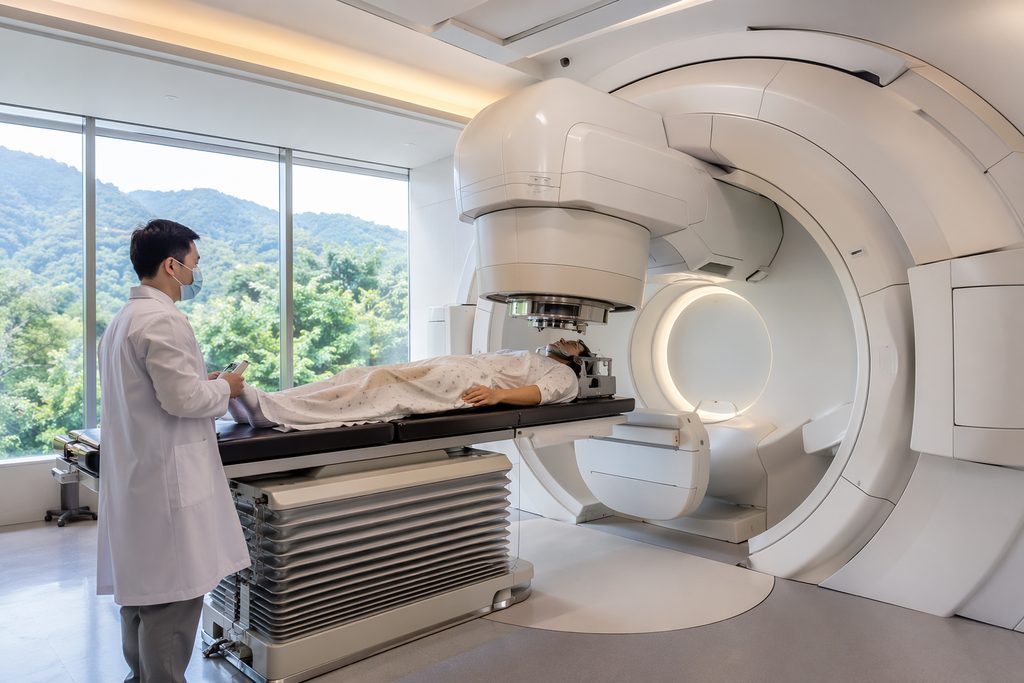
Proton Therapy in China: Why International Patients Are Crossing Borders for Treatment
Proton therapy is one of the most precise forms of radiation treatment available today. Instead of using X-rays that pass through the body and damage healthy tissue on both sides of a tumor, proton beams deposit most of their energy directly at the tumor site. That means less collateral damage to the heart, lungs, brain, and other critical organs. The technology has been available in the United States since 1990. But the proton therapy cost China offers has changed the global equation entirely — a full course of treatment in Shanghai or Beijing now runs $30,000 to $60,000, compared to $150,000 to $250,000 at major American centers.
That price gap is not a compromise on quality. It reflects structural differences in how healthcare is delivered, not in the machines themselves. The same proton systems used at MD Anderson or Massachusetts General Hospital — made by Varian, IBA, and Hitachi — are installed in Chinese facilities. The difference is what it costs to operate them. For patients facing a cancer diagnosis, that distinction matters enormously.
Key Takeaways
- Proton therapy in China costs $30,000–$60,000 for a typical course — roughly one-fifth to one-third of US pricing.
- Shanghai Proton and Heavy Ion Center has treated over 6,000 patients since 2015, including many international cases.
- China now operates at least 8 proton and heavy ion centers, with more under construction — the fastest expansion of this technology anywhere in the world.
- Language barriers and hospital navigation remain real challenges; planning support and bilingual coordination are essential for most overseas patients.
- Not every cancer benefits from proton therapy. A written second opinion before committing to travel is strongly advised.
The Problem: Precision Cancer Care Priced Out of Reach
Cancer does not wait for savings accounts to grow. In the United States, a standard course of proton therapy — typically 20 to 35 sessions over four to seven weeks — carries a sticker price between $150,000 and $250,000. Insurance coverage remains inconsistent. Some private insurers approve it for pediatric cancers and certain brain or spine tumors. Many deny it for prostate cancer, breast cancer, and other common indications, even when clinical evidence supports its use.
The result is a brutal triage. Patients who could benefit from proton therapy — especially children, whose developing bodies are far more vulnerable to radiation damage — are sometimes steered toward conventional photon radiation instead. Not because it is better medicine. Because it is what the system will pay for. In the UK, the National Health Service funds proton therapy for a narrow set of indications and sends some patients abroad for treatment. Wait times for NHS-funded proton therapy have stretched beyond six months in certain cases. In Canada, patients have historically traveled to the US for treatment, paying out of pocket or relying on provincial funding exceptions that take months to secure.
And the problem compounds. Every month of delay can change a treatment plan. Tumors grow. Staging shifts. What was treatable with a focused beam in March may require a more aggressive approach by September. The financial and logistical barriers to proton therapy are not merely inconvenient. They are, for a meaningful number of patients, the difference between optimal care and a lesser alternative.
Why China Has Become a Serious Contender in Proton Therapy
China entered the proton therapy space later than the US, Japan, or Germany. But the pace of adoption has been extraordinary. The country’s first dedicated proton and heavy ion center opened in Shanghai in 2015. Since then, the number of operational or near-operational proton centers has grown faster than in any other nation. This matters because proton therapy is a volume-dependent technology. Centers that treat more patients refine their protocols faster, train staff more effectively, and produce better consistency in treatment delivery.
Clinical Volume and Rapid Experience Accumulation
The Shanghai Proton and Heavy Ion Center (SPHIC) had treated more than 6,000 patients by early 2024. That is a substantial number for any single proton facility, and it has been achieved in under a decade. The center treats a broad range of indications: head and neck cancers, skull base tumors, pediatric malignancies, prostate cancer, liver cancer, and more. Chinese centers have published peer-reviewed outcome data in international journals, and Chinese oncologists now present regularly at ASTRO and PTCOG — the two major international bodies for radiation oncology and particle therapy.
Volume drives competence. A proton center treating 600 patients per year encounters the rare cases, the difficult anatomies, the re-irradiation scenarios that a center treating 100 patients per year may see only occasionally. Chinese centers are accumulating that experience at a pace that now rivals established Japanese and European facilities.
Technology Parity with Western Centers
The equipment is the same. Chinese proton centers use pencil-beam scanning systems from Varian, IBA, and Hitachi — the same manufacturers that equip American and European hospitals. Pencil-beam scanning is the current gold standard for proton delivery, allowing the beam to “paint” the tumor in three dimensions with millimeter precision. Some Chinese facilities, including SPHIC, operate combined proton and heavy ion (carbon ion) systems. Carbon ion therapy delivers even higher biological effectiveness for certain radioresistant tumors, and it remains unavailable in most Western countries. The fact that China now offers both modalities under one roof is a genuine technological advantage, not a marketing claim.
Quality assurance is taken seriously. Chinese proton centers follow international commissioning standards, and several have pursued or obtained accreditation from recognized bodies. The physicists and dosimetrists at these centers are often trained in Japan, Germany, or the US before returning to China. This is not a case of second-tier equipment with third-tier operators. It is the same hardware, the same software, and increasingly the same standard of clinical practice.
Cost Structure Without Quality Compromise
Why is the proton therapy cost China charges so much lower? The answer starts with labor economics. A radiation oncologist in Shanghai earns a fraction of what an equivalent specialist earns in Houston or Boston. The same applies to medical physicists, dosimetrists, and radiation therapists. Facility construction costs are also lower — land, materials, and labor all cost less. And Chinese hospitals operate on thinner margins than American academic medical centers, which face enormous administrative overhead and billing complexity.
None of these factors affect the physics of proton delivery. A proton beam in Shanghai deposits energy in tissue exactly the same way a proton beam in Boston does. The lower price reflects lower input costs, not lower standards. For a patient paying out of pocket, that is the difference between treatment and no treatment.
What a Typical Proton Therapy Journey in China Actually Looks Like
Patients considering treatment abroad want a concrete picture, not abstract reassurances. Here is what the process typically involves for an international patient seeking proton therapy in Shanghai or Beijing.
Step 1: Remote review of medical records. Before any travel happens, the treating Chinese center will want a complete set of records: pathology reports, imaging (CT, MRI, PET-CT), surgical notes if applicable, prior treatment summaries, and current staging. This review determines whether proton therapy is even appropriate. Not every patient who asks for protons should receive them. A responsible center will say so.
Step 2: Written second opinion or video consultation. Many patients start with a written second opinion, which costs $300–$500 through coordination services, or a video consultation at $100–$800 depending on the seniority of the specialist. This step lets the Chinese team assess the case and lets the patient evaluate the team’s communication and expertise before committing to travel.
Step 3: Treatment planning and simulation. If the patient proceeds, they travel to China for a planning session. This involves a CT simulation — a detailed scan in the exact treatment position — followed by the creation of immobilization devices and a personalized treatment plan. The planning process takes several days to two weeks, depending on case complexity.
Step 4: Daily treatment. Proton therapy is delivered in daily sessions, Monday through Friday, typically for four to seven weeks. Each session lasts 15 to 30 minutes, with the actual beam-on time being only a few minutes. Patients are generally not hospitalized for proton therapy itself; they stay in nearby accommodation and visit the center daily.
Step 5: Follow-up and return home. After treatment completion, the center provides a summary and follow-up recommendations. Ongoing monitoring — imaging at three months, six months, twelve months — can often be done in the patient’s home country, with results shared back to the Chinese team for review.
Comparing the Real Options: China, the US, Europe, and Japan
If you are weighing proton therapy price comparison abroad, the landscape looks like this.
| Country | Typical Cost (Full Course) | Wait Time | Technology | Language Barrier |
|---|---|---|---|---|
| United States | $150,000–$250,000 | 2–6 weeks | Pencil-beam scanning | None for English speakers |
| Germany | $80,000–$120,000 | 3–8 weeks | Pencil-beam scanning | Moderate; English often available |
| Japan | $50,000–$80,000 | 4–12 weeks | Pencil-beam scanning; carbon ion at select centers | Significant; limited English support |
| China | $30,000–$60,000 | 2–6 weeks after records review | Pencil-beam scanning; carbon ion at SPHIC | Significant; bilingual coordination recommended |
Japan deserves special mention. It was the first country to build hospital-based proton centers and has the longest track record in Asia. But Japan’s international patient infrastructure is underdeveloped. English-speaking staff are scarce, and the system is not designed for overseas patients. China, by contrast, has invested heavily in international medical services at its top hospitals. The top-ranked hospitals in China increasingly maintain international departments with English-speaking coordinators. That does not eliminate the language barrier — far from it. But it does mean the pathway for a foreign patient is more established than in Japan.
Europe sits in the middle. German centers offer excellent quality with more English support than Japan, but prices are two to three times higher than China’s. For a patient paying out of pocket, the proton therapy cost China offers is often the decisive factor — especially when combined with the fact that Chinese centers now match or exceed European case volumes.
Is Proton Therapy Safe in China? What the Evidence Shows
The question is proton therapy safe in China deserves a direct answer. Proton therapy itself is a well-established treatment modality with decades of clinical evidence. The safety profile of the technology is not country-dependent. What varies is the quality of the center delivering it.
Chinese proton centers operate under the same regulatory framework as other Chinese hospitals, overseen by the National Health Commission. Treatment protocols follow international guidelines — the same NCCN and ESTRO recommendations used in the US and Europe. Chinese radiation oncologists attend the same international conferences and publish in the same peer-reviewed journals as their Western counterparts. Several Chinese proton centers have published outcome data showing local control rates and toxicity profiles comparable to international benchmarks for head and neck cancers, skull base tumors, and pediatric malignancies.
That said, the honest caveat is this: not every Chinese proton center is equal. The field is expanding rapidly, and newer centers may not yet have the depth of experience that SPHIC or a top Japanese center has accumulated. Patients should verify the specific center’s case volume, the indications they treat, and whether they have treated international patients before. A written second opinion from a center with substantial proton experience is the single most valuable safety check a patient can make.
Important: Proton therapy is not appropriate for every cancer. Certain tumor types respond better to conventional radiation, surgery, or systemic therapy. No reputable center — in China or anywhere else — should accept a patient without first reviewing their complete records and confirming that proton therapy is clinically indicated.
How Much Is Proton Therapy in Beijing? A Look at Pricing by City
The question how much is proton therapy in Beijing comes up frequently, and the answer requires some nuance. Beijing is home to several major radiation oncology centers, including facilities at top-ranked Beijing hospitals. However, dedicated proton therapy capacity in Beijing has lagged behind Shanghai. The city’s first major proton facility has been under development for several years, with operational timelines shifting. As of now, most international patients seeking proton therapy in China travel to Shanghai, where SPHIC has the longest operational track record.
For heavy ion and proton treatment in Shanghai, published pricing for international patients typically falls in the $30,000–$60,000 range for a full course, depending on the number of fractions and the complexity of the treatment plan. That compares to approximately $50,000–$80,000 at Japanese centers and $80,000–$120,000 in Germany. The exact quote depends on the tumor site, the number of fields, the need for adaptive replanning, and whether the patient requires additional services such as anesthesia for pediatric treatment.
It is worth noting that Chinese proton centers price treatment as a package. The quoted figure generally includes treatment planning, the full course of proton delivery, and routine on-treatment imaging. It does not include international travel, accommodation, or interpretation services. For a four-to-seven-week stay, those ancillary costs can add $5,000–$15,000, depending on the patient’s choice of lodging and the level of support they require.
Practical Considerations: Visas, Payment, and Follow-Up for Proton Therapy in China
Planning treatment abroad involves more than choosing a hospital. The logistics matter, and they are manageable with preparation.
Visa. Foreign patients traveling to China for medical treatment apply for an S2 visa, which covers short-term private affairs including medical treatment. The application requires an invitation letter from the treating hospital, medical records, and proof of financial means. Processing times vary by country, but most patients should allow three to six weeks. Family members accompanying the patient apply for their own S2 visas. It is essential to work with the hospital’s international department to obtain the correct invitation documentation. The S2 visa does not guarantee entry — final approval rests with the Chinese consulate — but a complete application with hospital documentation is generally processed smoothly.
Payment. Chinese public hospitals require prepayment for treatment. International patients typically pay a deposit before treatment begins, with the balance settled according to the hospital’s billing schedule. Most proton centers accept international bank transfers and major credit cards, but patients should confirm the specific payment methods before traveling. Private international hospitals in China, such as those listed on our private hospital directory, may offer direct insurance billing, but proton therapy is delivered at specialized public centers where direct billing is uncommon. Patients with international insurance should confirm coverage before committing — many insurers will reimburse proton therapy in China, but pre-authorization is essential.
Language. This is the hardest logistical hurdle. Even at top Chinese proton centers, day-to-day communication outside the international department happens in Mandarin. Treatment consent forms, scheduling, pharmacy instructions, and follow-up appointments all require Chinese language ability. A bilingual medical companion — someone who handles registration, translates during consultations, and navigates the hospital’s physical and administrative layout — turns a stressful experience into a manageable one. This is not a luxury for most patients. It is the difference between understanding your treatment and guessing.
Follow-up after returning home. Proton therapy side effects can develop weeks after treatment ends. Patients need a clear follow-up plan: which imaging to get, at what intervals, and who reviews the results. Most Chinese centers provide a written follow-up protocol and are willing to review follow-up imaging remotely. The key is establishing that communication channel before leaving China, not after problems arise.
Frequently Asked Questions
Chinese proton centers treat a broad range of indications, but the most common are head and neck cancers, skull base tumors, pediatric cancers, prostate cancer, liver cancer, and certain recurrent tumors requiring re-irradiation. The suitability of proton therapy for any individual case depends on tumor location, size, histology, and prior treatment history. A records review is required before any center will accept a patient.
You cannot book a treatment slot the way you book a hotel room. The process starts with a remote records review, followed by a written second opinion or video consultation. If the Chinese team confirms that proton therapy is appropriate, they will then provide a treatment timeline and cost estimate. Only after the patient arrives in China and completes treatment planning does the actual treatment schedule begin. Any service that promises a guaranteed treatment date before records review should be treated with skepticism.
What happens if complications arise during treatment in China?
Proton therapy centers in China are attached to full-service hospitals with
For more medical information and treatment options in China, visit chinamedservices.com (China Medical Services).
