Proxy Medical Consultation in China: We Take Your Case to the Specialist
While patients in Canada wait a median 27.4 weeks between specialist referral and orthopedic surgery, surgeons at Beijing Jishuitan Hospital routinely perform over 300 joint replacements monthly — with clinical outcomes that match or exceed Western benchmarks. That gap is not about skill. It is about system design. And it is why a growing number of international patients ask a different question: what if I could send my case ahead of me?
The answer is a proxy medical consultation. You stay home. Your records go to China. And a specialist reviews them as if you were sitting in the room.
How This Actually Works, Step by Step
The process starts with what you already have. Scans, lab reports, pathology slides, discharge summaries, imaging files on a CD or in a cloud folder. You send us what exists. We do not ask you to repeat anything yet.
Our team translates every document into Chinese using medical translators who understand oncology, cardiology, orthopedics — not general linguists. A mistranslated pathology term changes everything. We assign a case manager who tracks your file from intake to specialist review.
Then we select the right department. Not just the right hospital — the right department within it. A patient with a rare liver tumor does not need “a good hospital.” They need the hepatobiliary surgery team at Zhongshan Hospital or the oncology group at Fudan University Shanghai Cancer Center. Our database covers 340+ top-ranked hospitals across 37 cities, and we match by specialty reputation, not brand name alone.
Your records go to the specialist for a written review. You receive a structured report: what the doctor sees, what they would recommend, what additional tests they would order, and whether they would accept your case for in-person treatment. That written second opinion costs $300–500. It is for reference only — not a prescription. But it tells you whether flying to China makes sense at all.
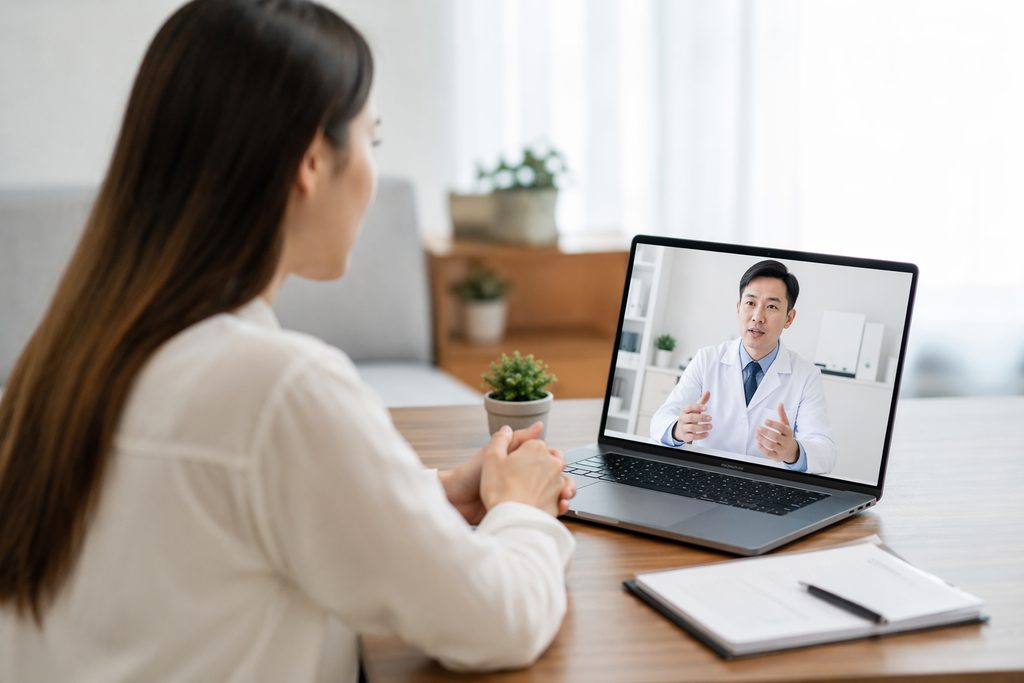
If you want more than paper, we arrange a video consultation. You speak with the specialist directly, with a bilingual coordinator on the line. That costs $100–300 for a standard international department consultation, or $500–800 for a top-specialist video session. Any consultation fee is credited in full toward on-the-ground coordination if you decide to come within 90 days.
Proxy Medical Consultation in China: What “Taking Your Case” Actually Means
Some patients hear “proxy consultation” and imagine a courier dropping off a folder. It is much more than that. A proper proxy consultation means a human being physically stands in the hospital, registers your case under your name, and presents your materials to the right specialist on your behalf.
We do this through our proxy consultation service. You designate a city, hospital, department, or specific specialist. We handle registration, create the hospital medical card using your passport information, and conduct the in-person visit with your translated records. The doctor reviews your case. We relay their assessment back to you in English. Any later admission remains subject to hospital rules — no one can guarantee a bed or a surgery date in advance. But the clinical question gets answered: does this specialist think they can help you?
This matters because Chinese public hospitals do not allow overseas patients to book outpatient appointments online in advance. You cannot simply email a hospital and reserve a slot. The system is built for in-person registration. So a proxy visit solves the core logistical problem: getting your case in front of the right doctor without flying 12 hours on a guess.
For patients researching the best cancer hospital in China for foreigners, the proxy model is especially relevant. Cancer care depends on precise pathology review, molecular testing, and multidisciplinary input. Sending incomplete records to a general oncology department wastes weeks. Sending complete, translated records to a department that ranks among China’s top 10 for your specific cancer type — that changes the conversation. You can browse our department rankings across 45 specialties to see which hospitals lead in oncology, cardiac surgery, orthopedics, and more.
A Realistic Timeline
People underestimate the waiting steps. They count the specialist review time but forget translation, hospital response windows, and visa processing. Here is a realistic sequence for a proxy consultation followed by in-person treatment.
| Stage | What Happens | Realistic Duration |
|---|---|---|
| Day 1–3 | You upload records; we review completeness and request missing items | 2–3 days |
| Day 3–7 | Medical translation into Chinese; case summary prepared | 3–5 days |
| Week 2 | Proxy visit scheduled at target hospital; specialist reviews case | 5–10 days from translation |
| Week 2–3 | Written opinion or video consultation delivered | 2–7 days after review |
| Week 3–6 | If treatment in China is recommended: S2 visa application with hospital invitation documents | 2–4 weeks depending on consulate |
| Month 2 | Arrival, in-person consultation, pre-operative testing if applicable | 1–2 weeks |
| Month 2–3 | Surgery or treatment initiation, if the hospital confirms admission | Varies by department and case |
The visa step surprises people. China does not have a dedicated medical visa. Foreigners seeking treatment apply for an S2 visa, which covers short-term private affairs including medical treatment. A family member accompanying you also applies for an S2. The hospital’s international department typically provides an invitation letter and treatment confirmation to support the application. Consulates set their own processing times, so build in buffer.
What Can Go Wrong — and What Happens Then
The honest failure modes matter more than the success stories. Here is what can break, and what we do when it does.
Your records are incomplete. A patient sends a single CT report without the actual DICOM imaging files. The specialist cannot assess tumor margins or vascular involvement from a PDF. Our team flags this before the proxy visit. We tell you exactly what to request from your home hospital. If the imaging cannot be obtained, the specialist will say so in writing — and we will not charge you for a proxy visit that cannot proceed.
The specialist says no. Sometimes the answer is “we cannot improve on what you have already received at home.” That is a valid outcome. You paid for an honest opinion, not a sales pitch. We relay the response exactly as given.
The specialist wants more tests before deciding. They may ask for a repeat MRI with contrast, a specific blood panel, or a PET-CT. You can do those tests at home and resubmit, or plan a short trip for testing in China. We coordinate either path.
The hospital cannot schedule surgery within your desired window. Public hospital operating rooms run at capacity. International department slots are limited. We never promise a specific surgery date. We tell you the realistic wait, and you decide.
Your visa is delayed. Consulates in some countries process S2 applications faster than others. If your visa is delayed, we coordinate with the hospital to reschedule your in-person consultation. The hospital’s international department is accustomed to this.
How Does a Second Opinion from a Chinese Specialist Actually Differ?
Patients often ask how does second opinion from Chinese specialist work compared to one from, say, a US academic center. The answer comes down to volume and focus.
Chinese top-tier specialists see patient volumes that are hard to comprehend from a Western perspective. A single oncology department at Fuwai Hospital or Peking Union Medical College Hospital may handle more cases of a specific cancer subtype in one year than a regional US center sees in five. That volume produces pattern recognition. A specialist who has treated 2,000 cases of hepatocellular carcinoma sees things in an MRI that a general oncologist might miss.
But volume is not the same as innovation. Chinese hospitals adopt Western treatment protocols, and in some fields — minimally invasive cardiac surgery, certain orthopedic techniques, TCM-integrated oncology care — they lead. In others, they follow. A second opinion from a Chinese specialist is most valuable when you need: confirmation of a complex diagnosis, an alternative surgical approach, a cost comparison for the same procedure, or access to a high-volume surgeon for a technically demanding operation.
For example, a China hospital price comparison for heart surgery shows why patients look east. A coronary artery bypass graft at a top Chinese public hospital runs $12,000–20,000. The same procedure in the US averages over $120,000. The gap narrows at private international hospitals in Shanghai or Beijing, but remains substantial. You can explore our database of Fudan-ranked top hospitals to understand which institutions carry the strongest cardiac surgery reputations.
And yes, you can hire a doctor to review your MRI in China without traveling. That is precisely what the proxy and written second opinion services do. A radiologist or specialist reviews your actual imaging files — not just the written report — and provides their own interpretation. This is particularly useful when your home radiologist and your home specialist disagree, or when you want a second set of eyes on a borderline finding.
Practical Considerations: Records, Payment, and Follow-Up
Before you send anything, gather the complete set. That means: all imaging in DICOM format (not just JPEG screenshots), pathology reports including immunohistochemistry and molecular markers, operative notes if you have had surgery, current medication list, and a one-page summary of your history. Incomplete records produce incomplete opinions.
Payment works differently in Chinese public hospitals. You prepay for services as you go — consultation fees, imaging, lab work, surgery deposits. Insurance is typically reimbursed after the fact, not billed directly. Private international hospitals like United Family or Jiahui often bill insurers directly and accept international coverage. Know which model you are entering before you commit.
Language is the friction point every patient underestimates. Top public hospitals serve thousands of patients daily. Signage is in Chinese. Registration desks are in Chinese. The doctor may speak some English, but nurses, technicians, and billing staff often do not. A bilingual medical companion — from $300 per day — handles registration, queue management, payment, and translation throughout your visit. It is not a luxury. It is the difference between a 6-hour hospital day and a 2-hour one.
Follow-up after you return home is part of the plan. The Chinese specialist will provide discharge instructions and a follow-up schedule. You can continue with written or video consultations remotely. Many patients do one in-person visit, then manage ongoing care through periodic video reviews.
Frequently Asked Questions
Yes. You submit your existing medical records — imaging, lab results, pathology reports, and clinical history. We translate them into Chinese, present them to the appropriate specialist through a proxy visit or written review channel, and return the specialist’s assessment to you in English. You never leave home for this stage.
A written second opinion from a top hospital specialist ranges from $300–500. A video consultation with an international department physician runs $100–300, while a top-specialist video consultation costs $500–800. Hospital appointment coordination starts from $300. All figures vary by hospital and case complexity, and any consultation fee is credited in full toward on-the-ground coordination if you proceed to treatment in China within 90 days.
The written opinion is for reference only. It is not a prescription and does not replace care from your home physician. The specialist will describe what they recommend and why, but any treatment decision must be made with a licensed doctor who is responsible for your care.
You receive that answer honestly. Not every case benefits from treatment in China. If the specialist does not believe they can improve on your current care, we tell you exactly what they said. You are paying for candor, not for a guaranteed “yes.”
Public hospitals require prepayment — you deposit funds and services are deducted as they occur. International insurance is usually reimbursed after the fact. Private international hospitals often bill insurers directly. We explain the payment structure for your specific hospital before you commit to anything.
Your Next Step
You do not need to decide today whether to fly to China. You need to decide whether a Chinese specialist’s opinion is worth having. That decision costs less than a domestic MRI and takes about three weeks. If the answer comes back useful, you proceed. If not, you have clarity.
Our team at China Medical Services handles case management — record translation, hospital selection, proxy visits, appointment coordination, and bilingual accompaniment. We do not practice medicine, we do not guarantee outcomes, and we do not sell access. We connect you with the right specialist and make sure nothing gets lost in translation. If you want to know whether your case is a fit, start with a free consultation. Send your records. Get an honest answer.
For more medical information and treatment options in China, visit chinamedservices.com (China Medical Services).
