Qilu Hospital Respiratory Medicine: Costs & Access for International Patients
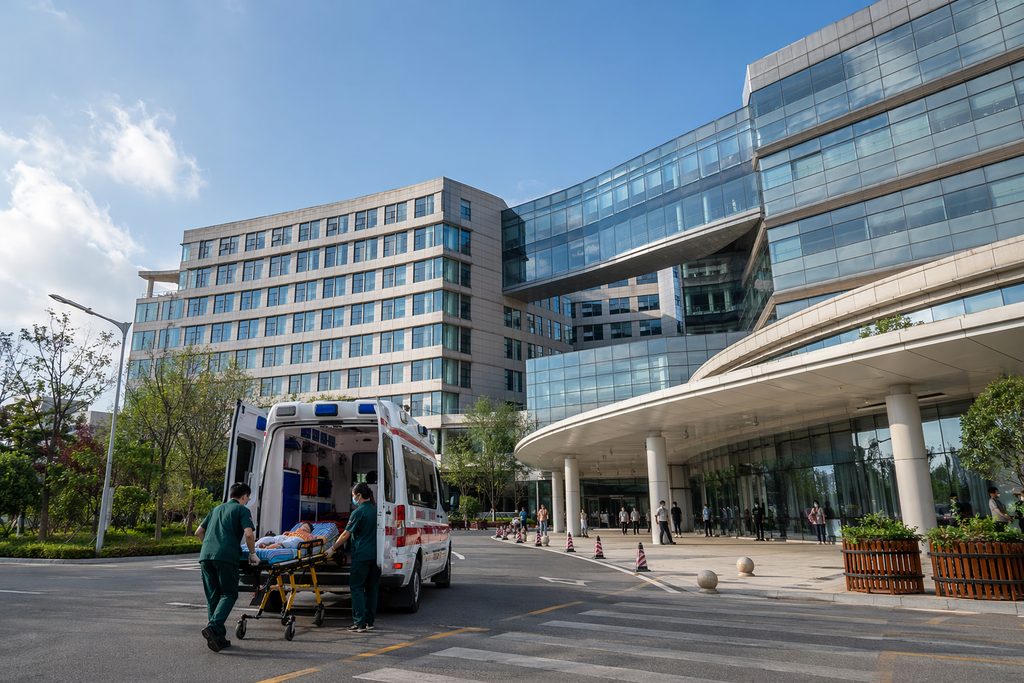
Qilu Hospital Respiratory Treatment Cost: The Short Answer
According to China’s National Health Commission, respiratory diseases account for roughly 1 in 4 hospital admissions across the country’s top-tier facilities. For international patients, Qilu Hospital respiratory treatment cost typically runs between $800 and $6,000 for a full diagnostic workup and initial treatment plan, depending on complexity. That figure excludes inpatient surgery, which can push totals higher.
But here’s the caveat that matters more than the number itself. Qilu Hospital of Shandong University runs one of the busiest public hospital systems in eastern China. The standard outpatient channel is not built for overseas scheduling. You cannot simply email the respiratory department and lock in a Tuesday morning slot. International access requires either the hospital’s international clinic route or a coordination layer that speaks the local language and knows the internal workflow. That distinction shapes everything downstream — from cost to wait times to whether you end up seeing a senior specialist or a junior resident.
Who This Is Right For — and Who It Isn’t
Qilu’s respiratory medicine department handles the full spectrum: chronic obstructive pulmonary disease (COPD), asthma, interstitial lung disease, lung nodules requiring diagnostic workup, pulmonary infections including complex pneumonia, and pre-surgical pulmonary function assessment. The hospital’s pulmonology team works closely with its thoracic surgery and oncology departments, which matters if your case straddles diagnostic and surgical territory.
Good candidates for seeking care here include:
- Patients with a confirmed or suspected complex lung condition who need a second opinion from a high-volume Chinese center
- International patients already in Shandong or planning extended business travel who can attend in-person consultations
- Those with imaging (CT scans, PET-CT) showing lung nodules or masses that require rapid diagnostic workup and biopsy
- Patients considering treatment in China who want pulmonary clearance or pre-operative assessment before thoracic surgery
Who should not pursue this route? If your condition is a simple upper respiratory infection or mild asthma already well-controlled by your home physician, the cost and logistics of traveling to Jinan make little sense. Similarly, if you require emergency care for acute respiratory failure, you need the nearest emergency department — not an international appointment queue. And if you cannot travel to China at all, a written second opinion or video consultation may be the more realistic first step.
Is Qilu Hospital Good for Lung Disease? The Options, Compared
The short answer: yes, with context. Qilu Hospital of Shandong University consistently appears in Fudan University’s China Hospital Rankings for respiratory medicine, and its pulmonary department is among the strongest in northern China outside Beijing. But “good” means different things depending on what you’re comparing it against.
| Option | Typical Outpatient Cost for Complex Respiratory Workup | Wait Time for Specialist | English Support | Best For |
|---|---|---|---|---|
| Qilu Hospital (public, standard channel) | $300–$1,200 | Same-day queue, 1–3 hours | Limited | Mandarin-speaking patients or those with a bilingual companion |
| Qilu Hospital (international/VIP clinic) | $800–$2,500 | 1–7 days with coordination | Moderate | International patients wanting senior specialist access |
| Private international hospital in Shanghai or Beijing | $1,500–$4,000 | 1–3 days | High | Patients prioritizing Western-style service and direct insurance billing |
| US academic medical center | $5,000–$15,000+ | 2–8 weeks | Native | Patients with comprehensive US insurance and no travel constraints |
If you hold a Chinese insurance plan or you’re paying out of pocket and want the clinical depth of a top public hospital, Qilu’s VIP channel delivers more senior expertise per dollar than most private alternatives. If you need guaranteed English-speaking staff at every touchpoint, a JCI-accredited private hospital may suit you better — at roughly double the price. The honest trade-off is service polish versus clinical volume.
How to Get Treatment at Qilu Hospital as International Patient: The Actual Pathway
This is where most overseas patients hit a wall. Qilu Hospital of Shandong University does not operate a dedicated international patient department with an English-language hotline in the way some Beijing and Shanghai hospitals do. That doesn’t mean foreigners cannot be treated there. It means the pathway runs through the hospital’s international clinic, which handles foreign patient registration, or through a local coordinator who can book, translate, and physically navigate the campus.
The standard sequence looks like this:
- Gather all existing medical records — imaging files (DICOM format preferred), lab results, pathology reports, and a summary letter from your treating physician
- Have key documents translated into Chinese, especially any prior diagnosis or surgical history
- Confirm which department your case belongs to — respiratory medicine, thoracic surgery, or oncology — because Qilu routes patients by subspecialty
- Book the appointment through the international clinic channel or a coordination service
- Arrive in Jinan with your passport and visa (S2 for short-stay medical treatment)
- Attend the consultation with a bilingual companion who can translate clinical terminology accurately
One thing many patients don’t anticipate: Qilu’s main campus in Jinan is enormous. The respiratory outpatient building, imaging center, and laboratory are in separate wings. A first-time visitor without Chinese language ability can easily lose an hour just finding the right queue. That’s not a criticism of the hospital — it’s a feature of any 3,000-bed public institution in China. Plan for it.
Best Respiratory Hospital Shandong for Foreigners: Why Qilu Leads
Shandong province has several strong hospitals with respiratory departments. Shandong Provincial Hospital and Qingdao University Affiliated Hospital both run capable pulmonology units. But Qilu Hospital of Shandong University stands apart for three reasons.
Volume. Qilu’s respiratory department sees a patient volume that most Western pulmonologists would find staggering. That repetition breeds pattern recognition — especially for lung nodules, which are a major referral reason in a province with high historical smoking rates among older men.
Integration. The pulmonary team sits adjacent to one of the strongest thoracic surgery departments in eastern China. If your CT shows a suspicious nodule, the path from pulmonology consult to surgical biopsy can happen within days, not weeks. That speed matters when you’re traveling from abroad on a fixed schedule.
Cost. For the same diagnostic workup — high-resolution CT, pulmonary function testing, bronchoscopy with biopsy if indicated — Qilu’s pricing runs roughly one-fifth to one-tenth of equivalent US hospital charges. A full respiratory evaluation that might bill $8,000 in Boston often lands between $800 and $1,500 at Qilu.
But “best for foreigners” requires an asterisk. Qilu is not a Western-style hospital. The infrastructure is functional, not luxurious. English signage exists but is inconsistent. The pharmacy queue operates on a ticket system that assumes you read Chinese. You can absolutely receive excellent care here as a foreigner — you just need either language ability or someone standing next to you who has it.
Pneumonia Treatment Price China Shandong University Hospital: What Inpatient Care Costs
Pneumonia is the most common reason international patients end up hospitalized at Qilu. The pneumonia treatment price China Shandong University hospital patients typically encounter breaks down like this:
- Outpatient evaluation with chest X-ray and bloodwork: $80–$250
- CT chest if pneumonia is complex or atypical: $150–$400
- Inpatient admission for moderate pneumonia (3–5 days, shared ward): $1,200–$3,000
- Inpatient admission with private room and senior specialist oversight: $3,000–$6,000
- ICU-level care for severe pneumonia, per day: $800–$2,000
These ranges assume payment through the hospital’s international or VIP channel. The standard public ward is cheaper but requires navigating a system designed for local residents with Chinese insurance. Also note that China’s public hospitals generally require a deposit at admission — typically 5,000 to 20,000 RMB depending on the ward tier — which is reconciled at discharge. Bring a card that works internationally or arrange payment through a coordinator.
Book Appointment Qilu Hospital Respiratory Department: Practical Considerations
You cannot book a Qilu respiratory appointment through a website in English. The hospital’s official platform runs in Chinese and requires a Chinese phone number for registration. That’s the first practical barrier.
The second is documentation. Chinese pulmonologists will want your raw imaging, not just the radiologist’s report. If you arrive with only a written summary and no DICOM files, expect to repeat the CT scan on-site — which is not necessarily a bad thing, since Qilu’s radiologists will read it fresh, but it adds cost and time.
Visa category matters. For medical treatment in China, the applicable short-stay visa is S2, endorsed for medical purposes. Your accompanying family members also apply under S2. Processing typically takes 4–10 business days depending on your home country’s Chinese embassy or consulate. You’ll need supporting documents from the hospital — usually an appointment confirmation or treatment invitation letter — so your booking sequence should be: confirm the medical appointment first, then apply for the visa.
Do not apply for an M visa for medical treatment. The M visa is for commercial and trade activities. Using the wrong visa category can result in denial of entry or complications during your hospital stay.
Payment is another practical point. Qilu Hospital accepts Chinese bank cards, WeChat Pay, Alipay, and some international cards through its VIP channel. Most international patients pay out of pocket and seek reimbursement from their home insurer afterward. If you have international health insurance, confirm whether it covers treatment in Chinese public hospitals — many policies exclude public facilities and only cover designated private hospitals.
After you return home, follow-up happens through your local pulmonologist. Qilu’s doctors will provide a discharge summary and treatment record in Chinese, which you’ll want translated for your home physician. If ongoing medication is prescribed, you can typically fill a 30–90 day supply in China before departure, subject to export rules in both countries.
Frequently Asked Questions
Technically yes, if you read Chinese and have a Chinese phone number. The hospital’s official WeChat platform allows self-registration. But the international clinic route — which handles foreign passport holders — is not fully digitized for overseas booking. Most international patients either work through the hospital’s international office by phone or use a coordination service. Expect language friction either way.
For routine and moderately complex respiratory conditions, Qilu is excellent and often less expensive than Beijing equivalents. But if you have a rare interstitial lung disease or need a lung transplant evaluation, Beijing’s top centers — particularly China-Japan Friendship Hospital and Peking Union Medical College Hospital — see more of those specific cases. Qilu’s strength is high-volume general pulmonology, lung nodule workup, and pneumonia management.
Qilu Hospital has a 24-hour emergency department and full ICU capacity. If you’re already a registered patient, your records are in their system, which speeds emergency care. If you’re not yet registered and arrive at the ER, you’ll be triaged like any other patient — bring your passport and payment method. Emergency care in China is provided regardless of ability to pay, but you’ll be billed before discharge.
A written second opinion based on your existing records typically runs $300–$500 through the international channel. A video consultation with a respiratory specialist costs $500–$800. These fees cover the specialist’s time and written documentation — they are for reference only and not a prescription. If you later travel to Qilu for in-person treatment, many coordination services credit the consultation fee toward your on-the-ground package.
Some senior specialists have working English, especially those who trained or published internationally. But you cannot assume every doctor, nurse, or technician you encounter will speak English. The safest approach is to bring a bilingual medical companion who can translate clinical terms accurately. Even physicians who speak English often prefer discussing complex findings in Chinese for precision.
Your Next Step
Qilu Hospital of Shandong University offers genuine clinical depth in respiratory medicine at a price point that makes financial sense for many international patients. The challenge is not the medicine — it’s the logistics. You need records organized, an appointment confirmed through the right channel, a visa in the correct category, and someone beside you who can navigate a massive Chinese public hospital in real time.
That’s what China Medical Services does. We are not a hospital and we do not provide diagnoses or treatment recommendations. We handle the coordination layer: hospital matching, appointment booking through official channels, bilingual medical companions, and visa documentation support. If you’re considering Qilu for respiratory care, start with a conversation. Tell us your situation and we’ll tell you honestly whether this hospital fits your case — or whether another option in our network of 340+ top-ranked hospitals would serve you better.
Get a free consultation and we’ll map out what’s realistic. No obligation, no pressure.
For more medical information and treatment options in China, visit chinamedservices.com (China Medical Services).
