Reproductive Medicine in China: Your Companion for Fertility Care
When 34-year-old Sarah from Manchester sat in her fertility specialist’s office last spring, the numbers on the page felt heavier than the diagnosis itself. One full IVF cycle at her local clinic: £5,500. Medication: another £1,200 to £2,000. Genetic testing, if needed: £3,000 more. And if the first cycle failed? Start again. Her consultant mentioned that some patients travel abroad for treatment. Sarah had never considered it. She started searching. That search led her to a phrase she typed at 2 a.m.: ivf cost China.
She is not alone. The global fertility services market reached an estimated $38 billion in 2023, and medical travel for reproductive care is one of its fastest-growing segments. Patients from the UK, Australia, Canada, and the United States now routinely evaluate clinics in Spain, Greece, the Czech Republic — and increasingly, China. The reason is simple arithmetic. A single IVF cycle in the United States costs $15,000 to $30,000. In China, the same procedure at a top-tier public hospital typically runs $4,000 to $8,000. That is a difference that changes decisions.
But cost is only part of the story. This guide explains what reproductive medicine in China actually looks like — the clinics, the regulations, the practical steps, and the honest trade-offs. We have helped international patients navigate this system for years through our China Medical Services platform. We are not a hospital. We do not provide diagnoses. We are the bridge between you and the medical expertise you need.
Key Takeaways
- A standard IVF cycle in China costs $4,000–$8,000 at top public hospitals, roughly one-third to one-fifth of US pricing.
- China’s leading fertility centers perform thousands of cycles annually; several appear in the Fudan University specialty rankings for reproductive medicine.
- Foreign patients must navigate language barriers, visa requirements, and hospital registration rules — a bilingual companion removes most of this friction.
- No clinic can guarantee a live birth. Evaluate success rates carefully and understand what the numbers actually measure before committing.
The Problem: Fertility Care Costs Are Breaking Family Budgets
In the United States, the average cost of one conventional IVF cycle is $21,600 according to FertilityIQ, a patient education platform that aggregates real-world pricing data from thousands of patients. Add preimplantation genetic testing for aneuploidy (PGT-A) and that figure climbs past $25,000. In Australia, out-of-pocket costs after Medicare rebates still leave patients paying $4,000 to $8,000 per cycle. In the United Kingdom, the National Health Service covers some cycles, but eligibility depends on postcode, age, and whether you already have children. Many patients wait 12 to 18 months for NHS treatment. That wait matters. A woman’s ovarian reserve does not pause.
The financial strain produces a predictable outcome: patients ration their attempts. They do one cycle instead of three. They skip genetic testing. They delay treatment while saving money — and age works against them. A 2022 study in Human Reproduction found that women who delayed IVF by 12 months due to cost had a measurable decline in cumulative live birth rates, particularly after age 37.
This is the quiet crisis of reproductive medicine. The technology exists. The expertise exists. The barrier is not medical — it is economic and logistical. And that is precisely why patients like Sarah start typing “how much is IVF in Beijing” into search engines at odd hours.
Why China’s Fertility Sector Delivers Results
Clinical Volume Creates Specialized Expertise
China’s top reproductive medicine centers operate at a scale that most Western clinics cannot match. Peking University Third Hospital in Beijing — one of the country’s most recognized fertility institutions — performs over 10,000 IVF cycles annually. Shanghai’s leading centers, including those affiliated with Fudan University and Shanghai Jiao Tong University, each report cycle volumes in the thousands per year. By comparison, a large fertility clinic in the UK or Australia might complete 1,000 to 2,000 cycles annually.
Volume matters in reproductive medicine. Embryologists who handle thousands of cases develop pattern recognition that no textbook provides. Andrologists see the full spectrum of male factor infertility. Clinicians refine protocols for specific patient subgroups — women with diminished ovarian reserve, patients with repeated implantation failure, couples with unexplained infertility. The Fudan University Hospital Rankings, which evaluate China’s hospitals across 45 specialties, include reproductive medicine among their ranked departments. Several Beijing and Shanghai hospitals appear consistently in the top tier. You can explore these rankings on our specialty pages.
Technology Adoption at Competitive Speed
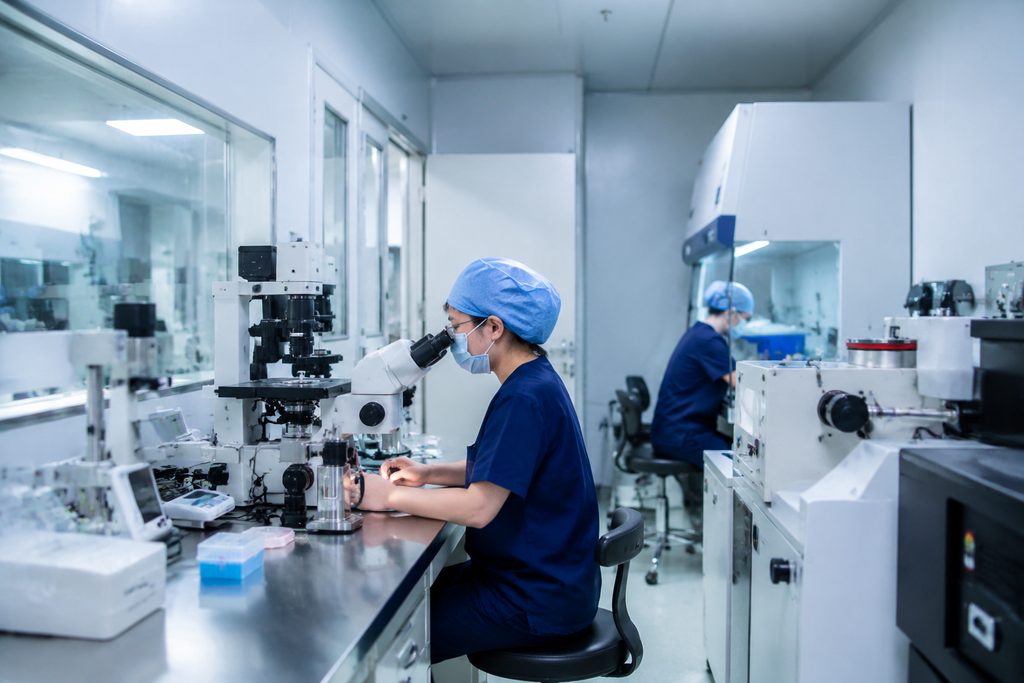
China’s fertility sector has adopted advanced laboratory technologies rapidly. Time-lapse embryo imaging — which photographs embryos every few minutes without removing them from the incubator — is standard equipment at top centers. Preimplantation genetic testing is widely available. Intracytoplasmic sperm injection (ICSI), once a niche procedure, now accounts for a substantial share of cycles at major clinics. Cryopreservation via vitrification, which dramatically improves egg and embryo survival rates, is routine.
What does this mean for a patient? It means the laboratory technology you would find at a top US clinic — CCRM, Shady Grove, NYU Langone — is present in Shanghai and Beijing. The difference is not the equipment. The difference is what you pay for it.
Cost Advantage Without Cutting Clinical Corners
The obvious question: why is ivf cost China so much lower? Is something being sacrificed? The answer lies in structural economics, not clinical shortcuts. Chinese public hospitals operate with lower labor costs for physicians, nurses, and laboratory staff. Real estate and administrative overhead are lower than in major Western cities. And the sheer patient volume spreads fixed costs — laboratory equipment, cleanroom maintenance, quality control systems — across thousands more cycles per year.
A senior embryologist in Shanghai earns a fraction of what a comparable specialist earns in New York or London. That does not mean lower skill. It means lower cost. The same dynamic applies across Chinese healthcare: a cardiac bypass that costs $120,000 in the US runs $12,000 to $20,000 at a top Chinese hospital. The clinical outcomes are comparable. The economics are not.
What IVF Actually Costs in China: A Real Breakdown
Let us get specific. The numbers below reflect typical ranges at top-tier public hospitals in Beijing, Shanghai, and Guangzhou as of 2026. Private international clinics — United Family, Jiahui, Parkway — charge more, typically $8,000 to $15,000 per cycle, but offer English-speaking staff and Western-style service. Prices vary by hospital and case complexity. Always confirm current pricing directly with the clinic.
| Service Component | Public Top-Tier Hospital (USD) | Private International Clinic (USD) |
|---|---|---|
| Initial consultation & fertility workup | $150 – $400 | $300 – $800 |
| Standard IVF cycle (monitoring, retrieval, lab, transfer) | $4,000 – $8,000 | $8,000 – $15,000 |
| Medications (gonadotropins, antagonists, trigger) | $800 – $2,000 | $1,500 – $3,000 |
| ICSI add-on | $500 – $1,000 | $800 – $1,500 |
| PGT-A genetic testing (per embryo batch) | $1,500 – $3,000 | $2,500 – $4,500 |
| Embryo freezing + first year storage | $500 – $1,000 | $800 – $1,500 |
| Frozen embryo transfer cycle | $1,500 – $3,000 | $2,500 – $5,000 |
Compare that to the United States, where FertilityIQ reports a median single-cycle cost of $21,600, or Australia where patients commonly pay $8,000 to $10,000 out of pocket after rebates. Even with international travel, accommodation, and our coordination services factored in, many patients find China’s total cost lands at 40% to 60% of what they would pay at home.
Is IVF Safe in China? What the Evidence Shows
This question comes up in nearly every conversation we have with prospective patients. It deserves a direct answer. Yes — IVF at accredited Chinese hospitals is safe, provided you choose a reputable institution. The Chinese Ministry of Health regulates assisted reproductive technology (ART) through a licensing system. Hospitals must meet specific laboratory, staffing, and ethical standards to perform IVF. Unlicensed clinics exist, as they do everywhere. Choosing a Fudan-ranked hospital or a JCI-accredited international clinic eliminates most of that risk.
Safety data supports this. A 2021 retrospective analysis published in Reproductive BioMedicine Online examined maternal and neonatal outcomes from over 50,000 ART cycles in China. The rates of ovarian hyperstimulation syndrome (OHSS), ectopic pregnancy, and multiple gestation were consistent with international benchmarks. Complication rates at top-tier centers were comparable to those reported by SART (Society for Assisted Reproductive Technology) in the United States.
But here is the honest caveat: is IVF safe in China depends heavily on where you go. A top-ranked public hospital in Shanghai operates under strict quality controls. A small, unaccredited clinic in a second-tier city may not. Our role is to help you distinguish between the two. We direct patients toward institutions with verifiable track records — hospitals that appear in national rankings, publish outcome data, and maintain international accreditation where applicable. You can browse our database of top-ranked hospitals to see which institutions meet these criteria.
How to Book IVF Treatment in China: The Step-by-Step Path
Patients often assume the hardest part of book IVF treatment China is the medical procedure itself. It is not. The hard part is the administrative path: knowing which hospital to contact, what documents to prepare, how to schedule a first consultation, and how to handle the language barrier. Here is the realistic sequence.
First, you need a preliminary assessment. Most Chinese fertility centers will not accept an international patient sight unseen. You will need to send your medical records — previous fertility workups, hormone panels, semen analyses, any prior IVF cycle records — for review. A written second opinion from a top specialist typically costs $300 to $500. A video consultation with a senior fertility physician runs $500 to $800. These fees are credited in full toward our on-the-ground coordination service if you proceed to treatment within 90 days.
Second, you travel to China for an in-person consultation. Chinese public hospitals require a face-to-face visit before any treatment protocol begins. This is non-negotiable. You cannot book a full IVF cycle remotely. The initial consultation includes bloodwork, ultrasound, and a treatment plan discussion. Plan for 3 to 5 days in-country for this first visit.
Third, you return for the treatment cycle itself. A standard IVF cycle requires approximately 14 to 21 days in China, depending on your protocol. This covers ovarian stimulation, monitoring, egg retrieval, embryo culture, and fresh transfer. If you opt for a frozen transfer — increasingly common for genetic testing or endometrial preparation — you may be able to shorten the initial stay and return later.
Throughout this process, a bilingual medical companion handles registration, queue management, payment, interpretation, and navigation. From $300 per day, this service transforms an overwhelming experience into a manageable one. You are never alone in a hospital corridor trying to decipher a Chinese sign while holding a numbered ticket.
Choosing the Best Fertility Clinic Shanghai or Beijing: Decision Criteria That Matter
Patients ask us constantly: what is the best fertility clinic Shanghai has for international patients? Or the equivalent for Beijing. The honest answer is that “best” depends on your specific situation. A clinic that excels at treating diminished ovarian reserve may not be the right choice for male factor infertility. A hospital with outstanding laboratory technology may have limited English support. Here are the criteria we use when matching patients to clinics.
Success Rates — Read Them Carefully
Every clinic publishes success rates. Few patients understand how to interpret them. Look for live birth rate per embryo transfer, not per cycle started. Look for age-stratified data — a clinic that reports a 60% success rate but treats mostly women under 35 is not impressive. Ask what percentage of their patients are over 38. Ask about cumulative live birth rates across multiple transfers from a single retrieval. Chinese public hospitals increasingly publish these figures in peer-reviewed journals and annual reports. If a clinic will not share age-stratified data, that is a red flag.
International Patient Experience
Some Chinese fertility centers see dozens of international patients monthly. Others see none. The difference shows in the small things: does the front desk know how to register a foreign passport? Does the laboratory accept translated medical records? Is there a staff member who can explain embryology reports in English? Hospitals with dedicated international departments — common among the top institutions in Beijing and Shanghai — handle these issues routinely. Private international clinics like Jiahui and United Family are built for this from day one, with English-speaking physicians and direct insurance billing.
Laboratory Credentials
The embryology laboratory is where IVF succeeds or fails. Ask about the lab’s accreditation. In China, the Ministry of Health inspects and licenses ART laboratories. Top centers also pursue international certifications. Ask about embryo culture media, incubator technology, and whether the lab uses time-lapse imaging. A clinic that cannot answer these questions is not a clinic you want handling your embryos.
Fertility Treatment Packages China: What Is Actually Included
Some clinics and medical travel agencies advertise fertility treatment packages China that bundle consultation, medication, retrieval, transfer, and accommodation. These packages can be convenient. They can also be misleading. Read the fine print. Does the package include medication, or is that billed separately? Does it cover one transfer or multiple? What happens if the cycle is cancelled before retrieval — do you get a refund? A reputable package will itemize every component. A vague package will not. We help patients evaluate these offers precisely because the details matter.
Practical Considerations: Documentation, Visas, and Money
China’s assisted reproduction regulations are conservative. IVF is generally available only to married heterosexual couples. Single women and same-sex couples face legal restrictions that do not exist in countries like Spain, Denmark, or Canada. Some private clinics may offer egg freezing to single women, but access is inconsistent. If you fall outside the traditional eligibility criteria, discuss your situation with the clinic before making any travel plans.
What happens if the first
Frequently Asked Questions
Is it safe to have surgery in China?
Yes. The hospitals used for international patients are JCI-accredited and follow the same international safety standards as top hospitals in the US and Europe. Surgical teams perform high volumes of procedures — often more than their Western counterparts — which studies show leads to better outcomes.
How much does medical treatment cost in China?
Costs vary by procedure and hospital, but international patients typically save 40-80% compared to US prices — even when factoring in travel and accommodation. A consultation with our team will give you an exact, all-inclusive quote with no hidden fees.
How do I start the process?
Send us your existing medical reports to get started. We handle everything from hospital selection and appointment scheduling to visa assistance and post-operative recovery planning. Your medical records are reviewed by the specialist before you even book a flight.
Frequently Asked Questions
Yes. The hospitals used for international patients are JCI-accredited and follow the same international safety standards as top hospitals in the US and Europe. Surgical teams perform high volumes of procedures — often more than their Western counterparts — which studies show leads to better outcomes.
Costs vary by procedure and hospital, but international patients typically save 40-80% compared to US prices — even when factoring in travel and accommodation. A consultation with our team will give you an exact, all-inclusive quote with no hidden fees.
Send us your existing medical reports to get started. We handle everything from hospital selection and appointment scheduling to visa assistance and post-operative recovery planning. Your medical records are reviewed by the specialist before you even book a flight.
For more medical information and treatment options in China, visit chinamedservices.com (China Medical Services).
