Shengjing Hospital Neurosurgery for International Patients: Costs, Safety, and How to Access Care
Key Takeaways
- Shengjing Hospital is a top-tier academic medical center in Shenyang affiliated with China Medical University, one of the oldest medical schools in China.
- Neurosurgery costs at Shengjing typically run 50–80% lower than comparable procedures in the United States or Western Europe, though exact pricing varies by case complexity.
- International patients cannot simply walk in and book surgery online — the process requires in-person evaluation, medical records review, and coordination through the hospital’s international patient pathway.
- Language barriers, visa logistics, and unfamiliar hospital workflows are the biggest practical hurdles. Planning ahead is non-negotiable.
When 44-year-old Daniel from Manchester first heard the word “meningioma,” his mind went blank. His UK consultant recommended surgery within six months. The NHS waitlist stretched to nine. A private quote came back at £38,000. Daniel started searching for alternatives — and that search eventually led him to a hospital name few Western patients recognize: Shengjing Hospital of China Medical University in Shenyang. What he found surprised him. Board-certified neurosurgeons performing hundreds of complex cranial procedures annually. Modern operating theaters with intraoperative MRI and neuronavigation. And a total cost, including hospital stay and surgical fees, that came in at roughly one-third of the UK private quote.
This article answers the questions Daniel had — and the ones you probably have too. What does Shengjing Hospital neurosurgery price actually look like? Is brain surgery in China safe? How do international patients actually get treated there? We will walk through the facts, the process, the costs, and the honest limitations.
The Problem: Brain Surgery Wait Times and Costs Are Crushing Patients in the West
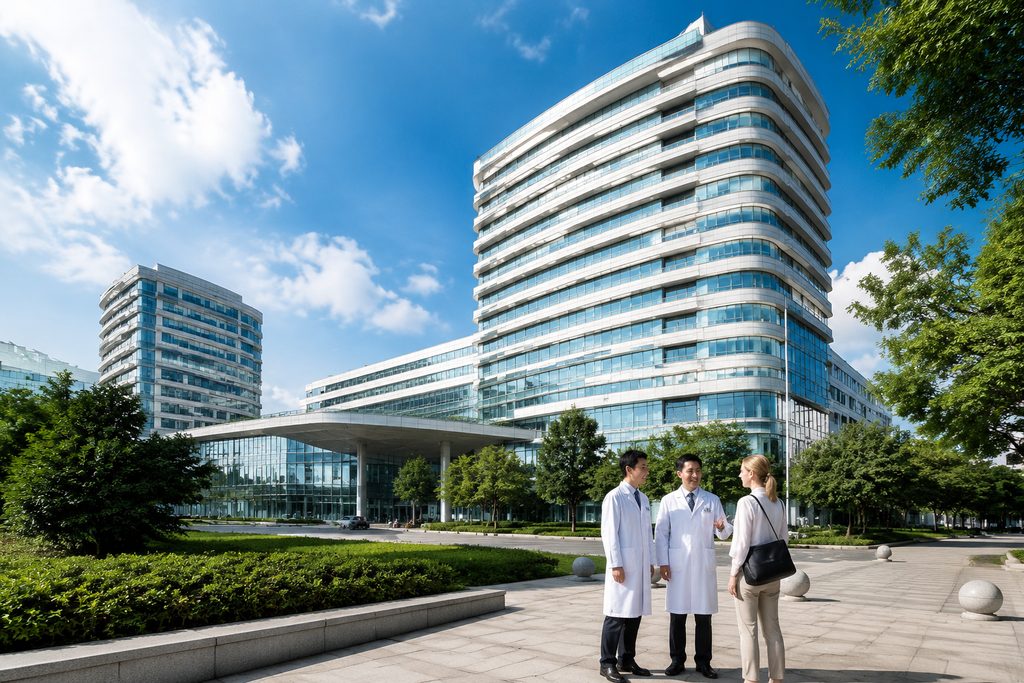
Walk into the neurosurgery wing at Shengjing’s Nanhu campus and you will see equipment that would be familiar to any neurosurgeon from Johns Hopkins or Charité. Intraoperative MRI. Frameless neuronavigation systems. High-resolution neuroendoscopy. Dedicated neuro-intensive care units with continuous intracranial pressure monitoring. The hospital has invested heavily in neurosurgical infrastructure over the past decade.
But infrastructure is only part of the story. The workflow is structured differently than in the West. In many Western hospitals, neurosurgery is a bottleneck — limited operating room time, limited anesthesia coverage, limited nursing staff. At Shengjing, the neurosurgery department runs multiple operating rooms simultaneously on surgical days. That means once a patient is admitted and cleared for surgery, the wait for an operating slot is typically measured in days, not weeks or months.
Cost Advantage Without Quality Compromise
Now to the question every international patient asks first: what is the Shengjing Hospital neurosurgery price? The honest answer is that no hospital publishes a fixed price list for neurosurgery — the final cost depends on the specific procedure, tumor type, length of ICU stay, and whether you go through the standard public pathway or the international/VIP pathway. But we can give realistic ranges based on our coordination experience.
A craniotomy for tumor resection at Shengjing typically falls in the range of $12,000 to $25,000 for international patients. A stereotactic biopsy might run $5,000 to $8,000. A complex skull base procedure could reach $30,000. Compare that to the United States, where a craniotomy averages $50,000 to $100,000 depending on the institution. Or the UK, where private craniotomy costs run £25,000 to £45,000. The structural reasons for the gap are straightforward: lower labor costs, higher patient throughput, and hospital pricing that is not inflated by the American insurance billing system.
Lower cost does not mean lower quality. It means a different economic model. That is a distinction worth understanding before you dismiss the option.
How a Neurosurgery Package at Shengjing Actually Works for International Patients
Here is the part most websites gloss over. You cannot email Shengjing Hospital, pay a deposit, and book a surgery date. Chinese public hospitals — including top-tier teaching hospitals like Shengjing — operate on an in-person evaluation model. The neurosurgeon must see you, review your imaging, and make a clinical determination before any surgery is scheduled. This is not bureaucracy. This is how good medicine works.
The process for international patients typically follows these stages:
- Stage 1: Remote records review. You send your existing MRI/CT scans, pathology reports, and clinical summaries. A neurosurgeon reviews them and gives a preliminary opinion on whether your case is suitable for treatment at Shengjing. This is a written second opinion, not a treatment commitment.
- Stage 2: Video consultation. You speak directly with the neurosurgery team. You explain your symptoms. They explain their proposed approach. You ask questions. This is where trust gets built or broken.
- Stage 3: Travel and in-person evaluation. You fly to Shenyang. The neurosurgeon examines you, reviews your imaging in person, and orders any additional tests needed. Only after this evaluation is a surgical plan finalized.
- Stage 4: Admission and surgery. Depending on your case, admission happens within days of the in-person evaluation. Surgery is scheduled, performed, and you recover in the neurosurgery ward or neuro-ICU.
The entire process — from first contact to surgery — can take as little as three to four weeks if your records are complete and your case is straightforward. For patients who need surgery urgently, the timeline can compress further. But do not expect to land in Shenyang on Monday and be in the operating room on Tuesday. That is not how this hospital works.
What You Need to Know Before Choosing Shengjing: Safety, Communication, and Reality Checks
Let us address the elephant in the room directly. How safe is brain surgery in China? The answer, based on published data and clinical outcomes, is that top-tier Chinese neurosurgery departments achieve complication rates and mortality rates comparable to Western academic centers. A 2022 study in the Chinese Medical Journal examining outcomes at major Chinese neurosurgical centers reported surgical mortality rates for elective craniotomy below 2%, consistent with international benchmarks. Shengjing’s neurosurgery department operates under the same national quality standards and reporting requirements as any top Chinese hospital.
But safety is not just about the surgeon’s hands. It is about communication, documentation, and aftercare. And here is where international patients face real challenges.
Language is the hardest part. Most neurosurgeons at Shengjing speak limited English. Your medical records need to be translated into Chinese. Your informed consent discussions need a competent interpreter. Your family needs to understand what is happening at every step. If you arrive without a plan for this, you will struggle — not because the care is poor, but because you cannot communicate effectively.
There are other practical considerations. Shengjing Hospital’s international patient department exists, but it is not a concierge service. You will still navigate Chinese hospital processes: registration, payment, imaging queues, ward rules. Payment is typically required upfront or in staged deposits. Insurance reimbursement depends entirely on your policy — most Western insurers will reimburse treatment at Chinese hospitals, but you will likely pay first and claim later.
And one more honest note: Shenyang is not Beijing or Shanghai. It is a major industrial city in Northeast China, cold in winter, with a smaller expatriate community and fewer English-speaking services. That is part of why costs are lower. It also means you will want local support — someone who can navigate the city and the hospital with you.
Gamma Knife and Alternative Neurosurgical Options: Cost Comparison
Not every brain lesion requires open surgery. For small tumors, vascular malformations, and certain functional disorders, stereotactic radiosurgery — Gamma Knife or CyberKnife — is a viable alternative. China has invested heavily in this technology, and Shengjing offers Gamma Knife treatment through its neurosurgery department.
So what does gamma knife cost in China? Again, no fixed public price list, but realistic ranges for international patients at top Chinese hospitals run $6,000 to $12,000 per treatment course, compared to $30,000 to $60,000 in the United States. The treatment itself is outpatient in most cases, requires no incision, and has a much shorter recovery window. For the right patient, it is a compelling option.
| Procedure | Typical Cost at Shengjing (International Patient) | Typical Cost in US (Uninsured) | Typical Cost in UK (Private) |
|---|---|---|---|
| Craniotomy for tumor resection | $12,000 – $25,000 | $50,000 – $100,000 | £25,000 – £45,000 |
| Stereotactic biopsy | $5,000 – $8,000 | $20,000 – $35,000 | £12,000 – £20,000 |
| Gamma Knife radiosurgery | $6,000 – $12,000 | $30,000 – $60,000 | £18,000 – £30,000 |
| Skull base tumor resection | $20,000 – $30,000 | $80,000 – $150,000 | £35,000 – £60,000 |
These are ranges, not quotes. Your final Shengjing Hospital neurosurgery price will depend on tumor location, surgical complexity, ICU days, and whether you go through the standard international pathway or the VIP pathway. The VIP pathway costs roughly 1.5 to 2 times more but includes faster access to senior specialists and more English-language support.
Practical Considerations: Visa, Records, Payment, and Follow-Up
If you decide to pursue treatment at Shengjing, here is what you need to handle.
Visa. You will need an S2 visa, which is the category for short-term private affairs including medical treatment. The hospital provides a medical invitation letter and treatment confirmation documents that you submit with your application. The S2 visa typically allows stays up to 180 days. If your treatment and recovery will exceed that, you may need an S1 visa. Do not apply for an M visa — that is for commercial and trade activities, not medical treatment. Chinese consulates are strict about this distinction.
Medical records. Bring everything. Original imaging on CD or USB. Written radiology reports. Pathology slides if you have had a biopsy. Medication lists. Prior surgical notes. These need to be translated into Chinese before your in-person evaluation. Some hospitals accept English records with a certified translation; others require translation through an approved service.
Payment. Shengjing Hospital, like most Chinese public hospitals, operates on a prepayment model. You deposit funds at admission, and costs are deducted as services are provided. Bring a credit card with a high limit or arrange a wire transfer in advance. Cash in large amounts is impractical and not recommended.
Insurance. Check your policy before you travel. Some international insurers have direct billing arrangements with Chinese hospitals, but most do not. You will likely pay upfront and seek reimbursement. Get written pre-authorization from your insurer if possible.
Follow-up. After you return home, you will need ongoing imaging and clinical follow-up. The neurosurgeon at Shengjing can provide a written treatment summary and recommendations for your home physician. Some patients return to China for follow-up imaging; others do it locally and send results back for review.
Frequently Asked Questions
Is brain surgery in China actually safe?
At top-tier academic medical centers like Shengjing Hospital, neurosurgery safety outcomes are comparable to Western benchmarks. Published data from major Chinese neurosurgical centers shows elective craniotomy mortality below 2%. The key is choosing a hospital with high surgical volume, modern infrastructure, and a structured international patient pathway — not just any hospital in China.
What does Shengjing Hospital neurosurgery price include?
The price typically includes the surgical procedure itself, anesthesia, hospital bed charges, standard nursing care, and routine post-operative imaging. It does not include international patient coordination fees, translation services, premium ward upgrades, or non-standard medications. Always ask for a written cost breakdown before committing.
Can I book a neurosurgery package in China before I travel?
No. You can book a remote evaluation, a video consultation, and an in-person appointment. But no reputable Chinese hospital will guarantee a surgery date before the neurosurgeon has evaluated you in person. Any service that promises otherwise is not operating through official hospital channels.
What if something goes wrong during or after surgery?
Chinese hospitals have established protocols for managing surgical complications. Shengjing has a dedicated neuro-ICU with 24/7 intensivist coverage. Your informed consent discussion before surgery will cover the specific risks of your procedure. If a complication requires extended treatment, your costs will increase — plan financially for that possibility. Medical malpractice litigation in China is possible but procedurally different from Western systems, and outcomes vary.
How do I find the best brain tumor surgeon in China for my specific case?
Start with the hospital’s department, not an individual name. Shengjing’s neurosurgery department has multiple senior surgeons with subspecialty focuses — skull base, neuro-oncology, vascular, functional. The right surgeon for a vestibular schwannoma is not the same as the right surgeon for a glioblastoma. A records review by the department will route your case to the appropriate specialist. Rankings and patient reviews can help, but they are not a substitute for a clinical assessment of your specific imaging and pathology.
Your Next Step
If you are considering Shengjing Hospital for neurosurgery, start by getting your records reviewed. That is the lowest-cost, lowest-commitment way to find out whether this option is realistic for your case. China Medical Services helps international patients navigate exactly this process — we coordinate records review, video consultations, in-person appointments, and on-the-ground support in Shenyang. We are not a hospital and we do not provide diagnoses or treatment recommendations. What we do is make the process navigable, transparent, and less overwhelming. When you are ready to explore whether Shengjing is right for you, request a free consultation and we will help you think through the next step.
For more medical information and treatment options in China, visit chinamedservices.com (China Medical Services).
