Skin Treatment in China: A Patient’s Guide to Costs and Clinics
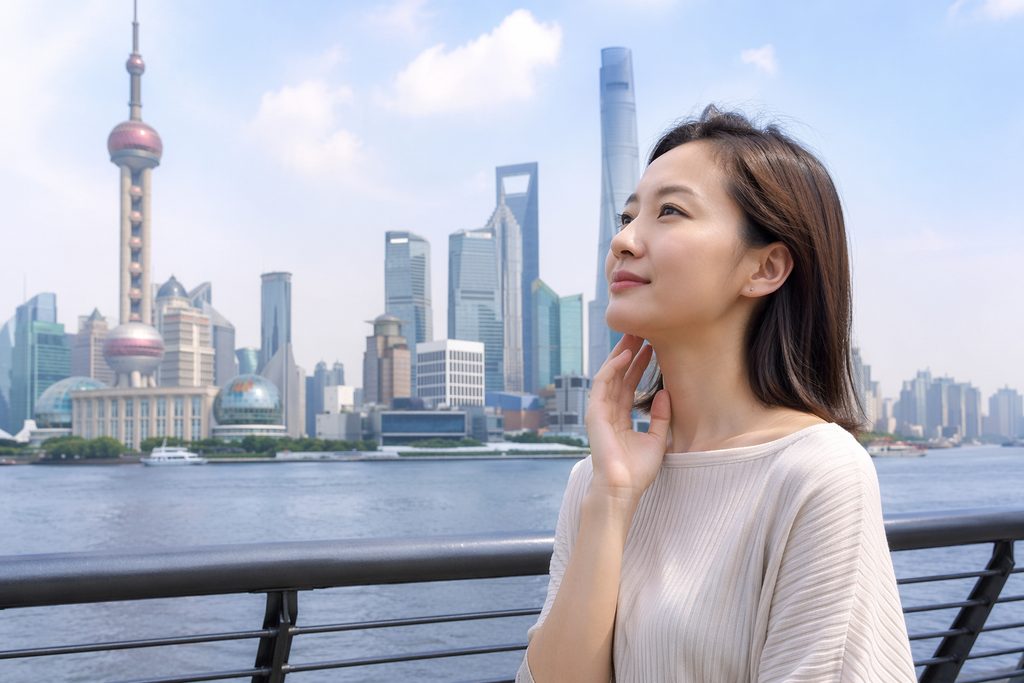
You have probably heard that traveling abroad for medical care means gambling on quality. For dermatology, the opposite is often true. China’s top hospitals run some of the highest-volume laser and skin-surgery departments on earth, and the skin treatment cost China patients pay is frequently a fraction of what the same procedure runs in the United States or Western Europe. That gap is not a discount for lower standards. It comes from volume, state investment in public hospitals, and a competitive private international sector.
This guide walks through what skin treatment in China actually involves for a foreign patient — the real numbers, the clinics worth considering, the safety questions you should ask, and the steps that trip people up.
How This Actually Works, Step by Step
Most international patients do not fly in blind and hope for the best. The sensible path starts at home, with your existing records.
Step 1 — Send your records. You share photos of the affected skin, any biopsy or pathology reports, prior treatment history, and a short note on what you want addressed. Acne scarring, melasma, a suspicious lesion, laser hair removal, scar revision — each points to a different specialist.
Step 2 — A specialty team reviews the file. Through a written second opinion, the relevant dermatology or plastic surgery department reads your materials and returns analysis, treatment suggestions, and direction. This costs from $300 to $500 and is for reference only, not a prescription.
Step 3 — You speak with the team. A video consultation lets you explain your goals directly and hear recommendations. Standard international-department sessions run $100–$300; a top-specialist video consultation runs $500–$800.
Step 4 — You decide, then we coordinate. If a plan makes sense, hospital appointment coordination starts from $300. Any consultation fee is credited in full toward on-the-ground coordination if you travel within 90 days — a one-time credit applied to the coordination fee, never to hospital treatment charges.
Step 5 — You arrive, and someone is with you. A bilingual medical companion handles registration, queuing, payment, wayfinding, and translation from from $300 per day. Public hospitals require prepayment; private international hospitals often bill insurance directly.
What Skin Treatment in China Costs — and Why the Gap Is So Wide
Here is the part most people search for first. Prices vary by hospital and case complexity, so treat every figure below as a range, not a quote.
| Procedure | Typical China range (USD) | Typical US range (USD) |
|---|---|---|
| Fractional laser resurfacing (full face, per session) | $150–$500 | $1,000–$3,000 |
| Acne scar treatment (package of 3–4 sessions) | $600–$2,000 | $3,000–$8,000 |
| Pigmentation / melasma laser course | $400–$1,500 | $2,000–$6,000 |
| Mole or benign lesion removal | $80–$400 | $300–$1,500 |
| Botulinum toxin (per area) | $200–$600 | $400–$1,200 |
| Dermal filler (per syringe) | $300–$900 | $700–$2,000 |
So how much does acne scar treatment cost in Beijing? A realistic package at a top public hospital’s international department usually lands between $700 and $1,800, depending on the technology used and how many sessions your scarring requires. The same course in a US metropolitan dermatology practice routinely exceeds $5,000 before anesthesia or facility fees.
Two forces explain the difference. First, volume. A single major Chinese hospital dermatology department may perform more laser sessions in a week than a mid-sized American clinic does in a quarter, which spreads equipment costs across far more patients. Second, the public system. Top-ranked public hospitals receive state support, so their fee schedules are not built around the revenue targets a private US practice must meet.
A Realistic Timeline
Skin treatment is rarely a single appointment, and the logistics take longer than most people expect. Here is a workable schedule for a patient planning laser or surgical skin treatment abroad.
| Stage | What happens | Typical duration |
|---|---|---|
| Days 1–3 | Gather records, photos, prior reports; submit for review | 2–5 days |
| Week 1–2 | Written second opinion returned; video consultation scheduled | 5–14 days |
| Week 2–3 | Treatment plan agreed; hospital appointment coordination begins | 3–10 days |
| Week 3–5 | S2 visa application (medical treatment/private affairs); documents translated | 1–3 weeks, varies by consulate |
| Week 4–6 | Travel, in-person consultation, first session | 2–4 days on the ground |
| Month 2–6 | Follow-up sessions spaced per protocol | 4–20 weeks |
Notice the waiting steps people forget. Document translation adds days. Appointment lead time at a busy international department can stretch past a week. Visa processing is not instant, and consulates differ. A fractional laser course needing three sessions six weeks apart means either multiple trips or a longer stay — plan for that before you book flights.
What Can Go Wrong — and What Happens Then
Honesty matters more here than anywhere else in this article.
You cannot pre-book a standard public outpatient slot from overseas. That is a hard rule at most public hospitals. Registration happens the day of, in person, and surgery is scheduled only after an in-person consultation. If a provider promises you a guaranteed operating room date before you have been seen, be skeptical. The realistic route to a pre-arranged appointment with a senior specialist is the hospital’s international or VIP channel, which runs roughly 1.5 to 2 times the standard fee.
Complications happen anywhere. Hyperpigmentation after laser, infection after excision, or an unsatisfactory cosmetic result can occur in Shanghai exactly as they can in Chicago. The recourse is a follow-up consultation, revision treatment, or a second opinion — all of which a bilingual companion can help you navigate, but none of which is guaranteed to fix the outcome.
Language failure is the most common practical problem. A top Chinese hospital may see more than 10,000 outpatient visits in a single day. Signage, forms, and staff are overwhelmingly in Chinese. Without interpretation, you can lose hours finding the right floor, let alone understanding aftercare instructions.
Choosing a Clinic: Public International Department or Private Hospital?
This is the decision that shapes everything else. Both options are legitimate; they serve different priorities.
Public hospital international departments — the ones inside China’s top-ranked institutions — give you access to enormous clinical volume and some of the country’s most experienced laser and dermatologic surgeons. You will pay more than the local standard rate, but still far less than Western prices. Expect a busy environment and less hand-holding.
Private international hospitals take the opposite approach. English-speaking staff, JCI accreditation, direct insurance billing, and a calmer Western-style experience define this sector. You pay a premium for the comfort and the paperwork simplicity. For straightforward cosmetic work, many patients find this the easier entry point.
If you are weighing a specific city, the best dermatology clinic Shanghai offers may sit inside a large public teaching hospital, while Beijing’s strongest options cluster around its academic medical centers. The specialty rankings by department let you see which institutions lead in dermatology and plastic surgery, and the top hospitals directory groups them by city so you can match geography to your travel plans.
Traditional Chinese medicine plays a genuine supporting role too — acupuncture and herbal approaches are sometimes used alongside conventional care for chronic inflammatory skin conditions. That is a separate pathway worth exploring on the TCM hospitals page if your concern is long-term management rather than a single procedure.
Practical Considerations: Records, Visas, Payment, and Follow-Up
Records. Bring pathology slides or reports if you have them, plus a chronological list of prior treatments and their results. Dermatology is visual, so high-quality, well-lit photos taken in consistent lighting help enormously.
Visa. Foreign patients coming to China for medical treatment use the S2 category, annotated for medical treatment purposes, with accompanying family members applying under the same category. Stays beyond 180 days fall under S1. Requirements shift, so confirm current rules with the nearest Chinese embassy or consulate and prepare supporting hospital documents. Note that the M visa is for commercial and trade activity and has nothing to do with medical care.
Payment and insurance. Public hospitals generally require prepayment, with insurance reimbursed afterward. Private international hospitals frequently bill insurers directly. Confirm your policy’s stance on elective dermatologic procedures before you travel — many exclude cosmetic work entirely.
Follow-up at home. Ask your Chinese clinician to write a clear aftercare and follow-up plan you can hand to your dermatologist back home. Continuity matters, especially after resurfacing or surgery.
Frequently Asked Questions
At accredited hospitals and international clinics, laser treatment follows the same technology and safety standards used in the West. The variables that matter are the provider’s experience, the device being used, and honest screening of your skin type. Ask directly which laser platform is planned and how many similar cases the clinician handles monthly.
A typical multi-session package at a top public hospital international department runs roughly $700–$1,800. Comparable treatment in a major US city often exceeds $5,000. Final pricing depends on scar type, session count, and which technologies are combined, so request an itemized estimate.
You can arrange a consultation and a provisional plan remotely. What you generally cannot do is lock in a specific procedure date at a standard public outpatient clinic before an in-person examination — that is a hospital rule, not a service limitation. Pre-arranged appointments are typically available through international or VIP channels.
Many laser courses require three to six sessions spaced weeks apart. Either plan a longer stay or budget for return trips. Factor accommodation and the companion service into the total cost, not just the procedure fee.
Not legally, but practically it transforms the experience. Registration, queuing, payment, and translation at a hospital seeing thousands of patients daily are genuinely difficult without Chinese language skills. A companion handles all of it so you can focus on the clinical conversation.
Your Next Step
The core message is simple: skin treatment in China can be safe, well-priced, and efficient — but only when you plan the logistics as carefully as the procedure. Our team at China Medical Services connects international patients with 340+ top-ranked hospitals across 37 cities, and we do not provide medical care or promise clinical outcomes. We handle the records, the coordination, the language, and the arrival. If you want to understand your options before committing to anything, start with a no-pressure conversation at our patient consultation page and see what a realistic plan looks like for your situation.
For more medical information and treatment options in China, visit chinamedservices.com (China Medical Services).
