Can a Sleep Study Be Done at Home? Cost and Accuracy Guide
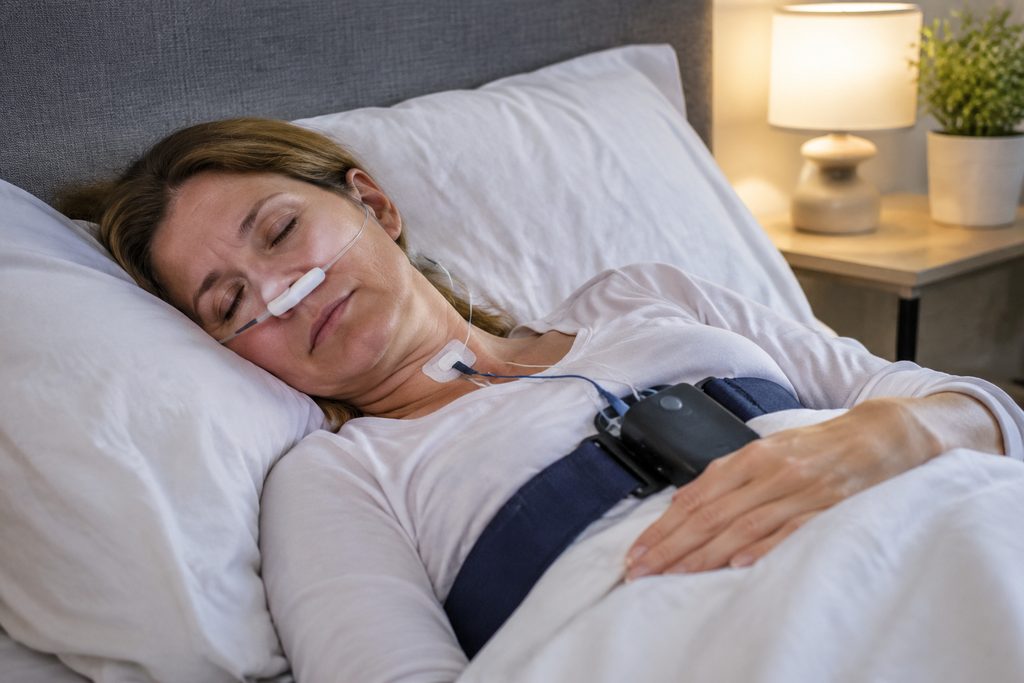
Can a Sleep Study Be Done at Home? Understanding Your Options and the At Home Sleep Study China Price
Yes, a sleep study can be done at home. A 2023 meta-analysis published in the Journal of Clinical Sleep Medicine found that home sleep apnea testing (HSAT) correctly identifies moderate to severe obstructive sleep apnea in approximately 83% of high-probability adult cases. That number matters if you have been putting off testing because you dread the thought of spending a night wired up in an unfamiliar hospital bed. The at home sleep study China price typically runs between $150 and $500 at private international clinics and hospital international departments, compared to $800 to $2,500 for a full in-lab polysomnography at equivalent facilities. But price is only one part of the story. Accuracy, eligibility, and what happens after the results come back are the real questions.
Key Takeaways
- Home sleep studies reliably detect moderate to severe obstructive sleep apnea in about 83% of high-risk adults, but they undercount mild cases and miss non-apnea sleep disorders.
- In China, home sleep testing costs between $150 and $500 at international clinics, roughly one-fifth to one-third of a full overnight lab study.
- Home tests measure breathing, oxygen, and pulse only. They do not measure brain waves, leg movements, or sleep stages. That limitation is the main reason a lab study remains the gold standard.
- Before booking any sleep test, a physician should confirm you are a suitable candidate. Not everyone qualifies for home testing, and getting this wrong wastes time and money.
The Problem: Sleep Apnea Is Vastly Underdiagnosed, and Lab Testing Feels Like a Barrier
China now operates over 2,000 accredited sleep laboratories across its public hospital network, according to the Chinese Medical Doctor Association’s Sleep Medicine Committee. Top-tier centers like the sleep medicine departments at Peking Union Medical College Hospital in Beijing and Zhongshan Hospital Fudan University in Shanghai run both in-lab polysomnography and home sleep testing programs. Private international hospitals — including United Family Healthcare and Jiahui Health — offer home testing with English-language support and immediate data review by Western-trained sleep physicians.
The operational model is efficient. You can typically pick up a device at the clinic, receive a 15-minute fitting and instruction session in English, and return it the next morning. Results are usually available within 24 to 48 hours, reviewed by a board-certified sleep specialist. For international patients considering medical travel, this means a home sleep test can often be completed during a short business trip or even arranged before committing to a longer stay.
Cost Advantage Without Quality Compromise
Here is where the numbers get interesting. At a top private international clinic in Shanghai, a home sleep apnea test cost Shanghai patients can expect is around $200 to $400, depending on the clinic and whether physician interpretation is bundled. In Beijing, a similar test at a hospital international department runs $150 to $350. Compare that to the United States, where home sleep tests average $150 to $500 for the device alone, with interpretation fees adding another $100 to $200. A full in-lab study in the US often exceeds $2,000 before insurance.
Why are Chinese prices lower? Labor costs for technicians and physicians are structurally lower, clinic overhead is more contained, and the volume of patients seen at top Chinese sleep centers is significantly higher than at comparable Western facilities. High volume breeds operational efficiency. The devices themselves — ResMed, Philips, and domestic Chinese manufacturers like BMC Medical — are the same or functionally equivalent to what you would receive in Europe or North America.
| Test Type | Signals Measured | Typical Cost in China (USD) | Typical Cost in USA (USD) | Best For |
|---|---|---|---|---|
| Home Sleep Apnea Test (HSAT) | Airflow, respiratory effort, oxygen saturation, heart rate | $150–$500 | $250–$700 | High-probability moderate to severe OSA, no major comorbidities |
| In-Lab Polysomnography (PSG) | Brain waves (EEG), eye movement, muscle tone, heart rhythm, airflow, oxygen, leg movements | $500–$1,200 | $1,500–$3,500 | Suspected central apnea, complex cases, neurological sleep disorders, failed home test |
| Video Consultation with Sleep Specialist | Clinical history, symptom review, test recommendation | $100–$300 | $200–$400 | Initial evaluation before any test |
How a Home Sleep Study Actually Works: Step by Step
If you are wondering can you do a sleep study at home without a physician referral, the short answer is: technically yes at some private clinics, but it is not recommended. A proper home sleep study follows a sequence. Skipping steps leads to inconclusive results and wasted money.
Step one is a clinical evaluation. A sleep physician reviews your symptoms, medical history, and risk factors. They calculate your STOP-Bang score — a validated screening tool that assesses snoring, tiredness, observed apneas, blood pressure, BMI, age, neck circumference, and gender. A score of 5 or higher strongly suggests moderate to severe sleep apnea and makes you a good home test candidate.
Step two is device fitting. You visit the clinic, or in some cases the device is delivered to your hotel room. The technician shows you how to position the nasal cannula, secure the chest belt, and place the pulse oximeter. The whole session takes 15 to 20 minutes.
Step three is the test night. You sleep at home or in your hotel bed. The device records continuously for six to eight hours. If the cannula slips or the signal drops, the device flags it. Most modern units store data locally and upload automatically when returned to the clinic.
Step four is data review and diagnosis. A sleep technologist scores the recording. The physician then interprets the results and calculates your Apnea-Hypopnea Index (AHI) — the number of breathing pauses per hour. An AHI of 5 to 15 is mild, 15 to 30 is moderate, and above 30 is severe. Treatment recommendations follow from that number.
Is a Home Sleep Study Accurate? What the Numbers Actually Mean
The question is a home sleep study accurate deserves a straight answer. Yes, for detecting moderate to severe obstructive sleep apnea in the right patient population, home testing is accurate enough to guide treatment. But the limitations are real and specific.
Home tests do not measure sleep stages. They cannot tell whether you actually slept or lay awake half the night. That means the AHI from a home test is calculated against total recording time, not actual sleep time. If you slept poorly, the test may undercount your apnea severity. A 2018 study in the journal Sleep found that home sleep tests underestimate AHI by an average of 15% compared to simultaneous in-lab polysomnography, primarily because of this sleep time calculation issue.
Mild sleep apnea is another blind spot. Home tests miss or underclassify mild cases in roughly 20 to 25% of patients. If you have mild symptoms but significant daytime impairment, a lab study is the better choice. Similarly, home tests cannot diagnose narcolepsy, restless legs syndrome, periodic limb movement disorder, or parasomnias like sleepwalking. Those conditions require EEG and leg movement sensors that only a lab study provides.
So the honest summary is this: if you snore, your partner has witnessed breathing pauses, you are overweight or have high blood pressure, and you are exhausted during the day, a home test will likely give you the answer you need. If your symptoms are ambiguous, or if you have heart failure, atrial fibrillation, opioid use, or suspected central apnea, go to the lab.
Who should NOT use a home sleep test: patients with congestive heart failure, chronic opioid therapy, significant COPD, prior stroke, or suspected central sleep apnea should undergo in-lab polysomnography instead. A physician must make this determination.
Booking a Home Sleep Study in China: Practical Considerations for International Patients
If you are exploring the option to book at home sleep study China medical tourism route, understand the logistics before you commit. The process is straightforward but requires planning.
First, decide on the city and facility type. Beijing and Shanghai have the deepest concentration of sleep medicine expertise. A sleep clinic Beijing home test abroad patient might consider is the international department of a major public hospital, which offers lower prices but requires more paperwork. Private international clinics like United Family or Jiahui cost slightly more but handle everything in English and accept direct insurance billing from major international insurers.
Second, prepare your medical records. Bring any previous sleep study reports, a list of current medications, your blood pressure history, and a note from your primary physician if you have one. If you have not had a recent physical, the sleep physician may order basic labs before clearing you for home testing.
Third, think about timing. A home sleep test requires one night, plus a 15-minute fitting the day before and a 15-minute return the morning after. Results take one to two days. If you are combining the test with other medical appointments in China, plan for a three-day window. Our team at China Medical Services regularly coordinates these logistics for international patients, including device pickup, interpreter support, and results review.
Fourth, understand the visa. For short medical visits, the S2 visa is the applicable category for private affairs including medical treatment. You will need an invitation letter or supporting documentation from the hospital or clinic. Processing typically takes one to two weeks at most Chinese embassies and consulates. We explain the full process in our guide to planning medical travel to China.
Fifth, payment. Public hospital international departments generally require upfront payment, with receipts provided for insurance reimbursement. Private international clinics often bill insurers directly. If you are paying out of pocket, expect to settle the full amount at the time of service.
Frequently Asked Questions
Can I do a home sleep study without seeing a doctor first?
Some private clinics will sell you a home test without a prior physician consultation. We advise against it. The clinical evaluation determines whether home testing is appropriate for you. Without that step, you risk an inconclusive result, a missed diagnosis, or a false negative that delays treatment. The consultation fee — typically $100 to $300 — is inexpensive insurance against wasting the test fee.
What happens if my home sleep study shows moderate or severe sleep apnea?
The standard first-line treatment is CPAP (continuous positive airway pressure). Your physician will prescribe a pressure setting based on your test results, or order an auto-titrating CPAP that adjusts pressure automatically. In China, CPAP machines from ResMed, Philips, and domestic brands like BMC are widely available at hospital pharmacies and medical equipment stores. Prices range from $400 to $1,200 depending on the model. Some patients with mild to moderate apnea and specific anatomical factors may be candidates for oral appliances or positional therapy instead.
Is the at home sleep study China price really lower than in the West?
Yes, for equivalent service levels. A home sleep test at a top private international clinic in Shanghai or Beijing runs $150 to $500, including device rental, technician fitting, and physician interpretation. In the United States, the same service typically costs $250 to $700, and in the UK private sector, £200 to £500. The gap narrows if you choose a premium private clinic in China, but even then, you are paying roughly 30 to 50% less than Western private rates for comparable quality.
What if the home test is inconclusive or I cannot sleep during the test?
Inconclusive home tests happen in roughly 5 to 10% of cases, usually due to sensor displacement or insufficient recording time. Most clinics will offer one repeat test at no charge or at a reduced fee. If you simply cannot sleep with the device on, the physician will likely recommend an in-lab study, where a technician can troubleshoot in real time. Do not interpret a failed home test as a reason to abandon testing altogether. The underlying sleep problem has not gone away.
Will my insurance cover a home sleep study in China?
It depends on your policy. Many international health insurance plans — including those from Cigna Global, Allianz, and Bupa — cover sleep testing when medically indicated, regardless of country. Private international clinics in China often provide direct billing for these insurers. Public hospital international departments usually require upfront payment, but they provide detailed receipts and medical reports that meet insurance documentation standards. Check with your insurer before booking, and ask the clinic whether they have direct billing agreements with your provider.
Your Next Step
A home sleep study is a legitimate, evidence-backed diagnostic tool for the right patient. If you snore heavily, stop breathing at night, and wake up exhausted, home testing can answer the question quickly and affordably. If your case is complex, a lab study is the safer route. Our team at China Medical Services helps international patients navigate sleep testing options across our network of 340+ top-ranked hospitals and private clinics in 37 cities. We are not a hospital and do not provide diagnoses — we connect you with the right specialists, coordinate appointments, and handle the logistics so you can focus on getting answers. If you want to explore your options, request a free consultation and we will help you map out a plan.
For more medical information and treatment options in China, visit chinamedservices.com (China Medical Services).
