Snoring Treatment in China: Options, Costs, and Top Sleep Clinics
Key Takeaways
- Snoring treatment cost China ranges from a few hundred dollars for a diagnostic sleep study to roughly $3,000–$8,000 for surgical correction — a fraction of US prices.
- China’s top-ranked hospitals run dedicated sleep medicine centers with overnight polysomnography and multidisciplinary teams, often with far shorter waits than Western systems.
- The hard part is not the medicine. It is the logistics: public hospital registration, language barriers, and the fact that surgery can only be scheduled after an in-person consultation.
- Anyone considering surgery should first confirm whether their snoring is simple snoring or obstructive sleep apnea — the two need very different treatment paths.
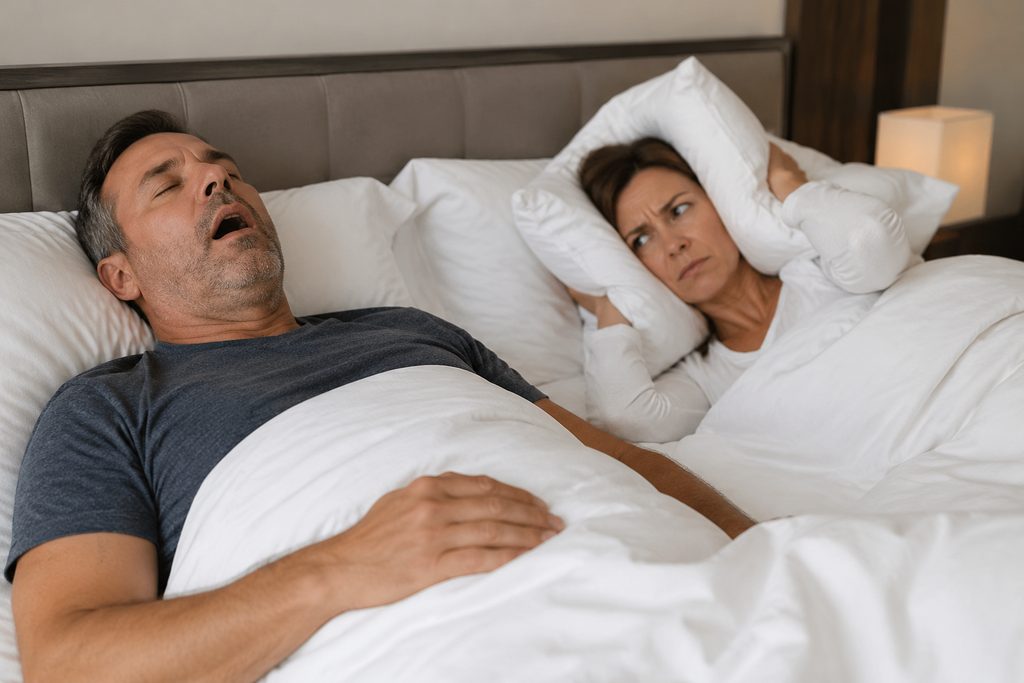
Snoring sounds like a minor annoyance. It is often something far more serious. In plain terms, snoring happens when air moving through your throat makes soft tissue vibrate. Sometimes that is harmless. Sometimes it signals obstructive sleep apnea (OSA), a condition where breathing repeatedly stops during sleep. The distinction matters enormously, because the right treatment for simple snoring is nothing like the right treatment for apnea.
Here is the number that should get your attention: according to a 2019 study in The Lancet Respiratory Medicine, an estimated 936 million adults worldwide have mild to severe obstructive sleep apnea, and roughly 425 million have moderate to severe cases. In the United States, the American Academy of Sleep Medicine reports that about 30 million adults live with OSA, yet an estimated 80 percent remain undiagnosed. If you or a partner has been tolerating loud snoring for years, you may be sitting inside that statistic.
So where does China fit into this picture? For international patients researching snoring treatment cost China has become a genuinely serious option — not because the medicine is exotic, but because the diagnosis and treatment are accessible, fast, and dramatically cheaper than in the US or Western Europe. This guide walks through the real options, the honest logistics, and what you should know before booking anything.
The Problem: Why Snoring Gets Ignored Until It Becomes Dangerous
Most people treat snoring as a relationship problem, not a medical one. That delay has consequences. Untreated moderate to severe sleep apnea is associated with hypertension, atrial fibrillation, type 2 diabetes, and a significantly elevated risk of cardiovascular events. A widely cited analysis in the journal Sleep found that severe untreated OSA was linked to a two- to three-fold increase in all-cause mortality risk compared with the general population.
The Western bottleneck is rarely the quality of care. It is access. A sleep study in the US can take weeks or months to schedule, and polysomnography at a hospital-based lab often costs $1,000–$3,000 before insurance. CPAP machines run $500–$1,500. Surgical options such as uvulopalatopharyngoplasty (UPPP) or hypoglossal nerve stimulation can exceed $20,000. And in many public health systems, the waitlist for a sleep clinic referral stretches past six months.
That is the gap China fills. Not by cutting corners, but by removing the queue.
Why China Delivers Results for Sleep and Airway Treatment
China’s approach to sleep medicine is built on volume, integration, and speed. The country has more than 35,000 hospitals, and the top 5 percent — ranked by the Fudan University Hospital Rankings and JCI accreditation — handle an extraordinary caseload. Sleep medicine sits inside this system as a recognized specialty, usually housed within respiratory medicine, ENT, or neurology departments.
Diagnostic Depth Without the Wait
At major centers, an overnight polysomnography study can typically be arranged within days to a couple of weeks, not months. The study measures brain waves, oxygen saturation, heart rate, breathing patterns, and limb movement. You get a formal Apnea-Hypopnea Index (AHI) score, which is the number that determines whether you have mild, moderate, or severe OSA. That score drives every treatment decision that follows.
Many top hospitals also offer drug-induced sleep endoscopy (DISE), a technique where a flexible scope examines exactly where your airway collapses while you are sedated. It is the difference between guessing and knowing which surgical approach will actually help.
A Full Range of Treatment Options Under One Roof
Western patients are often surprised by how many paths exist. China’s larger hospitals offer:
- CPAP and BiPAP titration with same-week fitting
- Oral appliance therapy coordinated with dental sleep specialists
- Positional therapy and weight-management programs
- Soft tissue surgery (UPPP, tonsillectomy, nasal procedures)
- Upper airway stimulation in selected centers
- Maxillomandibular advancement for severe skeletal cases
- Traditional Chinese medicine approaches for chronic nasal congestion and sleep quality
Cost Advantage Without Quality Compromise
Why is the price so much lower? It comes down to labor economics, hospital efficiency, and sheer volume. A senior surgeon in China may perform several times the annual case volume of a Western counterpart, and hospital overhead is structured very differently. The equipment — polysomnography systems, surgical instrumentation, imaging — is largely the same international standard you would find in a US academic center.
This is the same structural reason that cardiac surgery and orthopedic procedures in China cost a fraction of US prices while outcomes remain comparable. Sleep surgery follows the same pattern.
Snoring Treatment Cost China: A Realistic Breakdown
Prices below are reference ranges in US dollars. They vary by hospital tier, city, and case complexity. Public hospital international departments and private international hospitals sit at the higher end; standard public channels sit lower but come with longer queues and no English support.
| Service | Typical Cost in China (USD) | Typical Cost in the US (USD) |
|---|---|---|
| Initial ENT / sleep consultation | $30–$120 | $200–$500 |
| Overnight polysomnography (sleep study) | $200–$600 | $1,000–$3,000 |
| Drug-induced sleep endoscopy (DISE) | $400–$900 | $1,500–$4,000 |
| CPAP machine + titration | $400–$1,200 | $800–$2,000 |
| Oral appliance therapy | $300–$900 | $1,500–$4,000 |
| Laser-assisted snoring surgery (LAUP-type) | $1,500–$3,500 | $5,000–$12,000 |
| UPPP (uvulopalatopharyngoplasty) | $3,000–$8,000 | $15,000–$30,000 |
If you are specifically asking how much does laser snoring treatment cost in Beijing, expect the range to land between roughly $1,500 and $3,500 at a top-tier public hospital, and somewhat higher at a private international facility. The laser approach is generally reserved for simple snoring or mild apnea with a clear palatal source — it is not a fix for moderate to severe OSA.
Is Snoring Surgery Safe in China? What the Evidence Actually Says
This is the question every patient asks, and it deserves a straight answer. The safety of snoring surgery in China depends far less on the country than on three variables: the hospital’s tier, the surgeon’s volume, and whether your anatomy is actually suited to the procedure.
UPPP and related soft tissue surgeries carry well-documented risks anywhere in the world — bleeding, infection, temporary swallowing difficulty, voice changes, and the possibility that snoring improves but does not fully resolve. Reported success rates for UPPP in the international literature vary widely, roughly 40 to 60 percent for significant improvement, which is why careful patient selection matters more than the procedure itself.
China’s top-ranked hospitals manage these risks the same way leading Western centers do: pre-operative airway imaging, DISE to confirm the collapse site, and post-operative monitoring in a facility equipped for airway emergencies. The complication rates published by major Chinese academic centers are broadly in line with international benchmarks. What differs is that you may get into the operating room in weeks rather than many months.
What you should be cautious about is any provider — in any country — who promises a guaranteed cure from a single procedure. That is a red flag everywhere.
Finding the Best Sleep Clinic in Shanghai for Snoring
Shanghai is one of the strongest cities in China for sleep medicine, home to 18 hospitals on the Fudan Top 100 list. The Shanghai city page lists the major institutions, but here is how to think about choosing between them.
Large public hospitals with dedicated sleep centers offer the deepest diagnostic capability and the lowest prices. Private international hospitals — such as those with JCI accreditation and English-speaking staff — offer direct insurance billing, shorter waits, and a Western-style patient experience at roughly 1.5 to 2 times the public international department rate.
Which one fits you depends on your priorities. If you have complex OSA, skeletal abnormalities, or a history of failed treatment, a high-volume public academic center is usually the better call. If you want convenience, English-language continuity, and insurance handling, a private international hospital may serve you better.
For a broader map of options across the country, the ranked hospital directory groups facilities by city and specialty tier.
How to Book Snoring Surgery in China: The Real Process
This is where expectations need calibrating, because the process is genuinely different from the West.
Public hospitals in China generally do not allow overseas patients to book a surgery directly from abroad. The standard pathway is: consultation first, surgery scheduled after. You cannot skip the in-person evaluation. This is not bureaucracy for its own sake — it reflects the clinical reality that no responsible surgeon operates on an airway they have not examined.
Here is how the timeline typically unfolds for an international patient:
- Remote stage: You send existing sleep studies, imaging, and medical records. A Chinese specialty team reviews them and gives a written assessment or a video consultation.
- Travel stage: You arrive, attend an in-person consultation, and complete any additional testing the surgeon requires.
- Scheduling stage: If surgery is indicated and you agree, the hospital schedules the procedure — usually within days to a few weeks.
- Recovery stage: Hospital stay, discharge, and follow-up. Most soft tissue procedures involve one to three nights inpatient.
If you want to lock in a senior specialist and English-language service before you travel, the international or VIP department is the route. It costs roughly 1.5 to 2 times the standard channel and remains subject to hospital scheduling rules.
Practical Considerations: Visas, Payment, and Follow-Up
For medical travel to China, the applicable short-stay visa category is S2, used for medical treatment and private affairs, subject to the latest embassy or consulate requirements and supporting hospital documents. Accompanying family members apply under the same category. If your stay will exceed 180 days, the S1 category applies instead.
One clarification worth stating plainly: the M visa is for commercial and trade activities and has nothing to do with medical treatment. Some online sources conflate the two. They are wrong.
On payment, public hospitals require prepayment, with insurance reimbursement handled afterward in your home country. Private international hospitals often bill insurers directly. Bring your policy documents and confirm coverage before travel — most Western insurers treat overseas elective surgery as out-of-network.
Language is the other practical hurdle. China’s top hospitals can see tens of thousands of outpatients daily. Signage, registration systems, and staff communication are primarily in Chinese. Without support, even simple steps like registering, paying, and finding the right floor become genuinely difficult. This is a logistical reality, not a sales pitch.
Finally, plan your follow-up. Ask the surgeon for a written post-operative plan, discharge summary, and imaging in English before you fly home, so your local physician can continue care without gaps.
Frequently Asked Questions
Yes. Surgery without a confirmed diagnosis is guesswork. A polysomnography study establishes your Apnea-Hypopnea Index, which determines whether you have simple snoring or obstructive sleep apnea — and those two conditions require different treatments. Skipping this step is the single most common mistake patients make.
Not directly at public hospitals. The standard pathway requires an in-person consultation before surgery can be scheduled. You can, however, arrange a written second opinion or video consultation remotely first, which clarifies whether surgery is even appropriate before you commit to travel.
This is a real possibility, and honest surgeons will tell you so. Soft tissue surgery improves but does not always eliminate snoring, and success rates vary by anatomy. Some patients still need CPAP or an oral appliance afterward. Discuss realistic expectations with your surgeon before consenting.
Rarely for elective procedures. Most travel policies exclude planned surgery. You would typically pay out of pocket and seek reimbursement from your home insurer, which may treat it as out-of-network. Verify coverage in writing before you travel.
For a sleep study and consultation, about one week. If surgery is involved, plan two to four weeks total, including pre-operative testing, the procedure, hospital stay, and an initial follow-up visit before you fly home.
Your Next Step
The core message is simple: snoring is worth investigating, and China offers a fast, high-quality, and cost-effective path to diagnosis and treatment — provided you understand the process and plan the logistics properly. The medicine is solid. The navigation is where patients need help.
We are China Medical Services, a coordination service that connects international patients with top-ranked Chinese hospitals. We are not a hospital and we do not provide diagnoses or medical advice. If you would like to understand your options, you can start with a free consultation — no pressure, just a clear conversation about what is possible.
For more medical information and treatment options in China, visit chinamedservices.com (China Medical Services).
