Sir Run Run Shaw Hospital Gastroenterology for International Patients: Costs, Safety, and How to Book
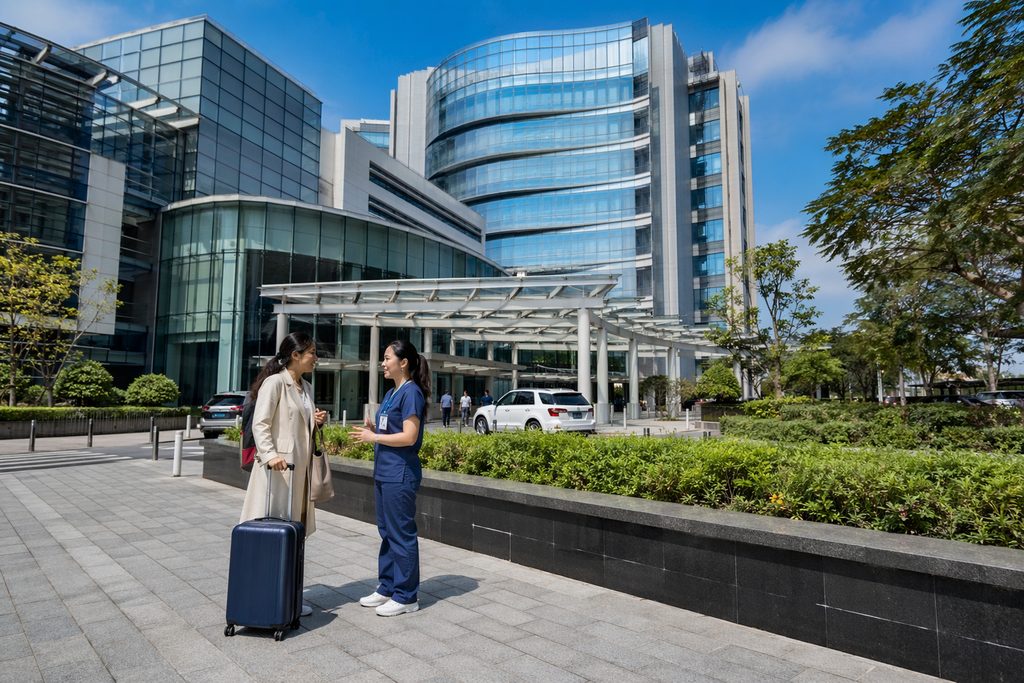
You’ve probably heard that getting specialized medical care in China means navigating chaos, language barriers, and questionable quality. The reality at Sir Run Run Shaw Hospital (SRRSH) in Hangzhou is closer to the opposite: a modern, internationally accredited teaching hospital with a gastroenterology department that handles complex cases daily. But understanding the Sir Run Run Shaw Hospital gastroenterology price structure and the actual pathway for a foreign patient requires looking past the marketing brochures. Our team at China Medical Services regularly coordinates digestive care for international patients here, and the questions are always the same: What will it cost? Is it safe? How do I even start?
How This Actually Works, Step by Step
You don’t just show up at the hospital and ask for a colonoscopy. The process for an international patient at a Chinese public hospital follows a specific sequence. Here is what actually happens when you contact us about gastroenterology care at Sir Run Run Shaw Hospital.
First, you send your existing medical records. This means recent endoscopy reports, imaging (CT, MRI, ultrasound), blood work, pathology slides if relevant, and a summary of your symptoms and treatment history. Our team translates these into Chinese and prepares a clinical summary for the department.
Second, the gastroenterology team reviews your file. They assess whether your case fits their expertise, what additional tests might be needed, and whether a remote consultation makes sense before you travel. This step typically takes three to seven business days.
Third, we arrange a video consultation if the department recommends it. You speak directly with a gastroenterologist, explain your symptoms and goals, and hear their preliminary assessment. The cost for this ranges from $100 to $300 for a standard international department consultation, or $500 to $800 for a top-specialist video session.
Fourth, if you decide to proceed in person, we coordinate your appointment, prepare your visa documentation, and arrange a bilingual medical companion to meet you at the hospital. You arrive, complete registration, see the specialist, undergo any recommended procedures, and receive a treatment plan.
Sir Run Run Shaw Hospital Gastroenterology Price: What You Actually Pay
The Sir Run Run Shaw Hospital gastroenterology price for international patients depends on which channel you use. The hospital operates a standard public outpatient system and an international medical center. Prices differ substantially between the two. The international center offers English-speaking staff, faster appointment scheduling, and dedicated coordination — but at roughly 1.5 to 2 times the standard public rate.
For a standard diagnostic colonoscopy with sedation, international patients typically pay between $400 and $800 at the international center. The same procedure through the standard public channel costs approximately $200 to $400, but you will need a bilingual companion to navigate registration, payment, and the procedure itself. A gastroscopy runs slightly lower, around $300 to $600 through the international center. These figures include the procedure fee, sedation, and basic pathology. They vary by case complexity and whether polyps are removed during the procedure.
Compare this to the United States, where a diagnostic colonoscopy without insurance commonly costs $2,000 to $4,000, and a gastroscopy $1,500 to $3,000. European prices fall somewhere in between. The cost advantage in China is real, but it comes with the logistical complexity of international travel and coordination.
| Procedure | Sir Run Run Shaw (International Center) | Sir Run Run Shaw (Standard Public) | USA Average (Uninsured) |
|---|---|---|---|
| Diagnostic Colonoscopy | $400–$800 | $200–$400 | $2,000–$4,000 |
| Gastroscopy (EGD) | $300–$600 | $150–$350 | $1,500–$3,000 |
| Capsule Endoscopy | $800–$1,500 | $500–$900 | $2,500–$5,000 |
| ERCP (complex biliary) | $3,000–$6,000 | $1,500–$3,500 | $15,000–$30,000 |
These are reference ranges, not quotes. Final pricing depends on your specific condition, the specialist assigned, and any additional interventions required during the procedure.
A Realistic Timeline
People underestimate how long the process takes. Here is what a typical timeline looks like for an international patient seeking gastroenterology care at Sir Run Run Shaw Hospital.
| Stage | What Happens | Duration |
|---|---|---|
| Day 1–3 | You submit medical records and symptom summary | 2–3 days |
| Day 4–10 | Document translation and department review | 5–7 business days |
| Day 11–18 | Video consultation scheduling and completion | 1–2 weeks (depends on specialist availability) |
| Week 3–5 | Visa application (S2), travel booking, appointment confirmation | 2–4 weeks |
| Week 5–6 | Arrival in Hangzhou, in-person consultation, procedure scheduling | 3–7 days |
| Week 6–8 | Procedure, pathology results, treatment plan discussion | 1–2 weeks |
The waiting steps people forget: document translation takes real time. Visa processing at your local Chinese embassy or consulate typically takes one to three weeks. And specialist availability at the international center is not infinite — popular gastroenterologists book out one to two weeks in advance. Plan for the whole process to take six to eight weeks from first contact to completed procedure. Some patients rush it in four weeks. Most don’t.
What Can Go Wrong — and What Happens Then
Let’s be straight about the failure modes. They exist, and pretending otherwise helps no one.
The most common issue: your records are incomplete or in a language the department cannot review. If you send a PDF of handwritten notes from a doctor in Portuguese, the review stalls. We handle translation, but if the source documents are illegible or missing key data, the gastroenterology team may ask for repeat imaging or labs before proceeding. That adds time and cost.
Another failure point: procedure scheduling. The hospital does not guarantee a specific procedure date for international patients until you have completed the in-person consultation. If the specialist determines you need additional cardiac clearance before sedation, your colonoscopy gets pushed back. This happens more often than patients expect, especially for those over 60 or with existing heart conditions.
Payment is also a friction point. Public hospitals in China require prepayment for procedures. International patients pay out of pocket and seek reimbursement from their insurance later. If your insurer requires pre-authorization, you need to secure that before you travel — the hospital will not handle it for you.
And if something goes wrong during a procedure? Sir Run Run Shaw Hospital is a tertiary teaching hospital with full emergency and ICU capabilities. Complication rates for diagnostic endoscopy are low — perforation occurs in roughly 1 in 2,500 to 1 in 10,000 procedures depending on the study — but the hospital has the resources to manage complications on-site. That’s a significant advantage over smaller private clinics.
Is Endoscopy Safe at Sir Run Run Shaw Hospital? Evaluating the Evidence
This is the question behind the question. Patients searching for is endoscopy safe at Sir Run Run Shaw Hospital are really asking: can I trust a Chinese hospital with a scope inside my body?
Sir Run Run Shaw Hospital was founded in 1994 through a collaboration between the Chinese government and the Sir Run Run Shaw Foundation, with early operational guidance from Loma Linda University in California. It has held Joint Commission International (JCI) accreditation, which requires meeting international patient safety standards across hundreds of measurable criteria. The hospital performs over 20,000 gastrointestinal endoscopies annually, a volume that directly correlates with procedural competence.
The gastroenterology department uses standard Olympus and Fujifilm endoscopic equipment — the same brands used in American and European hospitals. Sedation protocols follow international guidelines. Pathology specimens are processed in an accredited on-site laboratory. For international patients specifically, the international medical center assigns English-speaking coordinators who stay with you through the procedure.
What the hospital does not do: guarantee zero complications. No hospital can. But the structural safety measures — JCI accreditation, high procedure volume, on-site emergency response — are the same indicators you would look for in any Western hospital.
Book GI Specialist Hangzhou International Patient: The Right Way to Start
If you’re searching for book GI specialist Hangzhou international patient, you’ve probably already hit the wall. Chinese public hospitals do not allow overseas patients to book standard outpatient appointments online from abroad. The registration system requires a Chinese phone number, a local ID or passport verification in person, and payment through Chinese platforms. This is not a flaw — it’s how the system works for 1.4 billion people.
For international patients, the realistic options are: use the hospital’s international medical center directly, or work with a coordination service like ours. The international center accepts overseas inquiries by email and phone, but response times vary, and they cannot help with visa documentation, airport pickup, or hotel arrangements. A coordination service handles the full chain: document translation, appointment scheduling, visa support letters, bilingual accompaniment, and follow-up communication.
The decision between Hangzhou and Shanghai usually comes down to case complexity. For routine diagnostic endoscopy, inflammatory bowel disease management, or GERD evaluation, Sir Run Run Shaw is more than capable. For rare motility disorders or complex pancreaticobiliary cases requiring highly specialized intervention, Shanghai hospitals like Ruijin or Zhongshan may offer deeper subspecialty coverage. We help you make that call based on your actual records, not a generic ranking list.
Practical Considerations: Records, Visa, Payment, and Follow-Up
What do you actually need to prepare? Here is the honest list.
Medical records: Everything you have. Previous endoscopy reports with images, pathology slides, CT/MRI scans on disc, current medication list, and a chronological symptom summary. The more complete your file, the faster the review. Incomplete records mean delays.
Visa: You need an S2 visa for medical treatment in China. This is the short-stay visa category used for private affairs including medical care. Your accompanying family member applies for the same S2 visa. The hospital provides a medical treatment invitation letter that supports your application. Processing takes one to three weeks depending on your home country. No visa is guaranteed, and you should check the latest requirements with your local Chinese embassy or consulate.
Payment: Public hospitals in China operate on prepayment. You deposit funds at registration, and procedures are deducted from that balance. International insurance is rarely accepted for direct billing at public hospitals — you pay out of pocket and file for reimbursement. Private international hospitals in China do offer direct insurance billing, but Sir Run Run Shaw is a public institution. Budget for the full procedure cost upfront.
Language: The international medical center has English-speaking staff. The standard public department largely does not. If you choose the standard channel for cost savings, a bilingual companion is not optional — it’s the difference between a smooth visit and a lost afternoon.
Follow-up at home: Pathology results are typically available within 5 to 10 business days. We arrange for the reports to be translated into English and sent to you and your home physician. If the procedure reveals a condition requiring ongoing treatment, the gastroenterologist provides a written treatment plan that you can take back to your local doctor. For patients considering digestive disease treatment China medical tourism package options, the follow-up pathway matters as much as the procedure itself.
Frequently Asked Questions
Through the international medical center, a diagnostic colonoscopy with sedation typically costs $400 to $800. The standard public channel runs $200 to $400, but requires a bilingual companion and more waiting. Final cost depends on whether polyps are removed and sent for pathology.
The hospital holds JCI accreditation and performs over 20,000 gastrointestinal endoscopies annually. Equipment and sedation protocols match international standards. Complication rates are low, and the hospital has full emergency and ICU capabilities on-site. No procedure is risk-free, but the structural safety indicators are comparable to Western teaching hospitals.
You cannot book a standard public outpatient appointment from overseas. The international medical center accepts overseas inquiries, and a coordination service can arrange a video consultation first, then schedule your in-person appointment once you confirm travel. The video consultation lets you meet the specialist before committing to the trip.
You need an S2 visa for short-stay medical treatment. Accompanying family members apply for the same category. The hospital or your coordination service provides a medical treatment invitation letter. Processing takes one to three weeks and approval is never guaranteed.
It depends on your case. For routine endoscopy, IBD, and GERD management, Sir Run Run Shaw is fully capable and often less crowded than Shanghai’s largest hospitals. For rare or complex pancreaticobiliary cases, a Shanghai hospital with deeper subspecialty coverage may be more appropriate. We evaluate your records and recommend accordingly.
Your Next Step
Sir Run Run Shaw Hospital offers international patients a credible, cost-effective option for gastroenterology care — but the pathway requires coordination, translation, and local knowledge. Our team at China Medical Services handles the logistics: document translation, specialist matching, appointment scheduling, visa support, and bilingual accompaniment. We do not provide medical advice or guarantee outcomes; we connect you with the right specialists and make the process navigable. If you’re considering digestive care in China, start with a conversation. Send us your records and we’ll tell you honestly whether this hospital fits your case.
For more medical information and treatment options in China, visit chinamedservices.com (China Medical Services).
