Checking Whether a Telehealth App Is Legit: A Practical Guide for International Patients
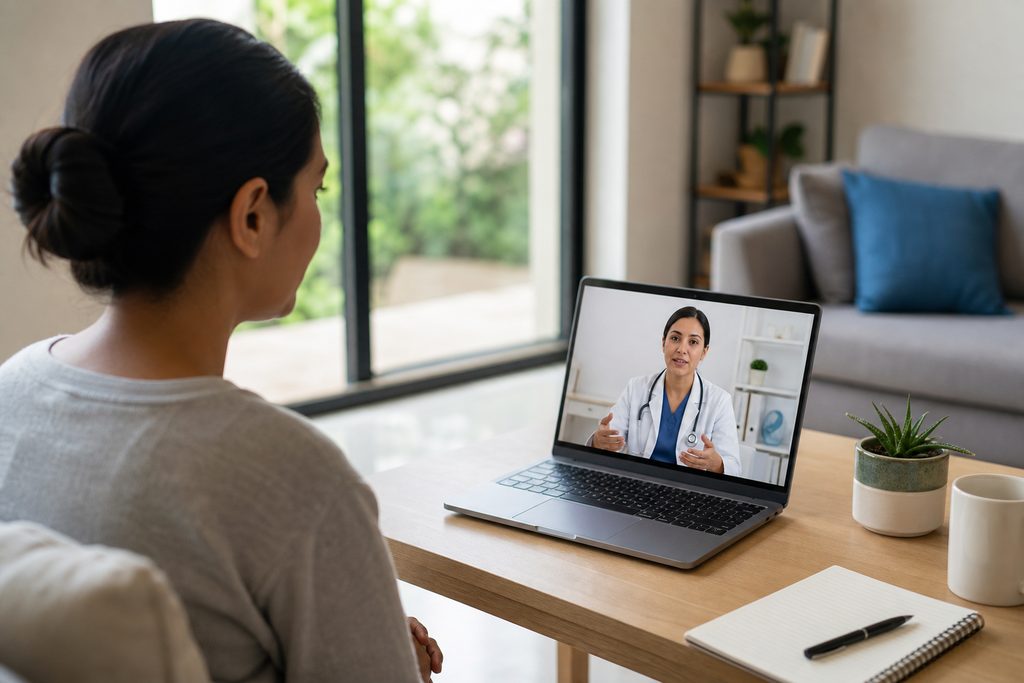
According to a 2023 report from the American Medical Association, nearly 74% of physicians now work in practices that offer telehealth services. That sounds reassuring until you realize the same report notes that almost every patient-facing app store hosts hundreds of unverified health platforms. The gap between a legitimate Chinese hospital’s official telemedicine portal and a slick-looking startup with a stock photo of a stethoscope is wider than most people assume. Checking whether a telehealth app is legit is not a technical exercise. It is a patient-safety skill. Our team has spent years connecting international patients with China’s top-tier medical institutions, and we have seen the full spectrum: world-class remote consultations and outright scams that vanish with a credit card number.
This guide is built for someone sitting in London, Dubai, or Los Angeles, staring at a telehealth app that promises access to Chinese specialists. You want to know if it is real. You want to know what happens after you upload your MRI. You want to know if the doctor on the other end actually works at the hospital the app claims. We will walk through exactly how to verify that, step by step, without jargon.
How This Actually Works, Step by Step
Let us assume you have found an app that claims to connect you with a cardiologist at Fuwai Hospital in Beijing. The app looks professional. The reviews are mixed but mostly positive. What now? The verification process follows a sequence. It is not glamorous. It works.
First, you identify the legal entity behind the app. Scroll to the bottom of the website or the app’s “About” page. Look for a registered company name, a physical address, and a business license number. In China, legitimate medical service platforms must display their ICP filing number (Internet Content Provider license) on their website footer. That number looks like “京ICP备12345678号” in Chinese characters, but reputable platforms serving international patients will also list an English-language corporate registration. If there is no company name anywhere, stop. That is not a red flag. That is a closed door.
Second, you cross-reference the hospital. Go to the official website of Fuwai Hospital. Search for their international medical services or telemedicine department. Official Chinese hospitals list their authorized remote consultation partners. If the app is not listed, that does not automatically mean fraud — some platforms work through third-party medical tourism agencies. But it means you need to ask the app directly: “Are you an official partner, or do you coordinate through an agency?” A legitimate platform answers this question in writing. A fraudulent one dodges it.
Third, you check the doctor. The app claims Dr. Zhang from Fuwai will review your case. Go to the hospital’s official physician directory. Is Dr. Zhang there? Does the specialty match? Does the photo match? This takes ten minutes. It is the single most effective step in checking whether a telehealth app is legit.
Fourth, you examine the payment flow. Legitimate platforms charge for the service — the coordination, the translation, the scheduling — not for “access” to a specific doctor. If the app asks you to pay a large sum before telling you which doctor will review your case, that is a problem. If the app asks for payment in cryptocurrency or via a personal PayPal account, that is a bigger problem.
Finally, you test the communication. Send a simple email or message through the app: “Can you tell me which hospital’s international department will handle my case, and what documents you need?” A legitimate platform responds within one to two business days with specific, verifiable information. A scam responds with urgency and vagueness: “Pay now to secure your slot with our top specialist.”
Checking Whether a Telehealth App Is Legit: The Verification Checklist
This section is the core of the guide. Print it. Save it. Use it before you upload a single medical record to any platform.
Start with the company. A legitimate telehealth platform operating in China’s medical sector should have a traceable corporate identity. Look for a registered business name, a physical office address in China, and a publicly listed legal representative. Cross-check that name on China’s National Enterprise Credit Information Publicity System — a free government database. If the company does not exist there, it does not legally exist. That is not a minor compliance issue. It means you have no legal recourse if something goes wrong.
Then move to the hospital relationship. Official Chinese hospital telemedicine platforms — like the ones operated by Peking Union Medical College Hospital or Zhongshan Hospital Fudan University — are usually accessible directly through the hospital’s own website or app. Third-party platforms that claim to facilitate access to these hospitals should be able to produce a cooperation agreement or a written authorization letter. Ask for it. A legitimate platform will share a redacted version. A fake one will tell you that information is “confidential.”
Now the clinical side. Who actually reviews your case? In China’s regulated telemedicine framework, remote consultations must be conducted by licensed physicians affiliated with licensed medical institutions. The app should tell you the doctor’s full name, their hospital affiliation, and their medical license number. Chinese physician licenses are public record. You can verify them through the National Health Commission’s physician practice registry. If the app refuses to name the doctor before payment, walk away.
Data security matters more than most patients realize. A legitimate platform will have a clear privacy policy that states where your medical records are stored, who has access, and how long they are kept. China’s Personal Information Protection Law (PIPL), effective since November 2021, imposes strict requirements on health data. Ask the app: “Where are my records stored? Will they be shared with any third party?” If the answer is vague or the privacy policy is missing, that is a disqualifier.
One more thing. Check the app’s presence across multiple channels. A legitimate platform has a website, a registered business address, a working customer service phone number, and a track record. Search for the company name plus “complaint” or “scam.” Search Chinese consumer forums. Search English-language expat forums. International patients are vocal about bad experiences. If you find nothing at all — no reviews, no complaints, no independent mentions — be cautious. Legitimate services leave traces.
A Realistic Timeline
Verification takes time. That is the point. Anyone who rushes you is not acting in your interest. Here is what a realistic process looks like when you are checking whether a telehealth app is legit and then actually using it.
| Stage | What Happens | Realistic Duration |
|---|---|---|
| Day 1–3 | Initial verification: company registration, hospital partnership, doctor credentials, privacy policy review | 2–3 days if the platform is responsive |
| Day 3–7 | Document preparation: collecting your existing scans, lab reports, and clinical summaries; translating them into Chinese if required | 3–5 days, longer if records are incomplete |
| Week 1–2 | Scheduling the consultation: the platform confirms the specialty team, proposes a date, and sends a formal service agreement | 5–10 business days depending on the hospital’s international department |
| Week 2–3 | The video consultation or written second opinion itself | 30–60 minutes for video; 5–7 business days for a written review |
| Week 3–4 | Receiving the written summary, treatment recommendations, and any follow-up questions answered | 3–5 business days after the consultation |
People forget the document preparation stage. It is the most common source of delay. Chinese specialists need complete records, not partial ones. If your MRI was done two years ago, expect to be asked for a new one. If your pathology report is in a language other than English or Chinese, expect translation time. Budget for it.
Visa processing is a separate timeline. If the remote consultation leads to a decision to travel to China for treatment, the S2 visa — the short-stay category used for medical treatment and private affairs — typically takes 4 to 10 business days after submission, depending on your home country’s Chinese embassy or consulate. Supporting documents from the Chinese hospital are required. A legitimate telehealth platform will tell you this upfront. A scam will promise to “handle everything” without mentioning a visa.
What Can Go Wrong — and What Happens Then
Stop all further payments. Document every interaction — screenshots, emails, payment receipts. If you paid by credit card, initiate a chargeback immediately. If the platform is registered in China, file complaints with the local health commission and market supervision administration. If registered elsewhere, report to your local consumer protection agency. Act quickly; the longer you wait, the harder recovery becomes.
No. Legitimate platforms can request a specific specialist through the hospital’s international department, but they cannot guarantee availability. Chinese hospitals assign specialists based on clinical need, department capacity, and the hospital’s own protocols. Any platform that promises a specific doctor by name before reviewing your case is not operating within the rules of China’s public hospital system.
Your Next Step
Checking whether a telehealth app is legit takes an afternoon of focused work. It is not complicated. It is just methodical. Verify the company, verify the hospital relationship, verify the doctor, read the privacy policy, and test the
Frequently Asked Questions
Yes. The hospitals used for international patients are JCI-accredited and follow the same international safety standards as top hospitals in the US and Europe. Surgical teams perform high volumes of procedures — often more than their Western counterparts — which studies show leads to better outcomes.
Costs vary by procedure and hospital, but international patients typically save 40-80% compared to US prices — even when factoring in travel and accommodation. A consultation with our team will give you an exact, all-inclusive quote with no hidden fees.
Send us your existing medical reports to get started. We handle everything from hospital selection and appointment scheduling to visa assistance and post-operative recovery planning. Your medical records are reviewed by the specialist before you even book a flight.
For more medical information and treatment options in China, visit chinamedservices.com (China Medical Services).
