Can I Travel With a Pacemaker? Planning Safe Medical Travel to China
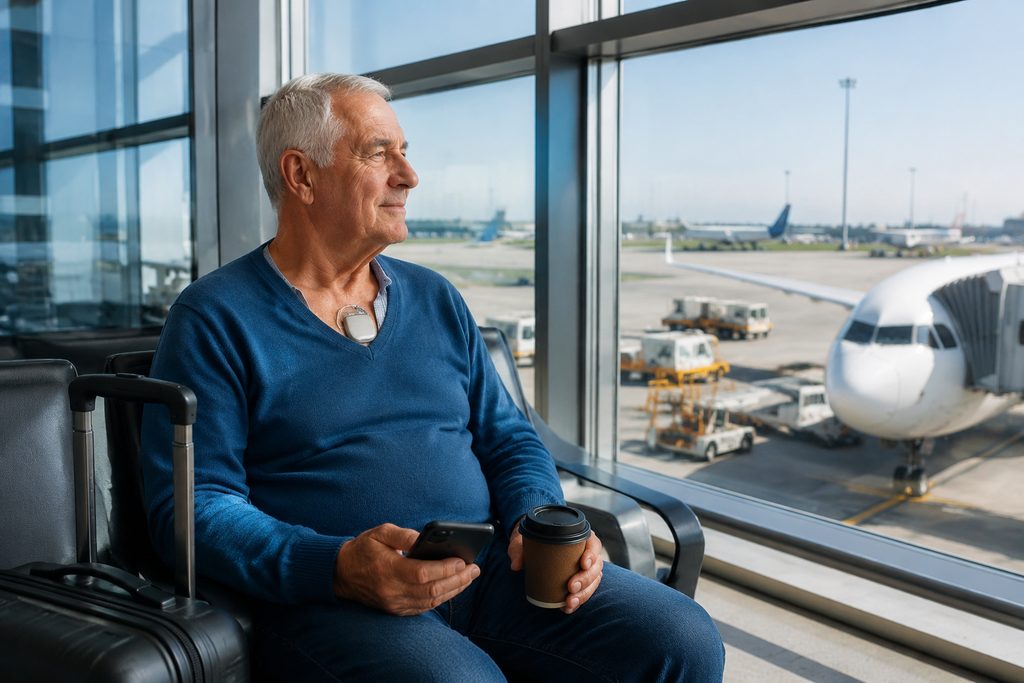
Have you ever felt that quiet knot of anxiety before a long flight, wondering whether the device keeping your heart in rhythm will trigger a security alarm or malfunction at 35,000 feet? You are not alone. Millions of people with pacemakers travel internationally every year, and the short answer is yes — you can travel with a pacemaker. But planning matters. This guide covers the practical realities of flying with a cardiac implant, what to expect at airport security, and why some patients now look at a pacemaker checkup cost China as part of a broader medical travel plan.
We coordinate care for international patients at China Medical Services, and a growing share of our cardiology inquiries come from pacemaker patients who want to combine travel with device interrogation or a second opinion. Not because they have to — but because the numbers make sense. A standard pacemaker checkup in the US can run anywhere from $250 to over $1,500 depending on where you live and whether a cardiologist or device clinic handles the interrogation. In China’s top-tier public hospitals, the same remote interrogation and lead evaluation typically costs between $50 and $200. That is a meaningful difference, especially for patients managing chronic cardiac conditions without comprehensive insurance.
How This Actually Works, Step by Step
The process of arranging a pacemaker checkup abroad is simpler than most patients expect. Here is the real sequence.
You start by sending us your existing device records — the implant card, the last interrogation report, and a brief note on your current symptoms or concerns. We translate these into Chinese and forward them to the cardiology department at one of our partner hospitals. A device specialist reviews the file and confirms whether an in-person interrogation is appropriate. Then we schedule the appointment through the hospital’s international or VIP channel, which allows advance booking — something ordinary outpatient clinics in China do not offer.
On the day of your visit, a bilingual medical companion meets you at the hospital entrance. They handle registration, payment, navigation, and translation. The interrogation itself takes 15 to 30 minutes. A cardiologist reviews the data — battery voltage, lead impedance, sensing thresholds, arrhythmia logs — and gives you a written summary in English. If you need a programming adjustment, that happens on the spot. If the doctor spots something concerning, you get a clear recommendation for follow-up.
What happens next depends on what the checkup finds. Routine results mean you leave with documentation and peace of mind. Abnormal findings might lead to a video consultation with a senior electrophysiologist or, in rare cases, a discussion about device replacement. You are never pushed toward a procedure you did not ask for.
Can You Fly With a Pacemaker? What the Evidence Says
Modern pacemakers are built to withstand commercial flight conditions. Cabin pressurization does not affect device function. The electromagnetic fields from aircraft systems are far too weak to interfere with a properly implanted device. The Aerospace Medical Association has published guidance confirming that patients with stable cardiac conditions and functioning pacemakers can fly safely once they are medically cleared.
That said, airport security screening deserves attention. Walk-through metal detectors will not damage your pacemaker, but they may detect it. The same goes for handheld wands. What you want to avoid is lingering near the detector arch or letting a security agent hold a wand over your chest for an extended period. The standard advice from device manufacturers like Medtronic and Boston Scientific is consistent: show your pacemaker ID card, ask for a manual pat-down if you prefer, and move through the detector at a normal pace. Full-body scanners used in many airports emit low-level millimeter wave or backscatter radiation that is not harmful to pacemakers. But if you are uncertain, a pat-down is always an option.
And what about can I fly with a pacemaker medical travel concerns regarding long-haul routes? The main risk is not the pacemaker itself — it is deep vein thrombosis from prolonged immobility, dehydration, and the stress of travel. Pacemaker patients are often older adults with comorbidities. Compression stockings, hydration, and walking every two hours matter more than anything about the device.
A Realistic Timeline
If you are considering a pacemaker checkup in China, here is what the calendar actually looks like. This is not the optimistic version. It is the version that accounts for document translation, hospital lead times, and visa processing.
| Stage | What Happens | Typical Duration |
|---|---|---|
| Week 1 | Send device records and medical history; translation into Chinese | 2–4 days |
| Week 1–2 | Cardiology review and appointment confirmation through international channel | 3–7 days |
| Week 2–4 | S2 visa application with hospital invitation letter | 5–15 business days, varies by consulate |
| Week 3–5 | Travel arrangements, flight booking, accommodation | 1–2 weeks |
| Day of visit | Device interrogation, cardiologist review, written English summary | 2–4 hours total at hospital |
| After return | Follow-up video consultation if adjustments or concerns arise | Within 1 week, if needed |
Most patients can complete the entire process — from first inquiry to returning home — within four to six weeks. If you already hold a valid Chinese visa, the timeline shrinks considerably. But do not book flights before the hospital confirms your appointment. That is the step people forget.
What Can Go Wrong — and What Happens Then
Let us be direct about the failure modes. They exist, and pretending otherwise does not serve you.
The appointment might be cancelled or rescheduled. It happens. Chinese hospitals are busy, and even international channels experience schedule shifts when a senior specialist is called into emergency surgery. If this happens, we rebook for the next available slot and adjust your itinerary. If the delay exceeds your travel window, you get a full refund of the coordination fee — we do not charge for appointments we cannot deliver.
Your device might be from a manufacturer that the Chinese hospital’s programmer does not support. Most major brands — Medtronic, Abbott, Boston Scientific, Biotronik — are compatible with programmers at top-tier Chinese cardiology centers. But if you have an older or uncommon device, the specialist may not be able to interrogate it. We verify device compatibility before you travel. If compatibility cannot be confirmed, we tell you upfront and you do not book.
The interrogation might reveal a problem you did not anticipate — a failing battery, a lead fracture, an arrhythmia you did not know about. This is not a failure of the process. It is the process working. If the finding is urgent, the hospital will explain your options. You can choose to proceed with treatment in China or return home with documentation for your local cardiologist. The decision is always yours.
And the visa might be delayed. Consulates move at their own pace. We provide the hospital invitation letter and supporting documents, but we cannot guarantee approval or speed. Apply early. If the visa does not come through, most coordination fees are refundable minus document processing costs.
Traveling With a Pacemaker to China: What Makes It Different
China is not Europe or North America. The healthcare system operates differently, and pacemaker patients need to understand what that means before they land.
The biggest difference is access. Ordinary outpatient clinics at Chinese public hospitals do not accept advance bookings from overseas patients. You cannot email the cardiology department and reserve a slot for next month. You show up, queue, and hope. That system works for locals. It does not work for someone flying in from abroad. The solution is the international or VIP channel, which does allow advance scheduling — but at a premium. Expect to pay roughly 1.5 to 2 times the standard outpatient fee. For a pacemaker checkup, that premium is modest in absolute terms: a standard interrogation that costs $80 might run $120 to $160 through the international department. Still far below US prices.
Language is the second difference. Top-tier Chinese hospitals handle enormous patient volumes — some see over 10,000 outpatient visits per day. English-speaking staff are not guaranteed, even at famous institutions. Without a bilingual companion, a simple device check can turn into hours of confusion. That is the specific gap we fill at China Medical Services: someone who knows the hospital layout, knows which window to visit, and can translate your symptoms accurately to the cardiologist.
The third difference is payment. Public hospitals in China require prepayment. You pay before the service, not after. International insurance is rarely accepted directly at public facilities — you pay out of pocket and claim reimbursement later. Private international hospitals like United Family or Jiahui do accept direct insurance billing, but their prices are higher. For a pacemaker checkup, the public hospital international channel is usually the best value.
Cardiology Hospitals in Shanghai and Beijing for Pacemaker Patients
If you are evaluating cardiology hospitals Shanghai for pacemaker patients, two institutions stand out. Zhongshan Hospital, affiliated with Fudan University, runs one of the largest cardiac device clinics in the country. Its electrophysiology team handles thousands of pacemaker and ICD patients annually, and the international department is experienced with foreign patients. Shanghai also hosts Ruijin Hospital, whose cardiology department is consistently ranked among China’s top ten in the Fudan specialty reputation rankings.
In Beijing, Fuwai Hospital is the reference point. It performs more cardiac surgeries than any other hospital in the world — over 14,000 annually — and its device clinic sees a volume that few Western centers can match. For complex device cases, including lead extraction and CRT optimization, Fuwai is where Chinese cardiologists themselves go. Peking Union Medical College Hospital offers a more generalist approach with strong internal medicine coordination, useful if you have multiple conditions alongside your rhythm disorder.
You can browse our full database of top-ranked Chinese hospitals to compare cardiology programs across 37 cities. The Fudan rankings group hospitals into tiers rather than precise numerical ranks, but the specialty reputation lists do identify the top ten for cardiac surgery and cardiology — worth reviewing before you choose a city.
Is a Pacemaker Safe for International Travel? The Honest Answer
Yes, with conditions. A pacemaker is safe for international travel if your cardiac status is stable, your device was implanted more than six weeks ago, and you have no active infection or recent lead revision. The device itself is not the limiting factor. Your overall health is.
Talk to your cardiologist before booking. Get written clearance. Carry your device ID card, a recent interrogation printout, and a list of your medications. Pack medications in your carry-on, never checked luggage. Keep a copy of your ECG and device settings on your phone. These are the habits that make travel uneventful.
One nuance worth stating: travel insurance. Standard policies often exclude pre-existing conditions. If you need coverage for cardiac events abroad, look for a policy that specifically covers pacemaker-related complications or acute arrhythmia management. It will cost more. It may be worth it. That is a personal risk decision, not something anyone can decide for you.
Practical Considerations: Records, Visa, Payment, and Follow-Up
Let us get concrete about what you need in hand before you travel.
Records. Bring your pacemaker implant card, the last two interrogation reports, a recent ECG, and a letter from your cardiologist confirming you are fit to fly. If your records are not in English, translation adds time. Most Western patients do not face this issue, but patients from the Middle East or Eastern Europe sometimes do.
Visa. Medical travel to China uses the S2 visa, annotated for medical treatment or private affairs. It is not the M visa — that is for commercial trade and has nothing to do with healthcare. Your accompanying family member applies for S2 as well. Processing times vary by consulate, so start early. For stays over 180 days, S1 applies, but a pacemaker checkup rarely requires that.
Payment. Public hospital international departments accept cash and major credit cards. Some now accept international bank transfers. Private international hospitals accept insurance directly. Budget for the checkup itself, the international channel premium, and your companion service. A typical pacemaker checkup cost China through the international channel runs $100 to $250 all-in for the hospital portion.
Follow-up at home. The Chinese cardiologist will give you a written summary. Share it with your local cardiologist. If the checkup reveals a programming change, your home clinic needs to know. Do not assume the systems communicate — they do not. You are the carrier of your own medical record.
Language. Even at international departments, not every nurse speaks fluent English. A bilingual companion removes that friction. It is not a luxury for a device check — it is the difference between a 45-minute visit and a four-hour ordeal.
How to Book Pacemaker Monitoring Abroad Without Getting Lost
The phrase book pacemaker monitoring abroad sounds straightforward. It is not, unless you know the system. The mistake most patients make is emailing a hospital directly and waiting. Chinese public hospitals rarely respond to cold emails from international patients. The international department phone lines are busy. The websites are often Chinese-only.
The reliable path goes through a coordinator who already has relationships with the hospital’s international office. We handle the document translation, the appointment request, the fee confirmation, and the visa invitation letter. You get a confirmed appointment before you book a flight. If the hospital cannot confirm, you have not spent a cent on travel.
Some patients ask whether they can simply walk in. Technically, yes — anyone can queue at a Chinese public hospital. But without Chinese language skills and a local phone number for registration, the walk-in route is a recipe for frustration. For a device check that requires a specific programmer and a cardiologist who understands your device history, advance booking through the right channel is not optional. It is the only sane way.
Frequently Asked Questions
No. Walk-through metal detectors and handheld wands do not damage modern pacemakers. Move through at a normal pace and avoid lingering. Show your device ID card and request a manual pat-down if you prefer to avoid the detector entirely.
A standard device interrogation at a top-tier public hospital in China typically costs between $50 and $200, depending on the hospital and whether you use the international channel. The international channel adds a premium of roughly 1.5 to 2 times the standard fee, bringing the total to $100–$250 in most cases. Prices vary by hospital and case complexity.
You need an S2 visa, annotated for medical treatment or private affairs. The M visa is for commercial trade and does not apply to medical travel. Family members accompanying you also apply for S2. Processing takes 5 to 15 business days depending on the consulate.
Yes, if the hospital’s programmer is compatible with your device brand. Most major manufacturers — Medtronic, Abbott, Boston Scientific, Biotronik — are supported at top cardiology centers. We verify compatibility before you travel. Programming changes are made on the spot and documented in English for your home cardiologist.
You get a clear written explanation and a recommendation. You can choose to pursue treatment in China or return home with documentation. Nothing is done without your explicit consent. The checkup is diagnostic — it does not commit you to any procedure.
Your Next Step
Traveling with a pacemaker is not complicated once you know the rules: get cardiac clearance, carry your records, understand airport screening, and book your checkup through a channel that actually confirms appointments. China offers excellent cardiology care at a fraction of Western prices, but only if you navigate the system correctly. We help international patients coordinate device checks, second opinions, and cardiology consultations at top-ranked Chinese hospitals — and we are honest when a trip does not make sense. If you are considering a pacemaker checkup in China, start with a free consultation. Tell us your device model, your location, and your timeline. We will tell you what is realistic.
Your pacemaker keeps your heart in rhythm. Planning keeps your travel in rhythm. Both matter.
For more medical information and treatment options in China, visit chinamedservices.com (China Medical Services).
