Wuhan Union Hospital Neurosurgery for International Patients: A Practical Guide to Costs, Safety, and Booking
When 42-year-old Daniel first heard the words “acoustic neuroma,” he had no idea where to start looking for treatment. His insurance covered surgery in the United States, but the out-of-pocket maximum still meant a $14,000 bill. A colleague mentioned that some patients travel abroad for complex neurosurgery. Daniel started searching. What he found was a maze of fragmented information about Chinese hospitals, visa rules, and pricing that didn’t line up. If you are in his position, the search for Wuhan Union Hospital neurosurgery cost and quality data probably feels similar. This guide breaks down what actually matters: real price ranges, safety evidence, the booking sequence, and the honest risks you should weigh before making a decision.
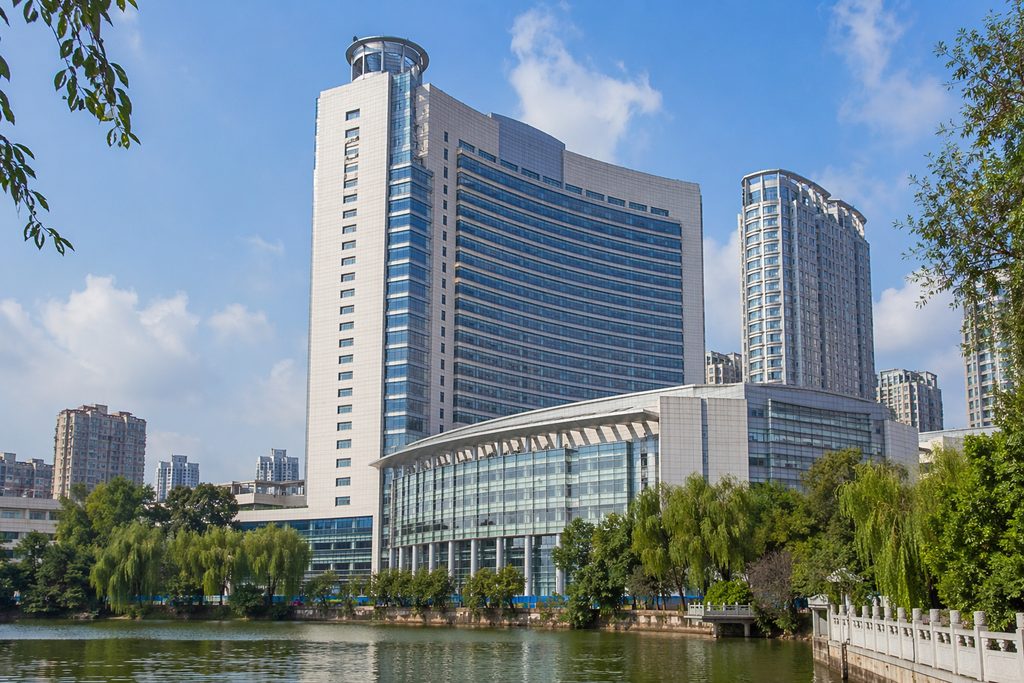
Wuhan Union Hospital, officially known as Union Hospital affiliated with Tongji Medical College of Huazhong University of Science and Technology, sits in central China’s Hubei province. For international patients, it represents one of the country’s strongest neurosurgery centers outside Beijing and Shanghai. The hospital’s neurosurgery department handles a high volume of complex cranial and spinal cases annually. But volume alone doesn’t answer the question you’re really asking: is this the right place for me?
How This Actually Works, Step by Step
The process for a foreign patient seeking neurosurgery at Wuhan Union Hospital follows a sequence that surprises many Western patients. It doesn’t begin with booking a surgery date. It begins with documentation.
First, you send your existing medical records — MRI or CT images, radiology reports, neurology notes, biopsy results if applicable, and a summary of your symptoms. These need translation into Chinese. The hospital’s international patient office or a coordination team reviews them. A neurosurgeon then evaluates whether your case fits their expertise. This typically takes 3 to 10 business days.
What comes back is not a surgery slot. It’s a preliminary opinion: whether the department can treat your condition, what surgical approach they’d likely recommend, and whether you need additional imaging before any decision. Only after this review does the conversation shift to scheduling.
The next step is a formal consultation. For international patients, this usually happens through the hospital’s international medical services channel, which operates differently from the standard public outpatient system. You’ll speak with the neurosurgery team via video or travel for an in-person evaluation. A surgical plan follows. Then — and only then — does a surgery date get discussed.
This staged approach protects you from flying across the world on a guess. It also means the timeline from first contact to actual surgery is rarely under three weeks.
Wuhan Union Hospital Neurosurgery Cost: Real Numbers for International Patients
Let’s address the search query directly. Wuhan Union Hospital neurosurgery cost varies significantly by procedure type, complexity, and whether you access the international VIP channel or the standard public pathway. For international patients, the international channel is the realistic option — it includes English-language coordination, priority scheduling, and senior surgeon involvement.
Here are reference ranges based on typical cranial and spinal procedures at top-tier Chinese public hospitals, expressed in USD:
| Procedure | Wuhan Union (International Channel) | US Average (Self-Pay) |
|---|---|---|
| Brain tumor resection (meningioma, glioma) | $18,000 – $35,000 | $70,000 – $150,000 |
| Acoustic neuroma removal | $20,000 – $40,000 | $60,000 – $120,000 |
| Cerebral aneurysm clipping | $25,000 – $45,000 | $80,000 – $180,000 |
| Microvascular decompression (trigeminal neuralgia) | $15,000 – $28,000 | $50,000 – $90,000 |
| Lumbar discectomy / spinal fusion | $12,000 – $25,000 | $40,000 – $90,000 |
These figures are estimates, not quotes. Final pricing depends on tumor location, surgical duration, ICU days, implant costs, and the specific surgeon’s seniority. The international channel typically runs 1.5 to 2 times the standard public rate — but that standard rate is inaccessible to most foreign patients without Chinese language ability and local navigation support.
What’s included? The surgical fee, hospital bed charges, operating room time, anesthesia, routine medications, and standard postoperative monitoring. What’s typically not included: pre-surgical imaging if new scans are required, premium implants or navigation technologies, private room upgrades, and any extended rehabilitation.
For comparison, the same procedures at private international hospitals in Shanghai or Beijing — United Family, Jiahui, Parkway — often run 30–50% higher than Wuhan Union’s international channel. Wuhan’s location in central China means lower overhead costs that translate to patient savings.
A Realistic Timeline
People underestimate the waiting steps. Here’s what a typical journey looks like from first inquiry to returning home after surgery:
| Stage | What Happens | Duration |
|---|---|---|
| Week 1 | Submit translated records; initial review by neurosurgery team | 3–10 business days |
| Week 2–3 | Video consultation; preliminary surgical opinion; cost estimate issued | 5–14 days |
| Week 3–5 | S2 visa application with hospital invitation letter; document preparation | 1–3 weeks |
| Week 4–6 | Travel to Wuhan; in-person evaluation; additional imaging if needed | 2–5 days |
| Week 5–8 | Surgery scheduling; preoperative clearance; procedure | 1–3 weeks after arrival |
| Week 8–12 | Postoperative recovery in hospital; discharge planning | 5–14 days inpatient |
| Month 3–4 | Follow-up imaging at home; remote consultation if needed | Ongoing |
The visa step catches many people off guard. Foreign nationals traveling to China for medical treatment use the S2 visa, which requires supporting documentation from the receiving hospital — typically an invitation letter and treatment confirmation. Processing times vary by embassy. Some patients wait three weeks for a visa appointment alone. Plan for this.
Another hidden delay: document translation. Radiology reports and clinical summaries need certified Chinese translation before the neurosurgery team can properly review them. This adds 3–5 days if you don’t prepare in advance.
What Can Go Wrong — and What Happens Then
Honesty matters here. Several things can derail the process, and you should know the recourse for each.
The first failure mode: the hospital reviews your records and says no. Not every case is appropriate for treatment abroad. If the neurosurgery team determines your condition is too advanced, too rare for their caseload, or better managed conservatively, they’ll decline. This isn’t a rejection of you — it’s a clinical judgment. The recourse is to seek a second opinion elsewhere or adjust your treatment expectations. This is also why the written second opinion service exists: it costs $300–500 and gives you a clear answer before you spend thousands on travel.
The second failure mode: you arrive and the surgical plan changes. New imaging might reveal a different tumor boundary or a complication that alters the approach. This happens in neurosurgery everywhere. The recourse is to have a contingency budget — typically 20–30% above the initial quote — and to understand that the final surgical plan is always made by the operating surgeon, not the coordinator.
The third failure mode: language barriers during recovery. Even with international channel support, the nursing staff on regular wards may have limited English. Miscommunication about pain levels, medication timing, or postoperative symptoms can occur. The recourse is to arrange a bilingual medical companion for the critical first days after surgery. This costs from $300 per day and is, in our experience, the single most underrated investment international patients make.
The fourth failure mode: complications requiring extended stay. Neurosurgery carries inherent risks — infection, bleeding, neurological deficits, CSF leaks. Chinese hospitals manage these competently, but your insurance may not cover extended hospitalization abroad. Verify your policy’s international coverage before committing. If your insurer won’t cover complications in China, factor that risk into your decision.
Is Brain Surgery Safe in China? What the Evidence Shows
The question “is brain surgery safe in China” deserves a direct answer. The short version: at top-tier academic medical centers like Wuhan Union Hospital, neurosurgical safety outcomes are comparable to Western benchmarks for common procedures. The longer version requires nuance.
China’s top hospitals operate at extraordinary volume. A single neurosurgery department at a major center may perform 3,000–5,000 procedures annually. That repetition builds surgical skill. For procedures like microvascular decompression, aneurysm clipping, and tumor resection, Chinese surgeons at Fudan-ranked hospitals routinely perform hundreds of cases per year — volumes that exceed most Western centers.
But volume isn’t everything. Infection control protocols, ICU nursing ratios, and postoperative rehabilitation infrastructure vary more in China than in the US or Europe. The top 5% of Chinese hospitals maintain rigorous standards; the other 95% are more variable. This is why hospital selection matters enormously.
Wuhan Union Hospital belongs to that top tier. It’s consistently ranked in the Fudan University Hospital Rankings — the most authoritative hospital evaluation system in China — for neurosurgery and multiple other specialties. The hospital holds international accreditation and operates a dedicated international medical services department that handles foreign patients.
What does this mean for safety? It means the surgical team you’d access through the international channel has extensive experience with complex cranial and spinal cases. It means the operating rooms are equipped with modern neuronavigation, intraoperative MRI, and microsurgical tools. It means the ICU follows standardized postoperative monitoring protocols.
It does not mean zero risk. Neurosurgery anywhere carries a baseline complication rate of 5–15% depending on procedure complexity. Anyone who promises otherwise is not being honest with you.
For international patients specifically, the safety equation includes factors beyond the operating room: communication quality, continuity of care after discharge, and the logistics of managing complications far from home. These are manageable with proper planning. They are not trivial.
How to Book Surgery at Wuhan Union Hospital: The Practical Path
You cannot simply call the hospital’s general line and book a neurosurgery slot. The public outpatient system requires in-person registration, same-day queueing, and a face-to-face consultation before any surgical scheduling. This is the standard rule at every public hospital in China.
For international patients, the realistic booking path runs through one of two channels:
The first is the hospital’s own international medical services department. You contact them directly, submit records, and work through their internal coordination process. This works if you have Chinese language support or are comfortable navigating email communication with a Chinese institution. Response times can be slow. Follow-up often requires persistence.
The second is a coordination service that acts as the bridge. A bilingual team translates your records, submits them through the proper channel, arranges the video consultation, and manages the back-and-forth until a surgical plan is confirmed. This costs from $300 for basic appointment coordination and scales up depending on the level of support you need.
Neither path guarantees a specific surgeon or a specific surgery date. Chinese public hospitals assign surgeons based on case complexity, department scheduling, and seniority. You can request a senior specialist — and the international channel increases the likelihood of getting one — but no legitimate service can promise a named surgeon in advance.
Practical Considerations: Records, Visa, Payment, Insurance, Follow-Up
Your medical records are the foundation of everything. Gather every relevant image — MRI, CT, PET if applicable — in DICOM format, not just printed films or JPEG screenshots. Include radiology reports, operative notes from any prior surgeries, pathology reports, and a current medication list. Get these translated into Chinese by a certified medical translator. Poor translations delay clinical review and can lead to misunderstandings about your case.
The visa category is specific: S2 for short-term medical treatment, S1 if your treatment and recovery will exceed 180 days. Family members accompanying you also apply for S2. The hospital’s invitation letter is essential supporting documentation. Start the visa process as soon as you have a confirmed consultation or treatment plan, because embassy processing times are outside anyone’s control.
Payment in Chinese public hospitals is prepaid. You deposit funds upfront, and the hospital draws down against that balance as services are rendered. International insurance is rarely accepted for direct billing at public hospitals — you pay first, then submit claims for reimbursement. Private international hospitals in China do offer direct insurance billing, but they’re a different category with different pricing.
Language is the persistent challenge. Even at top hospitals with international departments, the regular ward nurses, pharmacy staff, and billing offices operate in Chinese. A bilingual medical companion handles the daily friction: queueing for medications, clarifying discharge instructions, communicating with the nursing team during rounds. It’s not a luxury. It’s the difference between a smooth recovery and a stressful one.
Follow-up after you return home needs planning. The neurosurgery team will want postoperative imaging at 1, 3, and 6 months. You can get these scans locally and send them back for remote review. Establish this follow-up protocol before you leave the hospital, not after you’re home.
Frequently Asked Questions
Expect $12,000 to $45,000 depending on the procedure, with complex cranial cases at the higher end. The international channel runs 1.5 to 2 times the standard public rate but includes English coordination and senior surgeon access. Final quotes vary by hospital and case complexity.
Wuhan Union is a Fudan-ranked hospital with a strong neurosurgery department and lower overall costs than comparable centers in Beijing or Shanghai. The trade-off is fewer English-speaking support services in the surrounding city and less familiarity with Western patient expectations. For complex cranial procedures, the surgical quality is comparable. For routine spinal cases, the cost savings may justify the location.
You cannot confirm a surgery date without an in-person evaluation. The sequence is: remote record review, video consultation, travel to Wuhan, face-to-face assessment, then surgical scheduling. This is standard at all Chinese public hospitals and protects you from committing to surgery without proper evaluation.
At top-tier academic hospitals like Wuhan Union, neurosurgical outcomes for common procedures are comparable to Western benchmarks. The key is hospital selection — the top 5% of Chinese hospitals maintain rigorous standards. Complication rates exist everywhere; what matters is the team’s experience and the quality of postoperative care.
Most US and European insurers treat Chinese public hospitals as out-of-network, meaning you pay upfront and submit for reimbursement. Some international insurers have direct billing arrangements with private international hospitals in China, but those cost more. Verify your policy’s international coverage and complication coverage before committing.
Your Next Step
Choosing to travel to Wuhan for neurosurgery is a significant decision that deserves careful evaluation, not impulsive booking. The data on cost and quality is encouraging — Chinese top-tier hospitals offer genuine expertise at a fraction of Western prices. But the logistics are real: visa timing, document translation, language barriers, and the inherent uncertainty of any surgical journey.
We help international patients navigate this process without the guesswork. Our team at China Medical Services coordinates record translation, hospital communication, and on-the-ground support for patients considering treatment in China. We don’t perform surgery, and we don’t guarantee outcomes. What we do is make the path clearer — so you can make an informed decision with confidence.
If you’re weighing your options, start with a written second opinion. It costs $300–500 and gives you a concrete medical assessment from a Chinese neurosurgery team before you spend anything on travel. That’s the lowest-risk way to test whether this path makes sense for your case.
For more medical information and treatment options in China, visit chinamedservices.com (China Medical Services).
