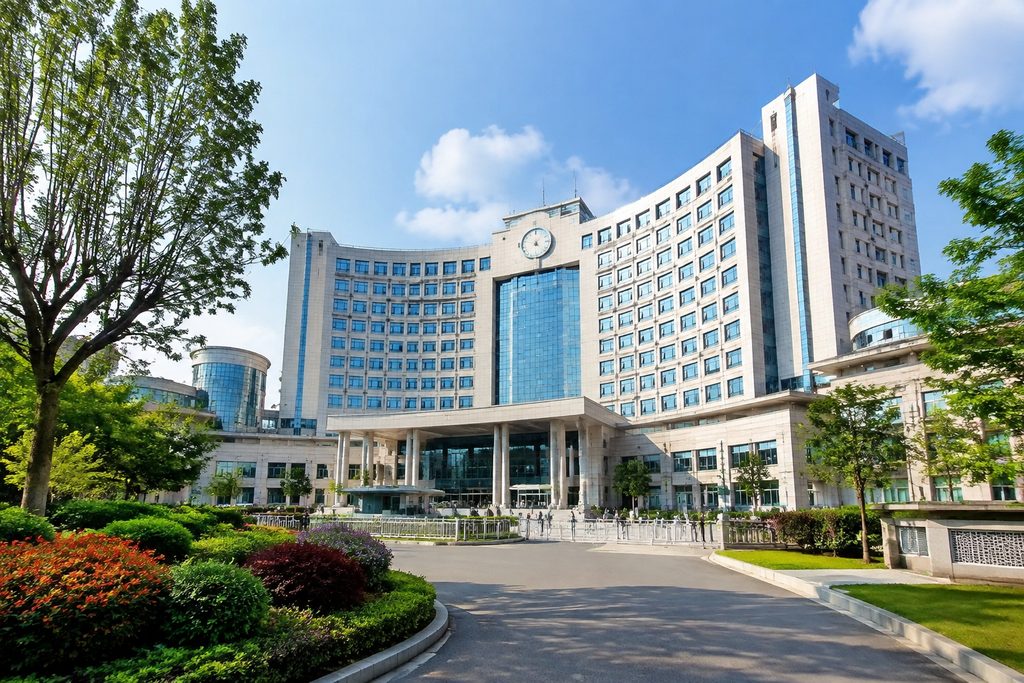
First Affiliated Hospital of Xi’an Jiaotong University Cardiology: A Guide for International Patients
Key Takeaways
- Cardiac bypass at Xi’an Jiaotong University’s First Affiliated Hospital typically runs $12,000–20,000, roughly one-fifth to one-tenth of the $120,000+ price tag common in the United States.
- The hospital’s cardiology department handles over 4,000 interventional procedures annually, placing it among the highest-volume cardiac centers in northwest China.
- Foreign patients cannot simply email the hospital and book a surgery date — public hospital rules require an in-person consultation first, unless you go through the international VIP channel.
- You will need an S2 visa for medical treatment, not an M visa. Plan for a minimum two-week stay for evaluation plus initial treatment.
The Problem: Cardiac Care Costs Are Crushing Patients in the West
When 54-year-old Daniel from Manchester received his coronary artery disease diagnosis, his cardiologist recommended a triple bypass. The quoted cost at a private London hospital: £38,000. His NHS wait time: 14 months. Daniel felt trapped between financial ruin and a dangerously long delay. He is not alone. In the United States, the average billed charge for a coronary artery bypass graft now exceeds $120,000, and even insured patients frequently face out-of-pocket costs above $15,000 after deductibles and coinsurance. For uninsured or underinsured patients, the numbers are simply impossible.
Cardiovascular disease remains the world’s leading cause of death, claiming approximately 17.9 million lives each year according to the World Health Organization. As surgical techniques advance, survival rates improve — but access lags behind. Wait times for elective cardiac surgery in Canada averaged 13.1 weeks in 2023, according to the Fraser Institute. In the UK, the NHS target of 18 weeks from referral to treatment has been missed for over a third of cardiac patients since 2020. The pattern repeats across Western Europe and Australia. Patients are told to wait, to pay more, or to accept riskier medication-only management.
And then there is the quiet question many patients ask themselves: is there another option?
Why Xi’an Jiaotong University’s First Affiliated Hospital Delivers Results
The First Affiliated Hospital of Xi’an Jiaotong University sits in the ancient capital of Shaanxi province, a city of 13 million people and the historic starting point of the Silk Road. The hospital is one of the largest tertiary referral centers in northwest China, with over 2,700 beds and a daily outpatient volume that routinely exceeds 10,000 visits. Its cardiology department is a national key clinical specialty — a designation reserved for departments that meet stringent volume, research, and outcome benchmarks set by China’s National Health Commission.
Clinical Volume That Builds Muscle Memory
The cardiology team at Xi’an Jiaotong performs more than 4,000 interventional procedures each year, including coronary angiography, percutaneous coronary intervention, and radiofrequency ablation. That is roughly ten procedures every single day, 365 days a year. Compare this to a typical US community hospital, where an interventional cardiologist might perform 150–300 PCIs annually. Volume matters in cardiology. Studies published in Circulation and the Journal of the American College of Cardiology have consistently shown that hospitals performing more than 400 PCIs per year have significantly lower in-hospital mortality rates than low-volume centers. The relationship is not linear — it is steep. High-volume operators encounter rare complications more often, which means they recognize them earlier and manage them better when they occur.
So when someone asks, is Xi’an Jiaotong hospital good for heart treatment, the answer starts with the numbers. This is not a boutique clinic doing a handful of cases per month. It is a high-throughput cardiac center where the team has seen nearly every presentation of coronary disease, arrhythmia, and structural heart defect.
Technology Without the Marketing Gloss
Walk through the cardiology wards and you will see equipment that matches any Western academic medical center. The catheterization labs are equipped with flat-panel digital subtraction angiography systems. The electrophysiology program uses three-dimensional electroanatomic mapping for complex ablation cases. Transcatheter aortic valve replacement is performed routinely. But the real structural advantage is less about brand names and more about workflow. Chinese public hospitals consolidate testing into single-day pathways. A patient arriving for chest pain evaluation can often complete ECG, echocardiography, and coronary CT angiography within 24 hours. In many Western systems, that same workup stretches across three separate appointments over two to three weeks.
This efficiency extends to surgical scheduling. Once a patient is admitted and the surgical plan is confirmed, operating room slots are allocated quickly. The hospital runs cardiac surgeries five to six days per week, not the four-day surgical week common in many Western centers.
Cost Advantage Without Quality Compromise
The heart surgery cost at Xi’an Jiaotong University hospital reflects structural economics, not inferior care. Chinese physician salaries are lower than Western counterparts, but the training pipeline is rigorous — cardiology fellows complete a minimum of six years of medical school plus three to five years of specialty training. Hospital construction costs are lower. Malpractice insurance premiums are a fraction of US levels. None of these factors touch clinical quality; they simply lower the cost base.
Here is what that means in practice. A coronary artery bypass graft at this hospital typically costs between $12,000 and $20,000 for an uncomplicated case, including hospital stay, surgeon fees, and standard medications. The same procedure in the United States averages $120,000 to $150,000 in billed charges. A cardiac ablation for atrial fibrillation runs $8,000 to $15,000 in Xi’an, versus $30,000 to $80,000 in the US depending on the facility. These are not promotional prices. They are the standard rates for the hospital’s international department, which provides English-speaking coordination and expedited scheduling.
How Much Does Cardiac Bypass Cost in China? A Detailed Breakdown
The question how much does cardiac bypass cost in China deserves a straight answer. Costs vary by hospital tier, city, and case complexity, but the ranges are consistent across top-tier public hospitals. The table below compares typical self-pay prices for international patients at Xi’an Jiaotong University’s First Affiliated Hospital against US and UK benchmarks.
| Procedure | Xi’an Jiaotong (International Dept.) | United States (Average Billed) | United Kingdom (Private) |
|---|---|---|---|
| Coronary Angiography | $1,500 – $2,500 | $8,000 – $15,000 | £3,000 – £5,000 |
| Coronary Bypass (CABG) | $12,000 – $20,000 | $120,000 – $150,000 | £25,000 – £40,000 |
| Cardiac Ablation (AFib) | $8,000 – $15,000 | $30,000 – $80,000 | £15,000 – £25,000 |
| Valve Replacement (Surgical) | $15,000 – $25,000 | $100,000 – $180,000 | £30,000 – £50,000 |
| TAVR (Transcatheter Valve) | $25,000 – $40,000 | $150,000 – $200,000 | £45,000 – £65,000 |
These figures are self-pay prices for international patients, not Chinese national insurance rates. They include hospital accommodation in a standard private room, operating theater fees, anesthesia, and routine post-operative care. They do not include travel, lodging for family members, or extended rehabilitation. Prices vary by hospital and case complexity, and a formal quotation requires review of your medical records.
But here is the point that matters most: even at the high end of these ranges, the total cost of flying to China, staying for three weeks, and having bypass surgery at Xi’an Jiaotong is typically less than the out-of-pocket portion many Americans pay after insurance. That is not a marketing claim. It is arithmetic.
Booking Cardiac Ablation as a China International Patient: The Actual Pathway
If you are searching for how to book cardiac ablation China international patient, you need to understand one hard truth first: Chinese public hospitals do not take surgical bookings by email from overseas patients. The system is built around in-person consultation. A doctor must see you, review your imaging, and sign off on the procedure before any operating room time is allocated. This is non-negotiable at virtually every public tertiary hospital in the country.
There are two routes around this. The first is to fly to Xi’an, register as an outpatient, queue for a specialist consultation, and proceed from there. This works, but it is slow. You will face language barriers, long queues, and the very real possibility of waiting several days just to get the initial consultation. The second route is through the hospital’s international department or VIP channel. Here, the hospital assigns a coordinator who arranges your consultation with a senior specialist, schedules your pre-operative testing, and coordinates your admission. The cost is roughly 1.5 to 2 times the standard public rate, but it compresses a two-week process into three to four days.
For a procedure like cardiac ablation, the typical timeline looks like this: Day 1, arrive and complete registration with your passport. Day 2, consultation with the electrophysiologist, review of your ECG and any prior Holter monitoring. Day 3, pre-operative testing — blood work, echocardiogram, sometimes cardiac CT. Day 4 or 5, the ablation itself. Two to three days of observation afterward. Total stay: seven to ten days. You can book cardiac ablation as a China international patient, but the booking happens in person, not remotely, unless you are using the international coordination channel.
Is Xi’an Jiaotong Hospital Good for Heart Treatment? What the Rankings Actually Show
The top heart hospital Xi’an for medical tourists question deserves nuance. China’s most authoritative hospital ranking, the Fudan University China Hospital Rankings, does not assign specific numerical ranks to its top 100 comprehensive hospitals. Instead, it groups them into tiers, from A++++ down to A. The First Affiliated Hospital of Xi’an Jiaotong University consistently appears in the upper tiers of this list. More relevant for cardiac patients is the specialty reputation ranking. In cardiology and cardiac surgery, the hospital’s department has appeared in the top tier for northwest China and frequently ranks among the top 20 nationally in the Fudan specialty lists.
What does this mean for a foreign patient? It means the department is not Fuwai Hospital in Beijing, which performs over 14,000 cardiac surgeries annually and is widely considered China’s premier cardiac center. But it also means the Xi’an team operates at a level that would place it comfortably within the top quartile of US academic medical centers for volume and technical capability. For most patients considering bypass surgery, valve repair, or ablation, the clinical outcomes at Xi’an Jiaotong are comparable to what they would receive at a solid regional cardiac center in the US or Europe — at a fraction of the cost.
Also worth noting: Xi’an itself is a major advantage for recovery. The city is far less congested and polluted than Beijing or Shanghai, with a slower pace that suits post-operative healing. Accommodation near the hospital is affordable — a decent serviced apartment runs $40 to $80 per night. English-speaking support is thinner than in Beijing or Shanghai, which is where a bilingual medical companion becomes genuinely valuable.
Practical Considerations: Visa, Payment, and Documentation for Xi’an Cardiac Care
Let us get concrete. If you decide to pursue treatment at the First Affiliated Hospital of Xi’an Jiaotong University, here is what you actually need to handle.
First, the visa. China does not have a dedicated “medical visa” for short-term treatment. The correct category for a patient traveling for medical care is the S2 visa, which covers short-term personal affairs including medical treatment. Your accompanying family members also apply for S2 visas. You will need an invitation letter or medical treatment confirmation from the hospital to support your application. The M visa is for commercial and trade activities — it is not appropriate for medical travel, and using it for this purpose can create problems at the border. S2 visas are typically issued for stays up to 180 days. If your treatment plan requires longer, the S1 visa applies. Requirements change, so check with the nearest Chinese embassy or consulate before booking flights.
Payment is the next hurdle. Chinese public hospitals require prepayment. The international department will give you a deposit estimate — typically 50% to 100% of the estimated procedure cost — payable by bank transfer, UnionPay, or major credit cards. Cash in large amounts is impractical and discouraged. Most Western insurance plans do not directly settle with Chinese public hospitals. You pay first, then seek reimbursement. Some international insurers will issue a guarantee of payment letter, which the hospital may accept in lieu of a deposit, but this is negotiated case by case. Private international hospitals in China, like those listed on our private hospital directory, are more likely to offer direct billing, but they may not have the same cardiac volume as Xi’an Jiaotong.
Documentation matters. Bring everything: ECG reports, echocardiogram images on CD or USB, coronary angiography films, stress test results, medication lists, and a referral letter from your home cardiologist. Chinese specialists will review these carefully. Having complete records can save you from repeating expensive tests and can shorten your stay by several days.
Language is a real barrier. The hospital’s international department has some English-speaking staff, but ward nurses, technicians, and junior doctors often speak only Mandarin. You will need interpretation for informed consent discussions, pre-operative instructions, and daily rounds. This is not a luxury; it is a safety issue. A bilingual medical companion who understands both the language and the hospital workflow can make the difference between a smooth admission and a confusing, stressful experience.
Frequently Asked Questions
No. Public hospital rules require an in-person specialist consultation before any surgery is scheduled. What you can do remotely is submit your medical records for a preliminary review through the international department or a coordination service. The specialist will confirm whether you are a suitable candidate and estimate the cost, but the actual booking happens after you arrive and complete the consultation.
This is a realistic scenario, and it is why remote pre-review matters. If the specialist determines that surgery is not indicated, you will receive a written explanation and treatment recommendations. You are under no obligation to proceed with anything. Your deposit for tests and consultation is used for those services; any unused balance is refunded according to hospital policy. The risk of traveling and being turned away is low when your records have been properly reviewed beforehand, but it is not zero.
The hospital will provide a discharge summary in English upon request, including operative details, medication adjustments, and recommended follow-up intervals. Your home cardiologist can manage ongoing care using this documentation. For questions that arise in the weeks after surgery, the international department can arrange a follow-up video consultation with your treating specialist. This typically costs $100 to $300 and is often sufficient to address post-operative concerns without another trip to China.
Yes. Chinese cardiac centers use the same internationally approved devices as Western hospitals — Medtronic, Abbott, Boston Scientific, Edwards Lifesciences, and Terumo products are all standard. Pacemakers, stents, and prosthetic valves are identical to what you would receive in the US or Europe. The difference is cost, not product quality.
Your Next Step
The decision to travel abroad for heart surgery is not one anyone makes lightly. The numbers, however, speak clearly: top-tier cardiac care at Xi’an Jiaotong University’s First Affiliated Hospital costs a fraction of Western prices, with clinical volume that supports strong outcomes. What stands between most patients and this option is logistics — the visa, the language barrier, the unfamiliar hospital system. That is where China Medical Services comes in. We are not a hospital and we do not provide diagnoses or treatment. We handle the practical coordination: record translation, hospital communication, visa documentation support, and bilingual accompaniment on the ground. If you want to understand whether this path makes sense for your specific case, start with a conversation. Submit your records for review, and we will help you understand your options. No pressure, no obligation — just clarity on what is possible.
For more medical information and treatment options in China, visit chinamedservices.com (China Medical Services).
