Zhejiang Provincial TCM Hospital Oncology: Costs, Access & What International Patients Should Know
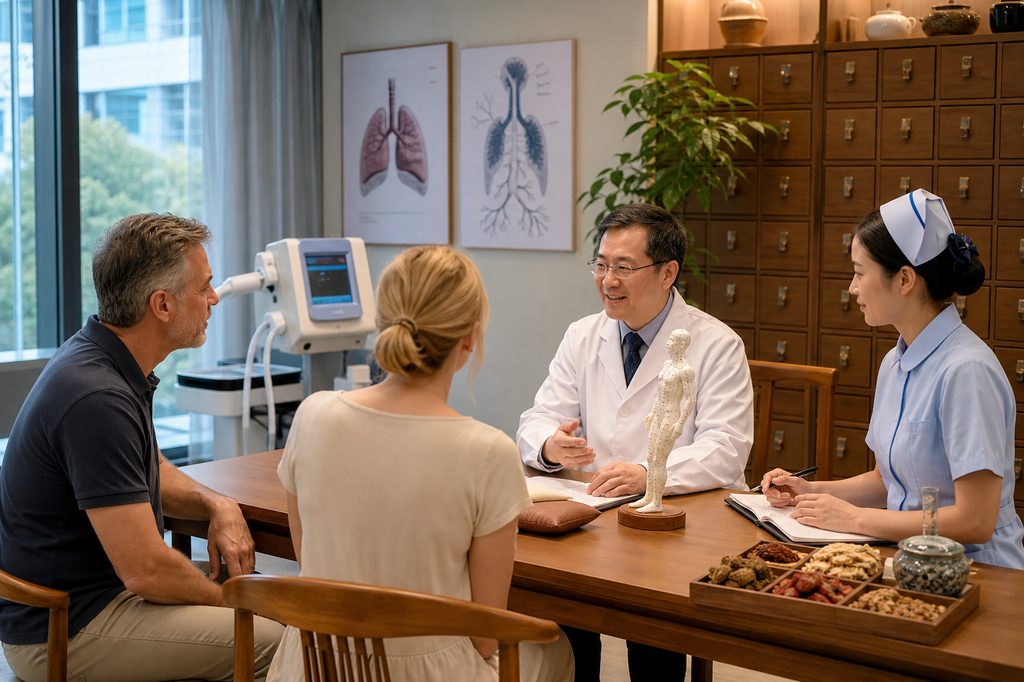
Zhejiang Provincial TCM Hospital TCM Oncology for International Patients: The Short Answer
Have you wondered whether a centuries-old medical system could sit alongside modern chemotherapy and radiation? The answer at Zhejiang Provincial TCM Hospital is a qualified yes. This hospital integrates traditional Chinese medicine with conventional oncology. For international patients, the path is real but not as simple as booking a flight. You will need documentation, a specific visa, and a clear understanding of what TCM oncology in China actually costs and delivers.
Let me be direct. The TCM cancer treatment cost China patients typically ask about runs from roughly $3,000 to $15,000 for a 2-4 week integrative program. That range depends on whether you receive inpatient care, how many herbal formulations are prescribed, and whether you add acupuncture, moxibustion, or dietary therapy. This is not a replacement for surgery or chemotherapy. It is a parallel system aimed at managing side effects, supporting recovery, and addressing symptoms that conventional medicine sometimes leaves untouched.
Our team at China Medical Services has coordinated care for patients from the US, the UK, the Gulf states, and Southeast Asia. The recurring question is not whether the hospital is legitimate. It is whether the trip makes sense for a specific diagnosis. That requires honest framing, not a brochure.
Who This Is Right For — and Who It Isn’t
Zhejiang Provincial TCM Hospital sits in Hangzhou, about 45 minutes by high-speed rail from Shanghai. Its oncology department is one of the strongest in China for combining herbal medicine with conventional protocols. But that strength applies to certain situations more than others.
Typically a good candidate:
- You are in post-operative recovery and want to manage fatigue, poor appetite, or sleep disruption.
- You are undergoing chemotherapy or radiation and struggling with nausea, neuropathy, or low white blood cell counts.
- You have completed active treatment and want a structured rehabilitation program with dietary therapy and qigong.
- You have a cancer type where conventional options are limited, and you want a supervised integrative approach rather than self-prescribed herbs.
- You are willing to stay in Hangzhou for at least two weeks. Shorter visits rarely allow enough assessment and adjustment.
Who should not pursue this:
- You need urgent surgical intervention. TCM oncology does not replace tumor resection.
- You are in an acute medical crisis. Go to the nearest emergency department, not an airport.
- You want a guaranteed cure. No ethical provider anywhere will promise that.
- You cannot provide translated medical records. Chinese physicians will not prescribe herbs without understanding your full history.
- You are taking multiple medications with narrow therapeutic windows. Herb-drug interactions are real and require careful review.
That last point matters more than most people realize. Some herbal compounds alter liver enzymes that metabolize chemotherapy agents. A responsible TCM oncologist will ask for your complete medication list before recommending anything.
The Options, Compared
International patients considering TCM oncology in China face three realistic choices. Here is how they stack up.
| Option | Typical Duration | Estimated Cost (USD) | Intensity of TCM Integration | Best For |
|---|---|---|---|---|
| Outpatient TCM oncology at Zhejiang Provincial TCM Hospital (standard public channel) | 2-4 weeks, daily visits | $3,000–$7,000 | Moderate — herbal prescriptions, some acupuncture | Patients comfortable navigating in Chinese or with a companion |
| Inpatient integrative program at Zhejiang Provincial TCM Hospital (international/VIP channel) | 2-3 weeks | $8,000–$15,000 | High — daily physician rounds, tailored herbal decoctions, acupuncture, dietary therapy | Patients who want structured oversight and English coordination |
| Private TCM clinic in Hangzhou or Shanghai | Flexible | $2,000–$5,000 | Variable — depends heavily on practitioner | Patients seeking lower cost or shorter visits, accepting less institutional oversight |
The inpatient integrative program suits most international patients. You get daily monitoring, which matters because herbal formulas are often adjusted every three to five days based on tongue diagnosis, pulse reading, and symptom changes. That level of iteration is hard to replicate as an outpatient flying in and out.
But the private clinic route is not automatically inferior. Some patients only need a written second opinion on whether TCM approaches could complement their existing regimen at home. In that case, a remote consultation with a Zhejiang Provincial TCM Hospital oncologist may be the smarter first step.
How TCM Oncology Actually Works at This Hospital
Western patients often imagine TCM oncology as a single mysterious treatment. It is not. At Zhejiang Provincial TCM Hospital, the oncology department runs on a protocol-driven model that would feel familiar to anyone who has been through a Western cancer center — except the tools are different.
The process typically starts with a comprehensive intake. You will be asked about sleep, appetite, bowel habits, temperature sensation, and emotional state. A physician will examine your tongue and take your pulse at three positions on each wrist. These are diagnostic signals, not rituals. They inform which herbal formula is selected from hundreds of classical prescriptions.
Then comes the integration question. If you are on chemotherapy, the TCM oncologist will review your regimen and select herbs aimed at reducing toxicity without interfering with the drugs. For example, certain formulations are used to address chemotherapy-induced peripheral neuropathy. Others target radiation-induced mucositis. None of these are sold as cures. They are sold as symptom management tools.
Acupuncture is usually offered two to three times per week. Moxibustion — the burning of mugwort near specific points — is common for patients with cold intolerance or low energy. Dietary therapy is not a vague suggestion to eat vegetables. It is a specific prescription: which foods to avoid, which to emphasize, and how to prepare them according to your TCM pattern diagnosis.
What surprises many Western patients is the documentation. Chinese TCM hospitals keep detailed records. You will leave with written summaries of your diagnosis, the formulas prescribed, and the rationale. That paper trail matters if you want your oncologist back home to review what you received.
What It Costs: TCM Cancer Treatment Cost China, Broken Down
Let me put real numbers on the table. The Zhejiang TCM hospital oncology price structure is not a mystery, but it is also not published as a simple menu. Here is what we have seen across recent patient cases.
A typical two-week inpatient stay in the international ward runs $4,000 to $6,000 for the room and nursing care alone. Herbal decoctions — prepared fresh daily — add $300 to $800 depending on the formula’s complexity. Acupuncture sessions are usually $30 to $60 each when bundled into an inpatient stay. Physician consultations with a senior oncologist run $100 to $300 per visit in the international department.
So a realistic two-week program lands between $8,000 and $15,000. A four-week program can reach $20,000. That is the honest range. Anyone quoting significantly less is likely describing the standard public channel, which is cheaper but comes with language barriers and less scheduling flexibility.
What is not included: international flights, visa fees, local accommodation if you choose outpatient care, and any conventional oncology treatments like chemotherapy or imaging. Those are billed separately by the hospital’s Western medicine departments.
Compared to integrative oncology programs in the US or Germany — which can run $30,000 to $80,000 for a similar duration — the China option remains substantially cheaper. But it is not free, and it is not a budget vacation with a health theme.
Practical Considerations: Records, Visas, and the Language Barrier
You cannot just show up. The hospital requires translated medical records before confirming any TCM oncology consultation. That means your pathology reports, imaging summaries, current medication list, and a brief treatment history — all translated into Chinese. Our team handles this translation step for patients because errors here can lead to inappropriate herbal prescriptions.
Visa is the next hurdle. Foreigners traveling to China for medical treatment apply for an S2 visa, which covers short-term private affairs including medical care. You will need an invitation letter or supporting documents from the hospital. The S2 is not a medical visa in any official sense — China does not have a dedicated medical visa category. It is the appropriate short-stay visa for treatment purposes, and the exact requirements vary by embassy. Accompanying family members also apply for S2 visas. Do not apply for an M visa; that is for commercial and trade activities and will not cover medical treatment.
Payment is almost always upfront. Public and international departments in Chinese hospitals operate on a prepayment model. You deposit funds, treatment is deducted from the balance, and you top up as needed. International insurance may reimburse you afterward, but the hospital will not bill your insurer directly in most cases. Private international hospitals in China do offer direct billing, but Zhejiang Provincial TCM Hospital is a public institution with an international wing — so expect to pay first and claim later.
Language is the final practical wall. The hospital’s international department has some English-speaking staff, but the senior TCM oncologists often conduct consultations in Chinese. A bilingual medical companion is not a luxury here. It is the difference between understanding your formula’s rationale and nodding politely while missing critical instructions. Our companion service starts from $300 per day and covers interpretation, navigation, and documentation.
And here is the part many patients forget: follow-up after you fly home. Herbal formulas are adjusted over time. You will need a plan for video follow-ups or a local TCM practitioner who can review the hospital’s records. The hospital will not chase you. You have to maintain the thread.
Frequently Asked Questions
The evidence is mixed and specific. TCM is not proven to cure cancer on its own. What multiple studies support is its use as an adjunct — reducing chemotherapy side effects, improving quality of life, and sometimes improving treatment completion rates. The Chinese government funds substantial research in this area, and Zhejiang Provincial TCM Hospital participates in that research. But “effective” depends entirely on what outcome you are measuring. If you mean tumor shrinkage, conventional oncology remains the primary tool. If you mean tolerating treatment and recovering function, TCM has a legitimate role.
A two-week integrative program at a top Chinese TCM hospital typically costs $8,000 to $15,000. Comparable integrative oncology programs in the United States run $30,000 to $80,000 for similar durations, and most US insurance plans cover little of it. The China option is significantly cheaper, but you must add travel, visa, and time costs. Also note that the Chinese program focuses heavily on herbal medicine and acupuncture, while US integrative programs may include more nutritional counseling and psychological support.
You cannot book treatment directly as an international patient through the standard public registration system. That system requires in-person registration and does not accommodate overseas patients. What you can do is work through the hospital’s international department or a coordination service like ours. The process starts with submitting translated medical records for review. Only after a physician has reviewed your case will the hospital confirm whether they will accept you and propose a treatment plan. There is no online shopping cart for TCM oncology packages for foreigners in China — anyone promising that is not being straight with you.
Herbal medicine is not harmless. Some formulas cause digestive upset, skin reactions, or changes in liver enzyme levels. At Zhejiang Provincial TCM Hospital, inpatient monitoring includes regular blood work to catch liver or kidney stress early. If you are an outpatient, the hospital will instruct you on warning signs. If you return home and experience problems, you need a local provider who can assess you — the Hangzhou physicians cannot manage an acute reaction from across the ocean. This is a real limitation, and it is why we advise patients to inform their home oncologist before starting any TCM protocol.
No referral is required, but a letter from your treating oncologist is strongly recommended. It confirms your diagnosis, current treatment status, and any contraindications. Chinese TCM oncologists take herb-drug interactions seriously, and knowing exactly what your Western doctors are prescribing helps them avoid dangerous combinations. Some patients worry their oncologist will disapprove. In our experience, most are willing to write a factual summary even if they are skeptical of TCM. Ask for facts, not permission.
Your Next Step
The decision to travel to Hangzhou for TCM oncology is not one to make lightly. The hospital is legitimate, the physicians are trained, and the cost is lower than Western integrative programs. But the logistics are real, the evidence is specific rather than universal, and the language barrier is not trivial.
Our team at China Medical Services helps international patients evaluate whether this path makes sense for their diagnosis. We are not a hospital, and we do not provide medical advice or diagnoses. What we do is handle the documentation, translation, hospital communication, and on-the-ground coordination so you can make an informed decision without drowning in logistics. If you want a clearer picture of whether Zhejiang Provincial TCM Hospital fits your situation, start with a conversation. No commitment, just clarity.
You can learn more about how we support international patients through our medical coordination services. If you are still comparing options, our guide to TCM hospitals in China provides a broader view of what is available beyond Hangzhou.
For more medical information and treatment options in China, visit chinamedservices.com (China Medical Services).
