First Affiliated Hospital of Zhejiang University Hematology: A Guide for International Patients
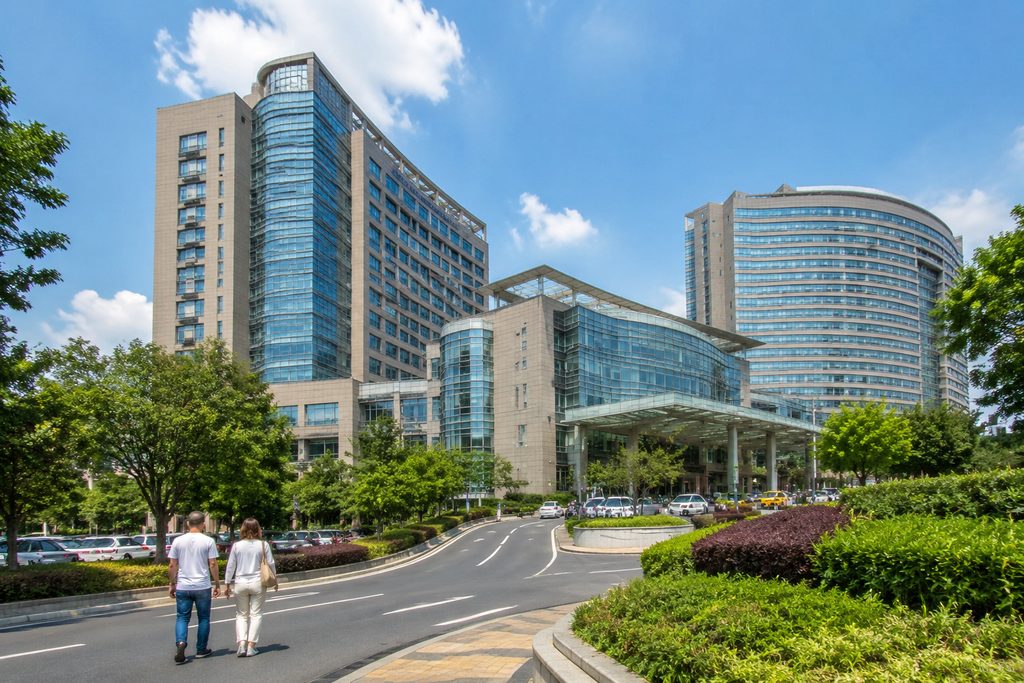
Leukemia treatment cost China is a question we hear constantly from families facing a terrifying diagnosis. Let’s start by demystifying the term itself. Hematology is simply the branch of medicine that deals with blood disorders — leukemia, lymphoma, myeloma, anemia, clotting problems. When someone says “I need to see a hematologist,” they mean a doctor who specializes in what’s going wrong inside the blood and bone marrow. At First Affiliated Hospital of Zhejiang University, the hematology department handles some of the most complex cases in the country. But what does that actually mean for you, a foreigner sitting in another country, trying to decide whether to fly to Hangzhou for treatment? That’s what this article answers.
We work with international patients every week. We’ve seen the confusion, the fear, and the practical obstacles. This guide is honest — including the parts that are inconvenient or uncertain. No hospital in China can guarantee outcomes. What we can do is show you how the system works, what it costs, and how to navigate it without losing your mind.
How This Actually Works, Step by Step
The process for international patients at First Affiliated Hospital of Zhejiang University hematology department follows a predictable pattern. Knowing it beforehand removes most of the anxiety.
First, you send us your existing medical records. Blood test results, bone marrow biopsy reports, flow cytometry, cytogenetics, any imaging. We translate these into Chinese and submit them to the hematology department’s international coordination office. A specialist reviews the materials — this usually takes 3 to 5 working days. You receive a written assessment: whether they can treat your condition, what treatment approach they’d recommend, and whether you need to come in person for further evaluation.
If the written review suggests you’re a candidate, the next step is typically a video consultation. You speak directly with the hematology team, explain your symptoms and history, and hear their recommendations. Cost for this ranges from $100 to $300 for a standard consultation, or $500 to $800 for a top-specialist video session. If you later travel to China for treatment, that consultation fee is credited in full toward the on-the-ground coordination service within 90 days.
Only after both steps — written review and video consultation — would you plan travel. This staged approach exists for a reason. It prevents you from spending thousands on flights and hotels only to discover the hospital can’t help, or that your case doesn’t match their strengths. We’ve seen that happen. It’s brutal. The remote evaluation exists to protect you from exactly that.
Once on the ground, our bilingual medical companion handles registration, queueing, payment, navigation, and translation. The hospital is enormous — over 3,000 beds, daily outpatient volume in the tens of thousands. Without Chinese language ability, you would be lost. Literally and figuratively.
First Affiliated Hospital of Zhejiang University International Patient Hematology: What Makes It Different
First Affiliated Hospital Zhejiang University international patient hematology services are built around a simple reality: blood cancers are treated differently in China than in most Western countries. The volume is staggering. The hospital’s hematology department sees more cases in a month than many Western centers see in a year. That volume translates into clinical experience that’s hard to replicate elsewhere.
The hospital is a public Grade 3A facility — the highest tier in China’s hospital classification system. It ranks among the top 100 hospitals nationally in the Fudan rankings, and its hematology department consistently places in the top 10 for the specialty. For international patients, the hospital operates an international medical center that provides English-speaking coordination, priority scheduling, and private consultation rooms. This is not the standard public pathway. It costs more — typically 1.5 to 2 times the standard public rate — but it’s the only realistic option for foreigners who need to book ahead of arrival.
Standard public outpatient clinics in China do not accept advance bookings from overseas. You show up, take a number, and wait — potentially for hours, potentially to be told the specialist you need isn’t seeing patients that day. The international pathway bypasses this. You get a confirmed appointment time, a dedicated coordinator, and continuity of care. That’s what you’re paying for.
Is hematology care in China good for foreigners? The honest answer: the clinical expertise at top-tier hospitals like this one is world-class. The infrastructure for international patients is functional but not luxurious. You won’t find Western-style hospitality. You’ll find excellent doctors, modern equipment, and a system that moves fast once you’re in it. The gap is language and process — and that’s exactly what coordination services exist to bridge.
A Realistic Timeline
Here’s what a typical journey looks like, from first contact to first treatment. These are ranges, not promises. Delays happen. Plan for them.
| Stage | What Happens | Typical Duration |
|---|---|---|
| Day 1–3 | You submit medical records; we translate and prepare them | 2–3 days |
| Week 1 | Hematology specialist reviews records; written assessment returned | 3–5 working days |
| Week 2 | Video consultation scheduled and completed | 5–10 days from request |
| Week 3–4 | Visa application (S2 category, annotated for medical treatment) | 1–3 weeks depending on embassy |
| Week 4–5 | Travel to Hangzhou; first in-person consultation | Within 1 week of arrival |
| Week 5–6 | Additional testing if needed (bone marrow biopsy, PET-CT, etc.) | 3–7 days |
| Week 6–8 | Treatment plan finalized; treatment begins | Varies by protocol |
Notice the gaps. Document translation takes time. Specialist review takes time. Visa processing is outside anyone’s control — the hospital can provide supporting documents, but the embassy sets the pace. And once you arrive, additional testing may be required before treatment can start. No responsible provider will promise you a treatment start date before the clinical team has seen you in person.
What Can Go Wrong — and What Happens Then
The failure modes here are real, and you deserve to know them before you commit.
Your records might be incomplete. Many international patients arrive with partial documentation — a blood test from six months ago, a biopsy report in a language the Chinese team can’t verify. If the hematology department can’t confirm your diagnosis from the materials provided, they’ll require repeat testing in Hangzhou. That adds time and cost. The solution: gather everything before you start. Every lab report, every imaging CD, every pathology slide if you can get them.
The specialist might say no. This happens more often than anyone likes to admit. A patient with end-stage disease, or a subtype the department doesn’t specialize in, or a case where the risks of travel outweigh the benefits — the hospital will decline. That’s not a rejection of you. It’s clinical judgment. The written review exists to surface this before you spend money on travel.
Visa delays happen. The S2 visa for medical treatment requires supporting documents from the hospital, and processing times vary by country. Some embassies take three weeks. Some take two months. We can’t control this. We can only prepare the paperwork correctly the first time.
And sometimes, the treatment itself doesn’t work. Blood cancers are brutal. No hospital in the world — not MD Anderson, not Memorial Sloan Kettering, not First Affiliated Hospital of Zhejiang University — can guarantee remission. Anyone who promises you otherwise is lying.
Leukemia Treatment Cost China: What the Numbers Actually Look Like
Let’s talk about leukemia treatment cost China in concrete terms. Prices vary enormously by subtype, stage, and treatment protocol. A patient with chronic myeloid leukemia on oral targeted therapy faces a very different cost profile than a patient with acute leukemia requiring induction chemotherapy and a bone marrow transplant.
For standard chemotherapy protocols at a top-tier public hospital’s international department, expect $15,000 to $40,000 per treatment cycle, depending on drugs and duration. A full induction and consolidation course for acute leukemia might run $80,000 to $150,000 total. Compare that with the United States, where the same protocols routinely exceed $300,000 to $500,000. The gap is real.
Bone marrow transplant price Shanghai — a question we get constantly, since many patients compare Hangzhou with Shanghai — typically ranges from $60,000 to $120,000 for an allogeneic transplant at a top public hospital. Hangzhou’s pricing is comparable, sometimes slightly lower. The biggest cost variable is whether you need a matched unrelated donor, which adds registry and procurement fees.
How much does CAR T-cell therapy cost in China? This is the question on every lymphoma and leukemia patient’s mind. In China, approved CAR T products are priced between $100,000 and $150,000 — dramatically less than the $400,000 to $500,000 list prices in the US. Some patients access clinical trials at top academic centers like First Affiliated Hospital of Zhejiang University at significantly reduced cost or no cost, though trial eligibility is strict and slots are limited.
Payment in Chinese public hospitals is prepaid. You deposit funds upfront, and the hospital draws down against your balance. Insurance reimbursement happens after the fact — most Chinese public hospitals do not do direct billing with foreign insurers. If you have international health insurance, check whether it covers treatment in China and what documentation you’ll need to file a claim.
Practical Considerations: Records, Visa, Language, and Follow-Up
Your medical records are the foundation of everything. Without a confirmed diagnosis and complete history, no Chinese hospital will move forward. Gather every document you have. Translate them professionally — not Google Translate. The hematology team needs precise terminology.
Visa category: S2, annotated for medical treatment. Your accompanying family members apply for S2 as well. The hospital provides an invitation letter and treatment confirmation document. Processing times vary by embassy. Apply early. If your treatment will require a stay longer than 180 days, you’ll need an S1 visa instead.
Language is the single biggest barrier. The hospital’s international center has some English-speaking staff, but the hematology ward nurses, the lab technicians, the pharmacy counter — they speak Chinese. Our bilingual medical companion handles all of this. From $300 per day, you get someone who queues, translates, navigates, and advocates for you. For most patients, this is not a luxury. It’s the difference between a manageable experience and a nightmare.
Follow-up at home is a real concern. After you return to your home country, your local oncologist needs to continue your care. The Chinese team will provide a detailed discharge summary and treatment record, but ongoing communication across borders is difficult. Plan for this before you leave. Ask your local doctor whether they’re willing to manage a treatment plan initiated in China. Some will. Some won’t. Find out early.
Frequently Asked Questions
Yes, through the international medical center pathway. Standard public outpatient clinics do not accept overseas bookings, but the international coordination office can secure a confirmed appointment time with a hematology specialist. Book appointment hematology specialist Hangzhou for expat requests are handled through this channel, typically with 1 to 2 weeks’ notice.
At top-tier academic centers like First Affiliated Hospital of Zhejiang University, the clinical expertise is genuinely world-class. The hematology department handles enormous case volumes and participates in international clinical trials. The infrastructure for international patients is functional but not luxurious. You’re coming for the medicine, not the hospitality.
That happens. The written review exists specifically to catch this before you spend money on travel. If the hematology team declines your case, you pay only the review fee — typically $300 to $500 — and you’re not committed to anything further. It’s a screening mechanism, and it works in your favor.
Upfront deposit. You transfer funds to the hospital’s international account or pay by card on arrival. The hospital draws down against your balance as treatment proceeds. Insurance reimbursement is between you and your insurer — the hospital provides itemized documentation, but does not bill foreign insurers directly.
The hospital has a 24-hour emergency department. Your international coordinator can arrange transport and admission if needed. For non-emergency issues, your bilingual companion handles communication with the care team. Emergency care in China is provided regardless of insurance status, but you’ll be expected to settle the bill.
Your Next Step
Navigating hematology care in China is not something you should do alone. The system is excellent, but it’s also complex, fast-moving, and entirely in Chinese. We exist to bridge that gap. Our team handles record translation, specialist review coordination, appointment scheduling, visa documentation, and on-the-ground bilingual accompaniment. We do not guarantee outcomes, and we do not promise access to specific doctors or treatment dates — anyone who does is not being honest with you.
If you’re considering First Affiliated Hospital of Zhejiang University for hematology treatment, start with a written review of your records. It costs a few hundred dollars and tells you whether this path is even viable. From there, you decide how far to go. Request a free consultation and we’ll walk you through the process, answer your specific questions, and help you decide if this is the right move for your situation.
Blood cancers demand fast decisions. But fast doesn’t mean reckless. Get the facts, understand the costs, and make your choice with clear eyes. That’s what we’re here for.
For more medical information and treatment options in China, visit chinamedservices.com (China Medical Services).
