First Affiliated Hospital of Zhejiang University Neurosurgery for International Patients: A Complete Guide
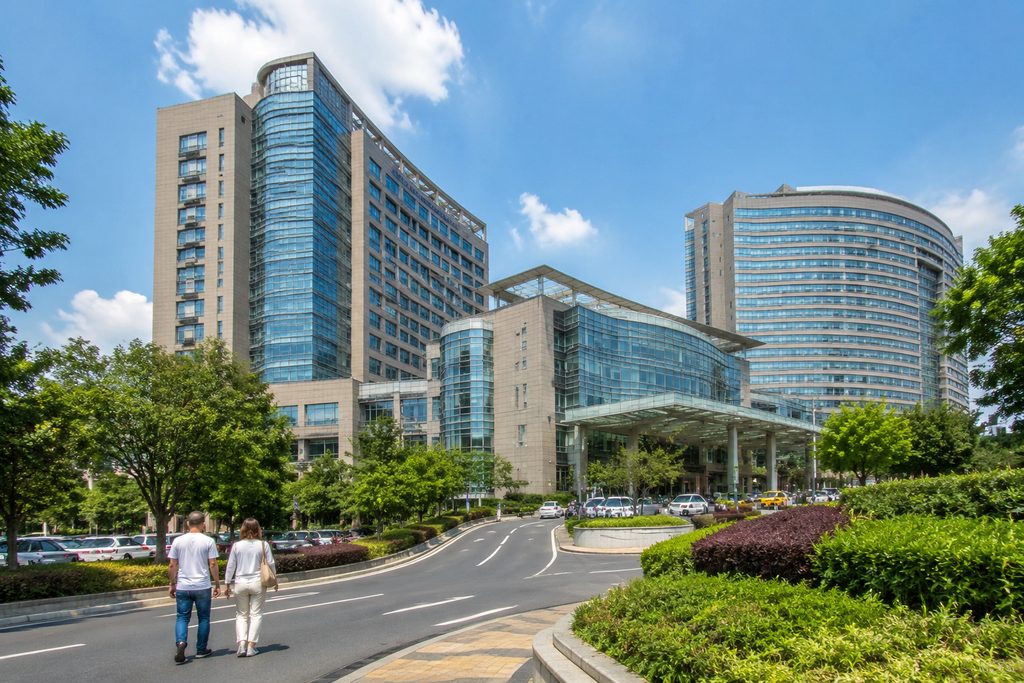
According to data from China’s National Health Commission, the country now performs over 200,000 neurosurgical procedures annually, with the top academic centers handling volumes that rival or exceed major Western institutions. For patients researching brain tumor surgery cost China, the First Affiliated Hospital of Zhejiang University (FAHZU) in Hangzhou consistently appears among the most searched institutions. Our team regularly fields questions from patients in North America, Europe, and the Middle East about this specific hospital and its neurosurgery department. This guide answers those questions directly.
FAHZU is not just another large hospital. Its neurosurgery department ranks among the top programs in China by the Fudan University hospital rankings, which evaluate clinical volume, research output, and peer reputation. The hospital handles complex skull base tumors, cerebrovascular malformations, and functional neurosurgery cases. But rankings tell only part of the story. What international patients actually need to know is how the process works, what it costs, and what happens when things do not go as planned.
How This Actually Works, Step by Step
The pathway from your home country to a neurosurgery bed at FAHZU follows a specific sequence. Understanding it before you book a flight saves weeks of frustration.
You start by sending your existing medical records. That means MRI or CT imaging on CD or via secure upload, pathology reports if a biopsy was done, and a summary letter from your current neurologist or neurosurgeon. Our team translates these documents into Chinese and submits them through the hospital’s international patient channel. A neurosurgeon at FAHZU reviews the file. This review typically takes 3 to 5 business days.
The written review comes back with one of three outcomes: the surgeon agrees your case is operable and appropriate for their department, the surgeon requests additional imaging or tests, or the surgeon recommends against traveling because the risk profile does not justify surgery. That last outcome happens more often than people expect. Chinese neurosurgeons at top centers are selective, especially for international patients.
If the review is positive, the next step is a video consultation. You speak directly with the surgeon or their senior team member. This costs between $300 and $500 for a written second opinion, or $500 to $800 for a top-specialist video consultation. Any of these fees are credited in full toward on-the-ground coordination if you proceed to treatment in China within 90 days.
After the video consult, you decide whether to travel. If yes, you apply for an S2 visa with the hospital’s invitation letter and treatment plan as supporting documents. S2 is the short-stay category used for private medical treatment in China. Processing time ranges from 4 to 15 business days depending on your home country’s Chinese embassy or consulate.
You arrive in Hangzhou, attend an in-person outpatient consultation, complete any required pre-operative tests, and then surgery is scheduled. Public hospital rules mean surgery cannot be booked without that in-person consultation first. The international VIP channel at FAHZU streamlines this, but the rule still applies.
Why International Patients Choose FAHZU Neurosurgery
The department performs over 6,000 neurosurgical procedures each year. That volume creates a specific kind of expertise. Surgeons who remove skull base tumors weekly see anatomical variations that a surgeon doing the same procedure quarterly might miss.
What does that mean for a foreign patient? Three things matter most.
First, the department has dedicated subspecialty teams. There is a cerebrovascular team handling aneurysms and AVMs, a skull base tumor team, a pituitary tumor team, and a functional neurosurgery team for epilepsy and movement disorders. You are not assigned to a general neurosurgeon. You are matched to the team that handles your specific pathology every day.
Second, the hospital’s imaging infrastructure matters. FAHZU operates multiple 3T MRI machines, intraoperative MRI in select operating rooms, and hybrid operating suites that combine angiography with surgical capability. For brain tumor cases, intraoperative MRI lets surgeons verify resection extent before closing. That is a meaningful safety factor.
Third, the cost difference is substantial. A craniotomy for tumor resection at a top Chinese academic hospital typically ranges from $15,000 to $35,000 depending on tumor location, complexity, and length of stay. The same procedure in the United States often exceeds $80,000 to $150,000. That gap is why many patients ask specifically about brain tumor surgery cost China.
But cost should never be the only factor. The question is neurosurgery safe in China deserves an honest answer. At top-tier academic centers like FAHZU, infection rates, complication rates, and mortality rates for common neurosurgical procedures are comparable to international benchmarks. The hospital is JCI-accredited, which means it has passed rigorous international safety and quality audits. That said, safety depends heavily on the specific center. A rural county hospital is not the same as a Fudan-ranked academic medical center. We only work with the latter.
A Realistic Timeline
People underestimate how long the pre-travel phase takes. Here is what a typical timeline looks like for an international patient pursuing brain tumor surgery at FAHZU.
| Stage | Duration | What Happens |
|---|---|---|
| Document collection and translation | 3–7 days | You gather MRI/CT discs, pathology reports, clinical summaries. We translate everything into Chinese. |
| Surgeon file review | 3–5 business days | A neurosurgeon at FAHZU reviews your case and issues a written opinion or requests more data. |
| Video consultation scheduling | 5–10 days | Top specialists have limited consultation slots. Expect a wait. |
| S2 visa processing | 4–15 business days | Varies by embassy. Some countries process faster. Plan for the longer end. |
| Travel and in-person consultation | 2–4 days | You arrive in Hangzhou, meet the surgeon, complete pre-op tests. |
| Surgery scheduling | 3–10 days after consultation | Depends on OR availability and your pre-op clearance. |
| Hospital stay | 7–21 days | Varies by procedure. Skull base tumors require longer stays than simple resections. |
| Recovery in Hangzhou before flying home | 7–14 days | Surgeons typically want to see you once for a post-op check before clearing you to fly. |
Total time from first contact to surgery: roughly 4 to 8 weeks. Anyone promising faster is cutting corners.
What Can Go Wrong — and What Happens Then
Neurosurgery carries risk anywhere in the world. The honest answer to is neurosurgery safe in China is that safety depends on the center, the surgeon, and the specific pathology. Top centers like FAHZU have outcomes comparable to Western academic hospitals. But complications happen. What matters is how they are handled.
If a complication occurs during surgery, FAHZU has a neurosurgical ICU staffed by dedicated neurointensivists. This is not a given at every hospital. The ICU team manages post-operative swelling, bleeding, and neurological deterioration. The hospital also has 24/7 interventional neuroradiology coverage, which matters if a post-operative vessel rupture requires emergency embolization.
What if the surgeon opens and finds the tumor is not resectable? This happens. The surgeon may take a biopsy and close. The written second opinion and video consult reduce this risk, but they do not eliminate it. Imaging can only tell so much.
What if you arrive and the surgeon changes the plan? This is actually common and usually appropriate. The in-person consultation may reveal new information. The surgeon may recommend a different approach than originally discussed. You have the right to refuse and return home. That is always your call.
What if your visa is delayed? This is the most common logistical failure. We recommend applying for the S2 visa only after the written review confirms your case is appropriate. That way you are not rushing a visa for a case the surgeon may decline.
How to Evaluate Whether This Hospital Is Right for You
The question best neurosurgery hospital China for foreigners has no single answer. FAHZU is excellent for many cases. It is not the right choice for everyone.
Consider your specific pathology. FAHZU’s strengths include skull base tumors, pituitary adenomas, cerebrovascular disease including aneurysm clipping and coiling, and functional neurosurgery. If your case involves a rare pediatric neurosurgical condition, another center may be more appropriate. If you need awake craniotomy for a tumor in eloquent cortex, ask specifically whether the department performs these regularly. They do, but volume varies by subspecialty.
Also consider location. Hangzhou is a major city with an international airport and good infrastructure. But it is not Beijing or Shanghai. If you anticipate needing consular assistance from your embassy, check whether your country has a consulate in Hangzhou or nearby Shanghai. Most do not have one in Hangzhou itself.
Language is another factor. FAHZU’s international department has English-speaking coordinators. But the ward nurses and junior doctors may have limited English. A bilingual medical companion bridges this gap. We provide this service, and it matters more in neurosurgery than in most other fields because post-operative communication about symptoms, pain, and neurological changes is critical.
For patients comparing brain aneurysm clipping price abroad, FAHZU offers competitive rates. Aneurysm clipping typically ranges from $18,000 to $30,000 depending on aneurysm location and complexity. Coiling, which is endovascular, runs $15,000 to $25,000. These are rough ranges. Final quotes come after the surgeon reviews your imaging.
Practical Considerations: Records, Visa, Payment, and Follow-Up
Your medical records are the foundation of everything. Send complete imaging, not just reports. A radiologist’s written report tells the Chinese surgeon what someone else saw. The actual DICOM files let the surgeon see for themselves. This matters especially for tumor boundaries and vascular anatomy.
Visa category is S2 for treatment stays under 180 days. Your accompanying family member also applies for S2. The hospital provides an invitation letter and treatment confirmation. These documents do not guarantee visa approval. They are supporting evidence. The embassy makes the final call.
Payment at FAHZU’s international department is typically required as a deposit before admission. The deposit amount depends on the estimated procedure cost. International insurance is often accepted for reimbursement, but the hospital generally does not bill insurers directly. You pay, then claim. Some international insurers have direct billing arrangements with specific private hospitals in China, but FAHZU is a public hospital with an international wing, not a private international hospital. Check your policy carefully.
Follow-up after you return home is a real challenge. Chinese surgeons typically want a follow-up MRI at 3 months and 6 months. You can have these done at home and send the images back for review. Some patients return to Hangzhou for the first follow-up. Others do it remotely. Discuss this with the surgeon before you leave.
If you are still comparing options, our guide to top-ranked specialty departments across China provides a broader view of neurosurgery and other programs. And if you want to understand how FAHZU compares to other institutions in the region, the Hangzhou hospital directory offers context.
Frequently Asked Questions
Most craniotomy procedures for tumor resection range from $15,000 to $35,000. This includes the surgery, hospital stay, and standard post-operative care. Complex skull base cases can exceed this range. The final quote comes only after the surgeon reviews your imaging and issues a treatment plan.
You cannot book surgery directly from overseas. The process starts with a written second opinion based on your existing records, followed by a video consultation. If the surgeon accepts your case, you travel to Hangzhou for an in-person consultation, complete pre-operative testing, and then surgery is scheduled. This is the standard pathway for how to book brain surgery in China at any public academic hospital.
At JCI-accredited, Fudan-ranked academic centers like FAHZU, outcomes for common neurosurgical procedures are comparable to Western benchmarks. The hospital has dedicated neuro-ICU coverage, intraoperative imaging, and subspecialty teams. Safety is not uniform across all Chinese hospitals, which is why center selection matters more than country selection.
The international department provides itemized invoices that most international insurers accept for reimbursement. Direct billing is less common at public hospital international wings than at private international hospitals. Verify your policy’s reimbursement process before committing to surgery.
This happens. You receive a written explanation and, if appropriate, alternative treatment suggestions. You are not obligated to travel. The written second opinion fee is not refundable, but it provides clarity that may save you from an unnecessary and risky trip.
Your Next Step
The decision to travel abroad for brain surgery is not one to make quickly. Gather your records. Ask hard questions. Compare centers honestly. Our team at China Medical Services helps international patients navigate this process — from document translation and surgeon review to visa guidance and on-the-ground bilingual support. We do not perform surgery, and we do not promise outcomes. We help you get the right information from the right specialists so you can make a clear-eyed decision.
If you have imaging and reports ready, send them to us. We will tell you honestly whether FAHZU or another Chinese center is worth pursuing for your specific case. That conversation costs nothing.
For more medical information and treatment options in China, visit chinamedservices.com (China Medical Services).
