Cardiac Rehab Cost in China: 2026 Price Guide for Foreign Patients
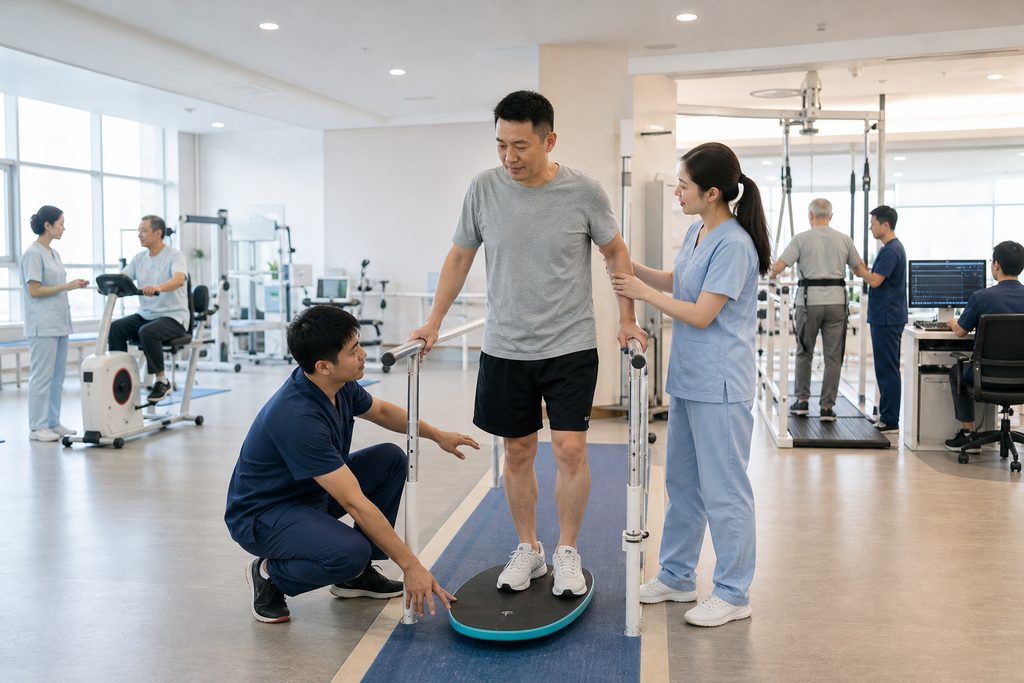
According to the World Health Organization, cardiovascular disease claims roughly 17.9 million lives annually, and cardiac rehabilitation reduces mortality by approximately 25% for patients who complete a structured program. Yet fewer than 20% of eligible patients worldwide ever access it. For international patients weighing options, the cardiac rehab cost China presents a striking contrast: comprehensive 12-week programs often run between $1,800 and $6,000, compared to $15,000–$40,000 for comparable protocols in the United States. That gap explains why a growing number of patients from Europe, the Middle East, and Southeast Asia now ask us about rehabilitation in Shanghai, Beijing, and Guangzhou.
But the price only tells part of the story. What you actually get for that money — the staffing model, the monitoring technology, the program duration, and whether anyone speaks English while you exercise — matters just as much. We have spent years helping international patients navigate exactly these questions. This guide breaks down what cardiac rehabilitation in China really costs in 2026, where the best programs are, what the process looks like from abroad, and what can go wrong if you skip the planning steps.
How This Actually Works, Step by Step
Most patients assume they can email a hospital, pay a fee, and show up for rehab. That is not how Chinese public hospitals operate. The real sequence is more involved, but it is manageable with the right preparation.
First, you send us your existing medical records: the discharge summary from your cardiac event, your most recent echocardiogram, stress test results, angiography report if available, and a current medication list. We translate these into Chinese and submit them to the cardiac rehabilitation department at the hospitals you are considering. A specialist reviews the file — usually within 3 to 7 working days — and issues a written assessment. That assessment tells you whether you are a candidate for outpatient rehab, what phase of rehab you should enter, and which hospital program fits your clinical profile.
Then comes the booking. Public hospital rehab centers typically require an in-person cardiology consultation before you can enroll in a program. That consultation cannot be scheduled months in advance through a website. Our team coordinates with the hospital’s international department or VIP clinic to arrange the appointment once you have confirmed your travel dates. The consultation itself costs $100–$300 depending on the hospital tier. After the cardiologist clears you, the rehab team designs your program and you begin.
If you want to lock in a specific start date and guarantee English-speaking staff from day one, you need the international or VIP pathway. Expect to pay 1.5 to 2 times the standard rate for that certainty. The standard public pathway is cheaper, but you will need a bilingual companion with you for intake forms, nurse instructions, and any equipment orientation.
What Determines the Cardiac Rehab Cost China Patients Actually Pay
Several variables move the price significantly. Understanding them before you commit prevents unpleasant surprises.
The first is hospital tier. A top-ranked public hospital such as Fuwai Hospital in Beijing or Zhongshan Hospital in Shanghai — both internationally recognized for cardiology — charges more than a provincial-level hospital. Fuwai performs over 14,000 cardiac surgeries annually, and its rehab program reflects that depth of experience. You pay for the expertise. A 12-week outpatient program at a top-tier public hospital typically ranges from $2,500 to $5,000. At a private international hospital like United Family or Jiahui, the same program may cost $6,000 to $12,000, but includes English-speaking staff as standard and direct insurance billing.
The second variable is program intensity. Basic programs include supervised exercise sessions three times per week, electrocardiogram monitoring during sessions, and periodic consultations. Premium programs add nutritional counseling, psychological support, smoking cessation coaching, and more frequent physician reviews. Each added component raises the price by roughly 10–20%.
The third is duration. Chinese programs commonly run 8 to 12 weeks for Phase II outpatient rehab, though some hospitals offer extended 24-week protocols for complex cases. Longer programs cost more in absolute terms but often deliver better outcomes. The per-session cost is what you should compare: expect $30–$80 per supervised session at public hospitals, $80–$150 at private international facilities.
Heart Rehabilitation Program Shanghai Price: A Closer Look
Shanghai hosts several of China’s strongest cardiac rehabilitation centers. The heart rehabilitation program Shanghai price varies more than most patients expect, because the city has both elite public hospitals and a dense cluster of private international clinics.
At Zhongshan Hospital affiliated with Fudan University, a leader in cardiovascular care, a standard 12-week outpatient program generally falls between $2,800 and $4,500 for international patients using the VIP pathway. That includes the initial cardiology assessment, supervised exercise sessions, ECG monitoring, and a final evaluation report. At Ruijin Hospital, another top-tier institution, prices run in a similar band.
For patients who prefer a Western-style environment, Jiahui Health and United Family Shanghai offer cardiac rehab packages starting around $5,500 for 12 weeks, with all staff fluent in English and direct billing to major international insurers. The trade-off is straightforward: public hospitals offer deeper specialist expertise at a lower price; private hospitals offer convenience and language comfort at a premium.
| Program Type | Location | 12-Week Estimated Cost (USD) | English Support |
|---|---|---|---|
| Standard public hospital | Provincial city | $1,800 – $3,200 | Limited; companion recommended |
| Top-tier public hospital (VIP pathway) | Beijing, Shanghai, Guangzhou | $2,800 – $5,500 | Available; varies by hospital |
| Private international hospital | Shanghai, Beijing, Shenzhen | $5,500 – $12,000 | Standard |
| Extended 24-week program | Any of the above | Multiply 12-week cost by 1.6–1.8 | As above |
Prices are ranges based on 2026 data and vary by hospital and case complexity. Always confirm the final quote in writing before committing.
A Realistic Timeline
Patients routinely underestimate how long the process takes from first inquiry to first rehab session. Here is a realistic breakdown based on cases we have coordinated.
| Stage | What Happens | Typical Duration |
|---|---|---|
| Week 1 | You send medical records; we translate and submit to 2–3 hospitals | 5–7 working days for specialist review |
| Week 2–3 | Written assessment returned; you select hospital and program | 3–5 days for your decision |
| Week 3–4 | Visa application (S2 category) | 5–10 working days, embassy-dependent |
| Week 4–5 | Travel to China; in-person cardiology consultation | 1–2 days after arrival |
| Week 5–6 | Program enrollment and first supervised session | 3–5 days after consultation |
| Week 6–18 | 12-week outpatient program | 3 sessions per week typical |
| Week 18–19 | Final evaluation, discharge report, home exercise plan | 1 week |
Document translation is the step people forget. If your records are in English, most top hospitals accept them directly, but some provincial hospitals require certified Chinese translations. Budget 3–5 days for that if needed. Visa processing can also stretch longer during peak seasons, so apply at least four weeks before your intended travel date.
What Can Go Wrong — and What Happens Then
We would rather you know the failure modes before you book than discover them in a hospital lobby.
The most common issue: the specialist reviews your records and says you are not yet ready for outpatient rehab. This happens with patients who had recent surgery or unstable angina. The hospital may require a period of medical optimization first — medication adjustments, further testing, or even inpatient stabilization. That adds time and cost. You should have a contingency budget of $1,000–$2,000 for additional diagnostics.
The second failure mode is language breakdown. Even hospitals that advertise English support may only have one English-speaking nurse on rotation. If she is off duty on your session day, you are left with charades. Our bilingual medical companion service exists precisely for this scenario — from $300 per day, a trained companion handles registration, payment, translation, and navigation so your rehab session focuses on exercise, not logistics.
The third is insurance rejection. Many international insurers will reimburse cardiac rehab in China, but only if the hospital provides itemized invoices and the program meets the insurer’s definition of medically necessary rehabilitation. Private international hospitals handle this smoothly. Public hospitals often issue invoices in Chinese with minimal detail, which insurers may reject. We help patients structure documentation correctly from the start to avoid this.
Do not book flights and accommodation until the hospital has confirmed your enrollment in writing. A written assessment is not the same as a confirmed program slot.
Is Cardiac Rehab in China Safe for International Patients?
The short answer is yes, with the right hospital selection. The longer answer requires some nuance.
China’s top cardiac centers follow protocols aligned with American Heart Association and European Society of Cardiology guidelines. Fuwai Hospital, Zhongshan Hospital, and West China Hospital publish peer-reviewed research on cardiac rehabilitation outcomes. Their Phase II programs include continuous ECG monitoring during exercise, blood pressure checks before and after each session, and emergency response protocols. The safety infrastructure is real.
What differs is the patient experience. Public hospital rehab departments can be crowded, and staff may not proactively explain each step unless you ask. That is where foreign patients sometimes feel uneasy — not because the care is unsafe, but because the communication style is different. A bilingual companion changes that dynamic entirely.
For patients asking specifically about best cardiac rehab centers in China for foreigners, the practical answer is: top-tier public hospitals with established international departments, or JCI-accredited private hospitals. Both are safe. The choice depends on your budget, your comfort with a Chinese-speaking environment, and whether your insurer requires JCI accreditation for reimbursement.
How to Book a Cardiac Rehab Package in China Without Wasting Money
Booking a cardiac rehab package from abroad is not like booking a hotel. You cannot simply reserve a start date online. But you can avoid the common mistakes that cost patients thousands of dollars in unnecessary travel.
The biggest mistake: flying to China for an initial consultation without first getting a written second opinion on your records. For $300–$500, a top hospital specialist will review your file and tell you whether you are a candidate, what phase of rehab you need, and whether their program fits your case. That written second opinion is credited in full toward our coordination service if you proceed within 90 days. It is the cheapest insurance against a wasted trip.
The second mistake: choosing a hospital based on name recognition alone. Fuwai is world-class for surgery, but its rehab program may not be the best fit for a patient who needs extensive nutritional counseling in English. We match patients to programs based on their specific clinical needs, not brand prestige. That is the core of what our consultation service does.
The third mistake: ignoring the visa timeline. You need an S2 visa for medical treatment in China. Processing takes 5–10 working days at most embassies, but can stretch to three weeks during peak periods. Start the visa process only after the hospital has confirmed your program slot in writing.
Practical Considerations: Records, Visa, Payment, and Follow-Up
Before you commit to cardiac rehabilitation in China, sort out these four practical matters.
Medical records. Bring everything: discharge summaries, imaging reports, medication list, and a letter from your home cardiologist stating you are stable for supervised exercise. Chinese specialists will not enroll you in rehab without clear documentation of your cardiac history. If your records are in a language other than English or Chinese, arrange certified translation before you travel.
Visa. Apply for an S2 visa, which covers short-term private affairs including medical treatment. Your spouse or family member accompanying you also applies for S2. The hospital’s invitation letter is essential supporting documentation. We guide you through exactly what to submit, but approval is always at the embassy’s discretion. Never book non-refundable flights until the visa is stamped in your passport.
Payment. Public hospitals in China operate on a prepayment model. You deposit funds at admission and the hospital deducts as services are delivered. International credit cards are accepted at major hospitals, but some provincial facilities require Chinese bank cards or cash. Private international hospitals accept major international cards and often bill insurers directly. Confirm the payment method before you arrive.
Follow-up at home. Your Chinese rehab team will provide a discharge report and home exercise plan. Share that with your home cardiologist. If you need ongoing remote monitoring or a video consultation with your Chinese rehab team after returning home, that can be arranged — typically $100–$300 per session.
Frequently Asked Questions
A 12-week outpatient cardiac rehab program in China costs roughly $1,800 to $6,000 at public hospitals, and $5,500 to $12,000 at private international facilities. In the US, the same program typically runs $15,000 to $40,000 without insurance. Even with travel and accommodation, many patients save 60–80%.
You cannot reserve a specific start date online for public hospital programs. But you can complete the pre-screening remotely: send your records, receive a written specialist assessment, and confirm program eligibility before you book flights. That removes most of the uncertainty. The final in-person consultation happens after you arrive.
Top-tier public hospitals with international departments usually have some English-speaking medical staff, but coverage is not guaranteed for every session. Private international hospitals provide English as standard. If you choose a public hospital, a bilingual medical companion ensures smooth communication at every visit.
It depends on your policy. Many international insurers reimburse treatment at JCI-accredited private hospitals. Public hospital claims often face more scrutiny because invoices may lack the detail insurers require. We help patients obtain properly itemized documentation to maximize reimbursement chances, but we cannot guarantee coverage.
This happens in a minority of cases. The hospital may recommend additional testing or medical optimization before enrollment. That is why the written second opinion before travel is so valuable — it catches most eligibility issues while you are still at home, not after you have spent money on flights and hotels.
Your Next Step
Cardiac rehabilitation in China offers genuine clinical quality at a fraction of Western prices, but only if you choose the right hospital and manage the logistics properly. Our team at China Medical Services has guided patients through this exact process for years — from record translation and specialist review to visa guidance and on-the-ground bilingual support. We do not provide medical advice or guarantee outcomes; we handle the coordination that makes treatment in China practical.
If you are considering cardiac rehab in China, start with a written second opinion. Send us your records, and within a week you will know whether Chinese programs are a realistic option for your case. That first step costs little and tells you everything. Request a free consultation and we will walk you through it.
For more medical information and treatment options in China, visit chinamedservices.com (China Medical Services).
