Colonoscopy Cost in China Hospitals: 2026 Price Guide for Foreigners
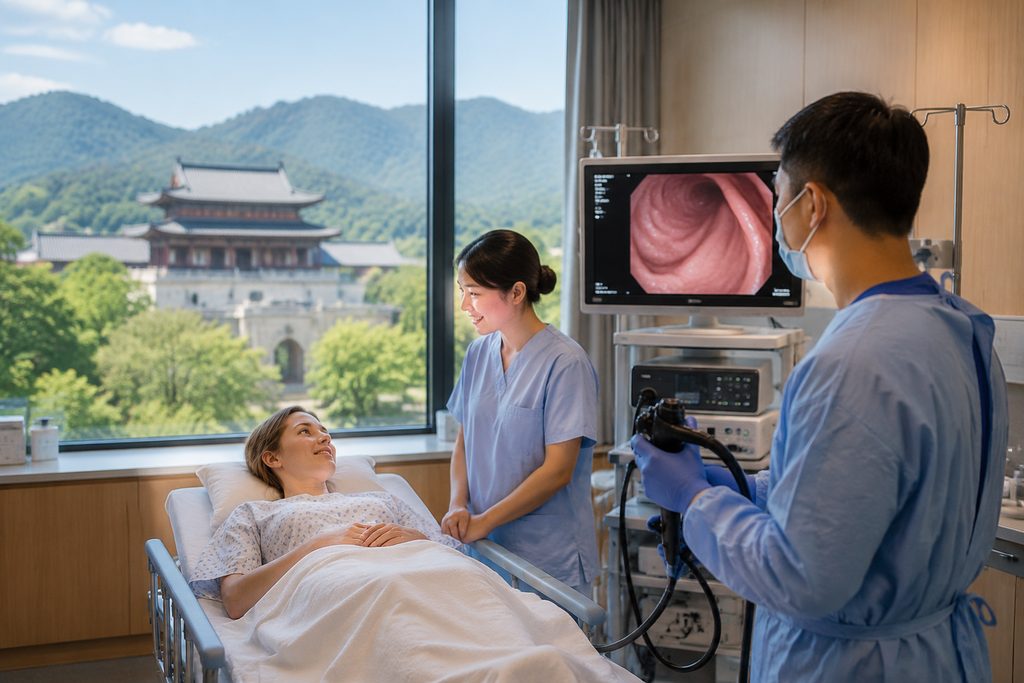
A colonoscopy is a procedure where a gastroenterologist uses a flexible camera scope to examine the lining of your large intestine. It sounds invasive, and it is. But it remains the single most effective screening tool for colorectal cancer, which the World Health Organization reports is the third most common cancer globally. For international patients weighing their options, the colonoscopy cost China hospitals offer has become a serious point of comparison against prices in the United States, Europe, and Australia.
Our team regularly fields questions from patients in North America and the Gulf states who have been quoted $3,000 to $6,000 for a routine screening colonoscopy at home. When they discover that a high-quality procedure at a top-tier Chinese hospital often runs between $200 and $800 out of pocket, the next question is always the same: is it safe, and how do I actually arrange it? This guide answers both, with concrete figures and the structural reasons behind the price gap.
Key Takeaways
- A screening colonoscopy at a top Chinese public hospital typically costs $200–$500, while private international hospitals charge $600–$1,500 — still far below the $3,000+ common in the US.
- China’s top gastroenterology departments perform thousands of colonoscopies annually; Fudan-ranked centers in Beijing and Shanghai handle volumes that dwarf most Western endoscopy units.
- Language and logistics are the real barriers. Public hospital registration, payment, and recovery all happen in Mandarin, and overseas patients cannot pre-book standard outpatient slots without a local presence.
- Safety standards at accredited Chinese hospitals are comparable to international norms, but you must verify the facility’s credentials and understand the sedation protocol before committing.
The Problem: Colonoscopy Pricing Has Spun Out of Control in Western Markets
In the United States, a screening colonoscopy without insurance routinely lands between $2,750 and $4,800 depending on the facility and whether polyps are removed. The Kaiser Family Foundation has documented that even insured patients can face surprise bills when an anesthesiologist or pathologist falls outside their network. A 2023 study published in JAMA Internal Medicine found that the average out-of-pocket cost for a colonoscopy among insured Americans was $244, but uninsured patients and those with high-deductible plans often pay the full sticker price.
Canada and the UK fare better on direct cost, but wait times introduce a different burden. In Ontario, the median wait for a non-urgent colonoscopy sits between 60 and 90 days. In parts of the UK’s National Health Service, patients can wait over 12 weeks for a routine diagnostic scope. For someone with a family history of colorectal cancer or concerning symptoms, that delay is not just inconvenient — it is medically meaningful.
Why Colonoscopy Cost China Hospitals Offer Is Structurally Lower
The price difference is not a reflection of lower quality. It is a product of how Chinese healthcare is organized, funded, and scaled. Understanding this matters because it directly addresses the most common objection international patients raise: that cheap must mean inferior.
Clinical Volume Drives Procedural Efficiency
A senior endoscopist at a top-tier Chinese hospital may perform 15 to 25 colonoscopies in a single day. Over a year, that adds up to thousands of procedures. Compare that to a typical Western gastroenterologist, who might complete 500 to 800 annually. Volume at that scale produces two things: lower per-procedure overhead and a level of procedural fluency that is hard to replicate in lower-volume settings. The Fudan University hospital rankings, which evaluate China’s hospitals by specialty reputation, consistently place gastroenterology departments in Beijing and Shanghai among the strongest in Asia.
Public Hospital Pricing Is Regulated, Not Market-Driven
China’s public hospitals operate under government price controls for core medical services. A standard colonoscopy without polypectomy is priced as a basic diagnostic procedure, not a profit center. The fee structure is published and relatively uniform across public tertiary hospitals in major cities. Private international hospitals, which cater to expatriates and self-paying foreign patients, set their own rates — hence the higher cost — but even those remain below Western private-sector benchmarks.
Sedation and Anesthesia Costs Are Dramatically Lower
In the US, anesthesia for a colonoscopy can add $500 to $1,200 to the bill. In China, conscious sedation using propofol administered by an anesthesiologist typically adds $50 to $150 at a public hospital. Many Chinese patients opt for unsedated colonoscopy, which lowers cost further, but foreigners almost universally choose sedation. Even with that add-on, the total remains a fraction of Western pricing.
How Much Is a Colonoscopy in Shanghai: Real Price Ranges for 2026
Shanghai is home to some of China’s most respected gastroenterology programs, including those at Zhongshan Hospital Fudan University and Ruijin Hospital. Patients searching for “how much is a colonoscopy in Shanghai” will find prices that vary significantly by facility type. Here is what current data shows.
| Facility Type | Colonoscopy Only (USD) | With Sedation (USD) | With Polyp Removal (USD) |
|---|---|---|---|
| Public tertiary hospital (standard outpatient) | $150–$300 | $200–$400 | $350–$700 |
| Public hospital international/VIP department | $400–$800 | $500–$1,000 | $800–$1,500 |
| Private international hospital (JCI-accredited) | $600–$1,200 | $800–$1,500 | $1,200–$2,500 |
These are out-of-pocket cash prices for self-paying international patients. They do not include pre-procedure consultation fees, which typically add $30 to $80 at public hospitals and $100 to $250 at private facilities. Pathology fees for biopsied polyps run $50 to $150 per specimen. The final bill depends on what the gastroenterologist finds and removes during the procedure.
Gastroenterology Clinic Price Beijing Colonoscopy: The Capital’s Numbers
Beijing’s top endoscopy centers — including those at Peking Union Medical College Hospital and Beijing Friendship Hospital — follow a similar pricing structure to Shanghai, with slight upward pressure from higher demand. A search for “gastroenterology clinic price Beijing colonoscopy” reflects a market where public hospital pricing remains tightly controlled but where international clinic pricing has risen modestly in recent years.
At Beijing’s public tertiary hospitals, a standard colonoscopy runs $150 to $350. The international departments of the same hospitals, which offer English-speaking coordination and faster scheduling, charge $450 to $900. Private international clinics like United Family Beijing and Raffles Medical price colonoscopy packages between $700 and $1,600, often bundling the consultation, sedation, and a follow-up review into a single fee.
The key difference between Beijing and Shanghai for foreign patients is scheduling pressure. Beijing’s top public hospitals serve enormous domestic patient volumes, and while the international departments are more accessible, same-week appointments are not guaranteed. Planning a week or two ahead is realistic.
Is Colonoscopy Safe in China for Foreigners? What the Evidence Shows
The short answer is yes, with qualifications. China’s top-tier hospitals follow sterilization and infection-control protocols that align with international standards. Many of the private international hospitals in our private hospital database hold Joint Commission International (JCI) accreditation, which requires adherence to rigorous patient-safety benchmarks.
But safety is not uniform across the entire system. China has over 35,000 hospitals, and quality varies enormously between the top 5% and the rest. For a foreign patient, the practical safety question is not “is China safe” but “is this specific hospital safe.” That is why our team only works with Fudan-ranked public hospitals and JCI-accredited private facilities. The Fudan Top 100 hospital list is the most reliable public ranking of Chinese hospital quality, and it is the starting point for any recommendation we make.
Sedation safety deserves particular attention. Chinese anesthesiology practice for colonoscopy typically uses propofol-based conscious sedation, which carries a low risk profile when administered by a trained anesthesiologist. At major public hospitals, an anesthesiologist is present for every sedated procedure. At smaller facilities, sedation may be administered by the gastroenterologist, which is a practice some Western patients find concerning. Ask directly about who administers sedation before booking.
Colonoscopy Price Comparison China vs Abroad: The Full Picture
Any honest colonoscopy price comparison China vs abroad must account for more than the procedure fee. Travel costs, accommodation, language support, and follow-up logistics all factor into the real total. Here is how the numbers stack up for a self-paying patient.
| Country | Procedure Cost (USD) | Typical Wait Time | Notes for Foreign Patients |
|---|---|---|---|
| United States | $2,750–$4,800 | 2–6 weeks | Highest cost; insurance-dependent |
| United Kingdom (private) | $1,800–$2,800 | 1–3 weeks | NHS wait can exceed 12 weeks |
| Thailand (private hospital) | $500–$1,200 | Days to 1 week | Established medical tourism market |
| China (public hospital, international dept) | $400–$900 | 3–10 days | Requires language support or VIP channel |
| China (private international hospital) | $700–$1,600 | 2–7 days | English-speaking; direct insurance billing |
The advantage for China is not just the procedure fee. It is the combination of low cost, short wait times, and access to gastroenterologists who perform thousands of scopes annually. Thailand competes on price and convenience, but China’s top-tier endoscopy centers operate at a clinical volume that few Southeast Asian facilities match.
Book Colonoscopy Package China Medical Tourism: How the Process Actually Works
For international patients looking to book colonoscopy package China medical tourism options, the pathway is not as simple as booking a flight and walking into a hospital. Public hospitals in China do not accept overseas advance booking for standard outpatient colonoscopy. The system is built for same-day registration and queueing, which is impractical for someone flying in from abroad.
The realistic options are threefold. First, use a hospital’s international or VIP department, which offers pre-arranged appointments and English coordination at roughly 1.5 to 2 times the standard outpatient price. Second, book through a private international hospital, which handles everything in English and often bills Western insurers directly. Third, work with a coordination service like China Medical Services, which arranges the appointment, provides a bilingual medical companion for the day of the procedure, and handles the logistics between arrival and discharge.
A typical timeline looks like this: initial consultation and records review (1–2 days before the procedure), bowel preparation (the day before), the colonoscopy itself (30–60 minutes), and recovery from sedation (1–2 hours). Most patients can fly home 24 to 48 hours after the procedure, assuming no complications and no large polyps requiring more extensive intervention.
Who Should Not Travel to China for a Colonoscopy
This option is not for everyone. Patients with a history of complex polyps requiring advanced endoscopic resection should think carefully. While Chinese endoscopists are highly skilled at EMR and ESD procedures, the follow-up care and pathology review are harder to manage from abroad. If a polyp is removed, you need a clear plan for receiving and interpreting the pathology report, and for scheduling any follow-up surveillance.
Patients on blood thinners need careful pre-procedure coordination. The standard protocol for stopping anticoagulants before colonoscopy is similar in China and the West, but the responsibility for managing that safely across borders falls on the patient. Anyone with significant comorbidities — unstable heart disease, severe lung disease, or poorly controlled diabetes — should consult their home physician before booking any procedure abroad.
And for anyone whose primary motivation is a medical vacation, be honest about what a colonoscopy involves. The bowel preparation is unpleasant anywhere in the world. The procedure itself is quick. The recovery is short. This is a practical medical trip, not a wellness retreat.
Practical Considerations: Documentation, Visa, and Payment Realities
International patients traveling to China for a colonoscopy need a few things in order before departure. The visa category for medical treatment and private affairs is the S2 visa, which is issued for short stays. Family members accompanying the patient apply for the same S2 category. The application requires supporting documents from the receiving hospital, typically an appointment confirmation or treatment invitation letter. Processing times vary by embassy, but three to four weeks is a reasonable planning window. Our team provides visa guidance as part of the coordination process, but approval is always at the discretion of the Chinese embassy or consulate.
Payment is straightforward but worth understanding. Public hospitals in China require upfront payment, typically in cash, Chinese debit card, or WeChat Pay/Alipay. Foreign credit cards are not widely accepted at public hospital cashiers. Private international hospitals accept major international credit cards and often bill insurers directly. If you are planning to claim reimbursement from your home insurer, request itemized receipts and a discharge summary in English before leaving the facility.
Medical records matter. Bring any prior colonoscopy reports, pathology results, and a summary of your medical history. If you have had polyps removed before, bring those pathology reports too. The gastroenterologist will want to know what has been found previously and what surveillance interval you have been following.
Frequently Asked Questions
Yes. Propofol is the standard agent for conscious sedation during colonoscopy in China, the same drug used in the US and Europe. At major public and private international hospitals, a dedicated anesthesiologist administers and monitors sedation throughout the procedure. Always confirm this before booking, as smaller facilities may have different protocols.
Small polyps are typically removed during the same procedure using a snare or biopsy forceps. The removed tissue is sent to pathology, and results usually return within 3 to 7 days. The additional cost for polypectomy ranges from $150 to $500 depending on the size and number of polyps. If a large polyp is found that requires more complex endoscopic resection, the doctor may recommend a separate procedure.
No. After sedation, you should not fly for at least 24 hours. Most patients schedule the procedure with one full recovery day before departure. If polyps are removed, your doctor may advise avoiding long-haul flights for 48 to 72 hours to reduce the small risk of post-polypectomy bleeding related to cabin pressure changes.
It depends entirely on your policy. Some international health insurance plans cover medically necessary procedures abroad, but routine screening colonoscopy is often excluded. Check with your insurer before booking. Private international hospitals in China are more likely to provide the documentation and direct billing arrangements that insurers require.
No referral is required for self-paying international patients. You can book directly through a hospital’s international department or through a coordination service. However, bringing a referral letter or summary from your home doctor is useful, particularly if you have symptoms or a family history that justifies the procedure.
Your Next Step
The colonoscopy cost China hospitals offer is genuinely lower than what most Western patients pay at home, and the clinical quality at top-tier facilities is strong. But the logistics — language, scheduling, payment, and follow-up — are real hurdles that require planning. That is where our team comes in. China Medical Services connects international patients with Fudan-ranked public hospitals and JCI-accredited private facilities across 37 Chinese cities, and we handle the coordination so you can focus on the procedure itself. If you are weighing a colonoscopy in China, start with a free consultation to understand your options and get an honest assessment of what makes sense for your situation.
For more medical information and treatment options in China, visit chinamedservices.com (China Medical Services).
