How We Check Hospital Accreditations in China: A 3-Layer Verification System
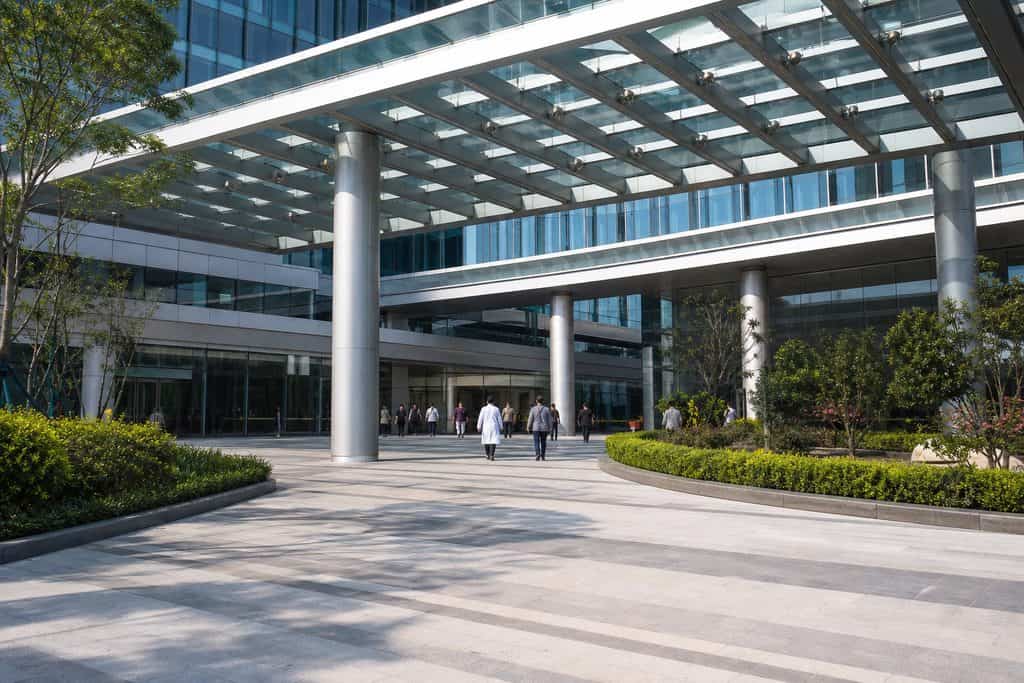
While patients in Canada wait a median 28.6 weeks for orthopedic surgery, surgeons at Beijing Jishuitan Hospital routinely perform over 300 joint replacements per month — with clinical outcomes that match or exceed Western benchmarks. The gap in access is real. But access without verification is a gamble. So how to check hospital accreditation in China becomes the first question every serious medical traveler must answer. Our team has spent years building a verification process for China Medical Services, and this article walks you through exactly what we check, why it matters, and how you can do the same.
How This Actually Works, Step by Step
You have a diagnosis. You have imaging and lab reports. You want to know whether the hospital you are considering in Shanghai, Beijing, or Guangzhou is actually what it claims to be. Here is the sequence we take every patient through.
First, you send us your existing medical records. We translate them into Chinese using medical translators who understand terminology, not just language. This matters because a poorly translated pathology report can lead a Chinese specialist down the wrong path. Translation takes 2 to 4 business days.
Second, we match your condition to the right specialty and the right tier of hospital. Not every condition needs a Fudan Top 100 hospital. Some cases are better served at a focused specialty center. We pull from our database of 340+ top-ranked hospitals across 37 cities.
Third, we verify the hospital’s credentials. This is the core of what this article covers. We check three layers: government licensing, independent accreditation, and clinical reputation. Each layer catches problems the others miss.
Fourth, we coordinate a remote consultation. You speak with the Chinese medical team by video or receive a written second opinion. Only after you are comfortable do we discuss travel logistics, visa documentation, and on-the-ground support.
How We Verify Hospital Accreditation in China: The Three Layers
China’s hospital system is vast — over 35,000 hospitals nationwide. The top 5% are what we include in our database. But “top” is not a label we assign ourselves. We rely on three independent verification layers.
Layer one: government licensing and hospital grade. Every legitimate hospital in China holds a license from the National Health Commission or its provincial counterpart. The license includes a grade. Public hospitals are classified as Level 3, Grade A — commonly called “3A” or “san jia.” This is the highest government rating. It reflects bed count, equipment, staffing, and clinical volume. But here is what many foreigners miss: a 3A license alone does not tell you whether the hospital’s cardiac surgery department is excellent or merely adequate. The license covers the whole institution.
So we go further.
Layer two: JCI accreditation. JCI — Joint Commission International — is the most recognized international hospital accreditation body. A JCI accredited hospital has passed audits on patient safety, medication management, infection control, and international patient services. For Western patients, JCI status is often the single most reassuring credential. You can verify JCI accreditation directly on the JCI website. But only a small fraction of Chinese hospitals hold JCI accreditation — mostly private international hospitals like United Family, Jiahui, and Raffles. Most top public hospitals do not pursue JCI because their domestic reputation already fills their beds.
That leads to layer three.
Layer three: Fudan rankings and specialty reputation. The Fudan University Hospital Rankings are China’s most authoritative hospital quality assessment. Published annually, the comprehensive list ranks the top 100 hospitals into five tiers — A++++ down to A. There are no individual numerical rankings in the comprehensive list. But the specialty reputation rankings are different: 45 specialties, each with a top 10 list. If a hospital is ranked among China’s top 10 for oncology, that is a verifiable, independently assessed fact. We check these rankings for every hospital we recommend. You can browse our department pages to see which hospitals rank in the top 10 for each specialty.
Is It Safe to Have Surgery in China? What Accreditation Actually Tells You
This is the question behind every other question. And the honest answer is: safety depends on the hospital, not the country. China’s top-tier public hospitals perform volumes that would be unimaginable in most Western systems. Fuwai Hospital in Beijing performs over 14,000 cardiac surgeries annually — the highest volume of any heart center in the world. Volume builds competence. But volume without safety systems is just chaos.
That is why accreditation matters. JCI accredited hospitals in China have demonstrated compliance with international patient safety standards. Fudan-ranked public hospitals have demonstrated clinical excellence through peer assessment and outcome data. When both signals align — as they do at a handful of institutions — the safety profile is strong.
What accreditation does not tell you: how your specific case will go. No credential guarantees an individual outcome. We always tell patients that accreditation verifies the institution, not the result.
What to watch for: Some clinics and “medical tourism agencies” advertise partnerships with top Chinese hospitals. Always verify the hospital’s license and accreditation independently. A partnership claim is not a credential.
A Realistic Timeline
Patients often underestimate how long verification and coordination take. Here is a realistic sequence for a planned surgery in China.
| Stage | What Happens | Typical Duration |
|---|---|---|
| Day 1–3 | You send medical records; we begin translation | 2–4 days |
| Week 1 | Hospital matching and accreditation verification | 3–5 days |
| Week 2 | Remote video consultation or written second opinion | 5–10 days |
| Week 3–4 | Visa documentation (S2 visa for medical treatment) | 2–4 weeks |
| Month 2 | Travel to China; in-person consultation with specialist | 1–2 days |
| Month 2–3 | Surgery scheduling and admission | 1–4 weeks |
The step people forget is visa processing. An S2 visa for medical treatment requires supporting documents from the Chinese hospital — an invitation letter, treatment plan, and hospital license copy. We help prepare these. But consulate processing times vary by country. Plan for at least a month.
What Can Go Wrong — and What Happens Then
Verification is not a guarantee. Here are the failure modes we have seen, and what we do about each.
The hospital’s accreditation has lapsed. JCI accreditation is valid for three years. A hospital might have been JCI accredited in 2021 but not renewed in 2024. We check the current JCI directory each time, not a cached list. If accreditation has lapsed, we tell you and adjust the recommendation.
The specialist you want is not available. Top Chinese specialists have packed schedules. A Fudan-ranked department does not mean the specific professor you read about will see you. We coordinate through the hospital’s international department to find the right specialist at the right level. Sometimes that means a different hospital in the same city.
Your records are incomplete. Chinese specialists often want fresh imaging — a CT scan from 8 months ago may not be accepted. This can mean repeating scans in China before a surgical plan is finalized. We tell patients to budget 2–3 extra days for this.
The hospital refuses the case. It happens. Some hospitals decline international patients for complex cases where the risk profile is too high. When that happens, we go back to the database and present alternatives. No hospital is the only option.
China Hospital Accreditation Standards for Foreigners: What’s Different
Western patients often assume accreditation works the same everywhere. It does not. China has its own accreditation ecosystem, and understanding it changes how you evaluate hospitals.
The government’s hospital grade system — Level 3, Grade A — is the baseline. But within that tier, quality varies enormously. A 3A hospital in a provincial capital might have excellent equipment but limited experience with international patients. A 3A hospital in Shanghai might have a dedicated international medical center with English-speaking coordinators. Same government grade. Very different experience.
Then there is the private international hospital sector. These hospitals are often JCI accredited, have English-speaking staff throughout, and offer direct insurance billing. For a Western patient who wants a familiar care environment, a JCI accredited hospital in Shanghai like Jiahui or United Family can be the right choice. The trade-off: private international hospitals generally do not offer the same depth of complex surgical expertise as the top public hospitals.
So the accreditation question becomes: what are you optimizing for? Clinical excellence for a complex procedure? A top public hospital with Fudan specialty rankings. Comfort and communication? A JCI accredited private international hospital. Sometimes the right answer is a hybrid — consultation at a top public hospital with recovery support at a private facility.
Practical tip: When verifying a Chinese hospital’s credentials, check three sources: the National Health Commission license database, the current JCI accredited organizations directory, and the latest Fudan hospital rankings. If all three align, the hospital is legitimate.
Verify Chinese Hospital Credentials: What International Patients Should Check
You can do a lot of verification yourself before contacting us. Here is what to look for.
Start with the hospital’s official website. Legitimate top hospitals publish their license number, grade, and accreditation status. If a hospital’s website does not list its license number, that is a red flag. Cross-check the license number against the National Health Commission’s public database.
Next, check JCI status. The JCI website has a searchable directory of accredited organizations. Search by country and city. If a hospital claims JCI accreditation but does not appear in the directory, walk away.
Then look at the Fudan rankings. The full list is published annually in Chinese, but English summaries are available. A hospital ranked in the top 10 for your specialty is a strong signal. You can also browse our Shanghai hospital pages to see which institutions we have verified for international patients.
Finally, check the hospital’s international patient volume. A hospital that treats 50 international patients a year will have very different processes than one that treats 2,000. Ask directly: how many international patients did you treat last year? What languages does your international department support?
Practical Considerations: Records, Visas, Payment, and Language
Verification is one piece. The practical logistics matter just as much.
Records. Bring everything. Original imaging on disc, pathology slides if relevant, full lab reports, and a summary of prior treatments. Chinese specialists want complete data. If records are in a language other than English or Chinese, professional translation is essential.
Visa. The S2 visa is the standard category for medical treatment in China. It is a short-stay visa issued for private affairs, including medical treatment. Your accompanying family members also apply for S2 visas. We provide the supporting documentation from the hospital, but the consulate makes the final decision. Processing times vary. Do not book flights until the visa is approved.
Payment. Public hospitals in China generally require prepayment for surgery. International insurance is usually reimbursed after the fact, not billed directly. Private international hospitals often offer direct billing. Clarify this before you travel.
Language. Even at top public hospitals, most staff speak limited English. The international department may have English-speaking coordinators, but the ward nurses and technicians often do not. A bilingual medical companion — which we provide — bridges this gap. It is not a luxury. It is the difference between understanding your treatment plan and guessing.
Frequently Asked Questions
Visit the Joint Commission International website and use their organization search tool. Filter by country (China) and city. The directory is updated regularly. If a hospital claims JCI accreditation but is not listed, treat the claim as unverified. Keep in mind that many excellent Chinese public hospitals do not hold JCI accreditation — they rely on domestic rankings instead.
Yes, in many cases. The top public hospitals — those in the Fudan comprehensive top 100 — have rigorous internal quality controls and enormous clinical volumes. Fuwai Hospital, for example, is not JCI accredited but performs more cardiac surgeries than any hospital in the world. Safety depends on the specific hospital and department. Check the Fudan specialty rankings and the hospital’s international patient volume.
A 3A (Level 3, Grade A) rating is a Chinese government classification based on institutional size, equipment, staffing, and clinical scope. It is the highest domestic grade. JCI accreditation is an international assessment focused on patient safety, care processes, and international patient services. A hospital can be 3A without JCI, JCI without 3A, or both. For complex surgery, a 3A public hospital with strong Fudan specialty rankings may be the better choice. For a Western-style experience with English-speaking staff, a JCI accredited private hospital is often preferable.
Partially. The JCI directory and English-language hospital websites are accessible. But the National Health Commission license database is primarily in Chinese, and the Fudan rankings are published in Chinese. This is where a bilingual coordinator helps. We verify credentials on your behalf and show you the evidence in English.
Walk away. Any legitimate hospital in China will provide its license number on request. Refusal to do so is a serious red flag. We have never encountered a top-tier hospital that withheld this information.
Your Next Step
Verifying hospital accreditation in China is not a one-time check. It is a process of cross-referencing government licensing, international accreditation, and specialty reputation. The good news: China’s top hospitals are genuinely world-class, and the verification path is clear if you know what to look for. Our team at China Medical Services handles this verification for every patient we work with. We do not perform surgery, and we do not guarantee outcomes. We do the legwork — credential checks, record translation, hospital matching, visa documentation, and on-the-ground support — so you can make an informed decision. If you are considering treatment in China, start with a conversation. No commitment, just clarity.
Understanding how to check hospital accreditation in China is the first step toward a confident medical decision. We have done this work for hundreds of patients across 37 cities. When you are ready, we will help you do the same.
For more medical information and treatment options in China, visit chinamedservices.com (China Medical Services).
