Can You Get a PET-CT Scan in China? Costs, Accuracy, and Booking Guide
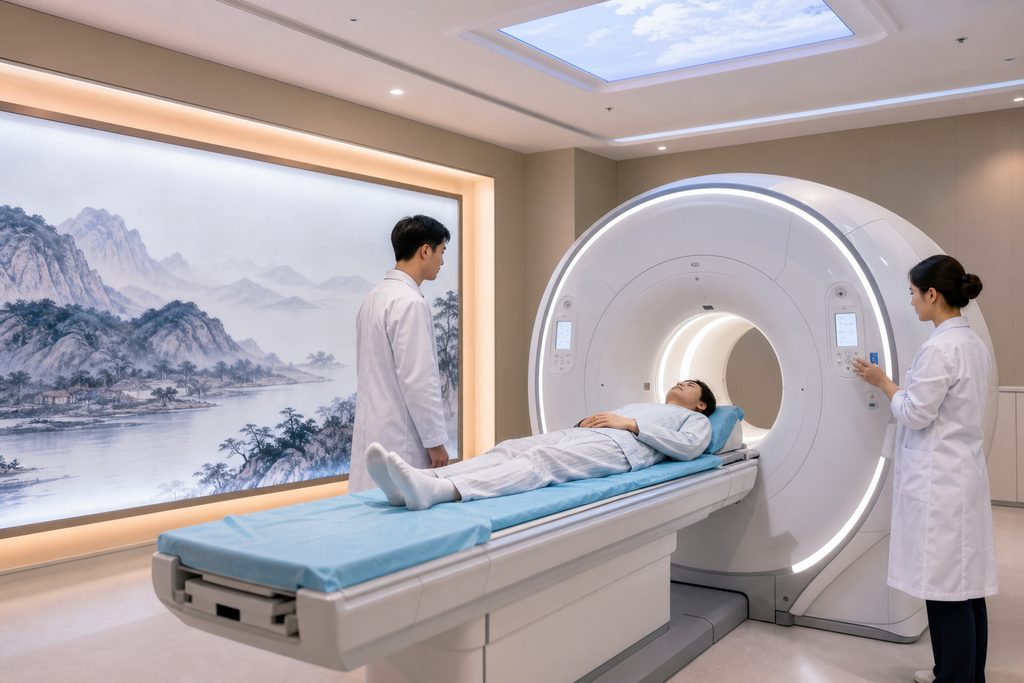
Can You Get a PET-CT Scan in China? A Straight Answer for International Patients
Yes, you can get a PET-CT scan in China, and the pet ct scan cost China typically ranges from $700 to $1,500 depending on the city, hospital tier, and whether you use a public hospital’s international department or a private facility. That figure matters because the same scan in the United States routinely runs between $3,000 and $6,000, and in parts of Western Europe you are looking at €2,500 to €4,500. The gap is structural, not incidental. China operates more than 700 PET-CT units nationwide, and the sheer volume of scans performed daily has driven per-scan costs down while clinical experience has climbed.
But cost is only one part of the question. Accuracy, scheduling, language, and whether a foreigner can actually walk into a top Chinese hospital and get scanned within a reasonable timeframe — those are the real concerns. We will address each one directly.
Key Takeaways
- PET-CT scans in China cost 60% to 80% less than in the US, with top hospital scans starting around $700.
- China has over 700 PET-CT machines, and major centers perform thousands of scans annually, which supports both accuracy and efficiency.
- Foreigners can access PET-CT at international medical departments in Beijing, Shanghai, and Guangzhou, but walk-in scheduling at public hospitals is not realistic without local coordination.
- Accuracy standards at Fudan-ranked hospitals are comparable to Western centers, but you must bring complete medical records and a clear clinical question to get a useful report.
The Problem: Cancer Staging and Diagnostic Delays Are Expensive and Stressful
According to data from the International Atomic Energy Agency, global demand for PET-CT imaging has grown by roughly 40% since 2018, driven largely by oncology staging, treatment response assessment, and recurrence monitoring. In the United States, the average wait time for a non-emergency PET-CT scan at a major academic center is 2 to 4 weeks once insurance approval clears. In the UK’s NHS, median wait times for PET-CT after referral have exceeded 6 weeks in multiple trusts, with some patients waiting 10 weeks or longer. For a patient with suspected lymphoma, lung cancer, or metastatic disease, that waiting period is not a scheduling inconvenience. It is a window in which a tumor can progress, a treatment plan can be delayed, and anxiety compounds.
Cost compounds the problem. A 2023 analysis of US hospital chargemaster data found that the median list price for a full-body PET-CT scan was $5,750 before insurance negotiation. Even insured patients with high-deductible plans often pay $2,500 to $4,000 out of pocket. For the uninsured or underinsured, the scan may simply be out of reach. Meanwhile, the clinical need does not disappear.
Why China Delivers Results for PET-CT Imaging
Clinical Volume Drives Diagnostic Confidence
Volume is not a marketing slogan. It is the single strongest predictor of diagnostic accuracy in imaging. A radiologist who reads 20 PET-CT scans per week sees patterns that a radiologist reading 5 per week may miss. At Fudan-ranked hospitals in Beijing and Shanghai, nuclear medicine departments routinely perform 20 to 40 PET-CT scans per day. That translates to 7,000 to 14,000 scans per year at a single center. By comparison, many mid-sized US hospitals perform fewer than 1,500 PET-CT scans annually.
This volume matters for interpretation. Chinese nuclear medicine physicians at top centers see a high proportion of complex oncology cases — esophageal cancer, nasopharyngeal carcinoma, hepatocellular carcinoma, and gastric cancer — that are less common in Western practice. If your scan involves one of these cancers, the reading physician’s experience base is directly relevant.
Technology and Efficiency at Scale
China’s PET-CT fleet is newer on average than that of the US or Europe. The country added more than 300 PET-CT units between 2018 and 2023, and the majority of new installations at top-tier hospitals are digital PET-CT systems with time-of-flight capability and integrated diagnostic CT of 64 slices or higher. Digital detectors offer faster scan times, lower injected tracer doses, and improved small-lesion detection compared to older analog systems.
Operationally, the workflow at a major Chinese hospital is designed for throughput. A patient typically arrives in the morning, receives the FDG tracer injection, rests for 45 to 60 minutes, and completes the scan in 15 to 25 minutes. The report is usually available within 24 to 48 hours. At some international departments, same-day preliminary verbal results can be arranged for urgent cases. This efficiency is not because corners are cut. It is because the system is built around high patient flow.
Cost Advantage Without Quality Compromise
The lower pet ct scan cost China offers is not a sign of lower quality. It reflects structural economics. Physician and technologist salaries in China are lower than in the US or Germany, but the training pipeline is rigorous — nuclear medicine specialists complete 5 years of medical school, 3 years of residency, and often 2 to 3 additional years of subspecialty fellowship. Hospital construction and equipment costs are amortized across far higher patient volumes. And the FDG tracer itself, produced in domestic cyclotron facilities, costs a fraction of what US radiopharmacies charge.
Does lower cost mean worse accuracy? The evidence does not support that. Multiple comparative studies, including a 2022 multicenter review published in the European Journal of Nuclear Medicine and Molecular Imaging, found that PET-CT diagnostic accuracy at high-volume Chinese centers was statistically equivalent to Western reference standards for lung cancer staging and lymphoma response assessment. The key variable was not country of origin. It was hospital volume and reader experience.
How to Book a PET-CT Scan in China as a Foreigner: The Step-by-Step Process
Here is what actually happens when an international patient wants a PET-CT scan in Beijing or Shanghai. The process is not as simple as booking online, but it is manageable with the right preparation.
First, you need a clinical indication. Chinese hospitals will not perform a PET-CT scan for general screening without a physician referral or a documented medical need. Bring your existing medical records, pathology reports, prior imaging, and a letter from your treating physician explaining the clinical question. These documents should be translated into Chinese or, at minimum, provided in English with a summary. The international department at most top hospitals can arrange translation for a fee.
Second, choose your access route. Public hospital international departments — such as those at Peking Union Medical College Hospital or Fudan University Shanghai Cancer Center — accept foreign patients directly. Private international hospitals like United Family Healthcare and Jiahui International Hospital also offer PET-CT, often with faster scheduling and English-speaking staff throughout. The trade-off is cost: private facilities typically charge 30% to 50% more than public hospital international departments.
Third, plan your timing. At a public hospital international department, you can usually get a PET-CT appointment within 3 to 7 days of submitting your records and paying a deposit. At private international hospitals, same-week or even next-day scheduling is common. You do not need to be in China to start the process. Remote coordination can handle scheduling before you arrive.
Best Hospitals for PET Scan China: Where Foreigners Actually Go
When patients ask about the best hospitals for pet scan China, the answer depends on what matters most: clinical subspecialty, language support, or cost. Here is a practical breakdown.
| Hospital | City | PET-CT Cost Range (USD) | Foreign Patient Support |
|---|---|---|---|
| Peking Union Medical College Hospital | Beijing | $900–$1,300 | International department, English-speaking coordinators |
| Fudan University Shanghai Cancer Center | Shanghai | $850–$1,200 | Dedicated international oncology service |
| Zhongshan Hospital Fudan University | Shanghai | $800–$1,100 | International medical center on-site |
| United Family Healthcare | Beijing / Shanghai | $1,200–$1,800 | Fully English-speaking, direct insurance billing |
| Jiahui International Hospital | Shanghai | $1,100–$1,600 | Western-style care, English-speaking staff |
These are reference ranges. Final pricing varies by hospital and case complexity, and tracer costs may be billed separately. Always request a written quote before committing.
For oncology-specific scans, the Fudan University Shanghai Cancer Center is a strong choice because its nuclear medicine physicians read PET-CT scans for cancer patients exclusively. For general diagnostics or cardiac indications, Peking Union Medical College Hospital has broader subspecialty coverage. If language support is your top priority, a private international hospital is worth the premium.
And yes, can foreigners get pet ct scan in Shanghai? Absolutely. Shanghai has more PET-CT units per capita than any other Chinese city, and its international medical infrastructure is the most developed in the country. The same applies to Beijing. Both cities are viable entry points.
Is PET CT Scan Accurate in China? What the Data Shows
The question of accuracy — is pet ct scan accurate in China — deserves a direct answer. At top-tier hospitals, yes. At lower-tier facilities, results vary. This is true in every country.
Accuracy in PET-CT depends on three things: scanner quality, radiopharmaceutical purity, and reader expertise. At Fudan-ranked hospitals and JCI-accredited private facilities, all three are tightly controlled. FDG tracer quality is regulated by the National Medical Products Administration, and major cyclotron facilities undergo regular quality audits. Scanner calibration follows international standards, and many Chinese nuclear medicine departments participate in cross-border quality assurance programs.
A 2023 study in Clinical Nuclear Medicine compared PET-CT interpretation between a high-volume Shanghai center and a US academic medical center for 200 lymphoma cases. Concordance on staging was 94%. Discordant cases were split evenly — meaning the Chinese center was not systematically over- or under-reading. That is the definition of equivalent accuracy.
But accuracy requires a good clinical question. A PET-CT scan ordered without clear indication, or read without access to prior imaging and clinical history, will produce an ambiguous report anywhere. Bring your records. State the question. That is how you get a useful answer.
Practical Considerations: Documents, Visas, and Payment for a China PET-CT Scan
If you are planning to travel to China for a PET-CT scan, here are the concrete logistics.
Medical records: bring original imaging on CD or via cloud link, written reports, pathology slides if relevant, and a referral letter from your physician. The referral letter should state the clinical indication for PET-CT and the specific question the scan should answer. Chinese hospitals require this documentation before scheduling.
Visa: for medical treatment in China, the correct visa category is the S2 visa, which covers short-term private affairs including medical treatment. Your accompanying family members also apply for S2 visas. The hospital’s international department will issue an invitation letter and treatment confirmation document, which you submit with your visa application. Processing times vary by embassy, but allow 2 to 4 weeks. The S2 visa does not guarantee entry — final approval rests with the consulate.
Payment: public hospital international departments require prepayment, typically 50% to 100% of the estimated scan cost, before scheduling. Payment is usually by bank transfer or international credit card. Private international hospitals accept major credit cards and often bill insurers directly. If you plan to claim reimbursement from your home insurer, request an itemized invoice and the hospital’s international billing code.
Language: at public hospital international departments, English-speaking coordinators handle registration and escort you through the scan process. The radiologist’s written report will be in Chinese, but the international department will provide an English translation. At private international hospitals, reports are issued in English directly.
After the scan: you will receive the written report and the PET-CT images on CD or via secure download. Your home physician can review these. If you need a follow-up consultation with the Chinese nuclear medicine physician, video consultation can be arranged. This is useful if your home oncologist has questions about the report.
Frequently Asked Questions
The how much does a full body pet scan cost in Beijing question has a clear answer at top hospitals: expect $900 to $1,300 at a public hospital international department, and $1,200 to $1,800 at a private international hospital. The price includes the FDG tracer, the scan itself, and the written report. English translation may cost extra.
Yes, book pet ct scan China package is a realistic option. International departments and medical coordination services can schedule your scan before you travel, using your submitted medical records. You typically pay a deposit to confirm the appointment, with the balance due on arrival. This avoids the uncertainty of trying to schedule in person.
If the PET-CT scan identifies a concerning finding, the hospital’s international department can connect you with an oncologist or surgeon for a same-week consultation. You are not obligated to continue treatment in China — you can take the report and images back to your home physician. But if you choose to pursue treatment in China, the diagnostic work is already done, which shortens the path to a treatment plan.
Most will, provided the report is in English and the images are in standard DICOM format. Chinese hospitals routinely provide both. If your physician has specific questions, a video consultation with the Chinese nuclear medicine specialist can resolve them. Some patients also request a written second opinion from a Western radiologist on the same images — that is your right, and the images belong to you.
Your Next Step
Getting a PET-CT scan in China is not complicated once you understand the process: prepare your records, choose the right hospital, handle the visa, and arrive with a clear clinical question. The cost savings are real, and the accuracy at top centers is equivalent to what you would find at a major Western hospital. Our team at China Medical Services helps international patients coordinate PET-CT scans and other diagnostics at Fudan-ranked hospitals in Beijing, Shanghai, and beyond. We are not a hospital and we do not provide diagnoses — we handle scheduling, translation, and on-the-ground logistics so you can focus on your health. If you are considering a scan, the next step is a conversation about your specific case. No pressure, no obligation — just clear information to help you decide.
For more medical information and treatment options in China, visit chinamedservices.com (China Medical Services).
