Fix Acne Scars Abroad: Laser Costs, Top Hospitals & Realistic Results
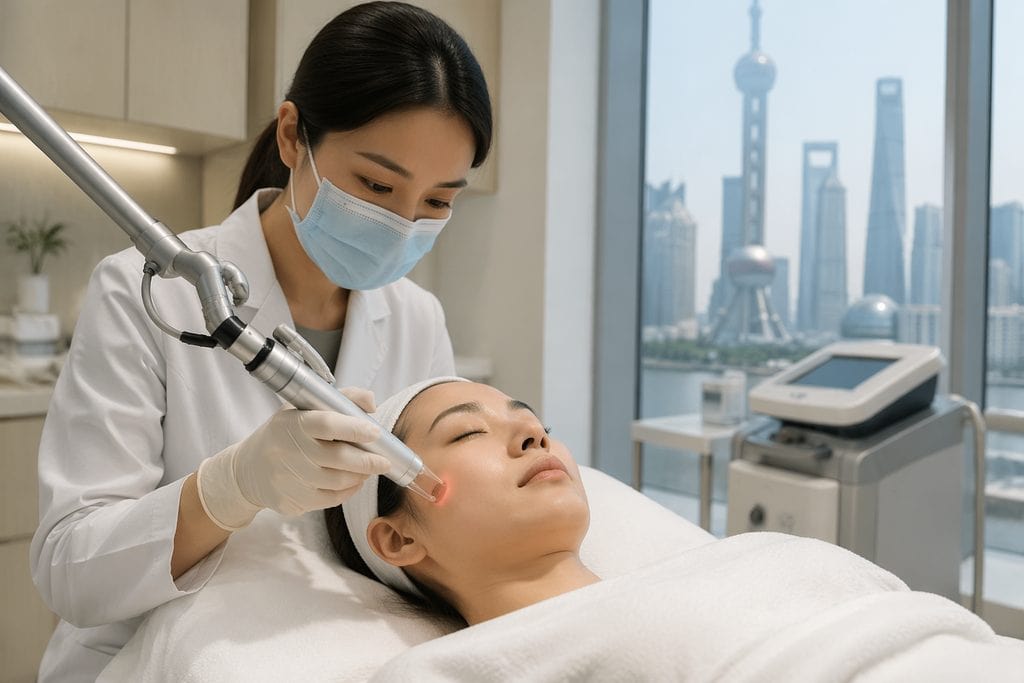
Acne scars are permanent changes in your skin’s texture. They form when inflamed blemishes damage the collagen framework beneath the surface. The result? Depressions, raised tissue, or discoloration that no cream can erase. But “permanent” doesn’t mean untreatable. Modern procedural dermatology can remodel that damaged collagen. The real question isn’t can you fix them. It’s which procedure matches your scar type, who should perform it, and what the acne scar treatment cost China actually buys you compared to prices at home.
We coordinate care at more than 340 top-ranked hospitals across 37 Chinese cities. Our team has watched hundreds of international patients weigh the same decision. The information below reflects what we tell them in free consultations — the clinical realities, the price ranges, and the honest limitations.
How This Actually Works, Step by Step
You don’t fly to China and walk into a laser room. The sequence matters, and skipping steps is how people waste money.
First, you send us clear photos of your scars in good lighting, plus any prior treatment records. A dermatologist at a partner hospital reviews them. They classify your scars — icepick, boxcar, rolling, or hypertrophic. That classification drives everything. Icepick scars need TCA CROSS or punch excision. Rolling scars respond to subcision. Boxcar and shallow scars favor fractional lasers. No single device treats all four types well.
Next comes a video consultation. You speak directly with the dermatologist. They explain which combination of procedures fits your skin type and scar pattern. This is also when they assess your Fitzpatrick skin type. Darker skin tones carry higher risk of post-inflammatory hyperpigmentation from aggressive lasers. A responsible provider adjusts settings accordingly.
Then you get a written plan with procedure names, session counts, intervals, and a price range. You decide. If you proceed, we coordinate the appointment, arrange a bilingual companion if needed, and handle the logistics. You arrive, undergo treatment, and fly home with aftercare instructions. Most patients need 3 to 5 sessions spaced 4 to 8 weeks apart, which means either multiple trips or an extended stay.
What Fractional CO2 Laser Actually Does to Scarred Skin
The search phrase “how effective is laser for acne scars in China” suggests people want a magic number. Here’s the honest version. Fractional CO2 laser creates microscopic columns of thermal injury in the skin. Surrounding healthy tissue stays intact, which speeds healing. The body responds by producing new collagen and elastin. Over weeks and months, depressed scars lift and smooth out.
Published studies report 50% to 70% improvement in acne scar appearance after a full course of fractional CO2 treatments. That’s a meaningful change, not perfection. The improvement is measured by blinded physician assessments and patient satisfaction scores. A 2016 meta-analysis in Dermatologic Surgery reviewed 12 studies and found consistent, statistically significant improvement in atrophic acne scars with fractional CO2. The same review noted that combination therapy — adding subcision or TCA CROSS — produced better results than laser alone for mixed scar types.
Recovery is real. Expect 5 to 7 days of redness, swelling, and peeling after each session. Most patients describe it as a moderate sunburn. You’ll need strict sun avoidance for weeks. In Shanghai or Beijing, that means hats, sunscreen, and planning indoor activities.
A Realistic Timeline
| Stage | What Happens | Typical Duration |
|---|---|---|
| Day 1–7 | You send photos and records; we arrange dermatologist review | 1 week |
| Week 1–2 | Video consultation with the specialist; written plan and quote delivered | 3–7 days after review |
| Week 2–6 | You decide; we book the first session; you apply for S2 visa with hospital invitation letter | 2–4 weeks for visa processing |
| Month 1–2 | First treatment session in China; 5–7 days of visible recovery | 1 week on the ground |
| Month 2–8 | Repeat sessions every 4–8 weeks; collagen remodeling continues between sessions | 3–5 sessions total |
| Month 8–12 | Final results visible; assess need for maintenance or touch-up | Ongoing |
The waiting step people forget is visa processing. An S2 visa for private affairs or medical treatment typically takes 2 to 4 weeks, and you’ll need supporting documents from the hospital. We help prepare those. Also, top dermatologists at major hospitals book out 2 to 4 weeks in advance. Don’t expect next-week appointments.
What Can Go Wrong — and What Happens Then
Laser resurfacing is generally safe in trained hands. But complications exist, and you deserve to know them before spending money.
Post-inflammatory hyperpigmentation (PIH) is the most common issue, especially in Fitzpatrick skin types III through VI. It appears as dark patches where the laser was applied. It usually fades over 3 to 6 months with topical treatment, but it’s distressing. A careful provider will test a small area first or use lower energy settings. Ask about this before your first full session.
Infection is rare but possible. Bacterial or viral reactivation (cold sores) can occur. Prophylactic antivirals and antibiotics are standard practice at reputable hospitals. Scarring from the laser itself is extremely uncommon with fractional devices but can happen with aggressive settings or improper aftercare. If any of these occur, the treating hospital manages them. Our role is ensuring you can reach the dermatologist afterward, not just during the appointment.
Another failure mode: unrealistic expectations. If you expect completely smooth skin after one session, you’ll be disappointed regardless of provider quality. We say this in every consultation. The patients who are happiest understand that 50% to 70% improvement is a good outcome.
Choosing Between Hospitals: What the Rankings Mean for Your Face
Searching for the “best dermatology hospital Shanghai for acne scars” leads many patients to Fudan ranking lists. Those rankings are real and useful. The Fudan China Hospital Rankings evaluate clinical reputation and research output across 45 specialties. For dermatology, hospitals like Huashan Hospital affiliated with Fudan University in Shanghai consistently appear among the top-ranked dermatology departments in the country. Peking University First Hospital and the Institute of Dermatology at the Chinese Academy of Medical Sciences in Nanjing also hold strong reputations.
But here’s what the rankings don’t tell you. A hospital can be excellent at treating complex skin diseases and still have long wait times for cosmetic procedures. Acne scar treatment is often handled in the medical aesthetics or laser department, which may operate separately from general dermatology. Some top public hospitals focus their laser resources on medical conditions like port-wine stains and burn scars, with cosmetic acne scar work taking lower priority.
Private international hospitals in Shanghai and Beijing offer a different trade-off. They have shorter wait times, English-speaking staff, and more experience with foreign patients. Prices run higher than public hospital international departments. For a procedure like fractional CO2 laser, where the device and operator skill matter more than the hospital’s research ranking, a well-equipped private clinic with an experienced dermatologist can be an excellent choice. We help patients evaluate both options based on their scar type, budget, and language needs.
Practical Considerations: Records, Visas, Payment, and Follow-Up
Bring any records from prior treatments. If you’ve had isotretinoin (Accutane) in the past 12 months, disclose it. Most providers require a 6 to 12 month washout period before laser resurfacing because the drug impairs wound healing. Bring a list of current medications and any history of keloid scarring. These details change the treatment plan.
Visa category matters. For medical treatment in China, the S2 visa is the applicable short-stay category, not the M visa, which is for commercial and trade activities. We provide the hospital invitation letter and supporting documents to include with your S2 application. Approval is never guaranteed, and requirements vary by embassy, so start early.
Payment at Chinese public hospitals is typically upfront. International departments accept major credit cards. Private international hospitals often bill insurance directly. If your home insurance covers treatment abroad, check whether acne scar procedures fall under reconstructive or cosmetic exclusions. Most insurers classify acne scar treatment as cosmetic and won’t cover it. Budget accordingly.
Follow-up after you return home is straightforward. You’ll have WhatsApp or email access to the dermatologist for questions during recovery. We can also coordinate a video follow-up if needed. The main post-treatment rule is sun protection for at least 3 months after the final session.
Frequently Asked Questions
No procedure can restore skin to its pre-acne state with 100% certainty. What experienced providers can achieve is 50% to 70% visible improvement that lasts for years, because the new collagen is your own tissue. Maintenance sessions every 1 to 2 years help preserve results. Anyone promising “permanent removal” is overselling.
Fractional CO2 laser for full-face resurfacing typically ranges from $150 to $400 per session at public hospital international departments, and $300 to $800 at private international hospitals. A full course of 3 to 5 sessions therefore runs roughly $450 to $4,000 depending on the facility and combination of procedures. In the United States, comparable sessions cost $800 to $2,500 each. Prices vary by hospital and case complexity.
Surgical options like punch excision, subcision, or punch elevation are priced differently from laser. In Beijing, subcision alone may cost $200 to $500 per session, while punch excision for deep icepick scars runs $100 to $300 per scar. Combination approaches cost more but often deliver better results for mixed scar types. The key is that surgery addresses individual scars, while laser treats the overall skin surface.
You can’t book most public hospital appointments from overseas without local assistance. The standard path is to submit photos and records for remote evaluation, complete a video consultation, then have a local coordinator book the in-person appointment. We handle this process for our patients, including the hospital registration and bilingual accompaniment. Without Chinese language ability or local help, navigating a public hospital’s laser department is extremely difficult.
Your Next Step
Acne scar treatment in China offers genuine value: experienced dermatologists, modern laser platforms, and prices that are a fraction of Western rates. But the outcome depends on honest scar classification, appropriate procedure selection, and realistic expectations. We help you get all three.
Our team at China Medical Services coordinates video consultations, hospital bookings, and bilingual support for international patients. We don’t perform treatments and we don’t guarantee results. What we do is connect you with qualified dermatologists and make the logistics manageable. If you’d like a specialist to review your scars and give you a straightforward assessment, request a free consultation.
Your scars don’t define your skin forever. But the right treatment plan starts with the right information — and that’s exactly where this conversation begins.
For more medical information and treatment options in China, visit chinamedservices.com (China Medical Services).
