Will a Second Opinion Change My Treatment? What the Data Shows
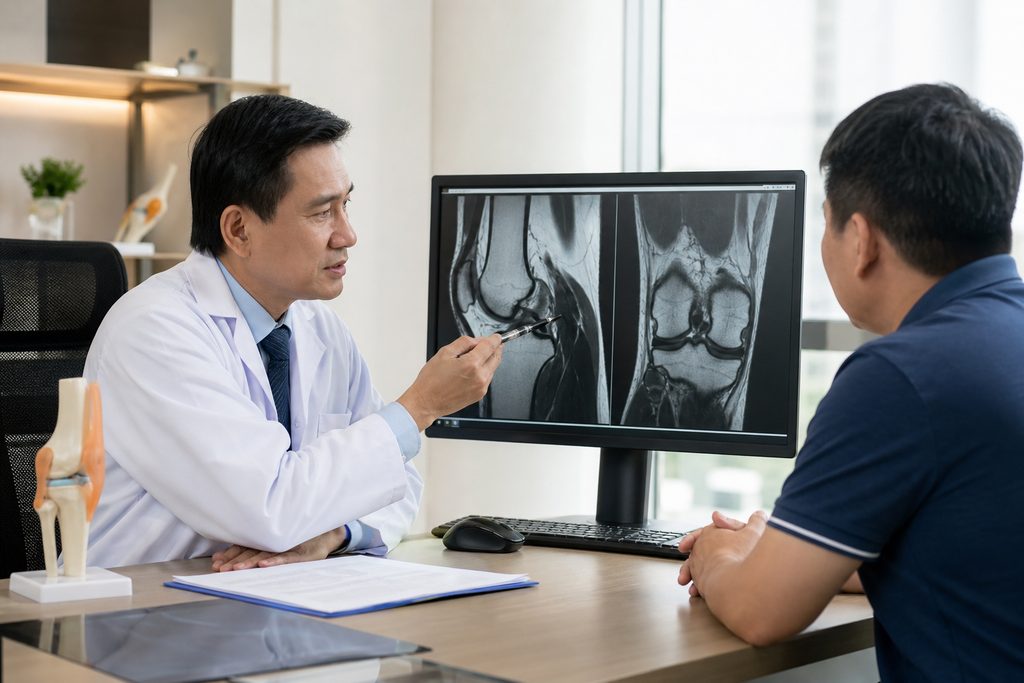
A second opinion means asking another specialist to review your diagnosis and proposed treatment plan. It does not mean starting over. It means checking the map before you commit to a long and expensive road. The question you typed into Google — will a second opinion change my treatment — has a measurable answer. Studies from Johns Hopkins and the Mayo Clinic show that a structured second opinion leads to a diagnosis change in 10–15% of cases and a treatment plan modification in roughly 30–40% of cases. For cancer patients specifically, the numbers lean higher. A 2017 study in The Breast Journal found that 43% of breast cancer patients who sought a second opinion at a multidisciplinary center had a change in their management plan. That is not a small number. When you are weighing a second opinion cost China cancer treatment against the price of getting the wrong treatment, the math changes quickly.
How This Actually Works, Step by Step
You send us your existing records. That means pathology slides, imaging files on a CD or DICOM link, blood work, surgical notes, current medication list, and a one-page summary of what your local doctor has told you. Our team translates everything into Chinese and routes it to the right department at a top-ranked Chinese hospital. A specialist reviews the full file. You get back a written report in English — usually 3 to 6 pages — that explains whether the reviewer agrees with the diagnosis, whether the staging is correct, and whether the proposed treatment matches current Chinese and international guidelines. If you want more than paper, you can upgrade to a video consultation and speak directly with the reviewing team. The written second opinion costs $300–$500. The video consultation with a top specialist runs $500–$800. Both are a fraction of what you would pay for the same review in the United States or Western Europe.
Will a Second Opinion Change My Treatment Plan? What the Research Actually Shows
Let us be direct about the numbers, because they are the only thing that matters here. A 2015 study published in the Journal of Evaluation in Clinical Practice reviewed 286 second-opinion cases at a major academic medical center. The diagnosis changed in 15% of cases. The treatment plan changed in 37% of cases. Another study from the University of Michigan, this one focused on oncology, found that 21% of patients received a different diagnosis after a second review, and 39% had their treatment recommendations altered. Some of those changes were minor — a different chemotherapy dosing schedule or an added imaging study. Others were major — a different surgical approach, a different stage, or a completely different drug regimen.
Why does this happen? Three reasons. First, pathology is subjective at the margins. Two pathologists can look at the same slide and disagree on tumor grade or even cell type. Second, treatment guidelines differ by country and by institution. What is standard first-line therapy in one hospital may be considered outdated in another. Third, high-volume centers see rare presentations more often. A specialist who has treated 2,000 cases of a particular cancer simply recognizes patterns that a general oncologist who has treated 200 might miss. That is not a criticism of your local doctor. It is a structural reality of medicine.
So the honest answer to the question is: yes, there is a meaningful chance your treatment plan will change. Not because your first doctor was incompetent. Because medicine is complex, and a fresh set of expert eyes has real value. The second opinion cost China cancer treatment — typically $300 to $800 depending on the level of review — is low enough that the expected value calculation almost always favors getting the review.
A Realistic Timeline
People underestimate how long a cross-border second opinion takes. Not because the medical review is slow, but because the logistics around it are. Here is an honest breakdown.
| Stage | What Happens | Realistic Duration |
|---|---|---|
| Day 1–3 | You collect and upload records; we check them for completeness | 2–3 days |
| Day 4–10 | Medical translation into Chinese; clarification questions if records are incomplete | 5–7 days |
| Day 11–16 | Department assignment and specialist confirmation at the hospital | 3–5 days |
| Day 17–27 | Specialist review and written report drafting | 7–10 days |
| Day 28–35 | English translation, quality review, delivery to you | 3–5 days |
| Week 6–8 | Optional video consultation scheduling (if you want to speak with the team) | 1–2 weeks lead time |
So the full written second opinion lands in your inbox in about four to five weeks. A video consultation adds one to two more weeks. If you are considering traveling to China for treatment afterward, factor in visa processing time — S2 visa applications typically take one to two weeks after the hospital issues your supporting documents, though this varies by embassy. None of this is instant. But none of it is unreasonable either.
What Can Go Wrong — and What Happens Then
Some international insurers and travel medical policies reimburse second opinion costs. Most US and European domestic insurers do not. Check with your insurer before you pay. We provide itemized receipts and a formal report that you can submit for reimbursement. Private international hospitals in China are more likely to have direct billing relationships with major insurers than public hospital international departments.
This happens in roughly one-third of cases. You are not obligated to follow the Chinese recommendation. The right next step is to discuss the discrepancy with your local doctor and, if needed, seek a third opinion. We can arrange a follow-up video consultation with the Chinese specialist to clarify their reasoning. The goal is not to replace your local doctor but to give you the information you need to make an informed decision.
No. The written second opinion is fully remote. You send records electronically, and the report is delivered by email. Video consultations are also remote. You only need to travel if you decide to pursue in-person treatment in China after the review.
Your Next Step
A second opinion is one of the highest-value investments you can make before committing to a major treatment plan. The data is clear: roughly one in three patients has their treatment changed after expert review. The second opinion cost China cancer treatment — $300 to $800 for most cases — is a small price for that level of certainty.
Our team at China Medical Services coordinates written and video second opinions with specialists at China’s top-ranked hospitals. We handle translation, department matching, and scheduling. We do not make medical decisions for you, and we do not promise specific outcomes. What we do is make the process clear, honest, and manageable. If you want to explore a second opinion from a Chinese specialist, start with a free consultation at our patient services page. Send us your records. We will tell you what is possible.
Frequently Asked Questions
Yes. The hospitals used for international patients are JCI-accredited and follow the same international safety standards as top hospitals in the US and Europe. Surgical teams perform high volumes of procedures — often more than their Western counterparts — which studies show leads to better outcomes.
Costs vary by procedure and hospital, but international patients typically save 40-80% compared to US prices — even when factoring in travel and accommodation. A consultation with our team will give you an exact, all-inclusive quote with no hidden fees.
Send us your existing medical reports to get started. We handle everything from hospital selection and appointment scheduling to visa assistance and post-operative recovery planning. Your medical records are reviewed by the specialist before you even book a flight.
For more medical information and treatment options in China, visit chinamedservices.com (China Medical Services).
