Will Dental Implants Look Natural? What Patients Should Know Before Choosing China
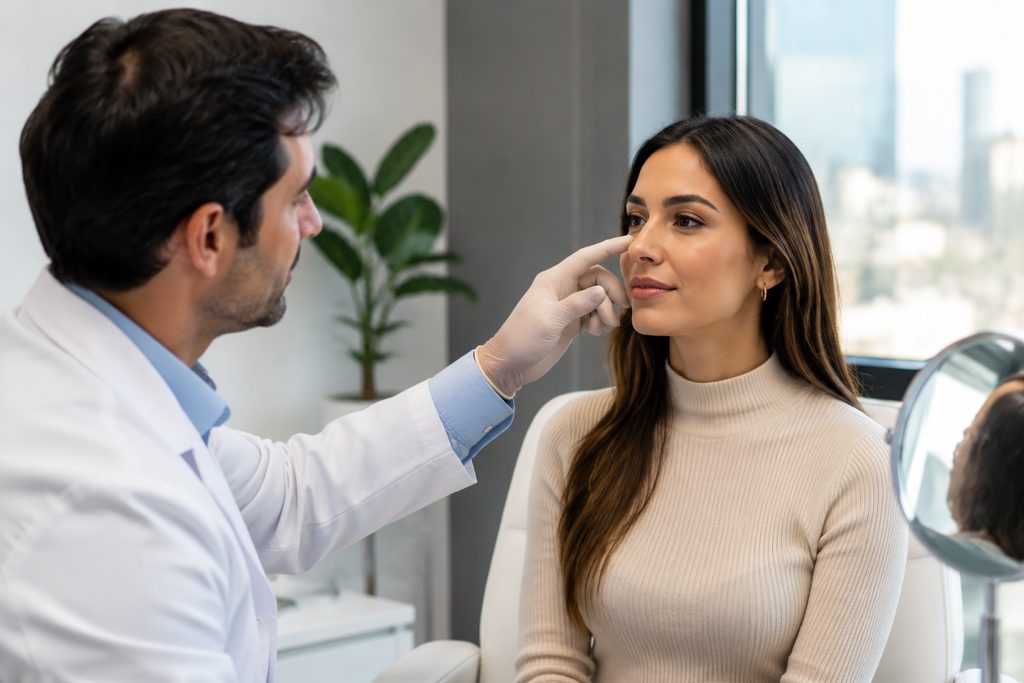
Will Dental Implants Look Natural? Understanding Aesthetics, Materials, and Dental Implants China Cost
A dental implant replaces a missing tooth root with a titanium post, then crowns it with a custom-made ceramic tooth. The short answer is yes — modern implants can look indistinguishable from natural teeth. But the result depends on three things: the surgeon’s skill, the crown material, and how well the implant site heals. For patients weighing dental implants China cost against quality, the question is not whether implants can look natural, but what separates a good result from a mediocre one.
We have helped patients from over 40 countries evaluate dental treatment options in China. The aesthetic concern comes up in nearly every consultation. Patients want to know if they will smile, eat, and speak without anyone noticing. The evidence says yes — when the right conditions are met.
Key Takeaways
- Modern zirconia and lithium disilicate crowns achieve a natural translucency that mimics real enamel — studies report patient satisfaction rates above 90% for implant aesthetics.
- Chinese dental implant systems use the same FDA-approved and CE-marked components as Western clinics: Straumann, Nobel Biocare, and Osstem are standard.
- Dental implants China cost typically ranges from $1,200 to $3,000 per tooth — roughly 60–70% less than US prices — but the lowest quote is not always the best value.
- Gum tissue quality, bone volume, and the lab technician’s ceramic layering skill matter more than the implant brand itself.
The Problem: A Missing Tooth Changes Everything — and Not Just Your Smile
Approximately 178 million Americans are missing at least one tooth, according to the American College of Prosthodontists. That is more than half the adult population. The consequences go far beyond appearance. When a tooth is gone, the jawbone beneath it begins to resorb — losing up to 25% of its width in the first year alone, per research published in the Journal of Oral and Maxillofacial Surgery.
Bone loss changes facial structure. The cheeks sink. The lips lose support. Adjacent teeth drift into the gap, creating bite misalignment that can lead to TMJ pain. And what starts as one missing tooth often becomes several within a decade. A removable denture does not stop bone loss — only an implant does, because the titanium post transmits chewing force into the jawbone just like a natural root.
So the real question is not “will it look natural?” but “how long can I wait before the bone deteriorates to the point where a natural-looking result becomes harder to achieve?”
How Natural Do Dental Implants Look? The Science of Aesthetic Dentistry
The honest answer: a well-executed implant is virtually undetectable. But “well-executed” is doing a lot of work in that sentence. Let us break down what actually determines the result.
Crown Material: Zirconia vs. Porcelain-Fused-to-Metal
Early implants used porcelain-fused-to-metal (PFM) crowns. They looked acceptable but had a telltale gray line at the gum margin. Modern full-contour zirconia and lithium disilicate crowns eliminate that problem entirely. Zirconia, in particular, has a light transmission property remarkably close to natural enamel. A skilled dental technician layers translucent ceramics over a shaded zirconia core to replicate the subtle color gradients of a real tooth — darker at the gum line, lighter at the incisal edge.
A 2023 systematic review in the Journal of Prosthetic Dentistry found that patients rated monolithic zirconia crowns as aesthetically equivalent to natural teeth in over 90% of cases. The material matters. So does the technician.
Gum Tissue: The Overlooked Factor
Here is what most patients do not know: the crown is only half the picture. The gum tissue around the implant — the “pink aesthetics” — determines whether the result looks natural. A natural tooth emerges from the gum with a scalloped, knife-edge margin. A poorly placed implant can look flat, puffy, or recessed. This is why surgeons use a temporary healing abutment to shape the gum tissue before the final crown is placed. It takes time. It takes patience. Skipping this step is how you get an implant that looks “good from afar but far from good.”
Placement Precision and Digital Planning
Modern implant surgery uses 3D cone-beam CT imaging and computer-guided surgical templates. The surgeon plans the implant angle, depth, and position digitally before making a single incision. This precision is what allows the crown to emerge at the correct angle relative to the adjacent teeth. A 2-millimeter error in placement is the difference between a crown that blends in and one that looks like it was bolted on.
Why China Has Become a Serious Option for Aesthetic Dental Implants
China’s dental implant market has grown explosively over the past decade. The country now performs an estimated 4 million implant procedures annually, according to industry data cited by the China Daily. Volume drives proficiency. The same dynamic that made Chinese cardiac surgeons world-class — thousands of cases per year — applies to implant dentistry.
Implant Volume Builds Clinical Confidence
A dentist in a major Chinese city like Shanghai or Beijing may place 300–500 implants per year. The average general dentist in the United States places fewer than 50. That gap matters for complex cases: immediate loading, full-arch restoration, sinus lifts, and aesthetic zone placement all benefit from repetition. When a surgeon has seen every anatomical variation hundreds of times, the margin for error shrinks.
Same Implant Systems, Different Cost Structure
Chinese clinics use the same implant systems you would find in a Beverly Hills practice. Straumann (Swiss), Nobel Biocare (Swedish), and Osstem (Korean) are the most common. The components are identical. What differs is the cost structure: lower facility overhead, lower labor costs, and a healthcare system built on volume rather than margin. That is why dental implants China cost runs $1,200–$3,000 per tooth while the same Straumann implant in the US typically runs $3,000–$6,000 per tooth.
You are not buying a cheaper implant. You are buying the same implant in a cheaper market.
Specialized Aesthetic Dentistry in Shanghai and Beyond
For patients specifically searching for natural looking dental implants Shanghai, the city hosts several internationally accredited dental hospitals and private clinics with English-speaking staff. Shanghai Ninth People’s Hospital, affiliated with Shanghai Jiao Tong University School of Medicine, runs one of the largest oral and maxillofacial departments in Asia. Its dental implant center handles complex aesthetic cases, including full-mouth rehabilitation. Private options like Jiahui Health and Parkway Shanghai offer Western-style service standards with direct insurance billing.
Our Shanghai hospital guide covers the city’s major medical institutions in detail. For a broader look at top-ranked facilities, see our Top 100 Hospitals by City directory.
Dental Implant Packages China Price: What You Are Actually Paying For
When you search for dental implant packages China price, you will find quotes ranging from $600 to $6,000 per tooth. That spread exists because “dental implant” is not one product — it is a bundle of components and services. Understanding the breakdown prevents expensive misunderstandings.
| Package Component | Budget Option (China) | Premium Option (China) | US Average |
|---|---|---|---|
| Implant fixture (titanium post) | $300–$600 (Korean: Osstem, Dentium) | $500–$900 (Swiss/Swedish: Straumann, Nobel) | $1,000–$2,000 |
| Abutment (connector) | $100–$200 | $150–$300 | $300–$600 |
| Crown (zirconia or lithium disilicate) | $300–$600 | $500–$1,000 (layered aesthetic zirconia) | $1,000–$2,500 |
| Surgical placement fee | $200–$500 | $300–$800 (specialist surgeon) | $700–$1,500 |
| Imaging (CBCT scan, digital planning) | $100–$200 | $150–$300 | $200–$500 |
| Total per tooth | $1,000–$2,100 | $1,600–$3,300 | $3,200–$7,100 |
Prices vary by hospital and case complexity. A full-arch restoration (All-on-4 or All-on-6) in China typically runs $8,000–$15,000 per arch versus $25,000–$40,000 in the US. Those are the numbers that make international patients take notice.
Watch for hidden exclusions. Some advertised “from $600” packages cover only the fixture — not the abutment, crown, or surgery. Always ask for an itemized quote before committing. A legitimate clinic will provide one without hesitation.
Can Dental Implants Look Completely Natural? The Honest Limitations
Yes — in most cases. But there are conditions where a perfectly natural result is harder to achieve. You should know them before deciding.
Severe bone loss changes the game. If the jawbone has resorbed significantly, the implant may need to be placed at a slightly different angle than the original tooth. A skilled surgeon can compensate with angled abutments and careful crown contouring, but the gum line may sit slightly differently. Bone grafting restores volume but adds 3–6 months to the timeline.
Smokers face a higher risk. Smoking constricts blood vessels in the gum tissue, reducing healing capacity. Studies consistently show implant failure rates 2–3 times higher in smokers. If you smoke, quitting for at least 2 weeks before and 8 weeks after surgery significantly improves outcomes.
Front teeth are more demanding than molars. An implant in the upper front incisor region — the “aesthetic zone” — requires the highest level of surgical and prosthetic skill. The gum tissue is thinner, the smile line exposes more, and any asymmetry is immediately visible. This is where choosing the right clinician matters most.
How to Evaluate a Dental Implant Clinic Before You Commit
Whether you are considering treatment at home or exploring the best dental implant clinic China has to offer, the evaluation criteria are the same. Here is what we tell every patient who consults us.
Ask about the surgeon’s case volume — not just years of experience. A dentist who has placed 50 implants over 10 years is not the same as one who places 300 per year. Request before-and-after photos of cases similar to yours, specifically in the same tooth position. An upper front incisor case is not comparable to a lower molar.
Confirm the implant system by name. “Premium implant” means nothing. “Straumann BLX” or “Nobel Active” means something specific — and you can verify the component’s authenticity. Reputable clinics will show you the packaging with serial numbers.
Ask about the lab. Who fabricates the crown? A clinic with an in-house dental lab or a long-term relationship with a certified technician will produce better aesthetic results than one that outsources to the cheapest bidder. The crown is where “natural-looking” is won or lost.
Check the warranty. Most reputable Chinese clinics offer 5–10 year warranties on the implant fixture and 2–5 years on the crown. Get it in writing. A clinic that refuses to provide a written warranty is telling you something.
Practical tip: Request a video consultation before traveling. A 15-minute conversation with the actual treating dentist — not a sales coordinator — will tell you more about the clinic’s quality than any brochure. Ask to see the CBCT machine, the surgical suite, and the lab. Serious clinics are happy to show you.
Practical Considerations: Records, Visas, and Follow-Up Care
If you decide to pursue dental implants in China, the logistics are manageable — but they require planning. Here is what actually matters.
Bring your dental records. Panoramic X-rays or a recent CBCT scan, your periodontal charting, and a list of any medications you take. If you have had previous implant failures, bring those records too — they contain critical information about why the first attempt failed. Most clinics can review digital records before you travel, which is why a written second opinion is often the smartest first step. The cost ranges from $300 to $500, and if you proceed with treatment, many clinics credit that fee toward your procedure.
Visa: foreign nationals traveling to China for medical treatment apply for an S2 visa, which covers short-term private affairs including medical care. You will need an invitation letter or treatment confirmation from the hospital. Processing typically takes 1–2 weeks. Family members accompanying you apply for the same S2 category. The M visa is for commercial and trade activities — it is not appropriate for medical travel.
Timeline: a single implant typically requires two trips. The first trip covers consultation, imaging, and surgical placement — about 3–5 days. The second trip, 3–6 months later, covers the final crown placement — about 5–7 days. Some clinics offer same-day immediate loading for suitable candidates, but that is case-dependent and not always advisable for aesthetic zone implants.
Payment: Chinese hospitals and clinics generally require upfront payment. International credit cards are accepted at most private and international clinics. Public hospital international departments often require a deposit before scheduling surgery. Keep all receipts for insurance reimbursement claims — most international insurance plans reimburse out-of-network dental care, though rarely at 100%.
Follow-up after returning home: any competent local dentist can handle routine implant maintenance — cleaning, checking for peri-implantitis, tightening the abutment. You do not need to return to China for checkups. Ask the Chinese clinic for a complete treatment summary and implant passport (a small card identifying the implant system and serial number). Your home dentist will need it.
Frequently Asked Questions
In the vast majority of cases, no. A well-executed implant with a layered zirconia crown is indistinguishable from a natural tooth in normal conversation distance. The factors that give implants away — a gray metal line, flat gum contour, or mismatched color — are all avoidable with proper technique and materials.
No — and this is important to understand. The cost difference is structural, not qualitative. Chinese clinics use the same Straumann, Nobel Biocare, and Osstem implant systems used worldwide. Lower facility overhead, higher patient volume, and lower labor costs explain the price gap. That said, the cheapest quote is not always the best value. A $600 implant with a poorly fabricated crown will not look natural, no matter where it is placed.
Implant failure rates are low — approximately 2–5% over 10 years for healthy non-smokers, according to long-term studies. But it does happen. Reputable clinics offer written warranties covering fixture replacement if the implant fails to integrate. For aesthetic dissatisfaction, the crown can be remade. Make sure the clinic’s warranty terms are in writing before you pay. Ask specifically: what is covered, for how long, and who pays for the replacement surgery if needed.
Plan for 3–6 months total. The surgical placement takes one visit. The healing period — osseointegration — requires 3–4 months for the lower jaw and 4–6 months for the upper jaw. The final crown placement takes one more visit of about a week. Some cases qualify for immediate loading, where a temporary crown is placed the same day as surgery, but the final aesthetic crown still comes later.
Not at international dental clinics and hospital international departments. These facilities employ English-speaking coordinators and many dentists trained in the US, UK, or Australia. Public hospital general departments, however, operate almost entirely in Chinese. If you are traveling independently, a bilingual medical companion — typically from $300 per day — handles registration, translation, and navigation. The cost is modest relative to the total treatment budget.
Your Next Step
For more medical information and treatment options in China, visit chinamedservices.com (China Medical Services).
