Cardiac Ablation Risks: What Chinese Hospitals Don’t Tell You
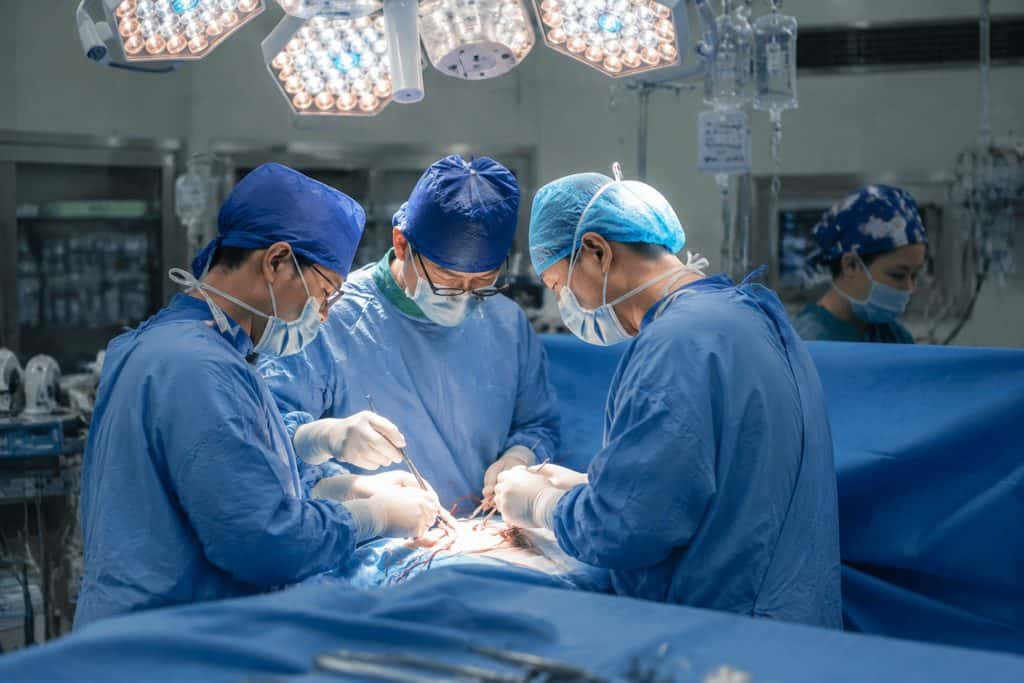
You’ve probably heard that traveling abroad for a heart procedure means rolling the dice on quality. The data tells a different story. China’s top cardiac centers now perform over 140,000 ablation procedures annually, with complication rates at Fuwai Hospital’s arrhythmia center running below 1% for standard cases. That’s not marketing language — it’s published registry data. But “low risk” does not mean “no risk,” and if you’re searching for the real answer to what are the risks of cardiac ablation, you deserve more than a brochure.
We coordinate care for international patients at 340+ top-ranked hospitals across 37 cities. Part of that work means explaining what can go wrong, how often it actually happens, and what the response looks like when it does. This article covers the risks, the numbers behind them, the recovery reality, and what cardiac ablation cost China actually looks like compared to Western pricing.
How This Actually Works, Step by Step
Before we get into risks, you need to understand the sequence. Cardiac ablation is not a walk-in procedure, and the path from “considering it” to “recovered” involves more steps than most patients expect.
You start with records. Your existing ECG, Holter monitor results, echocardiogram, and any prior medication history get translated into English or Chinese depending on which direction you’re coming from. A cardiac electrophysiologist reviews them. That review determines whether ablation is even indicated — roughly 30% of patients who contact us with ablation in mind are advised to try medication adjustment first or pursue further diagnostic testing before committing to a catheter procedure.
If ablation is indicated, you’ll schedule a pre-procedure consultation. In China’s public hospital system, this typically means an in-person visit. Top centers like Fuwai Hospital in Beijing or Zhongshan Hospital in Shanghai run dedicated arrhythmia clinics, but you cannot book a procedure slot from overseas without first establishing a clinical record. The international department pathway changes this somewhat — we coordinate with hospital international offices to sequence the consultation, pre-op testing, and procedure scheduling into a single trip where possible.
Then comes the procedure itself. Most ablations take 2 to 4 hours. You’re under conscious sedation or general anesthesia depending on the arrhythmia type and hospital protocol. Afterward, you lie flat for 4 to 6 hours to allow the femoral vein puncture sites to seal. Most patients stay one to two nights in hospital. Full recovery to normal activity takes about one week. Full resolution of intermittent symptoms can take up to three months as the heart tissue heals and the ablation lesions mature.
What Are the Risks of Cardiac Ablation: The Honest Numbers
Every invasive procedure carries risk. The question is magnitude, frequency, and manageability. For catheter ablation, the published literature gives us a clear picture.
The overall major complication rate for cardiac ablation sits between 2% and 5% depending on the arrhythmia type and the center’s volume. Atrial fibrillation ablation carries slightly higher risk than ablation for SVT or atrial flutter because it involves more extensive tissue modification and often transseptal puncture — passing a catheter from the right atrium to the left atrium through the septum.
Specific risks break down like this:
- Vascular access complications — 1% to 3%. Bruising, hematoma, pseudoaneurysm, or arteriovenous fistula at the groin puncture site. Most resolve with compression or a minor repair. Rarely requires surgical intervention.
- Cardiac perforation and tamponade — 0.5% to 1.5%. The catheter tip can puncture the heart wall, causing fluid to accumulate around the heart. This is the complication that requires the most urgent response. In experienced centers, it’s recognized immediately and treated with pericardiocentesis — draining the fluid with a needle. Mortality from tamponade in high-volume centers is below 0.1%.
- Stroke or transient ischemic attack — 0.5% to 1% for left-sided procedures. Blood clots can form on catheters or be dislodged from the left atrium. Anticoagulation during the procedure and careful catheter management reduce this risk substantially.
- Pulmonary vein stenosis — under 1% with modern techniques. Narrowing of the pulmonary veins after AF ablation. Was more common with older approaches. Severe cases may require stenting.
- Phrenic nerve injury — 0.1% to 0.5%. The nerve controlling the diaphragm can be damaged during ablation near the right pulmonary veins. Usually temporary. Rarely causes persistent shortness of breath.
- Atrioesophageal fistula — 0.04% to 0.1%. The rarest and most feared complication. A connection forms between the left atrium and the esophagus due to thermal injury. Mortality is high when it occurs. Modern protocols — esophageal temperature monitoring, reduced power settings on the posterior wall — have made this extremely uncommon.
- Death — 0.05% to 0.1% in contemporary series. At a center performing thousands of ablations yearly, this means a handful of cases annually, almost always in patients with advanced structural heart disease or multiple comorbidities.
Those numbers come from international registries and meta-analyses. The relevant question for anyone considering cardiac ablation risks in Chinese hospitals is whether Chinese centers match this profile. The answer, at top-ranked institutions, is yes. Fuwai Hospital alone performs more than 10,000 ablation procedures annually — among the highest single-center volumes globally. Volume matters. Studies consistently show that centers performing more than 100 ablations per year have significantly lower complication rates than low-volume centers. Every hospital in our network exceeds that threshold by a wide margin.
A Realistic Timeline
Here’s what the process actually looks like, with the waiting periods people forget to mention.
| Stage | Duration | What Actually Happens |
|---|---|---|
| Record collection and translation | 3 to 7 days | You gather ECGs, Holter reports, echo results. We arrange certified translation. Missing records add delays. |
| Specialist review | 3 to 10 days | The electrophysiology team reviews your case. This is the step where ablation may be ruled out or deferred. |
| Visa processing (S2) | 1 to 3 weeks | S2 visa for medical treatment. Requires hospital invitation letter. Embassy processing times vary by country. |
| Pre-procedure consultation and testing | 2 to 3 days | In-person visit. Blood work, chest X-ray, sometimes cardiac CT or MRI. Anticoagulation planning. |
| Procedure and hospital stay | 2 to 3 days | Ablation day plus one to two nights observation. Groin site monitoring. Rhythm monitoring. |
| Local recovery before travel | 3 to 7 days | You should not fly immediately after ablation. Most physicians recommend staying local for at least 3 days. We coordinate accommodation. |
| Follow-up at home | 1 to 3 months | Remote follow-up with your home cardiologist. Holter monitoring at 1 month and 3 months. Medication adjustments. |
Total time from first contact to being back home: roughly 4 to 6 weeks. The window between “records sent” and “procedure done” is rarely less than 3 weeks once visa processing is included. Anyone promising faster is cutting corners somewhere.
What Can Go Wrong — and What Happens Then
Let’s be direct about failure modes. Not because they’re likely, but because you should know the response plan before you need it.
The most common complication — groin site bleeding or hematoma — is managed on the spot. Compression, observation, sometimes a small ultrasound-guided injection of thrombin. It delays discharge by a day. It does not change the long-term outcome.
Cardiac tamponade is the complication that separates experienced centers from everyone else. It presents as a sudden drop in blood pressure during or shortly after the procedure. The response window is minutes. In a high-volume Chinese cardiac center, the interventional team performs pericardiocentesis immediately — often in the cath lab before the patient is even moved. The published mortality rate for tamponade at top centers is under 1% of tamponade cases. That’s a 0.01% overall mortality contribution. Manageable, but only with the right team and equipment in the room.
Stroke during left-sided ablation is the other serious concern. Chinese centers have adopted the same protocols as Western centers: intraprocedural heparin, transesophageal echocardiography to rule out left atrial thrombus before the procedure, and careful catheter flushing. The stroke rate at top Chinese centers for AF ablation runs between 0.5% and 1%, consistent with international benchmarks.
What about recurrence? This is the “failure” nobody calls a complication, but it’s the most common disappointing outcome. Success rates for AF ablation are 60% to 80% for a single procedure, depending on whether the AF is paroxysmal or persistent. A second procedure raises the cumulative success rate to 80% to 90%. For SVT and typical atrial flutter, single-procedure success exceeds 95%. If your arrhythmia returns after ablation, the response is usually a repeat procedure after a 3-month blanking period. Some patients need antiarrhythmic medication long-term even after ablation. That’s not a failure of the procedure — it’s the reality of treating a chronic electrical disorder.
And the honest truth about how safe is cardiac ablation in China: safety at top centers matches international standards. Safety at average Chinese hospitals is harder to verify. The Chinese healthcare system spans a huge quality range. The 340+ hospitals we work with represent the top 5% of China’s 35,000+ hospitals, ranked by Fudan and JCI. That filtering is the entire value proposition. You’re not choosing “China” — you’re choosing a specific hospital with a documented volume and track record.
Choosing Where to Have It Done
If you’re weighing Chinese hospitals for ablation, here’s what actually matters.
Volume first. Ask how many ablation procedures the center performs annually. Under 100 — walk away. Between 100 and 500 — acceptable. Over 500 — that’s where the complication curves flatten. Fuwai Hospital in Beijing performs over 10,000 annually. Zhongshan Hospital in Shanghai runs one of the largest AF ablation programs in Asia. If you’re asking specifically about the best hospital in Shanghai for cardiac ablation, Zhongshan’s arrhythmia center is the standard answer, with Ruijin Hospital as a strong alternative. Both are Fudan-ranked top-tier institutions with dedicated electrophysiology teams and international patient departments.
Technology matters less than you’d think. Radiofrequency ablation and cryoballoon ablation produce similar success rates in experienced hands. Pulsed field ablation — the newer non-thermal approach — is available at select Chinese centers and may reduce esophageal injury risk, but long-term data is still maturing. The operator’s experience with their specific platform matters more than which platform it is.
Also consider the post-procedure reality. You’ll be in a Chinese hospital for one to two nights. The nursing staff at public hospitals may have limited English. The food is Chinese hospital food. The environment is efficient but not luxurious. If you want Western-style amenities, the private international hospitals in Shanghai and Beijing offer English-speaking staff and direct insurance billing — but their ablation volumes are lower than the major public centers. There’s a real trade-off between volume and comfort. We help patients navigate that decision honestly.
For a deeper look at hospital options, our top-ranked hospital database breaks down Fudan-ranked institutions by city and specialty. If you’re comparing cardiac programs specifically, the cardiac surgery and cardiology department rankings show which centers lead in electrophysiology.
Practical Considerations: Cost, Insurance, and Recovery
Let’s talk about cardiac ablation cost China, because it’s usually a major factor in the decision.
| Cost Component | China (Top Public Hospital) | United States (Average) |
|---|---|---|
| Cardiac ablation (total procedure) | $15,000 – $25,000 | $80,000 – $150,000 |
| Pre-procedure testing | $800 – $1,500 | $3,000 – $6,000 |
| Hospital stay (1-2 nights) | $300 – $800 | $5,000 – $10,000 |
| International department coordination | $800 – $1,200 | N/A |
| Follow-up Holter and consultation | $200 – $500 | $1,500 – $3,000 |
These are ranges, not quotes. Final pricing varies by hospital and case complexity. The international department pathway — which includes English-speaking coordination and priority scheduling — typically runs 1.5 to 2 times the standard public pricing. That’s still a fraction of Western costs.
Insurance is the practical hurdle most patients don’t plan for. Chinese public hospitals require pre-payment. You pay for the procedure, then seek reimbursement from your insurer. Some international insurers have direct billing arrangements with private international hospitals in China, but not with public hospitals. Check your policy before you commit. We provide itemized invoices and translated medical records to support reimbursement claims.
Recovery is the other under-discussed topic. Is cardiac ablation painful recovery time? The procedure itself is not painful — you’re sedated. The recovery is more uncomfortable than painful. Groin soreness for 2 to 3 days. Some chest discomfort for the first week as the ablation lesions heal. Fatigue is common for the first month. Most patients return to desk work within a week and full activity within two to four weeks. You’ll be on anticoagulation for at least 2 to 3 months after AF ablation, sometimes longer depending on your stroke risk profile.
One more thing about the S2 visa: it’s the correct category for medical treatment in China. Processing requires a hospital invitation letter, which we help coordinate. Processing time varies by embassy — plan for 1 to 3 weeks. Family members accompanying you also need S2 visas. Do not apply for an M visa; that’s for commercial activity and will not cover medical treatment.
Frequently Asked Questions
Atrioesophageal fistula is the rarest but most lethal complication, occurring in roughly 0.04% to 0.1% of AF ablations. It forms when ablation energy damages the esophagus, creating a connection to the heart. Modern protocols — esophageal temperature monitoring and reduced power on the posterior heart wall — have made it extremely uncommon. Cardiac tamponade is more frequent (0.5% to 1.5%) but far more treatable when recognized immediately.
Groin soreness resolves in 2 to 3 days. Most people return to work within 5 to 7 days. Full activity — exercise, heavy lifting — typically resumes after 2 to 4 weeks. The heart tissue continues healing for up to 3 months, during which brief arrhythmia episodes can occur and do not necessarily mean the procedure failed.
For symptomatic SVT or typical atrial flutter, ablation offers a cure rate above 95% with a major complication risk under 1%. For AF, the calculus is more individual — success rates of 60% to 80% per procedure, with the option of a second procedure. The alternative is lifelong medication with variable symptom control. A qualified electrophysiologist can help you weigh this for your specific case.
Cost is the primary driver. The same procedure that costs $80,000 to $150,000 in the US runs $15,000 to $25,000 at a top Chinese public hospital — even accounting for travel and accommodation, the savings are substantial. Volume is the second factor. China’s leading cardiac centers perform more ablations annually than almost any Western hospital, and volume correlates with lower complication rates.
You cannot book a procedure slot from overseas through the standard public pathway. Chinese public hospitals require an in-person consultation before scheduling surgery. What you can do is coordinate the international department pathway, which sequences consultation, testing, and procedure into a single trip. We handle that coordination — including hospital communication, translation, and appointment scheduling. The consultation and testing phase takes 2 to 3 days in-country before the procedure.
Your Next Step
Cardiac ablation carries real but manageable risks, and the numbers at China’s top cardiac centers match international benchmarks. The decision comes down to your specific arrhythmia, your risk tolerance, and whether the cost and volume advantages justify travel. We help international patients evaluate those factors with actual clinical data, not sales
For more medical information and treatment options in China, visit chinamedservices.com (China Medical Services).
