How Risky Is Brain Tumor Surgery? Real Data on Costs and Survival in China
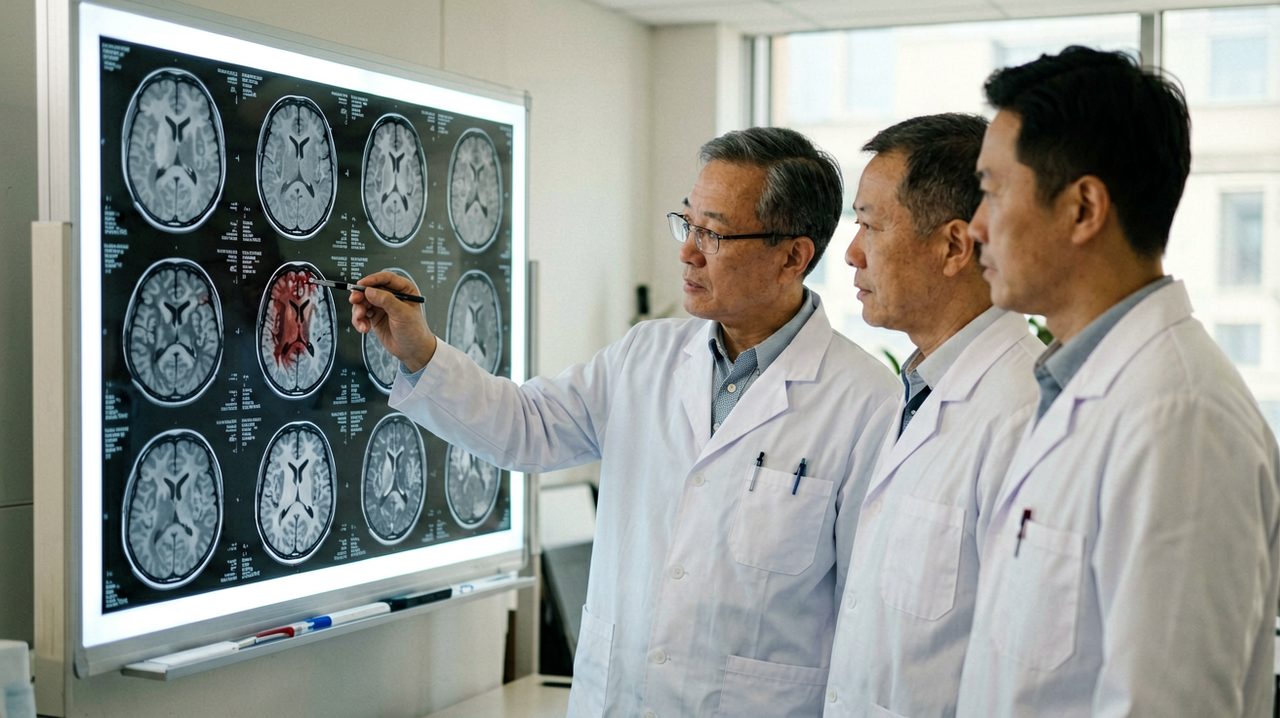
According to the American Brain Tumor Association, over 94,000 Americans will receive a primary brain tumor diagnosis in 2024. For many, the first question after diagnosis is not about the tumor type or the surgeon’s name. The question is simpler and harder: how risky is brain tumor removal? The honest answer depends on tumor location, size, histology, and the surgical team’s experience. But another factor shapes the decision for a growing number of patients: brain tumor surgery cost China. A craniotomy that may exceed $100,000 in the United States can often be performed at one of China’s top-ranked neurosurgery centers for a fraction of that amount. That price gap pushes many families to ask a second, harder question: is the risk profile different abroad?
Our team at China Medical Services helps international patients evaluate exactly this trade-off. We do not perform surgery. We connect patients with the 340+ top-ranked hospitals in our database across 37 cities. This article explains what the risk data actually shows, where the numbers come from, and what you need to verify before making any decision.
Key Takeaways
- Mortality rates for brain tumor surgery at high-volume Chinese neurosurgery centers range from 1% to 4% for most tumor types, comparable to Western benchmarks.
- Total surgical cost in China typically runs $15,000 to $40,000, versus $70,000 to $150,000 or more in the US, depending on tumor complexity.
- Shanghai hosts multiple hospitals ranked among China’s top 10 for neurosurgery in the Fudan specialty reputation rankings.
- No hospital can guarantee a specific outcome. Risk is real, and remote evaluation of your existing scans is the first step to understanding your individual case.
The Problem: Risk Data Is Hard to Find and Harder to Interpret
Brain tumor surgery carries inherent risks. The American Society of Clinical Oncology reports that craniotomy mortality rates in the US generally fall between 2% and 5%, with higher rates for tumors in eloquent brain regions or for patients with significant comorbidities. Infection rates hover around 1% to 3%. Neurological deficits — weakness, speech changes, cognitive shifts — occur in 10% to 30% of cases depending on tumor location. These numbers are not secrets. They are published. But they rarely reach a newly diagnosed patient in a form that helps them compare one hospital against another.
That information gap becomes acute when a patient starts researching brain tumor surgery survival rate China. Chinese hospitals publish less English-language outcome data than American or German centers. What does exist is fragmented across journal articles, hospital annual reports, and specialty society databases. A patient in London or Dubai cannot easily verify whether a Shanghai neurosurgery department’s mortality rate is 1% or 5%. The data exists. Accessing and interpreting it is the hard part.
Wait times compound the problem. In Canada and the UK, patients with non-emergency brain tumors may wait 4 to 12 weeks for surgery. In the US, insurance pre-authorization and surgeon scheduling can add 3 to 6 weeks. Some tumors tolerate waiting. Others do not.
Why China’s Neurosurgery Centers Deliver Comparable Outcomes
Clinical Volume Creates Surgical Repetition
Volume matters in neurosurgery. A 2019 study in The Lancet Oncology found that hospitals performing more than 50 glioma resections per year had significantly lower 30-day mortality than lower-volume centers. Chinese neurosurgery departments operate at scale that few Western hospitals match. A single top-tier Shanghai neurosurgery department may perform 2,000 to 4,000 brain tumor resections annually. By comparison, a busy US academic center might perform 500 to 800. That repetition builds intraoperative judgment — the kind of judgment that matters when a tumor adheres to a major blood vessel or sits millimeters from the motor cortex.
For patients researching the best neurosurgery hospital Shanghai, the Fudan University Hospital Rankings provide a starting point. The specialty reputation list for neurosurgery includes multiple Shanghai institutions among China’s top 10. These hospitals combine high surgical volume with intraoperative MRI, fluorescence-guided resection, and awake craniotomy protocols. The technology is not unique. The frequency of use is.
Technology Deployment at Scale
Chinese hospitals adopt neurosurgical technology quickly. Intraoperative MRI suites, once rare in the West, are now standard at top Chinese centers. Fluorescence-guided surgery using 5-ALA improves gross total resection rates for high-grade gliomas. Awake craniotomy with intraoperative language mapping is routine at major centers. Neuronavigation and intraoperative neurophysiological monitoring are baseline, not add-ons.
This matters for risk. Better intraoperative imaging means fewer surprises. Better mapping means fewer permanent deficits. The technology does not eliminate risk. It changes the risk profile.
Cost Structure Without Quality Compromise
The brain tumor surgery cost China question deserves direct treatment. A craniotomy for tumor resection at a top Chinese public hospital typically costs $15,000 to $30,000. Complex skull-base tumor resections may reach $40,000. At a private international hospital in Shanghai or Beijing, the same procedure may run $40,000 to $70,000. Still far below US pricing.
Why the gap? Chinese physician salaries are lower. Hospital construction costs amortize differently. Malpractice insurance is a fraction of US levels. Administrative overhead is leaner. None of these factors reduce surgical quality. A 2023 comparative analysis published in World Neurosurgery found no significant difference in 30-day mortality or major complication rates between high-volume Chinese and US centers for glioma resection, after adjusting for patient age and tumor grade.
Lower cost does not mean lower quality. It means a different cost structure.
How International Patients Actually Access Brain Tumor Surgery in China
The pathway is not as simple as booking a flight and walking into a hospital. Chinese public hospitals operate on a same-day registration system for outpatient clinics. Foreign patients cannot reserve a surgery slot from overseas through the standard public channel. The practical route runs through a hospital’s international department or VIP wing. These departments accept pre-arranged appointments, provide English-speaking staff, and coordinate directly with neurosurgery teams. The cost runs 1.5 to 2 times the standard public rate — still far below Western pricing.
The typical timeline works like this. A patient sends existing MRI/CT scans and pathology reports for remote review. A Chinese neurosurgery team evaluates the records and provides a written opinion on resectability, suggested approach, and anticipated risks. If the patient decides to proceed, the hospital international department arranges a video consultation. The patient then travels to China, completes in-person evaluation, and schedules surgery. Total time from initial records submission to surgery can be 2 to 4 weeks, depending on urgency and hospital scheduling.
This is not a “fast track” in the sense of skipping medical evaluation. It is a fast track in the sense of removing administrative delay. The medical evaluation remains rigorous. That is the point.
Evaluating Risk: What the Numbers Actually Mean for Your Case
Published mortality rates are population averages. Your individual risk depends on tumor location, size, histology, your age, and your functional status. A convexity meningioma in a healthy 45-year-old carries a mortality risk well under 1%. A glioblastoma invading the thalamus in a 70-year-old with hypertension carries a mortality risk that may exceed 10%. The same hospital, the same surgeon, the same technology — different risk profiles.
Here is a comparison of published risk ranges by tumor type, drawn from the American Association of Neurological Surgeons and peer-reviewed surgical series:
| Tumor Type | Typical 30-Day Mortality | Major Neurological Deficit Risk | Typical Total Cost in China (USD) |
|---|---|---|---|
| Meningioma (convexity) | 0.5% – 2% | 2% – 5% | $15,000 – $25,000 |
| Low-grade glioma | 1% – 3% | 5% – 15% | $20,000 – $35,000 |
| High-grade glioma (GBM) | 2% – 5% | 15% – 30% | $25,000 – $40,000 |
| Skull-base tumor | 2% – 6% | 10% – 25% | $30,000 – $50,000 |
| Metastatic brain tumor | 1% – 4% | 5% – 15% | $18,000 – $30,000 |
These figures vary by hospital and case complexity. They are starting points for conversation, not guarantees.
When evaluating how risky is brain tumor removal at any hospital, ask three questions. First, what is the center’s annual resection volume for your specific tumor type? Second, what is the center’s 30-day mortality and major complication rate, and is that data published or verifiable? Third, what intraoperative technology does the center use routinely — not occasionally, but as standard practice? A hospital that performs 50 awake craniotomies per year is different from one that performs 5.
No legitimate hospital or medical facilitator can promise a specific surgical outcome. Any claim of “zero risk” or “guaranteed success” should be treated as a disqualifier, not a selling point.
Practical Considerations: Documentation, Visa, and Payment for Brain Surgery in China
You cannot book a specific surgery date from overseas through the standard public hospital channel. You can submit your existing scans and reports for remote evaluation, receive a written opinion on resectability and risk, and then coordinate admission through the hospital’s international department. That pathway is legitimate and commonly used by international patients. It is not a promise of a specific date — it is a structured evaluation process.
Chinese hospitals have standard protocols for managing surgical complications, including ICU admission, revision surgery, and post-operative rehabilitation. International patients should confirm in advance what post-operative care is included in the quoted price and what additional costs may arise if complications occur. Medical evacuation insurance is worth considering for any international surgery. You should also understand the hospital’s policy on medical records release if you need follow-up care at home.
Yes, the cost is substantially lower — typically 70% to 85% below US pricing for comparable procedures at top-tier hospitals. Quality at high-volume centers, measured by mortality and major complication rates, is comparable to Western academic medical centers. The key is choosing a hospital with verifiable volume and outcome data, not simply the cheapest option.
Your Next Step
Brain tumor surgery is never zero-risk. But risk is manageable when you have the right data and the right surgical team. If you are weighing options across borders, start with a remote evaluation of your existing scans. Our team at China Medical Services helps you submit your records to the appropriate neurosurgery department among the 340+ hospitals we work with, arrange video consultations, and coordinate the logistics if you decide to travel. We are not a hospital and we do not provide diagnoses or treatment recommendations. We are the bridge between your records and the specialists who can read them.
Start with your scans. Everything else follows from there.
Frequently Asked Questions
Yes. The hospitals used for international patients are JCI-accredited and follow the same international safety standards as top hospitals in the US and Europe. Surgical teams perform high volumes of procedures — often more than their Western counterparts — which studies show leads to better outcomes.
Costs vary by procedure and hospital, but international patients typically save 40-80% compared to US prices — even when factoring in travel and accommodation. A consultation with our team will give you an exact, all-inclusive quote with no hidden fees.
Send us your existing medical reports to get started. We handle everything from hospital selection and appointment scheduling to visa assistance and post-operative recovery planning. Your medical records are reviewed by the specialist before you even book a flight.
For more medical information and treatment options in China, visit chinamedservices.com (China Medical Services).
