Can a Seizure Be Treated With Surgery? Costs & Success in China
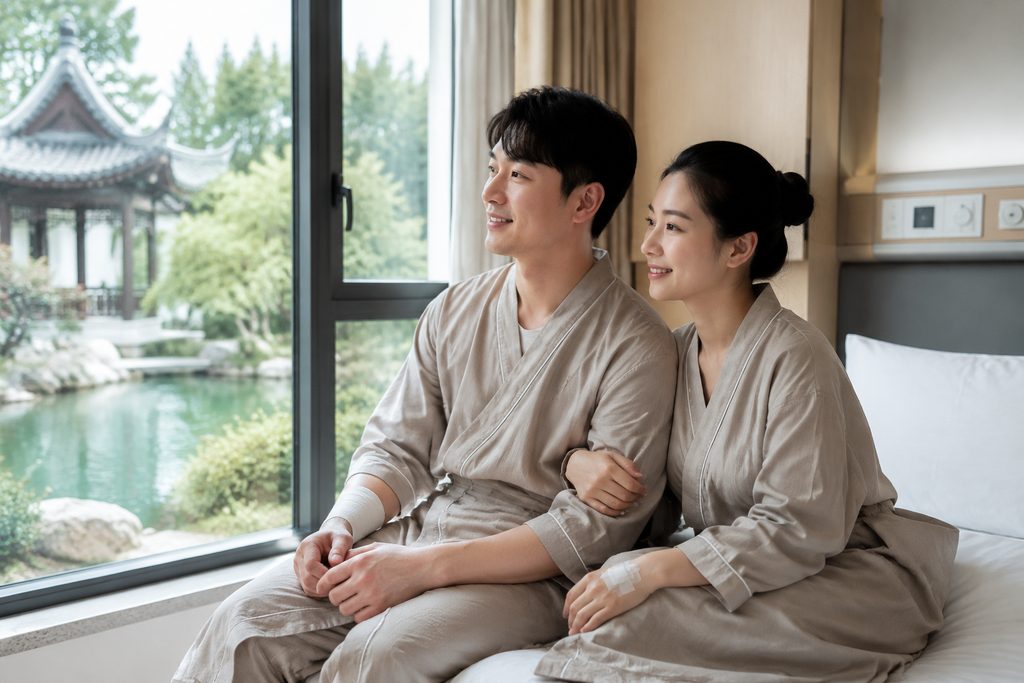
You have probably heard that surgery in China means compromising on quality. The reality is the opposite for epilepsy. China’s top neurosurgery centers now perform thousands of epilepsy procedures annually, often using the same intraoperative MRI, stereo-EEG, and robotic navigation systems found in Munich or Boston. The real difference is the epilepsy surgery cost China patients face: roughly $18,000 to $35,000 for a resective procedure at a top-tier public hospital, against $80,000 to $150,000 in the United States. That gap changes what “accessible” means for many families.
Can a Seizure Be Treated With Surgery? The Short Answer
Yes. For the right candidate, surgery can stop seizures entirely — not merely reduce them. The benchmark figure comes from a 2001 randomized controlled trial published in the New England Journal of Medicine: 58% of patients who underwent temporal lobe resection were seizure-free after one year, versus 8% of those on medication alone. Longer-term cohorts from major epilepsy centers report 50–70% of well-selected patients achieving long-term seizure freedom.
But “well-selected” is doing heavy lifting there. Surgery is not a general fix for everyone with seizures. It works when a single, identifiable brain region generates the seizures and that region can be removed without unacceptable damage to speech, memory, or movement. If seizures arise from multiple areas or from eloquent cortex, surgery may be off the table. That is the honest caveat behind every statistic.
Who This Is Right For — and Who It Isn’t
Candidacy hinges on one question: has the patient failed adequate trials of at least two properly chosen anti-seizure medications? If the answer is no, surgery is premature. Medication remains first-line therapy for the vast majority of people with epilepsy.
A typical good surgical candidate looks like this:
- Drug-resistant focal epilepsy — seizures persist despite two or more appropriate medications at therapeutic doses
- A lesion visible on high-resolution MRI: hippocampal sclerosis, focal cortical dysplasia, a low-grade tumor, or a cavernous malformation
- Seizure semiology and EEG findings that point consistently to one brain region
- No major psychiatric contraindication and realistic expectations about risks
Who should not pursue surgery, at least not yet:
- Generalized epilepsy syndromes where no single focus exists
- Seizures arising from primary motor or language cortex, unless a palliative procedure like corpus callosotomy or neuromodulation is being considered
- Patients who have not genuinely tried medication optimization — sometimes a different drug or combination resolves the issue
- People seeking a quick fix without completing the pre-surgical evaluation, which takes weeks to months
Being explicit about who should not have surgery matters more than listing who should. A good epilepsy center will reject more surgical candidates than it accepts. That selectivity is what protects the success rates.
The Options, Compared
Surgery is one of several paths for drug-resistant epilepsy. Here is how the main options stack up.
| Option | Seizure-Free Rate | Typical Cost (USD) | Invasiveness | Best For |
|---|---|---|---|---|
| Medication optimization | 5–10% additional response | $500–3,000/year | None | First step for everyone |
| Resective surgery (temporal) | 50–70% long-term | $18,000–35,000 in China; $80,000–150,000 in US | Craniotomy | Clear lesion, single focus |
| Resective surgery (extratemporal) | 40–60% | $22,000–40,000 in China | Craniotomy | Focal lesion outside temporal lobe |
| Laser interstitial thermal therapy (LITT) | 45–60% for mesial temporal cases | $30,000–50,000 in China; $90,000+ in US | Minimally invasive | Small deep lesions, hypothalamic hamartoma |
| Vagus nerve stimulation (VNS) | 5–10% seizure-free; 50% achieve ≥50% reduction | $25,000–40,000 | Implanted device | Non-surgical candidates, generalized epilepsy |
| Responsive neurostimulation (RNS) | Rarely seizure-free; median 70%+ reduction at 9 years | $45,000–70,000 | Implanted device | Bilateral or eloquent cortex foci |
If a clear lesion exists and it is safely removable, resective surgery offers the only realistic shot at a cure. Neuromodulation devices control seizures but rarely eliminate them. The decision between China, the US, or Europe for surgery often comes down to one number: the out-of-pocket price. For uninsured or underinsured patients, the epilepsy surgery cost China centers quote can be the deciding factor.
How Successful Is Epilepsy Surgery in China?
The question patients actually ask is not whether Chinese surgeons are competent — it is whether outcomes match Western benchmarks. The short answer: at top centers, yes.
China’s leading neurosurgery departments publish outcomes in peer-reviewed international journals. Temporal lobe resection series from major centers report seizure-free rates of 55–70% at two to five years, consistent with cohorts from the Cleveland Clinic or University College London. Volume matters. A handful of Chinese hospitals perform more than 300 epilepsy surgeries per year — comparable to the busiest centers anywhere.
What drives the outcome is not nationality. It is patient selection, the quality of the pre-surgical evaluation, and the technology available in the operating room. The best hospital for seizure surgery Shanghai offers — and Beijing and Guangzhou have equivalents — uses stereo-EEG with robotic electrode placement, 3T MRI with epilepsy protocols, PET-CT, and intraoperative electrocorticography. These are the same tools used in any world-class program.
The honest caveat: outcomes vary widely between hospitals in China. The top 20 or so neurosurgery centers produce international-standard results. Smaller provincial hospitals may not. Choosing a center from the Fudan University hospital rankings — specifically the neurosurgery specialty list — is the single most important decision a patient makes. Our team can point you to the relevant departments.
What It Costs: Epilepsy Surgery Cost China, Line by Line
Here is what a resective epilepsy surgery package typically includes at a top-tier public hospital in Shanghai or Beijing:
- Pre-surgical evaluation (video-EEG monitoring, 3T MRI, PET-CT, neuropsychological testing): $3,000–6,000
- Stereo-EEG with depth electrodes, if needed: $8,000–15,000
- Resective surgery with neuronavigation and intraoperative monitoring: $10,000–18,000
- Hospital stay (7–14 days, including ICU observation): $2,000–5,000
- Anesthesia, pathology, medications, and consumables: $1,500–3,000
Total: roughly $18,000 to $35,000 for a temporal lobe resection without stereo-EEG; $25,000 to $45,000 if invasive monitoring is required. Extratemporal cases run higher. LITT procedures sit in the $30,000–50,000 range.
What is not included: international flights, visa fees, accommodation for family members, and post-operative rehabilitation if needed. Those add $3,000–8,000 depending on length of stay and city.
For comparison, the same temporal lobe resection in the US bills at $80,000–150,000 before insurance. In Germany or the UK private sector, expect €60,000–120,000. The price difference is real and durable. It is not a discount for lower quality — it reflects lower labor costs, lower facility overhead, and a different payer structure.
Practical Considerations: Records, Visas, and Follow-Up
Brain surgery overseas is not a weekend decision. The logistical reality:
Medical records. You will need complete documentation: all MRI images (DICOM format on disc or via secure upload), EEG reports and raw tracings if available, medication history with doses and dates, and a detailed seizure diary. Chinese epilepsy centers will review these before accepting a case. Incomplete records mean delays.
Visa. Medical treatment in China falls under the S2 visa category, issued for short-term private affairs including medical care. You will need an invitation letter from the hospital confirming your appointment or admission. Family members accompanying you also apply for S2 visas. Processing typically takes one to three weeks. The M visa is for commercial activity and is not appropriate for medical travel.
Payment. Chinese public hospitals require prepayment. International departments typically accept wire transfers and major credit cards. Private international hospitals may bill your insurer directly if they have an agreement. Most patients pay out of pocket and seek reimbursement from their home insurer afterward.
Language. Top public hospitals operate in Mandarin. International departments have some English-speaking staff, but the gap between “some English” and “enough English for a neurosurgery admission” is significant. A bilingual medical companion bridges that gap — handling registration, queueing, payment, and translation during consultations and ward rounds.
Follow-up. After discharge, you will need medication adjustments and possibly repeat imaging at 3, 6, and 12 months. Chinese surgeons typically offer remote follow-up via the international department. Your home neurologist should also be involved from the start.
Frequently Asked Questions
For drug-resistant focal epilepsy with a clear, removable lesion, surgery offers the only realistic chance of a cure — meaning no seizures and eventually no medication. But “cure” is never guaranteed. Roughly 50–70% of well-selected temporal lobe patients achieve long-term seizure freedom. The rest may see meaningful reduction but not complete control. No ethical surgeon promises a cure before the evaluation is complete.
Expect $18,000 to $35,000 for a standard temporal lobe resection at a top-tier public hospital, and $25,000 to $45,000 if stereo-EEG or extratemporal work is required. That covers the evaluation, surgery, hospital stay, and standard consumables. Flights, visas, accommodation, and post-operative rehabilitation are separate. Final quotes vary by hospital and case complexity.
Shanghai has several high-volume neurosurgery centers. Huashan Hospital’s neurosurgery department is consistently ranked among China’s top three by the Fudan University specialty rankings and handles a large share of the city’s epilepsy surgeries. Ruijin Hospital and Zhongshan Hospital also run active epilepsy programs. The right choice depends on your specific lesion location, age, and whether invasive monitoring is needed — not on a single brand name.
Then you are back to the drawing board, but with more information. Failed resective surgery may mean the true seizure focus was not fully removed, or that a second focus exists. Options include re-evaluation with stereo-EEG, a second surgery in selected cases, or neuromodulation such as VNS or RNS. A failed surgery is not the end of the road, but it is a serious outcome that requires honest discussion with your surgical team before proceeding.
No reputable Chinese hospital will schedule surgery without a face-to-face pre-surgical evaluation. What you can do remotely is send your records for a written second opinion or video consultation. If the Chinese team agrees you are a candidate, you then travel for the in-person evaluation and, if confirmed, surgery follows. The remote step saves you from flying across the world only to be told you are not a candidate.
Your Next Step
The decision to pursue epilepsy surgery abroad starts with one question: are you actually a surgical candidate? That question is answerable before you spend a dollar on flights. China Medical Services helps international patients navigate that first step — reviewing records, recommending appropriate neurosurgery departments, and coordinating remote consultations with top epilepsy teams in cities like Shanghai and Beijing.
We are not a hospital. We do not diagnose, and we do not promise surgical outcomes. What we do is connect you with the right specialists and handle the practical coordination — records, appointments, translation, and on-the-ground support — so you can make an informed decision without the chaos of navigating a foreign system alone.
If you have been living with drug-resistant seizures and wondering whether surgery could help, the answer might be yes. The only way to know is a proper evaluation. Start with a remote consultation. It costs less than a flight and can save you from a wasted trip.
The core message is simple: for the right patient, seizure surgery works — and it works in China at a fraction of Western prices. The hard part is finding out whether you are the right patient. That starts with records, a specialist review, and an honest conversation.
For more medical information and treatment options in China, visit chinamedservices.com (China Medical Services).
