Rehabilitation: Physical Therapy Explained for Medical Travelers
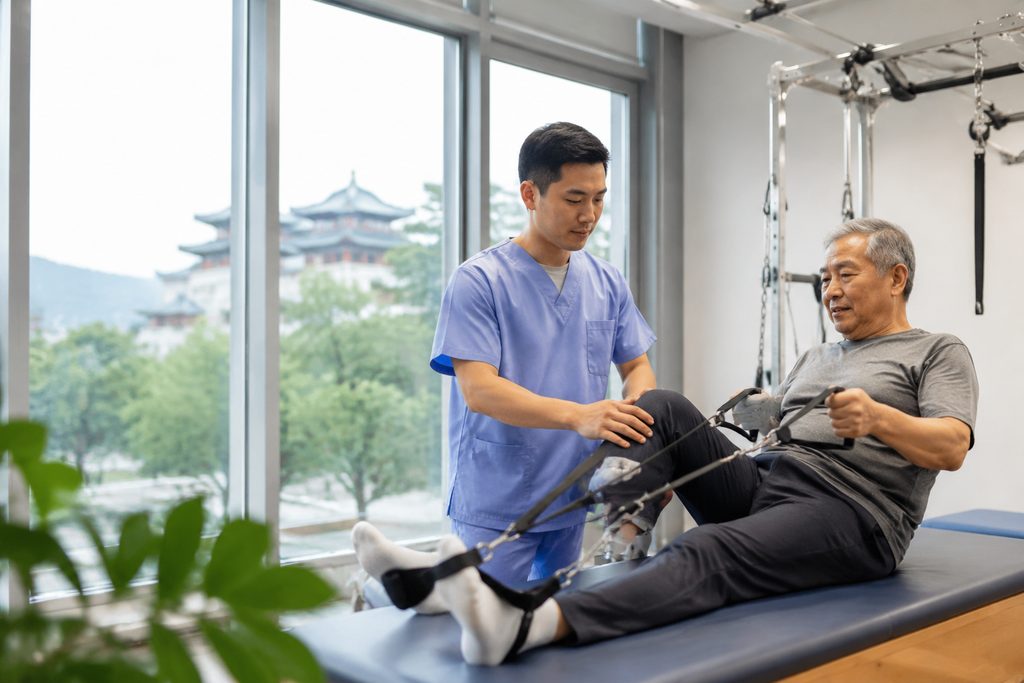
While a single physical therapy session in the United States averages $100–$200 without insurance, equivalent care at a top-tier Chinese rehabilitation hospital typically runs $30–$80 per session. That gap reshapes decisions for thousands of international patients every year. Our team has coordinated rehabilitation programs across 37 Chinese cities, and we have watched families stretch budgets that would have been exhausted in weeks back home into months of sustained, intensive therapy.
Physical therapy cost China is not a single number. It depends on the hospital tier, the city, the therapist-to-patient ratio, and whether you need inpatient or outpatient care. But the structural difference is real: a month of daily therapy in Shanghai can cost less than a week of equivalent care in Los Angeles, London, or Sydney. This article explains what physical therapy actually involves, what it costs in China, where to find strong programs, and what the process looks like from your first inquiry to your flight home.
How This Actually Works, Step by Step
You start with records. Send us your existing imaging, surgical notes, discharge summaries, and current functional status. A Chinese rehabilitation specialist reviews them — usually within 3 to 5 business days — and returns a written assessment. That document tells you whether a China-based program makes clinical sense for your situation, how many weeks might be needed, and which hospital type fits: public top-tier, private international, or a TCM-integrated rehab center.
Then comes the planning phase. We coordinate with the hospital’s international department or VIP channel to confirm availability, because public outpatient clinics in China do not accept advance bookings from overseas. This is where our bilingual team handles the calls, the documentation, and the scheduling. You receive a proposed timeline and cost range. You decide. We book.
On the ground, a medical companion meets you at the airport or hospital entrance. They handle registration, payment queues, translation during every therapy session, and communication with your therapist about daily progress. You focus on the work of recovery.
After discharge, your Chinese rehab team sends a summary report to your home physician. Continuity matters. We make sure the handoff is clean.
What Physical Therapy in China Actually Looks Like
Chinese rehabilitation medicine has evolved rapidly over the past fifteen years. The country now operates dedicated rehabilitation hospitals and large rehab departments inside its top general hospitals. A typical inpatient day includes 2 to 3 hours of active therapy — physical therapy, occupational therapy, sometimes speech therapy — plus modalities like electrotherapy, hydrotherapy, or traditional Chinese techniques such as tuina massage and acupuncture when clinically indicated.
The therapist-to-patient ratio is often more intensive than what Western patients describe back home. In many Chinese rehab wards, one therapist works with two or three patients at a time, with nursing staff reinforcing exercises between sessions. That density of contact hours is precisely what drives outcomes in stroke recovery, spinal cord injury rehabilitation, and post-orthopedic surgery cases.
What surprises many international patients: the integration of TCM. A patient recovering from knee replacement might receive Western-standard range-of-motion work in the morning and acupuncture for pain and swelling in the afternoon. The combination is not mystical — it is pragmatic, and it is standard practice in many Chinese rehab programs.
Physical Therapy Cost China: Real Numbers for Budget Planning
Let us be direct about money. The table below reflects ranges we have seen across partner hospitals in Beijing, Shanghai, Guangzhou, and Chengdu. All figures are in USD and vary by hospital tier, case complexity, and length of stay.
| Service Type | China (Public Top-Tier) | China (Private International) | US Average (Reference) |
|---|---|---|---|
| Single outpatient PT session | $30–$80 | $80–$150 | $100–$200 |
| Inpatient rehab (per day, all-inclusive) | $200–$500 | $500–$1,200 | $1,500–$3,000+ |
| One-month stroke rehab package | $6,000–$15,000 | $15,000–$40,000 | $45,000–$90,000+ |
| Written second opinion (rehab plan) | $300–$500 | included in package | $500–$1,500 |
| Bilingual medical companion | from $300/day | from $300/day | N/A |
These are planning numbers, not quotes. A complex spinal cord injury case with multiple comorbidities will land at the upper end or beyond. A straightforward post-surgical knee rehabilitation will sit lower. What matters is the ratio: most patients pay 20% to 40% of what equivalent care would cost in the United States, often with more daily therapy hours.
And yes — if you book a remote consultation first and later travel to China for treatment, the consultation fee is credited in full toward your on-the-ground coordination service. That is a one-time credit applied to coordination only, never to hospital charges.
A Realistic Timeline
People forget the waiting steps. Here is the honest sequence, with ranges.
| Stage | What Happens | Typical Duration |
|---|---|---|
| Day 1–3 | You send medical records; our team translates them into Chinese | 2–3 business days |
| Week 1 | Rehab specialist reviews records; written second opinion delivered | 3–5 business days |
| Week 1–2 | Hospital selection and appointment coordination (VIP/international channel) | 5–10 business days |
| Week 2–4 | S2 visa application with hospital invitation letter | 1–3 weeks depending on embassy |
| Week 4–6 | Arrival, intake assessment, therapy begins | Day 1 on-site |
| Month 1–3 | Active rehabilitation program | 4–12 weeks typical |
| Final week | Discharge summary, home exercise plan, handoff to home physician | 2–3 days |
The visa is often the bottleneck. Apply early. The S2 visa is the correct category for short-term medical treatment in China, and family members accompanying you should apply under the same category. We provide the hospital documentation that supports the application, but approval rests with the embassy or consulate.
What Can Go Wrong — and What Happens Then
We need to be honest about failure modes. They exist, and pretending otherwise helps no one.
The hospital rejects the case after records review. It happens. A patient’s condition may be too unstable for international travel, or the rehab department may judge that remote management is more appropriate. Recourse: we take the written assessment back to another hospital or adjust the plan. Sometimes the right answer is to delay travel by a month and build strength at home first.
Therapy progress is slower than expected. Rehabilitation is not linear. A stroke patient may plateau for two weeks, then make sudden gains. If progress stalls, the Chinese rehab team adjusts the protocol — changing intensity, adding modalities, or consulting a different specialist. You are never locked into a fixed plan.
Language friction during therapy. Even at hospitals with English-speaking staff, nuance gets lost. That is why we place a bilingual companion in every session for international patients. If a therapist’s instruction is unclear, the companion clarifies immediately. This is not a luxury; it is the difference between doing an exercise correctly and reinforcing a harmful movement pattern.
Insurance refuses to cover the program. Most Western insurers do not cover rehabilitation in China unless you have an international policy with out-of-network benefits. Recourse: we provide itemized invoices and clinical documentation to support your claim. Some patients pay out of pocket and seek reimbursement after returning home. Know your policy before you book.
Is Rehab in China Good for Spinal Cord Injury? What the Numbers Suggest
Spinal cord injury rehabilitation demands volume. The more hours of structured therapy a patient receives in the first 12 months post-injury, the better the functional outcomes — this is well-established in rehabilitation literature. Chinese rehab hospitals deliver that volume at a price Western families can sustain.
China has invested heavily in rehabilitation infrastructure since 2010. Dedicated rehab hospitals now operate in every major city, and several rank among Asia’s largest by bed count and annual patient volume. The rehabilitation departments at China’s top general hospitals handle case volumes that would be statistically improbable in most Western centers. That repetition builds clinical experience — especially in stroke, spinal cord injury, and post-operative orthopedic recovery.
But volume is not the same as quality. We tell patients to evaluate a program on three criteria: therapist qualifications, daily therapy hours, and the presence of a structured outcome measurement system. Ask for the hospital’s Functional Independence Measure (FIM) or Barthel Index tracking. Reputable programs track these numbers and will share them.
For spinal cord injury specifically, the best programs in China combine conventional neurorehabilitation with adjunctive therapies: functional electrical stimulation, body-weight-supported treadmill training, and sometimes robotic-assisted gait training. Equipment availability varies by hospital. If robotic gait training matters to you, specify that during hospital matching — not every facility has the devices, and the ones that do charge differently.
How Long Is Physical Therapy After Stroke in China?
The honest answer: it depends on the stroke’s severity and the patient’s baseline function. But Chinese rehab programs tend to run longer and more intensively than Western insurance-driven models.
A typical inpatient stroke rehabilitation stay in China runs 4 to 8 weeks for moderate impairment. That is followed by 1 to 3 months of outpatient or day-program therapy, tapering from daily to 3 times weekly. Patients with severe impairment may stay 12 weeks or longer. The key difference from Western systems: Chinese programs are not discharge-driven by an insurance company’s day limit. The clinical team decides, based on progress.
For families asking “how long is physical therapy after stroke in China,” the practical planning number is 6 to 8 weeks for a first phase. Budget for that, and extend if progress justifies it. Many families we work with plan 8 weeks and reassess at week 6.
Practical Considerations: Records, Visa, Payment, and Follow-Up
Bring everything. Recent imaging on CD or USB, operative reports, medication lists, and any prior rehab assessments. We translate the critical documents into Chinese before the hospital reviews them. Incomplete records delay the process by days or weeks.
The S2 visa is the correct category for medical treatment stays under 180 days. Your accompanying family members apply under the same category. The hospital’s international department issues an invitation letter that supports the application. Processing times vary by country — some embassies issue within a week, others take three. Start early.
Payment is typically upfront. Public hospitals in China operate on a prepaid deposit model; you top up your account as treatment progresses. Private international hospitals may bill weekly or accept direct insurance settlement. We provide cost estimates before you travel, but final charges depend on actual services delivered.
Language is the biggest practical barrier in public hospitals. Even in Beijing and Shanghai, most public hospital staff do not speak functional English. Our bilingual medical companion service exists for exactly this reason — registration, payment, translation during therapy, and daily communication with your care team.
Follow-up at home is non-negotiable. Your Chinese rehab team will provide a written discharge plan with exercises, progress notes, and recommendations for your home therapist. We coordinate that handoff before you leave, so there is no gap in continuity.
Frequently Asked Questions
Outpatient sessions run $30–$80 at top public hospitals and $80–$150 at private international facilities. Inpatient rehabilitation ranges from $200–$500 per day at public hospitals to $500–$1,200 at private facilities. Total package costs depend on length of stay and case complexity.
Shanghai operates several strong rehabilitation hospitals, including dedicated rehab centers and rehab departments within its top general hospitals. The best fit depends on your condition — stroke, spinal cord injury, orthopedic recovery, and pediatric rehab each have different strengths. We match you based on records review, not reputation alone. Browse Shanghai hospital profiles to see what is available.
Yes, through the hospital’s international department or VIP channel. Public outpatient clinics do not accept advance bookings from overseas, but international departments do. The process starts with a records review, then a proposed treatment plan with dates and costs. You commit only after you see the plan.
The hospitals we work with are among the top 5% of China’s 35,000+ hospitals, ranked by Fudan University and JCI accreditation standards. Clinical standards at these facilities are high. The risks are practical, not medical: language barriers, visa delays, and unfamiliarity with hospital processes. Those are manageable with proper coordination.
This is rare but real. Our team maintains communication with your home physician and the treating team in China. If a complication arises, the hospital manages it on-site — these are full-service hospitals, not standalone rehab clinics. Emergency care is available 24/7. We also coordinate medical evacuation planning if a return home becomes medically necessary.
Your Next Step
Physical therapy in China is not for everyone. But for patients facing long recovery timelines and limited insurance coverage at home, the math is compelling: more therapy hours, experienced clinicians, and costs that make a full rehabilitation program possible instead of aspirational. Our team at China Medical Services handles hospital matching, records translation, visa documentation, and on-the-ground support — we do not provide medical advice or promise outcomes.
If you are weighing rehabilitation options and want a clear-eyed assessment of whether China makes sense for your situation, send us your records. The first conversation costs nothing, and the written assessment tells you what is actually possible.
For more medical information and treatment options in China, visit chinamedservices.com (China Medical Services).
