Harbin Cancer Hospital: International Support and Costs Explained
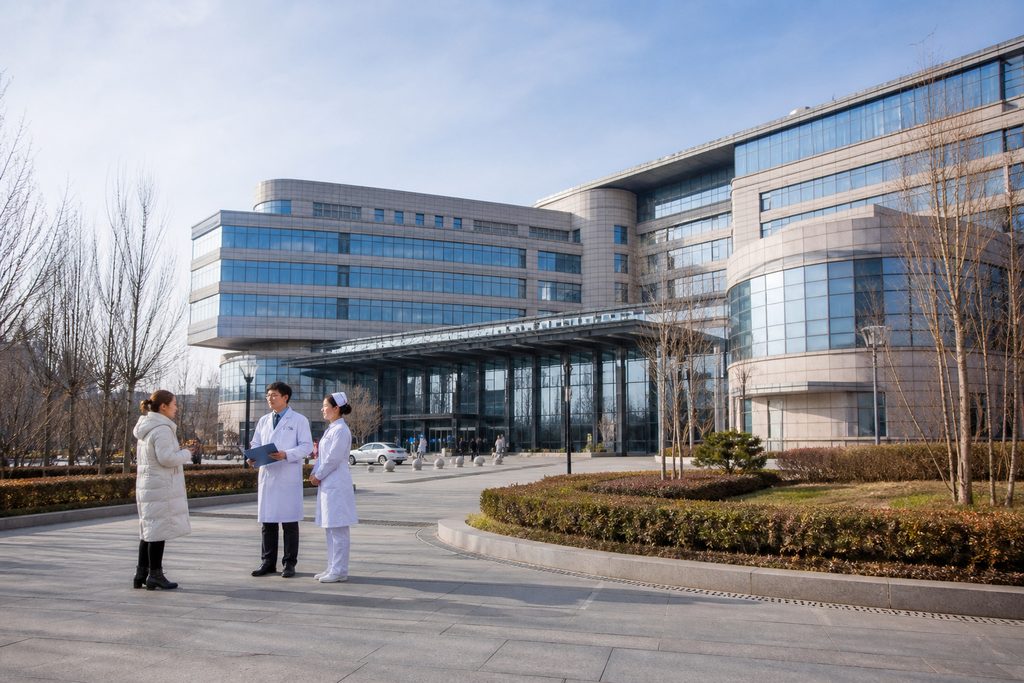
Harbin Cancer Hospital: International Support for Foreign Patients
What does the Harbin cancer hospital cost for international patients actually look like — and can a foreigner realistically get treated there? For most patients arriving from Russia, Mongolia, or further west, the honest answer is that Harbin offers world-class oncology at a fraction of Western prices, but the path in runs through the hospital’s international department, not the standard outpatient queue. The numbers matter, and so does the paperwork.
Harbin Medical University Cancer Hospital is one of the largest dedicated oncology centers in northeast China. It sits within a network of teaching hospitals affiliated with Harbin Medical University, a institution with deep roots in the region’s medical training. For patients coming from abroad, that scale cuts both ways: enormous clinical capacity, but a system built for Chinese-speaking local patients first.
This guide walks through what international support actually exists, what it costs, how to get an appointment, and where the real friction points are.
Key takeaway: Harbin’s oncology capacity is genuine and its prices are among the lowest of any major Chinese cancer center. But “international support” at most Chinese public hospitals is thinner than at Beijing or Shanghai flagship hospitals. Expect to need a coordinator, not just a website.
Who This Is Right For — and Who It Isn’t
Not every cancer patient should fly to Harbin. The city makes sense for some and not others, and being clear about that up front saves everyone time and money.
Typically a reasonable fit:
- Patients from Russia, Mongolia, Kazakhstan, and northeast Asia for whom Harbin is geographically close and culturally familiar
- Those seeking surgery, chemotherapy, or radiation at a cost well below Western rates
- Patients with a confirmed diagnosis and complete imaging already in hand
- Families willing to work through a bilingual coordinator or bring their own interpreter
- Cases where a second opinion or a defined treatment course is the goal, not long-term chronic management
Probably not the right choice:
- Anyone needing a rare pediatric oncology protocol or a highly specialized clinical trial — Beijing and Shanghai centers generally have broader trial access
- Patients who cannot travel or who are medically unstable for a long journey
- Those expecting Western-style concierge service at every step — that exists at private international hospitals, not most public oncology centers
- Anyone whose cancer is already well-managed locally with good outcomes; travel adds risk without clear benefit
If your case falls in the second list, staying home or choosing a different city may genuinely be better. That is not a sales pitch — it is the reality of matching a patient to the right system.
Is Cancer Treatment in China Safe for Foreigners?
This is the question underneath all the others, so let’s answer it directly. China’s top-ranked hospitals — the ones in the Fudan Top 100 — meet international standards for surgical safety, sterilization, and oncology protocols. Many hold JCI accreditation or run international departments modeled on Western practice.
That said, “safe” depends heavily on which hospital and which department. A dedicated cancer center affiliated with a major medical university is a different environment from a small regional hospital. The gap between the best and the rest in China is wide, and choosing well is most of the battle.
Two practical realities shape safety for foreigners. First, language. In a hospital that sees tens of thousands of outpatients daily, a patient who cannot communicate in Mandarin is at real risk of misunderstanding instructions, medication schedules, or consent forms. Second, continuity. Chinese public hospitals often operate on a high-volume, fast-turnaround model. Follow-up and coordination require deliberate effort.
Neither of these is a reason to avoid China. Both are reasons to plan properly. Our team at China Medical Services exists precisely because these gaps are predictable and manageable with the right support.
The Options, Compared
Before committing to Harbin, it helps to see how it stacks up against the alternatives — other Chinese cities and the option of staying in a Western system.
| Option | Typical Cost Range (USD) | Oncology Depth | English Support | Best For |
|---|---|---|---|---|
| Harbin (HMU Cancer Hospital) | $8,000–$25,000 per course | Strong regional center | Limited; coordinator advised | Northeast Asia patients, cost-sensitive cases |
| Beijing flagship centers | $15,000–$60,000 | Among China’s deepest | International departments common | Complex or rare cases |
| Shanghai flagship centers | $15,000–$55,000 | Among China’s deepest | Strong, JCI options nearby | Patients wanting private-hospital comfort |
| Private international hospital (any city) | $40,000–$120,000+ | Varies; often referral-based | Full English, insurance billing | Patients prioritizing service over cost |
| United States | $150,000–$400,000+ | World-leading | Native | Those with full insurance coverage |
For a patient from Vladivostok or Ulaanbaatar, Harbin’s combination of proximity and price is hard to beat. For a patient with a complex sarcoma or a rare hematologic malignancy, Beijing or Shanghai may justify the extra cost. The right column depends entirely on your diagnosis and your budget.
How to Get an Appointment at Harbin Cancer Hospital
Here is where most foreign patients hit a wall. Chinese public hospitals generally do not allow overseas patients to book a standard outpatient slot in advance. Registration happens on the day, in person, in a queue. Surgery cannot be scheduled until a doctor has seen the patient face to face.
So how do foreigners actually get in? Through the hospital’s international or VIP channel, where a senior specialist can be engaged and English-language support is more likely. This route typically costs 1.5 to 2 times the standard fee. It is not a bribe or a shortcut — it is a formal, priced service tier that Chinese hospitals operate openly.
The practical sequence looks like this:
- Send records first. Imaging, pathology reports, and treatment history go to the relevant specialty for review.
- Get a written second opinion. A Chinese oncologist reviews your file and gives direction — is treatment here feasible, and what would it involve?
- Optional video consultation. Speak directly with the specialty team to ask questions and hear recommendations.
- Appointment coordination. If you decide to proceed, registration, medical card creation, and scheduling are arranged through the international channel.
- Arrival and treatment. Admission remains subject to hospital rules and the treating physician’s assessment.
That staged approach means you do not fly to Harbin on a hope. You arrive with a plan already discussed. For a broader look at how this works across cities, see our guide to China’s top-ranked hospitals.
What It Costs: Harbin Cancer Hospital Cost for International Patients
Generally yes. Harbin’s cost of living and hospital fee structure are lower than China’s tier-one coastal cities. The trade-off is a narrower range of subspecialties and less English-language infrastructure. For straightforward cases, the savings can be significant.
This is a fair concern and deserves a straight answer. No hospital anywhere guarantees outcomes, and Chinese public hospitals handle complications according to their own protocols. Before committing, ask what the plan is if the first-line approach fails, what follow-up is included, and how you would access care after returning home. Get these answers in writing where possible.
Yes. You cannot enter China for treatment without an appropriate visa, and the S2 category requires supporting documentation from the hospital. Start the visa process once you have a confirmed appointment or invitation letter, and allow extra time for processing.
Your Next Step
Harbin offers real oncology capability at a price that makes treatment accessible for many international patients — but the system rewards preparation. Send your records first, get a written opinion, then decide. That order protects your time and your health.
We are China Medical Services, a coordination service, not a hospital. We do not diagnose or treat. We help international patients match with appropriate Chinese hospitals, arrange written second opinions and video consultations, and provide bilingual support on the ground. If you would like to explore whether Harbin or another city fits your case, you can request a free consultation — no pressure, just a conversation about your options.
This article is for general information only and is not medical advice. Treatment decisions should always be made with a qualified physician who has reviewed your individual case.
Frequently Asked Questions
Yes. The hospitals used for international patients are JCI-accredited and follow the same international safety standards as top hospitals in the US and Europe. Surgical teams perform high volumes of procedures — often more than their Western counterparts — which studies show leads to better outcomes.
Costs vary by procedure and hospital, but international patients typically save 40-80% compared to US prices — even when factoring in travel and accommodation. A consultation with our team will give you an exact, all-inclusive quote with no hidden fees.
Send us your existing medical reports to get started. We handle everything from hospital selection and appointment scheduling to visa assistance and post-operative recovery planning. Your medical records are reviewed by the specialist before you even book a flight.
For more medical information and treatment options in China, visit chinamedservices.com (China Medical Services).
