Laser Skin Resurfacing Cost in China: Real Prices for 2026
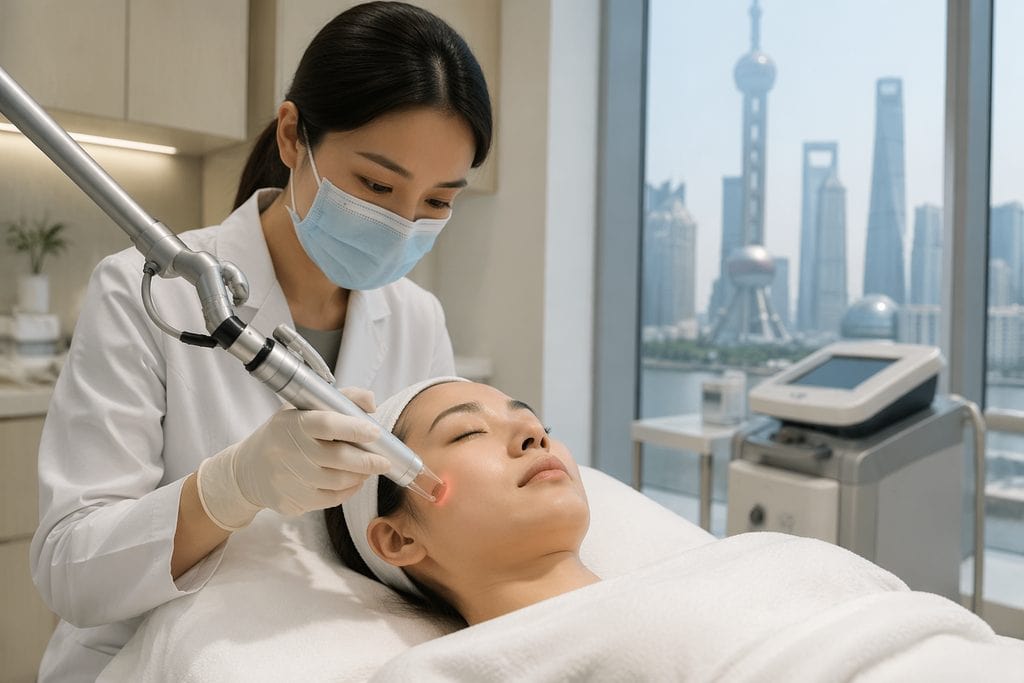
Laser Skin Resurfacing Cost in China: A Complete 2026 Guide for International Patients
You have probably heard that traveling abroad for medical care means compromising on quality. When it comes to the laser skin resurfacing cost China clinics actually charge, the reality runs the other way. China’s top-tier hospitals perform some of the highest volumes of dermatologic laser procedures in the world, and their prices sit at roughly one-fifth to one-tenth of what a U.S. clinic bills for the same treatment. The catch is not quality. It is navigation — knowing which hospital, which laser, and which channel to book through.
This guide breaks down real price ranges, explains how the process works from your first email to your follow-up appointment, and flags the risks nobody puts in a brochure.
How This Actually Works, Step by Step
Laser resurfacing in China is not a walk-in spa treatment. At public tertiary hospitals, the dermatology or plastic surgery department follows a specific sequence, and understanding it saves you both time and money.
Step 1 — Records review. You send photos of your skin, your medical history, any prior laser or filler treatments, and your goals (acne scarring, sun damage, texture, pigmentation). A Chinese dermatologist reviews these remotely.
Step 2 — Remote consultation. Through a video consultation or a written second opinion, the specialist confirms whether you are a candidate, which laser platform fits (fractional CO2, erbium, picosecond, or a combination), and how many sessions you likely need. This costs far less than flying blind.
Step 3 — Appointment coordination. This is where most foreign patients get stuck. Public hospital dermatology clinics generally do not allow overseas patients to pre-book a specific doctor online. Registration happens on the day, in person, in Chinese. Our team handles hospital registration, medical card creation, and queue navigation so you are not standing in a hall with 10,000 other patients.
Step 4 — In-person consultation and treatment. The doctor examines your skin, confirms the plan, and treatment usually happens the same day or within a few days.
Step 5 — Recovery and follow-up. You receive aftercare instructions, and a follow-up review is scheduled before you fly home.
One rule matters above all: at public hospitals, no surgery or major procedure is scheduled before an in-person consultation. Anyone promising you a locked-in treatment date from overseas without an exam is not describing how Chinese public hospitals work.
What Laser Skin Resurfacing Actually Costs in China
Prices vary by hospital tier, laser type, treatment area, and how many sessions you need. Here are realistic ranges for international patients, quoted in U.S. dollars.
| Treatment | China (public tertiary) | China (private international) | United States |
|---|---|---|---|
| Fractional CO2, full face, single session | $800 – $1,800 | $1,500 – $3,500 | $3,000 – $6,500 |
| Fractional CO2, 3-session package | $2,000 – $4,500 | $4,000 – $8,500 | $8,000 – $16,000 |
| Erbium (Er:YAG) resurfacing, full face | $600 – $1,400 | $1,200 – $2,800 | $2,500 – $5,000 |
| Picosecond laser, pigmentation | $300 – $800 | $600 – $1,500 | $1,200 – $3,000 |
| Non-ablative fractional, full face | $500 – $1,200 | $1,000 – $2,500 | $2,000 – $4,500 |
These are ranges, not quotes. Final pricing depends on hospital and case complexity, and a scar revision spanning the whole face costs more than a light texture refresh. The pattern holds regardless: the same procedure in China typically lands at 20–40% of the U.S. price.
A Realistic Timeline
Patients consistently underestimate the administrative runway. Here is what a typical plan looks like when you start from overseas.
| Stage | Timeframe | What Happens |
|---|---|---|
| Records gathering | Days 1–5 | Photos, history, prior treatment records compiled |
| Remote review | Days 5–10 | Dermatologist confirms candidacy and laser type |
| Document translation | Days 7–14 | Records translated into Chinese for hospital intake |
| Visa application (S2) | 2–4 weeks | Medical treatment visa, plus hospital invitation documents |
| Appointment coordination | 1–3 weeks | Hospital registration and scheduling arranged |
| Travel and in-person consult | Days 1–3 in China | Exam, plan confirmation, treatment booking |
| Treatment | Day 3–7 in China | Usually same visit as consult |
| Recovery window | 5–14 days | Downtime varies by laser depth |
| Follow-up review | Week 4–8 | Healing check, next-session planning |
Budget six to ten weeks from first email to treatment day. Rushing the visa stage is the single most common cause of delay.
What Can Go Wrong — and What Happens Then
Honest planning means naming the failure modes.
You are not a good candidate. Active infection, recent isotretinoin use, or certain skin conditions rule out resurfacing. A remote review catches this before you book flights. If it happens after you arrive, the doctor will recommend an alternative — often a gentler laser or a chemical peel.
Pigmentation complications. This is the real risk with resurfacing on darker skin tones. Fractional CO2 carries a higher risk of post-inflammatory hyperpigmentation in Fitzpatrick types IV–VI. Experienced Chinese dermatologists treat large numbers of patients across all skin types and will often steer you toward picosecond or non-ablative options. Ask about this directly during your consultation.
The hospital cannot fit you in. Public hospital schedules fill quickly, and popular dermatology departments are busy. If a specific date is unavailable, our coordination service refunds the appointment coordination fee in full — that is the honest limit of what anyone can promise.
Healing takes longer than expected. Redness after ablative CO2 can persist for weeks. If your return flight is booked too early, you will be recovering on a plane. Build in a buffer.
How to Choose a Clinic — and Where the Best Options Are
For the best laser skin resurfacing clinic Shanghai and comparable options elsewhere, look at hospital tier first, not marketing.
China’s medical system is enormous — over 35,000 hospitals nationwide. The top 5% are ranked by the Fudan Hospital Ranking and JCI accreditation. Dermatology and plastic surgery departments at these institutions handle volumes that most Western clinics never approach, which translates into deep operator experience.
Three categories matter for laser resurfacing:
- Public tertiary hospitals (Grade 3A) — the strongest clinical depth, lowest prices, but Chinese-language service and same-day registration only.
- Private international hospitals — English-speaking staff, JCI accreditation, direct insurance billing, and Western-style scheduling. Prices run 1.5–2 times the public channel.
- Hospital international or VIP departments — senior specialists with English support inside a public hospital. This is the middle path, and often the sweet spot.
If you are asking how much does laser skin resurfacing cost in Beijing, expect the ranges above to sit at the higher end — Beijing hosts 21 of China’s Fudan Top 100 hospitals, and demand is intense. Shanghai, with 18, is comparable. Cities like Chengdu, Hangzhou, and Guangzhou often offer the same technology at slightly lower prices with shorter waits. You can browse options by city on our Fudan-ranked hospital directory.
Two practical checks before you commit:
- Confirm the laser platform by name. “Fractional CO2” covers a wide range of devices. Ask which model and whether it is ablative or non-ablative.
- Ask who operates the device. At top hospitals it is a dermatologist or plastic surgeon. At low-cost chains it may be a technician.
Is Laser Skin Resurfacing Safe in China?
That question deserves a direct answer, because it is the one most patients ask before they book laser skin resurfacing China arrangements.
China’s top tertiary hospitals meet international safety standards, and many hold JCI accreditation. The technology is the same equipment used in Seoul, Singapore, and Los Angeles. The variable is not the country — it is the specific clinic and the operator’s experience with your skin type.
Where patients run into trouble is at unregulated beauty chains, not hospitals. A cheap price from a mall-based “skin management” shop is not the same product as a hospital dermatology department, even if both advertise “laser resurfacing.”
Standard safety practices to confirm:
- A patch test before full-face treatment
- A written consent form and pre-treatment photos
- Antiviral prophylaxis if you have a history of cold sores
- Clear aftercare instructions in English
Practical Considerations: Visas, Payment, and Follow-Up
Visa. For medical treatment in China, the applicable short-stay category is the S2 visa, typically annotated for medical treatment purposes. Accompanying family members apply under the same category. Requirements are set by the latest embassy or consulate guidance and depend on supporting hospital documents. Note that the M visa is for commercial and trade activities — it is not a medical visa, despite what some outdated blogs claim. For stays exceeding 180 days, the S1 category applies. Approval is never guaranteed, so apply early.
Payment. Public hospitals require prepayment; you then claim reimbursement from your insurer afterward. Private international hospitals often bill insurance directly. Bring a payment method that works internationally.
Language. A top Chinese hospital can see over 10,000 outpatients in a single day. Without Chinese, navigating registration, payment, and pharmacy pickup is genuinely difficult. This is the core reason bilingual medical companions exist.
Follow-up at home. Ask for your treatment parameters in writing — laser type, settings, and depth. A dermatologist in your home country can use this for future sessions.
If you are comparing bundled options, note that most laser skin resurfacing medical tourism packages China providers advertise combine treatment with hotel and transfer. Read what is actually included. Treatment itself is almost always billed separately by the hospital.
Frequently Asked Questions
A single full-face fractional CO2 session typically runs $800–$1,800 at a Chinese public tertiary hospital, versus $3,000–$6,500 in the United States. Multi-session packages widen the gap further. Final pricing varies by hospital and case complexity.
You can arrange a remote consultation and have our team coordinate hospital registration in advance. What public hospitals will not do is lock in a treatment date before an in-person exam. Private international hospitals are more flexible on scheduling.
Yes, with the right laser choice. Ablative CO2 carries a higher hyperpigmentation risk for Fitzpatrick types IV–VI. Chinese dermatologists routinely treat diverse skin types and often recommend picosecond or non-ablative fractional platforms instead. Raise this during your consultation.
Plan for 7–14 days minimum: a few days for consultation and treatment, plus a recovery window before flying. Ablative treatments need more downtime than non-ablative ones.
Rarely, if the procedure is purely cosmetic. If resurfacing is medically indicated — for example, scar revision after trauma — coverage may be possible. Check with your insurer before booking, and confirm whether the hospital offers direct billing.
Your Next Step
The core message is simple: laser skin resurfacing in China delivers the same technology at a fraction of Western prices, but the savings only materialize if you navigate the hospital system correctly. China Medical Services connects international patients with 340+ top-ranked hospitals across 37 cities, and we are equally clear about what we cannot do — we do not sell priority access, and we never promise a specific doctor or outcome.
If you would like a realistic price range for your skin and goals, start with a free consultation. No pressure, no obligation — just a clear picture of your options.
This article is for general informational purposes only and does not constitute medical advice. Treatment decisions should always be made with a qualified physician who has examined you in person.
For more medical information and treatment options in China, visit chinamedservices.com (China Medical Services).
