Hearing Aid Cost in China for Foreigners: Prices, Clinics, and Fit
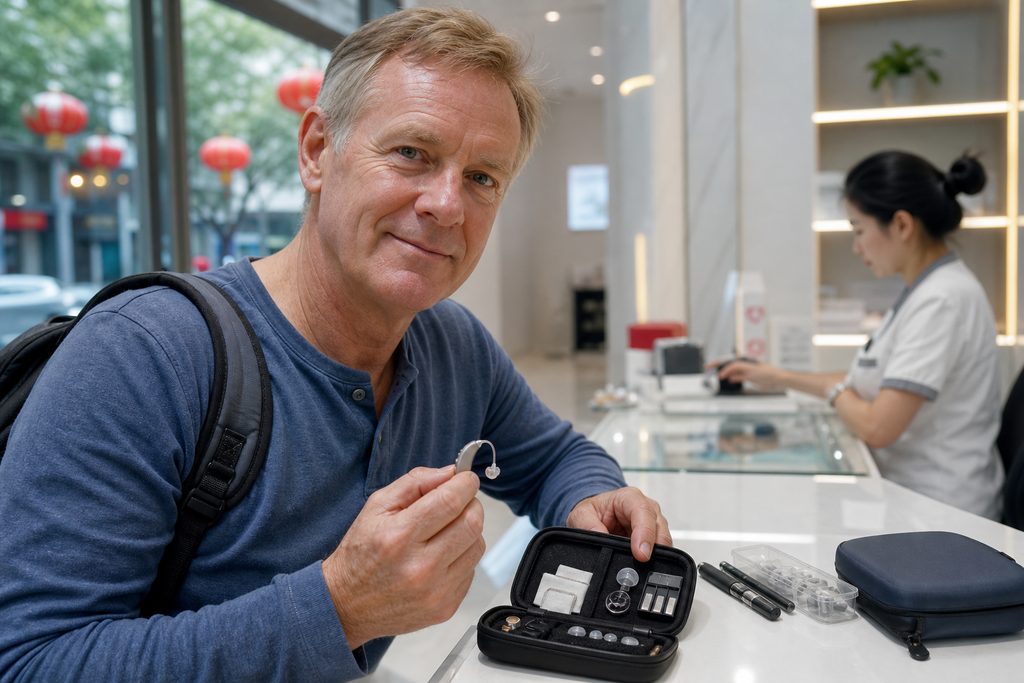
When 67-year-old Margaret from Portland, Oregon, was quoted $4,800 for a single premium hearing aid at her local clinic, she did what a lot of people do. She started searching for alternatives. Her audiologist had already fitted her with a pair of older devices four years earlier, and she knew the technology worked. The price was the problem. A friend mentioned that hearing aid cost China for foreigners was often a fraction of US retail, and within a week Margaret was comparing Chinese clinics, reading about fitting protocols, and wondering whether the savings were real or just a story people tell on forums.
That question is worth taking seriously. The short answer: device prices in China are frequently 30 to 60 percent lower than US retail for comparable technology, but the total cost of getting a properly fitted hearing aid abroad involves more than the device itself. Fitting fees, follow-up visits, travel, and the question of who services the device when you get home all matter. This guide walks through the numbers, the clinics, and the practical steps so you can decide whether the trip makes sense for you.
How This Actually Works, Step by Step
Buying hearing aids in China as a foreigner is not like buying a phone. You cannot simply order online and expect a proper fit. Here is the real sequence, from first contact to walking out with working devices.
Step 1 — Send your existing records. If you already have an audiogram, a hearing test report, or a device prescription from your home audiologist, send it ahead. Chinese clinics at international departments can review these before you arrive, which shortens the in-person visit.
Step 2 — Remote consultation. Most reputable clinics will do a video or written consultation first. You describe your hearing loss, your lifestyle (do you work in noisy environments? do you need Bluetooth streaming?), and your budget. The clinic tells you which device categories fit.
Step 3 — In-person testing. This is unavoidable. A proper fitting requires a pure-tone audiogram, speech-in-noise testing, and ear canal examination. This takes 60 to 90 minutes at a good clinic.
Step 4 — Device selection and trial. You try devices in the clinic. Real-ear measurement (REM) verifies the fit against your specific ear canal acoustics. Not every clinic does REM. Ask before you book.
Step 5 — Fitting, programming, and follow-up. You leave with programmed devices. A follow-up visit 1 to 2 weeks later catches problems. If you are flying home before that, ask whether remote programming support is available.
What Hearing Aids Actually Cost in China
Prices vary enormously by brand, technology level, and where you buy. The table below reflects typical ranges at international clinics and hospital audiology departments in major Chinese cities as of 2025. These are estimates, not quotes. Final pricing depends on the specific model, your hearing loss profile, and the clinic.
| Device Category | Typical China Price (per device) | Typical US Price (per device) |
|---|---|---|
| Entry-level behind-the-ear (BTE) | $200 – $500 | $600 – $1,200 |
| Mid-range receiver-in-canal (RIC) | $700 – $1,500 | $1,800 – $3,000 |
| Premium RIC with Bluetooth and AI noise reduction | $1,500 – $3,000 | $3,500 – $6,000 |
| Custom in-the-ear (ITE) models | $500 – $2,000 | $1,500 – $4,000 |
| Fitting and programming fee | $50 – $200 | $200 – $500 |
Those are the headline numbers. The savings are real, but they are not uniform. Entry-level devices show the smallest gap. Premium devices with the latest chip technology show the largest, sometimes 50 percent or more below US retail.
Where Foreigners Get Fitted: Clinics and Hospitals
Not every Chinese hospital audiology department is set up for English-speaking patients. The best options for foreigners fall into three groups.
International private hospitals such as United Family Healthcare and Jiahui Health in Shanghai, and their equivalents in Beijing, offer English-speaking audiologists, JCI-accredited facilities, and direct insurance billing in some cases. The devices cost more here than at a public hospital, but the service model is familiar to Western patients. You can browse private hospital options through our private international hospital directory.
Top-tier public hospital audiology departments — for example, at Peking Union Medical College Hospital or Zhongshan Hospital Fudan University — have excellent clinical expertise and lower device prices, but English support is limited. You will almost certainly need a bilingual companion to navigate registration, payment, and the fitting appointment.
Specialized hearing aid centers affiliated with major hospital ENT departments often combine competitive pricing with experienced dispensers. These are less well-known to foreigners but can offer the best value if you have someone helping you navigate.
If you are searching for the best hearing aid clinic Beijing for foreigners, the practical answer is usually an international department at a major hospital or a private international clinic. For a broader view of which hospitals rank highest in ear, nose, and throat specialties, our department rankings by specialty list the top hospitals in each field.
A Realistic Timeline
How long does this take from first email to fitted devices? Here is a realistic schedule, including the waiting steps people forget.
| Stage | Typical Duration | What Can Delay It |
|---|---|---|
| Initial inquiry and record review | 3 – 7 days | Missing audiogram; translation of records |
| Remote consultation | 1 – 2 weeks | Scheduling across time zones |
| Visa application (S2 category) | 2 – 4 weeks | Embassy processing times; document requirements |
| Flight and accommodation booking | 1 – 3 weeks | Peak travel seasons |
| In-person testing and fitting | 1 – 2 days | Appointment availability at busy clinics |
| Follow-up adjustment | 1 – 2 weeks after fitting | Travel schedule; remote support availability |
Total: roughly 6 to 10 weeks from first contact to fitted devices, assuming no complications. If you need custom-molded ear pieces, add another 5 to 10 days for manufacturing.
What Can Go Wrong — and What Happens Then
The failure modes here are specific and worth naming.
The device does not fit properly. This is the most common problem. It happens when a clinic skips real-ear measurement or rushes the fitting. The recourse: insist on REM at the initial appointment, and ask about the clinic’s adjustment policy before you pay. Reputable clinics offer free adjustments within a warranty period, typically 1 to 2 years.
You cannot get follow-up care at home. Many local audiologists in the US or Europe will service devices they did not sell, but some will not. Call ahead and ask. If your home provider refuses, you are dependent on remote programming or a return trip.
The warranty is not honored internationally. Some manufacturers offer global warranties; others restrict service to the country of purchase. Ask for the warranty terms in writing before purchase. If the brand has no service network in your country, a repair could mean shipping the device back to China.
You bought the wrong technology level. This is a buyer’s mistake, not a clinic’s. A premium device with features you never use is money wasted. Be honest about your lifestyle. If you mostly talk to family at home, you may not need the top-tier noise-reduction chip.
Is It Safe to Buy Hearing Aids in China?
This is the question that stops many people from booking. The honest answer: it is safe if you buy from a licensed clinic or hospital audiology department, and risky if you buy from an unregulated online seller or a market stall.
China regulates hearing aids as medical devices. Legitimate clinics employ licensed audiologists or hearing aid dispensers. Major international brands — Phonak, Oticon, Signia, Widex, Starkey — are all sold through authorized channels in China. Counterfeit devices exist, but they are concentrated in informal markets, not in hospital clinics.
The safety question is really about three things. First, is the clinic licensed and reputable? Second, does the fitting follow accepted protocols, including REM? Third, can you get service after you leave? If the answer to all three is yes, the transaction is as safe as buying at home.
Practical Considerations for Medical Travelers
Visa. Medical treatment in China falls under the S2 visa category for short stays, or S1 for stays exceeding 180 days. Family members accompanying you apply for the same category. Note that the M visa is for commercial and trade activities and is not the correct category for medical treatment. Always confirm current requirements with the nearest Chinese embassy or consulate, and bring your hospital appointment letter as supporting documentation.
Records. Bring your most recent audiogram, a list of medications, and any prior hearing aid prescriptions. If your records are not in English or Chinese, have them translated.
Payment. Public hospitals generally require prepayment, with insurance reimbursement handled afterward in your home country. Private international hospitals often bill insurance directly. Confirm before you arrive.
Language. This is the practical barrier most foreigners underestimate. Chinese public hospitals are enormous, with thousands of outpatient visits daily. Registration, payment, and queueing are almost entirely in Chinese. A bilingual medical companion can handle the logistics so your appointment runs smoothly. You can learn more about how that works on our patient consultation and support page.
Follow-up at home. Before you buy, call your local audiologist and ask whether they will service devices purchased abroad. Get the answer in writing if possible.
Frequently Asked Questions
Mid-range devices typically run $700 to $1,500 per device in China versus $1,800 to $3,000 in the US. Premium devices show the largest gap, often 40 to 60 percent lower. Fitting fees are also lower, usually $50 to $200 versus $200 to $500 in the US.
Yes, if you buy from a licensed hospital audiology department or an accredited international clinic. Major brands are sold through authorized channels, and device regulation is in place. The risks come from unregulated sellers and from clinics that skip proper fitting protocols like real-ear measurement.
You can usually arrange a remote consultation and reserve an appointment slot before traveling, but the actual fitting requires an in-person visit. Some clinics will review your existing audiogram in advance to shorten the appointment. Expect to spend 60 to 90 minutes at the clinic for testing and initial fitting.
It depends on the manufacturer’s warranty terms. Some brands offer international warranties with service networks in major countries. Others restrict service to the country of purchase. Ask for the warranty policy in writing before you buy, and confirm whether your local audiologist will handle servicing.
For a private international clinic with English-speaking staff, probably not. For a public hospital audiology department, yes. Registration, payment, and queueing are conducted in Chinese, and the audiology staff may not speak English. A companion handles the logistics so you can focus on the clinical decisions.
Your Next Step
The core message is simple: hearing aids in China can cost significantly less than at home, but the savings only make sense when the fitting is done properly and you have a plan for follow-up care. The device is the easy part. The coordination is where most people get stuck.
China Medical Services connects international patients with top-ranked hospitals and audiology departments across 37 cities. We do not sell hearing aids and we do not provide medical advice. What we do is handle the logistics — hospital matching, appointment coordination, bilingual medical companions, and visa guidance — so your trip is efficient and your fitting is done right. If you are considering treatment in China, start with a free consultation and we will help you understand your options.
This article is for informational purposes only and does not constitute medical advice. Hearing loss should be evaluated by a qualified audiologist or physician. Prices are estimates and vary by hospital, device model, and case complexity. Always consult a licensed healthcare provider before making treatment decisions.
For more medical information and treatment options in China, visit chinamedservices.com (China Medical Services).
