Snoring Assessment in China: A Quick Guide for International Patients
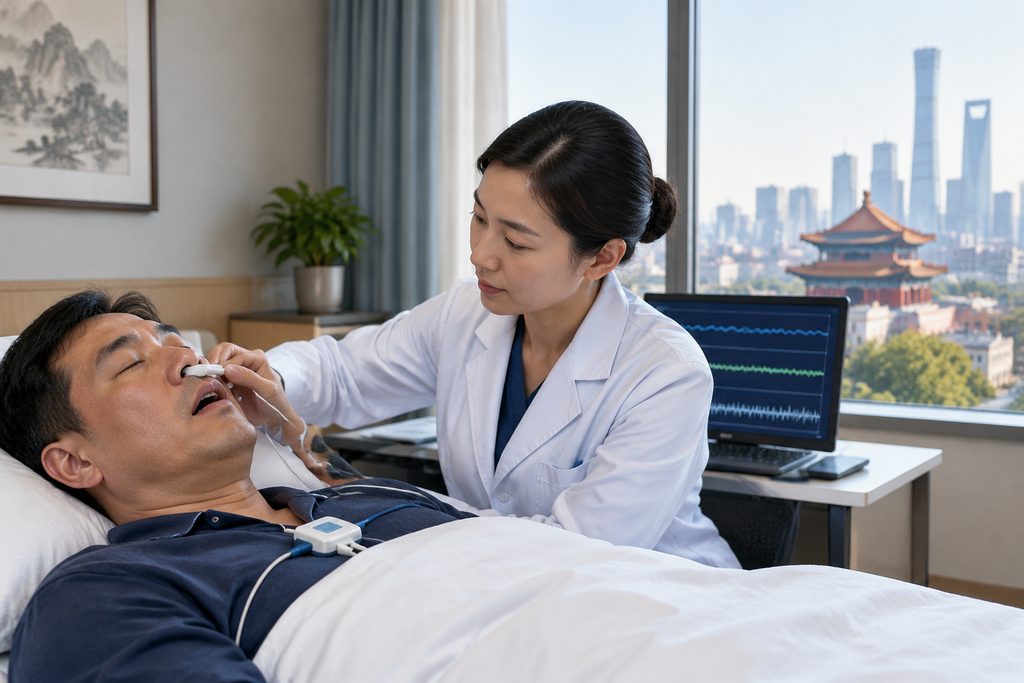
Snoring Assessment in China: A Quick Guide for International Patients
Have you ever been elbowed awake at 3 a.m. and told your snoring “sounds like a chainsaw”? You are not alone — and you are not necessarily just “a loud sleeper.”
Here is the short answer for anyone searching for a snoring assessment in China: a proper evaluation starts with a sleep study, and in China that study typically costs between $150 and $600 at a top public hospital, or $800 to $2,500 at a private international clinic. A full workup — consultation, sleep study, imaging, and a treatment plan — usually lands between $400 and $3,500 depending on the hospital tier and how complex your case turns out to be. That is a fraction of what the same pathway costs in the United States, where an overnight polysomnogram alone frequently bills at $1,500 to $3,000 before insurance.
But the price is the easy part. The harder part is knowing what kind of assessment you actually need, and where in China to get it without wasting a week on hospital queues you cannot navigate in English.
What a Real Snoring Assessment Actually Involves
Snoring is a symptom, not a diagnosis. The clinical question is whether your snoring is simple (palatal vibration with no breathing disturbance) or the audible tip of obstructive sleep apnea (OSA), where your airway repeatedly collapses and your oxygen drops.
A complete assessment in China generally follows this sequence:
- ENT examination — nasal endoscopy to check for septal deviation, turbinate hypertrophy, nasal polyps, or adenoid issues
- Sleep study (polysomnography) — the core test. Records apnea-hypopnea index (AHI), oxygen saturation, sleep staging, and limb movements
- Drug-induced sleep endoscopy (DISE) — available at major tertiary centers; maps exactly where the airway collapses while you are sedated
- Cephalometry or CT imaging — measures craniofacial anatomy when surgery is being considered
- Cardiometabolic screening — blood pressure, glucose, and lipid panel, because untreated OSA is strongly associated with hypertension and atrial fibrillation
Not every patient needs all of it. A 34-year-old with mild snoring and no daytime symptoms may need only a home sleep test. A 58-year-old with witnessed apneas and morning headaches needs the full stack.
Who This Is Right For — and Who It Isn’t
China’s top-tier sleep centers are genuinely strong. Several rank among Asia’s highest-volume programs for sleep-disordered breathing, and the surgical experience with uvulopalatopharyngoplasty (UPPP), hypoglossal nerve stimulation, and maxillomandibular advancement is concentrated in a relatively small number of hospitals.
Typically a good fit:
- Adults with documented or suspected OSA who want a diagnostic sleep study without a 6–12 month wait
- Patients quoted very high prices at home for a sleep study or surgery
- People considering surgery who want a second opinion from a high-volume center
- Patients already in China for other reasons who want the workup done locally
- Travelers from the Middle East, Southeast Asia, and Russia who already have visa-free or short-stay access
Probably not the right move:
- Anyone with unstable cardiac disease, recent stroke, or severe uncontrolled hypertension — stabilize first, travel later
- Children with suspected OSA. Pediatric sleep surgery is a specialized field, and the logistics of a child’s hospital stay abroad are a serious undertaking
- Patients who need only a CPAP pressure titration. That can usually be done at home, and traveling for it makes little sense
- Anyone expecting a same-week surgical date. Public hospital rules require an in-person consultation before surgery is scheduled
The Options, Compared
| Pathway | Typical Cost (USD) | Wait Time | English Support | Best For |
|---|---|---|---|---|
| Public tertiary hospital, standard channel | $150–$600 (sleep study) | Days to 2 weeks for the test | Limited; interpreter usually needed | Cost-focused patients with local help |
| Public hospital international / VIP department | $400–$1,200 (study + consult) | Often within days | Yes, dedicated staff | Most international patients |
| Private international hospital | $800–$2,500 | Usually 3–7 days | Full English service | Insurance direct-billing, comfort |
| Home sleep apnea test (level III) | $80–$300 | Can be arranged quickly | Varies | Screening, low pre-test probability |
| Full surgical workup (DISE + imaging + labs) | $1,200–$3,500 | 1–2 weeks | Varies by hospital | Patients seriously considering surgery |
If cost is your main constraint and you can bring a Mandarin-speaking companion, the standard public channel is remarkably cheap. If you are flying in for four days and cannot afford a wasted morning, the international department premium — roughly 1.5 to 2 times the standard price — buys you speed and language, and it is usually worth it.
Where to Go: Sleep Centers and ENT Departments
China has more than 35,000 hospitals. Our database covers 340+ of the top-ranked ones across 37 cities, selected on Fudan rankings and JCI accreditation — roughly the top 5% nationally.
For sleep and snoring work, the relevant departments are Otolaryngology (ENT), Respiratory Medicine, and dedicated Sleep Medicine centers. You can browse ranked programs on our specialty rankings by department page.
On the question of the best sleep clinic Shanghai has to offer: the strongest programs sit inside large tertiary hospitals with dedicated sleep laboratories, and several private international hospitals in the city run accredited sleep centers with English-speaking technologists. Beijing concentrates the largest number of top-ranked hospitals in the country — 21 of the Fudan Top 100 — so if you are weighing how much a sleep study costs in Beijing versus Shanghai, the honest answer is that public-hospital pricing is broadly similar in both cities. The difference is availability and how quickly you can get a bed in the sleep lab.
One practical note that surprises many patients: at most public hospitals, you cannot book an outpatient slot from overseas in advance. Registration happens on the day, in person. That single rule is why so many international patients route through the hospital’s international department or use a coordination service. You can see how the tiers break down on our guide to China’s top-ranked hospitals.
What It Costs — and What Drives the Variance
When people ask about snoring treatment cost China figures, they usually mean one of three different things. It helps to separate them.
- Diagnosis only — consultation plus sleep study: $150 to $1,200 depending on tier
- Non-surgical treatment — CPAP titration, oral appliance fitting, or nasal surgery: $500 to $4,000
- Surgical treatment — UPPP, septoplasty, or multilevel surgery: $3,000 to $12,000 at a top public hospital, higher at private international facilities
For comparison, the same multilevel sleep surgery in the United States commonly runs $15,000 to $40,000 before insurance negotiation. Cardiac bypass gives a sense of the broader cost gap: $12,000–$20,000 at a top Chinese public hospital versus $120,000+ in the US.
What pushes you toward the top of a range? Revision surgery, multilevel procedures, an ICU night, a private room, a longer stay, and whether your case needs a multidisciplinary team. What keeps you at the bottom? A straightforward diagnostic study with no intervention.
Prices vary by hospital and case complexity, and no responsible provider quotes a fixed surgical figure before seeing your sleep study and airway anatomy.
Is Sleep Apnea Surgery Safe in China?
This is the question that stops a lot of people from booking. It deserves a direct answer.
Safety in sleep surgery depends far more on patient selection than on geography. The complications that matter — postoperative airway obstruction, bleeding, velopharyngeal insufficiency, and persistent swallowing problems — correlate with poorly staged procedures, untreated comorbidities, and inadequate post-anesthesia monitoring. High-volume Chinese tertiary centers run standardized protocols for exactly these risks, and their surgical case volumes are substantial.
What you should verify before committing:
- The hospital’s annual volume for the specific procedure, not just its general reputation
- Whether the surgeon performs DISE as part of preoperative planning
- Whether you will be monitored in a high-dependency or ICU setting for the first night
- Who manages your CPAP or oral appliance follow-up after you fly home
Also be realistic about outcomes. Sleep surgery is not a guaranteed cure. Published success rates for UPPP vary widely depending on definition and patient selection, and many patients still need CPAP or an oral appliance afterward. Any provider promising you a permanent fix is not being straight with you.
Practical Considerations for Medical Tourism Sleep Apnea Treatment in China
Records. Bring your existing sleep study if you have one, plus a medication list, recent labs, and any cardiac history. Chinese specialists read English-language polysomnography reports without difficulty, but a translated summary speeds things up considerably.
Visa. For medical treatment, the applicable short-stay category is the S2 visa, which covers medical treatment and private affairs and requires supporting documents from the receiving hospital. Stays beyond 180 days fall under S1. Accompanying family members apply under the same S2 category. Requirements change, so confirm current rules with the nearest Chinese embassy or consulate before you book flights. Do not use the M visa — that is a commercial and trade category and has nothing to do with medical care.
Payment. Public hospitals generally require prepayment, with insurance reimbursement handled afterward in your home country. Many private international hospitals bill insurers directly. Bring a card that works internationally and confirm limits with your bank before arrival.
Language. China’s flagship hospitals can see more than 10,000 outpatient visits a day. Signage is largely in Chinese, and appointment systems assume Mandarin. This is the single biggest practical barrier, and it is a solvable one.
Follow-up. Arrange your post-operative review plan before you leave. If you are returning home within two weeks of surgery, ask explicitly who will handle a complication if one occurs in transit.
Frequently Asked Questions
You have two realistic routes. The first is the hospital’s international or VIP department, which accepts overseas inquiries and can schedule an in-person consultation, usually within days. The second is the standard public channel, where registration happens on the day of your visit — workable, but only with someone who speaks Mandarin. Surgery cannot be scheduled before an in-person consultation at either tier.
Public-hospital overnight polysomnography in Beijing generally runs $150 to $600, similar to Shanghai and Guangzhou. Private international clinics charge $800 to $2,500 for the same test with English-speaking staff and faster scheduling. The variance comes from hospital tier and room type, not from the city.
That is a genuinely good outcome, and it happens often. Simple snoring without apnea may need nothing more than positional therapy, weight management, or a nasal intervention. You will have spent a few hundred dollars to rule out a condition that carries real cardiovascular risk — a reasonable trade.
Yes. You can send your existing sleep study and ENT records for a written review by a Chinese specialist, or arrange a video consultation to discuss findings and options directly. This is often the sensible first step, because it clarifies whether travel is warranted at all before you commit to flights and visas.
Your Next Step
Snoring is common. Obstructive sleep apnea is not benign. Getting a proper assessment — a real sleep study, a proper airway examination, and an honest conversation about whether you need CPAP, surgery, or nothing at all — is the part that matters, and China’s top-tier hospitals can deliver it at a fraction of Western prices.
We are China Medical Services, a coordination service, not a hospital. We do not diagnose, we do not treat, and we do not promise outcomes. What we do is help international patients find the right department, arrange written second opinions and video consultations, handle registration and bilingual accompaniment, and explain the visa and payment steps in plain English. If you would like to talk through your situation with no obligation, you can start a free consultation here.
This article is general information, not medical advice. Snoring and sleep-disordered breathing require evaluation by a qualified clinician. Please consult a licensed physician about your individual situation before making treatment decisions.
For more medical information and treatment options in China, visit chinamedservices.com (China Medical Services).
