Brain Tumor Surgery at Huashan Hospital: A Guide for Foreigners
Key Takeaways
- Huashan Hospital is consistently ranked among China’s top hospitals for neurosurgery, and its affiliated neurosurgery center handles one of the largest volumes of brain tumor cases in the country.
- For international patients, the practical path is usually the hospital’s international or VIP channel, which can pre-arrange consultations and admissions in a way the standard outpatient queue cannot.
- The hardest part is not the surgery itself — it is the logistics: getting records reviewed, securing an appointment, and navigating a hospital that sees tens of thousands of patients daily, mostly in Chinese.
- No one can guarantee a specific surgeon, date, or outcome. Anyone who does is not being honest with you.
Brain tumor surgery at Huashan Hospital is one of the most searched procedures among international patients considering treatment in China. In plain terms, it means an operation to remove or reduce a tumor inside the skull, performed at a Shanghai hospital long recognized for neurosurgery. The jargon around it — craniotomy, resection, glioma grading — can feel overwhelming. This guide explains what the hospital actually offers, what it costs, how foreigners get in the door, and where the real obstacles sit.
The Problem: A Diagnosis That Leaves You With Few Good Options
Receiving a brain tumor diagnosis is frightening enough. Then comes the logistics. In the United States, a patient with a newly diagnosed glioma may wait two to six weeks just to see a neurosurgeon, and scheduling surgery can push that timeline further. In the United Kingdom, NHS waiting times for neurosurgery have stretched in recent years, with some patients waiting months between referral and operation. Canada’s median wait for neurosurgical procedures has hovered around several weeks to months depending on urgency.
Those delays carry real weight. For aggressive tumors, time matters. And even when care is fast, the bill arrives. A craniotomy in a U.S. hospital can run $150,000 to $300,000 or more before insurance adjustments. Patients with high-deductible plans or no coverage face numbers that feel impossible.
So they search. They look for alternatives — not miracle cures, but competent surgery at a price that does not destroy a family’s finances. That search often leads to China, and specifically to Shanghai.
Why Brain Tumor Surgery at Huashan Hospital Draws International Patients
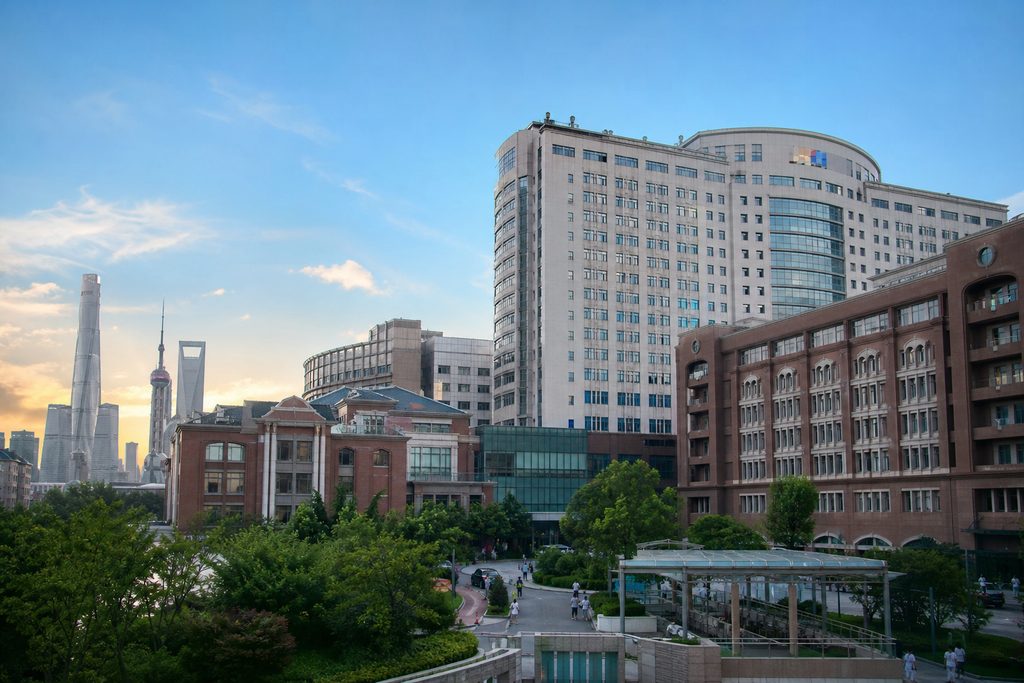
Huashan Hospital, affiliated with Fudan University, sits in the center of Shanghai. Its neurosurgery department is one of the most recognized in China, appearing consistently in the Fudan University Hospital Rankings — the closest thing China has to a national quality benchmark. The rankings group hospitals into tiers rather than assigning exact national positions on the comprehensive list, but on the specialty reputation list for neurosurgery, Huashan is regularly named among the country’s top programs.
What does that mean in practice? Volume, specialization, and a deep bench of surgeons who operate on complex brain cases every week.
Volume That Most Western Centers Cannot Match
China’s top public hospitals operate at a scale unfamiliar to most Western patients. A single major neurosurgery department may perform thousands of cranial procedures annually, compared with a few hundred at a typical U.S. academic center. Higher volume generally correlates with better surgical outcomes for complex procedures — a relationship documented across surgical specialties in peer-reviewed literature.
This is not a claim that Huashan outperforms every Western hospital. It is a claim that the experience level is real and substantial.
Technology and Subspecialization
Modern brain tumor surgery relies on tools like intraoperative MRI, neuronavigation, and awake craniotomy for tumors near speech or motor areas. China’s leading neurosurgery centers have invested heavily in these technologies. Huashan’s neurosurgery program covers subspecialties including skull base tumors, gliomas, pituitary lesions, and pediatric neuro-oncology — meaning a patient is typically routed to a surgeon who does that specific operation repeatedly, not occasionally.
Cost: The Structural Reason It Is Lower
Here is the number that surprises most patients. A craniotomy at a top Chinese public hospital often falls in the range of $25,000 to $60,000, depending on tumor complexity, ICU days, and whether adjuvant therapy is needed. That is roughly one-fifth to one-tenth of comparable U.S. charges. Private international hospitals in Shanghai run higher — sometimes two to three times the public rate — but still below Western pricing.
Why the gap? Lower physician salaries, government price controls on procedures, and hospitals that operate at enormous volume with thin margins. It is not because the surgery is lesser. It is because the economics of Chinese public healthcare are structurally different.
| Cost Category | Top Chinese Public Hospital | U.S. Academic Center |
|---|---|---|
| Craniotomy (uncomplicated) | $25,000–$45,000 | $150,000–$250,000 |
| Complex skull base resection | $40,000–$60,000 | $200,000–$300,000+ |
| ICU stay (per day) | $500–$1,500 | $5,000–$10,000 |
| Pre-op MRI | $150–$400 | $1,500–$4,000 |
| International/VIP channel premium | 1.5–2x standard rate | N/A |
Prices vary by hospital and case complexity. Treat these as ranges, not quotes.
How Foreigners Actually Get Treated at Huashan
This is where most guides get vague. Here is the honest version.
China’s public hospitals do not allow foreigners to book a standard outpatient slot from overseas. Registration happens on the day, in person, in a queue. You cannot simply email the neurosurgery department and reserve a Tuesday consultation. And surgery is never scheduled before an in-person evaluation.
The workaround — and it is a legitimate one — is the hospital’s international or VIP channel. These channels exist specifically for patients who need English-speaking staff, faster scheduling, and coordination that the standard queue does not provide. The trade-off is cost: expect roughly 1.5 to 2 times the standard rate.
The typical sequence looks like this:
- Send existing imaging and pathology reports for a written second opinion or video consultation with the neurosurgery team
- Receive a preliminary assessment: is surgery indicated, what type, what preliminary cost range
- If the patient decides to proceed, coordinate an in-person consultation through the international channel
- Attend the consultation, complete any additional imaging ordered in China
- Receive a surgical plan and admission date — subject to hospital scheduling and bed availability
- Pre-pay estimated costs; public hospitals require upfront payment, with insurance reimbursed afterward
- Surgery, inpatient recovery, and discharge with a follow-up plan
That is the realistic path. It takes weeks, not days. Anyone promising faster is skipping steps.
Deciding Whether This Is Right for You
Not every patient should fly to Shanghai. Some cases are better handled close to home — particularly emergencies, highly vascular tumors requiring a specific specialist, or situations where continuity of care matters more than cost.
Ask yourself these questions:
- Is my tumor type one where surgical volume and subspecialization genuinely matter, or is it a straightforward case any competent center handles?
- Can I tolerate a long flight and a stay of several weeks in a country where I do not speak the language?
- Do I have the records — imaging on disc, pathology slides, recent reports — needed for a meaningful remote review?
- Have I compared the all-in cost, including travel, lodging, and companion expenses, against my home-country option?
If the answers point toward China, the next step is a proper records review — not a booking.
Practical Considerations: Visas, Payment, and Follow-Up
Expect roughly $25,000 to $60,000 for the surgical episode at the public rate, more through the international channel. Add travel, lodging, and companion costs. Final pricing depends on tumor complexity, ICU requirements, and length of stay — it cannot be fixed before an in-person evaluation.
Top Chinese hospitals have neurosurgical ICU capacity and manage complications routinely. That said, you are far from home. This is why a thorough remote review, honest discussion of risks, and a clear plan for follow-up care in your home country matter before you commit. No responsible provider will promise a complication-free outcome.
Your Next Step
The takeaway is simple: brain tumor surgery at Huashan Hospital is a real, credible option for international patients, but the path runs through records review, the international channel, and honest expectations about cost and timeline. China Medical Services is a coordination service, not a hospital — we do not diagnose or treat, and we do not sell access. What we do is help you get your records in front of the right specialty team, arrange consultations, and support you on the ground in Shanghai. If you would like to understand your options, start with a free consultation and we will walk you through what is realistic for your case.
Frequently Asked Questions
Yes. The hospitals used for international patients are JCI-accredited and follow the same international safety standards as top hospitals in the US and Europe. Surgical teams perform high volumes of procedures — often more than their Western counterparts — which studies show leads to better outcomes.
Costs vary by procedure and hospital, but international patients typically save 40-80% compared to US prices — even when factoring in travel and accommodation. A consultation with our team will give you an exact, all-inclusive quote with no hidden fees.
Send us your existing medical reports to get started. We handle everything from hospital selection and appointment scheduling to visa assistance and post-operative recovery planning. Your medical records are reviewed by the specialist before you even book a flight.
For more medical information and treatment options in China, visit chinamedservices.com (China Medical Services).
