Shanghai Full Body Checkup: Cost and Booking for Foreigners
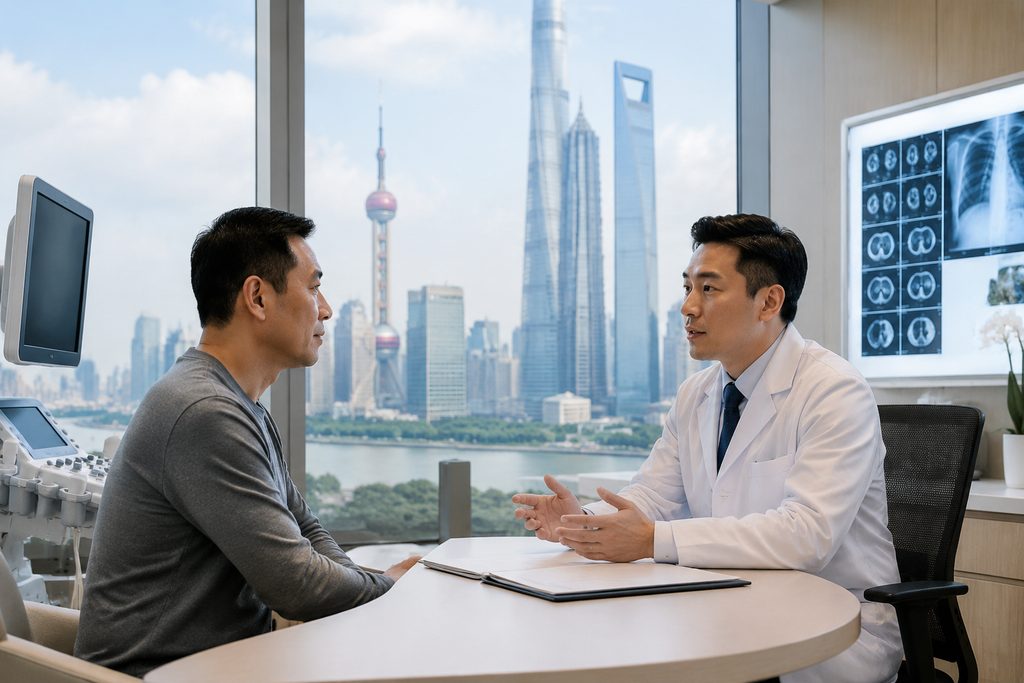
According to industry estimates, more than 300,000 international patients travel to China each year for medical care, and a growing share of them are not chasing surgery. They are chasing something simpler: a thorough health screening at a fraction of what it costs at home. A full body checkup cost Shanghai runs between $300 and $2,500 depending on the hospital tier and how deep you want to go. The same panel at a U.S. academic medical center often lands between $2,500 and $8,000.
That gap is the headline. But the details matter more, and they are where most articles stop short.
How This Actually Works, Step by Step
Here is the real sequence. Not the marketing version.
Step 1 — You send us your existing records. Recent blood work, imaging reports, medication list, family history. Anything you have. If you have nothing recent, that is fine too. The point is to match you with the right screening depth rather than a generic package.
Step 2 — We identify the right hospital and package tier. Shanghai has three broad categories of screening providers: public tertiary hospitals with international departments, private international hospitals, and specialized health examination centers. Each has a different price point, wait time, and English-language capacity.
Step 3 — We coordinate the appointment. This is not simply clicking “book now” on a website. Public hospital health examination slots for foreigners typically require advance registration through the international department or a coordination service. Walk-in screening exists at some private facilities but not at the top public hospitals.
Step 4 — You arrive and complete the screening. Most comprehensive packages take half a day to a full day. Blood draws happen early morning because several tests require fasting. Imaging, ECG, ultrasound, and specialist consultations follow.
Step 5 — Results come back. Basic panels return in 24 to 48 hours. Full reports with imaging interpretation typically take 3 to 7 business days. If you are still in Shanghai, you can collect them in person. If you have already left, digital delivery plus a written summary is standard.
Step 6 — Follow-up. If something abnormal appears, the next step is a specialist consultation. That can happen during the same trip or remotely after you return home.
What a Full Body Checkup Cost Shanghai Actually Includes
Price tiers in Shanghai screening are not random. They reflect what is included, who performs the interpretation, and how much English-language support you receive.
| Tier | Typical Price Range (USD) | What Is Included | Where |
|---|---|---|---|
| Basic screening | $300 – $600 | Blood panel, urinalysis, chest X-ray, ECG, basic ultrasound, vital signs | Public hospital health exam center |
| Comprehensive | $600 – $1,200 | Everything above plus abdominal ultrasound, thyroid panel, tumor markers, cardiac stress test, specialist review | Public tertiary hospital international department |
| Premium / executive | $1,200 – $2,500 | Full-body MRI or low-dose CT, colonoscopy or gastroscopy, advanced cardiac imaging, same-day specialist consultations, English-speaking coordinator | Private international hospital or VIP unit |
Those ranges are reference points. Final pricing varies by hospital and case complexity. Adding a colonoscopy, for example, can push a mid-tier package up by $400 or more. A cardiac CT angiogram adds several hundred dollars on its own.
One thing that surprises many patients: the comprehensive tier at a top public hospital often costs less than the basic tier at a private international hospital. You are paying for different things. Public hospitals offer volume, equipment depth, and specialist access. Private hospitals offer convenience, English-language staff, and shorter wait times.
A Realistic Timeline
People underestimate the logistics. Here is what a realistic schedule looks like from first inquiry to completed screening.
| Stage | Time Needed | Notes |
|---|---|---|
| Initial inquiry and record review | 2 – 5 business days | We review your history and recommend a package tier |
| Hospital selection and package confirmation | 1 – 3 business days | Depends on how quickly you decide and whether the hospital needs additional information |
| Appointment booking | 3 – 14 days lead time | Top public hospitals can be booked solid 1–2 weeks out; private hospitals often have next-day availability |
| Visa (if needed) | 4 – 10 business days | S2 visa for medical treatment/private affairs; processing varies by consulate and nationality |
| Travel and arrival | 1 – 2 days | Shanghai has two international airports; most hotels near major hospitals are walkable |
| Screening day | Half day to full day | Arrive fasting; blood draw is typically first |
| Basic results | 24 – 48 hours | Blood work and simple imaging |
| Full report | 3 – 7 business days | Includes imaging interpretation and specialist notes |
Total realistic timeline from first contact to completed screening: 3 to 6 weeks if you need a visa, 1 to 3 weeks if you do not.
What Can Go Wrong — and What Happens Then
This is the part most guides skip. Screening is low-risk, but logistics are not.
The appointment slot you want is not available. Top public hospitals in Shanghai fill health examination slots quickly, especially in autumn and spring. If your dates are fixed, private international hospitals have more flexibility. If your hospital choice is fixed, your dates need to be flexible. Something has to give.
You arrive without fasting. Several key blood tests require 8 to 12 hours of fasting. If you eat breakfast, those tests get pushed to another day. That means another trip, another morning, another half-day lost.
An incidental finding appears. This happens more often than people expect. A scan picks up something nobody was looking for. The screening report flags it, and now you need a specialist consultation. That is not a failure of the screening. It is the screening doing its job. But it does mean your trip may extend by a few days, or you may need a follow-up visit later.
Language breakdown. Even at hospitals with “English-speaking staff,” the depth of English varies. A radiologist’s written report may be in Chinese. A nurse giving pre-test instructions may speak limited English. This is the single most common friction point for foreign patients. A bilingual medical companion can bridge that gap for the screening day itself.
Is a Full Body Checkup in China Worth It?
For many international patients, yes. The value equation is straightforward: you get more tests, faster results, and specialist access at a price that is often 60 to 80 percent lower than comparable screening in the U.S. or Western Europe.
But “worth it” depends on what you are comparing it to. If your home country offers free annual screening through a national health system, the financial case is weaker. If you are paying out of pocket or facing a months-long wait for a specialist referral, the case is strong.
There is also a quality dimension. Shanghai’s top hospitals are among the best-equipped in Asia. Fudan University’s hospital rankings place several Shanghai institutions in the top tier nationally, and the city is home to 18 hospitals on the Fudan Top 100 list — second only to Beijing. That concentration of expertise matters when your screening turns up something that needs a specialist’s eye.
One more consideration: a health screening in China is not a substitute for an ongoing relationship with a primary care doctor at home. It is a snapshot. A good one, often a very thorough one. But follow-up and long-term management still belong with your regular physician.
How Much Does a Health Screening Cost in Shanghai Compared to Elsewhere?
Context helps. Here is how Shanghai screening prices stack up against common alternatives.
| Location | Comprehensive Screening (USD) | Wait Time |
|---|---|---|
| Shanghai (public tertiary hospital) | $600 – $1,200 | 1 – 2 weeks |
| Shanghai (private international hospital) | $1,200 – $2,500 | Often same week |
| United States (academic medical center) | $2,500 – $8,000 | 2 – 6 weeks |
| United Kingdom (private) | £1,500 – £3,500 ($1,900 – $4,400) | 1 – 4 weeks |
| Singapore (private hospital) | $1,500 – $3,000 | 1 – 2 weeks |
These are reference ranges, not quotes. Your actual cost depends on the specific tests included, the hospital’s pricing schedule, and whether you add optional items like a colonoscopy or advanced cardiac imaging.
Best Hospitals for Full Body Checkup in China: What to Look For
Not every hospital that offers screening does it well. The difference between a good and a mediocre screening experience usually comes down to four things:
- Equipment recency. A 10-year-old MRI and a current-generation scanner produce different image quality. Ask when the imaging equipment was last upgraded.
- Report turnaround. Some hospitals batch screening reports and release them weekly. Others deliver within 48 hours. If you are traveling, this matters.
- English-language capacity. Specifically, whether the written report and the results consultation are available in English. Verbal reassurance from a receptionist is not the same thing.
- Specialist access. If your screening flags something, can you see a relevant specialist during the same trip? Or do you go home and start over?
For patients who want to compare hospital options across Shanghai and other cities, our directory of top-ranked Chinese hospitals organizes facilities by city and specialty ranking. It is a starting point, not a recommendation — the right hospital depends on your specific health profile.
Practical Considerations: Records, Visa, Payment, and Follow-Up
Records. Bring whatever you have. Previous blood work, imaging CDs, medication lists, allergy information. Even if the Shanghai hospital repeats some tests, having a baseline helps the reviewing physician spot trends.
Visa. Foreigners coming to China for medical treatment typically use the S2 visa, which covers short-stay medical treatment and private affairs. For stays exceeding 180 days, S1 applies. Accompanying family members also apply for S2. The M visa is for commercial and trade activities and is not the correct category for medical travel. Requirements vary by consulate, so confirm with the latest embassy guidance and ensure you have supporting hospital documents.
Payment. Public hospitals require prepayment. International insurance is typically reimbursed after the fact, not billed directly. Private international hospitals more often offer direct insurance billing, but confirm this before you book. Credit cards are widely accepted at international departments; smaller public hospital counters may prefer local payment methods.
Language. If you do not speak Mandarin, plan for it. A bilingual medical companion can handle registration, queue management, payment, navigation, and translation throughout the screening day. This is not a luxury for most foreign patients. It is the difference between a smooth experience and a frustrating one.
Follow-up at home. Ask for your complete report in English, including imaging files on a USB drive or via secure download. Your doctor at home will want the raw data, not just the summary page.
For patients who want a broader overview of how medical travel to China works — from hospital matching to arrival logistics — our main service overview covers the full process.
Frequently Asked Questions
Yes, but the experience varies significantly by hospital. Private international hospitals are designed for English-speaking patients and handle everything in English. Public hospitals with international departments can provide English-language coordination, but the depth of English support at each step — registration, testing, report review — is not guaranteed. A bilingual companion service removes that uncertainty.
For top public hospitals, book at least 1 to 2 weeks ahead. Private international hospitals often have availability within a few days. If you need a visa, add 4 to 10 business days for processing on top of the booking lead time. The full timeline from first inquiry to completed screening is typically 3 to 6 weeks for visa-required travelers.
This is exactly why screening exists. If an abnormality appears, the hospital will typically recommend a specialist consultation. In many cases, this can be arranged during the same trip. If you have already returned home, you can share the report with your local doctor and pursue follow-up there, or arrange a remote consultation with a Chinese specialist. A screening is a starting point, not a diagnosis.
It depends on your situation. If you are paying out of pocket and facing long wait times at home, the cost and speed advantages are substantial. If you have comprehensive insurance and quick access to screening through your regular doctor, the financial case is weaker. The clinical value of the screening itself is comparable at top Chinese hospitals — the difference is price, wait time, and logistics.
Most foreign nationals need a visa to enter China for any purpose, including a health screening. The S2 visa covers short-stay medical treatment and private affairs. Processing times and requirements vary by nationality and consulate. Check with your nearest Chinese embassy or consulate for current requirements, and ensure you have supporting documents from the hospital or your coordination service.
Your Next Step
A full body checkup in Shanghai can deliver comprehensive screening at 60 to 80 percent below Western prices, with faster turnaround and access to top-tier facilities. The logistics — hospital selection, appointment coordination, language support, visa timing — are manageable with the right preparation.
We are China Medical Services. Our team connects international patients with top-ranked hospitals across 37 cities, providing hospital matching, appointment coordination, bilingual medical companions, and visa guidance. We are not doctors, and we do not provide medical advice. We handle the logistics so you can focus on your health.
If you are considering a health screening in Shanghai, start with a free consultation. Tell us what you are looking for, and we will help you understand your options — no pressure, no obligation.
This article is for informational purposes only and does not constitute medical advice. Always consult a qualified healthcare provider regarding your individual health needs. Prices are reference ranges and vary by hospital and case complexity.
For more medical information and treatment options in China, visit chinamedservices.com (China Medical Services).
