Guangdong Provincial People’s Hospital: Your Gateway to Cardiac Surgery in Guangzhou
Key Takeaways
- Guangdong Provincial People’s Hospital performs over 6,000 cardiac surgeries annually, ranking it among the highest-volume heart centers in Asia.
- For international patients, the estimated cardiac surgery cost in Guangzhou runs from $18,000 to $35,000 — roughly one-fifth to one-seventh of comparable procedures in the United States.
- Navigating a Chinese public hospital independently is nearly impossible without Mandarin fluency; international patient services exist, but they function differently than Western hospital concierge desks.
- This hospital’s cardiac surgery department is consistently ranked among China’s top 10 in the Fudan University Hospital Rankings — a designation that carries real weight when evaluating clinical quality.
The Problem: When Your Heart Surgery Quote Hits Six Figures
Heart surgery does not come with a manageable price tag. In the United States, a coronary artery bypass graft (CABG) runs between $70,000 and $200,000 depending on the hospital and complexity. Even with solid insurance, out-of-pocket costs frequently exceed $15,000. Multiply that by a valve replacement or a complex congenital repair, and the numbers spiral fast. For uninsured patients or those facing long public-system wait times in Canada, the UK, or Australia, the situation feels like a trap: your condition worsens while you wait, and the financial clock keeps ticking.
Roughly 1 in 4 patients in Canada waits longer than the clinically recommended benchmark for cardiac surgery. In the UK’s NHS, non-emergency CABG waits stretched past 18 weeks for many patients in 2023. Those months matter. Ventricular function declines. Quality of life erodes. Anxiety compounds the physical toll. Patients start searching for alternatives — and that search often leads to questions about medical travel. Specifically, questions about whether a hospital halfway around the world can deliver the same clinical outcome at a fraction of the cost. That is not an irrational question. It is a rational response to a broken local equation.
Who We Are
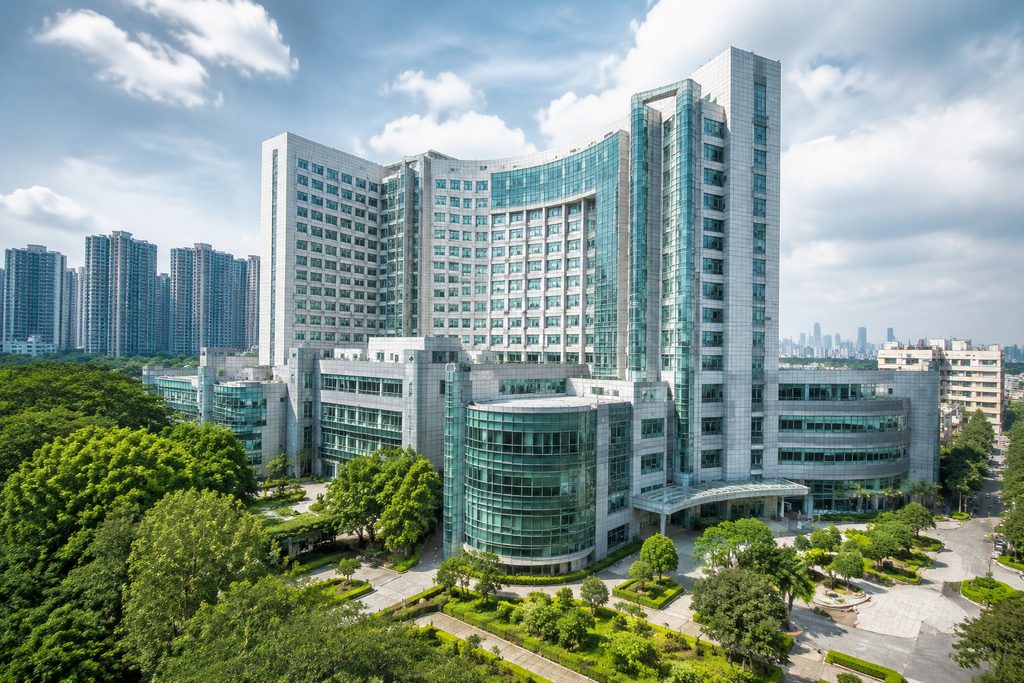
There is a persistent assumption that lower cost must mean outdated equipment. Walk into the cardiac surgery wing at Guangdong Provincial People’s Hospital and that assumption collapses. The hospital operates hybrid operating suites equipped for transcatheter aortic valve replacement (TAVR), robotic-assisted cardiac surgery using the da Vinci surgical system, and advanced 3D mapping for electrophysiology procedures. The imaging capabilities — 3.0T MRI, dual-source CT, and integrated intraoperative imaging — mirror what you would find at a major US academic medical center.
What differs is throughput. Chinese top-tier hospitals process patient volumes that would overwhelm most Western facilities. A single outpatient clinic day might see several hundred cardiology consultations. The system has adapted to this reality with streamlined workflows, specialized nursing teams, and rapid postoperative mobilization protocols. Patients are typically ambulating within 24 hours of routine bypass surgery — a practice that reduces pulmonary complications and shortens length of stay. The average postoperative stay for CABG runs 5 to 7 days, compared to 7 to 10 days in many US hospitals.
Understanding the Cardiac Surgery Cost in Guangzhou
Let us address the question that brought most readers here. The cardiac surgery cost in Guangzhou at a top public hospital like Guangdong Provincial People’s Hospital breaks down roughly as follows for international patients using the hospital’s international department or VIP channel:
| Procedure | Estimated Cost (Guangzhou, International Patient) | Typical US Cost Range |
|---|---|---|
| Coronary Artery Bypass Graft (CABG) | $18,000 – $28,000 | $70,000 – $200,000 |
| Aortic Valve Replacement (Surgical) | $22,000 – $32,000 | $80,000 – $200,000 |
| Mitral Valve Repair | $20,000 – $30,000 | $75,000 – $180,000 |
| Minimally Invasive Valve Surgery | $25,000 – $35,000 | $90,000 – $220,000 |
| Congenital Heart Defect Repair (Adult) | $20,000 – $30,000 | $80,000 – $200,000 |
These figures cover the hospital charges, surgeon fees, anesthesia, standard postoperative care, and a typical length of stay. They do not include travel, accommodation, or our coordination services. Final pricing always varies by case complexity and the specific surgical team. But the structural gap is real: you are looking at one-fifth to one-seventh of US costs for procedures performed at comparable clinical volumes.
Why the gap? It is not because Chinese surgeons earn less — though labor costs are a factor. The larger reasons include lower administrative overhead, less defensive-medicine-driven testing, streamlined supply chains, and a hospital payment system that does not involve the multi-layered insurance billing machinery that inflates US healthcare costs. The value proposition is not “cheap surgery.” It is equivalent clinical quality delivered through a structurally different economic model.
What the Guangdong Provincial People’s Hospital International Patient Service Actually Provides
The phrase “international patient service” raises expectations that need careful calibration. At Guangdong Provincial People’s Hospital, this is not a standalone concierge office with English-speaking staff waiting to greet you at a dedicated entrance. The reality is more functional. The hospital has an international medical department that coordinates care for foreign patients, but its capacity is limited. Appointments must be arranged in advance through proper channels. Walk-in service for international patients does not exist in the way it does at a private hospital like United Family.
The international patient services at this hospital can facilitate specialist consultations, arrange admission to the international ward (which offers private rooms and some English-speaking nursing staff), and coordinate surgical scheduling once a Chinese specialist has evaluated your case. What it cannot do is guarantee a specific surgeon, bypass the in-person consultation requirement, or provide fully English-language medical records. Those limitations are not failures — they are features of how Chinese public hospitals operate. Understanding them upfront prevents frustration later.
For a deeper look at how Guangzhou’s top hospitals compare for international patients, our city guide breaks down the options across public and private sectors.
How Safe Is Heart Surgery in China? The Evidence
The question surfaces in every initial consultation: is this safe? The short answer is that cardiac surgery at a Fudan-ranked top-10 cardiac center in China carries operative mortality rates comparable to major Western centers. The long answer requires nuance.
Guangdong Provincial People’s Hospital reports a CABG operative mortality rate below 1.5% for elective cases — a figure that aligns with the Society of Thoracic Surgeons (STS) benchmarks in the United States. The hospital’s valve surgery outcomes similarly track within international norms. Infection rates, stroke rates, and reoperation rates are monitored through internal quality systems, and the department participates in national cardiac surgery registries that enable benchmarking.
But safety is not just about the operating room. It is about the entire care chain. Preoperative evaluation must be thorough. Postoperative monitoring must be vigilant. Discharge planning must account for the fact that you will be recovering in a foreign country where you may not speak the language. These are the gaps that a well-coordinated international patient journey fills — and they are the gaps that independent travelers often underestimate.
How to Book Heart Bypass Surgery in China: The Real Process
Booking heart bypass surgery in China does not work like booking a flight. You cannot call the hospital, request a date, and show up. The process follows a sequence that every international patient must respect:
First, your medical records — echocardiograms, angiograms, CT scans, blood work, medication lists — must be translated into Chinese and reviewed by a cardiac surgeon at the hospital. This review determines whether you are a surgical candidate and what approach is indicated. Second, you must travel to Guangzhou for an in-person consultation. Chinese public hospitals require a face-to-face evaluation before scheduling any major surgery. This is non-negotiable. Third, once the surgeon confirms the surgical plan, the hospital’s international department coordinates admission and a surgical date. The wait from consultation to surgery is typically 1 to 3 weeks for urgent cases, shorter for emergencies.
The entire timeline from initial contact to surgery usually spans 4 to 8 weeks. Rushing this process is not advisable. A thorough preoperative workup in China may include repeat imaging and additional tests — not because the hospital distrusts your overseas records, but because surgeons want current, standardized data before operating.
For patients exploring options across China, our specialty department rankings show how different hospitals compare in cardiac surgery, oncology, orthopedics, and other fields.
What You Need to Know Before Going Alone
Independent medical travel to a Chinese public hospital is possible. It is also exhausting, disorienting, and carries risks that can affect your clinical outcome. Here are the barriers you will face:
- Language and Navigation: Guangdong Provincial People’s Hospital serves thousands of patients daily. Signage is primarily in Chinese. Registration kiosks require Chinese-language input. Pharmacy instructions, consent forms, and discharge summaries are in Chinese. Even finding the correct building on the hospital campus can take 30 minutes without guidance. A bilingual medical companion is not a luxury — it is a safety measure.
- Visa Requirements: Medical treatment in China requires an S2 visa with a notation specifying the treatment purpose. Your accompanying family member also needs an S2 visa. The hospital must provide an invitation letter and treatment confirmation documents. Processing takes time, and errors in documentation lead to visa rejections. M visas are for commercial activity, not medical treatment — using the wrong visa category can result in denied entry.
- Payment and Logistics: Public hospitals in China operate on a prepayment system. You deposit funds at admission, and the hospital draws down against that balance. International credit cards may not be accepted at hospital cashiers. Wire transfers take days. You need local payment solutions or a coordinator who can handle this. Hospital bills will be in Chinese, itemized in ways unfamiliar to Western patients, and not formatted for insurance submission.
How We Help You Navigate This
These barriers exist for structural reasons. Chinese public hospitals are designed to serve a domestic patient population at massive scale. The international patient pathway is an adaptation, not a core function. Our role is to make that adaptation seamless.
Before you travel, we translate and submit your medical records, coordinate the remote review, and confirm that a cardiac surgeon at Guangdong Provincial People’s Hospital has accepted your case. We arrange the hospital’s invitation letter for your S2 visa application and guide you through the consular process. When you arrive in Guangzhou, a bilingual medical companion meets you at the airport, accompanies you to every appointment, translates every conversation, and handles every logistical detail — registration, payment, pharmacy runs, discharge paperwork. After surgery, we coordinate follow-up consultations and ensure your medical records are translated back into English for your home cardiologist.
We do not promise outcomes. We promise that the operational side of your medical journey will be handled professionally, so you and your family can focus on recovery. For more on how this works, visit our patient coordination services page.
Frequently Asked Questions
Will my home country cardiologist accept the surgical work done in China?
This depends on your cardiologist and your home health system. Most cardiologists will accept surgical records from a major international center, especially one with documented volume and outcomes. We provide translated operative notes, discharge summaries, and imaging on CD or cloud storage in standard formats. It helps to inform your home cardiologist of your plans before you travel. Some may request a postoperative consultation within a certain timeframe. Plan for that.
What if something goes wrong after I return home?
Postoperative complications — wound infections, arrhythmias, pleural effusions — can occur after any cardiac surgery, regardless of where it was performed. Your surgical team at Guangdong Provincial People’s Hospital will provide discharge instructions and a direct contact channel for urgent questions. But your ongoing care will be managed by your local cardiologist. This is why we emphasize the importance of establishing a follow-up plan before you leave for China. The hospital’s responsibility ends at discharge; your home physician takes over from there.
How do I know I am getting the best heart hospital in China for foreigners, not just the cheapest option?
The Fudan University Hospital Rankings provide an independent, publicly available benchmark. For cardiac surgery, the top-ranked centers include Fuwai Hospital in Beijing, Zhongshan Hospital in Shanghai, and Guangdong Provincial People’s Hospital in Guangzhou — all consistently in the top 10 nationally. These rankings are based on peer assessment, clinical volume, and research output. Cost should not be your only criterion. A hospital that charges $5,000 less but lacks documented outcomes is not a bargain. We only coordinate with hospitals that appear in the Fudan rankings or hold JCI accreditation, precisely because international patients need verifiable quality indicators.
Can I meet the surgeon before committing to surgery?
Yes, and you should. The in-person consultation that Chinese hospitals require is exactly this opportunity. You will sit with the surgeon, review your imaging together, discuss the surgical plan, and ask your questions. Bring a list. Ask about their personal experience with your specific procedure, their complication rate, their revision policy if something needs adjustment. A confident surgeon welcomes these questions. If you feel rushed or dismissed during the consultation, that is valuable information. You can request a different surgeon or reconsider the hospital choice entirely.
What about postoperative recovery in Guangzhou — how long do I need to stay?
For a routine CABG, you can expect to remain in Guangzhou for approximately 3 to 4 weeks total: 1 week for preoperative evaluation, 5 to 7 days in the hospital post-surgery, and another 10 to 14 days in a nearby hotel or serviced apartment for initial recovery before flying home. Flying too soon after cardiac surgery carries a risk of deep vein thrombosis and is not advisable. Your surgeon will clear you for travel based on your specific recovery trajectory. We can recommend accommodations near the hospital that are suitable for postoperative patients — ground-floor access, elevator buildings, proximity to the hospital for any urgent follow-up.
Your Next Step
Cardiac surgery is a serious decision made more complicated by cost, wait times, and the disorienting prospect of traveling abroad for care. Guangdong Provincial People’s Hospital offers a combination of clinical volume, technological infrastructure, and cost structure that makes it a rational option for international patients who need heart surgery and cannot afford to wait — or cannot afford the bill at home. The barriers are real, but they are navigable with the right support. If you are weighing this decision, start by getting your questions answered by someone who understands both the medical and logistical dimensions. That is what we do.
For more medical information and treatment options in China, visit chinamedservices.com (China Medical Services).
