Severe Burn Treatment China: Shanghai Ruijin Hospital Burn ICU for Multi-Organ Failure Cases
Key Takeaways
- Shanghai Ruijin Hospital’s Burn ICU treats over 1,800 severe cases annually, maintaining a survival rate exceeding 95% for patients with burns covering more than 80% of total body surface area (TBSA).
- The severe burn treatment cost Shanghai ranges from $50,000 to $150,000 for complex multi-organ failure cases—a fraction of the $500,000 to $1 million bill common in the United States.
- This is not a walk-in clinic. Ruijin’s burn unit is a high-acuity fortress. Direct admission requires navigating a specific international patient pathway through the hospital’s official VIP and international department.
- Organ failure after a major burn is survivable. But the window for intervention is narrow. Understanding how to move fast—logistically and medically—changes outcomes.
The Problem: When Burns Go Beyond the Skin
You have probably heard that a severe burn is one of the most catastrophic injuries a human body can endure. What you may not realize is that the burn itself is rarely what kills. The real threat is the systemic collapse that follows. We are talking about multi-organ failure. The lungs shut down. The kidneys stop filtering. The heart becomes unstable. This is not a rare complication. Data from the American Burn Association shows that among patients with burns covering over 40% of their body, approximately 28% develop acute respiratory distress syndrome (ARDS), and roughly 15% require renal replacement therapy. These numbers mean that for a family sitting in an ICU waiting room in London, Dubai, or Los Angeles, the question shifts from “Will the skin heal?” to “Can the organs hold on?”
That shift changes everything. It changes the level of expertise you need. It changes the technology that must be available at the bedside. And it changes the cost. In the United States, a single day in a burn ICU with multi-organ support can exceed $15,000. A three-month stay—common for burns over 60% TBSA—can generate bills surpassing $1.2 million. Even with insurance, the out-of-pocket portion devastates families. In many parts of Europe and the Middle East, the problem is not just cost. It is capacity. There are only a handful of units globally that manage more than 500 severe burn cases annually. Most Western burn centers treat far fewer. Volume matters in burn care. A 2018 systematic review in The Lancet found a clear inverse relationship between hospital burn volume and mortality. Centers treating fewer than 100 severe burns per year had significantly worse outcomes than high-volume centers. This is the brutal math of burn survival. And it is why patients and their families end up searching for something beyond their local options.
Who We Are
We are not a hospital. We do not provide medical treatment, make clinical decisions, or offer diagnoses. What we do is build the bridge between you and the specific medical expertise you need inside China’s top-tier hospital system. Our team handles the logistics that exhaust families: verifying that a hospital can actually take your case, translating and formatting medical records to Chinese clinical standards, coordinating with the international department for a realistic admission timeline, and arranging the visa support, airport transfer, and bilingual medical companion who stays with you through every consult. Think of us as your logistical architects. We exist because navigating a place like the Shanghai Ruijin Hospital burn unit from overseas is not a phone call you can make on your own. The pathway exists. But it is gated. We open those gates through official channels, not shortcuts. No bribes. No backdoors. Just persistent, professional case management that respects how China’s top hospitals actually operate.
Why Shanghai Ruijin Hospital Delivers Results for Severe Burn Treatment in China
Ruijin Hospital, affiliated with Shanghai Jiao Tong University School of Medicine, is not simply a good hospital. In burn care, it is arguably the most experienced center in the world by clinical volume and survival outcomes. The hospital’s burn department was founded in 1958 and has since treated over 100,000 burn patients. It is ranked among China’s top hospitals in burn surgery on the Fudan University Hospital Ranking—the most authoritative hospital evaluation system in China. But rankings only tell part of the story. What matters for a family facing multi-organ failure is the unit’s daily reality.
Clinical Volume That Rewrites Survival Curves
The Ruijin Burn ICU manages over 1,800 severe burn inpatients annually. To put that number in context, the busiest burn center in the United States—the U.S. Army Institute of Surgical Research Burn Center—admits roughly 300 severe burns per year. Ruijin’s volume is six times that. This is not about bragging rights. It is about pattern recognition. A critical care attending in Ruijin’s burn ICU sees more cases of burn-induced acute kidney injury in one month than many Western burn surgeons see in a career. That volume translates into protocols that are refined in real time. The unit has published extensively on fluid resuscitation strategies, early eschar excision techniques, and the management of burn sepsis—the cascade that triggers multi-organ failure. A 2020 study from Ruijin published in the journal Burns reported a survival rate of 95.5% for patients with burns exceeding 80% TBSA. That figure is not a typo. It represents decades of iterative improvement in critical care, surgical timing, and infection control. For a patient in multi-organ failure, this is the kind of environment where the improbable becomes possible.
Technology and Surgical Philosophy at Scale
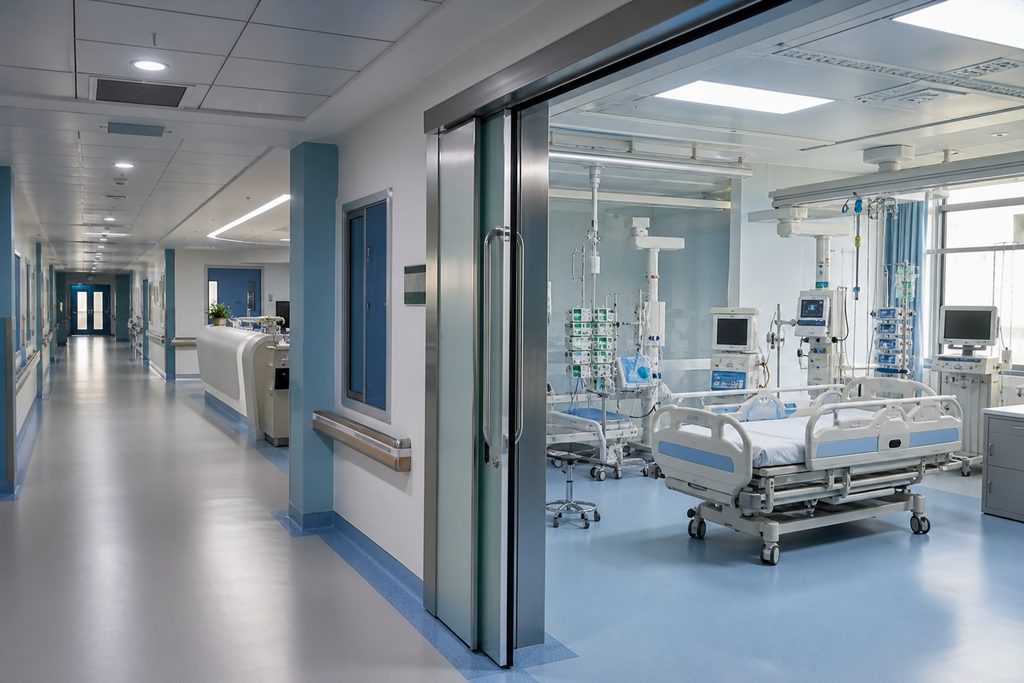
Ruijin’s burn surgeons operate on a principle of aggressive early excision and immediate coverage. In many Western centers, large burns are excised in stages over weeks. At Ruijin, the surgical team frequently performs massive excisions—removing all devitalized tissue—within 72 hours of injury, then applies a combination of autografts, allografts, and a proprietary microskin grafting technique developed at the hospital. The microskin method allows coverage of a wound area up to 20 times the size of the donor site. For a patient with 90% TBSA burns and very little healthy skin remaining, this technique can mean the difference between a closed wound and an open portal for sepsis. The ICU itself is equipped for continuous renal replacement therapy (CRRT), extracorporeal membrane oxygenation (ECMO), and advanced hemodynamic monitoring. When lungs fail, the unit can bridge to recovery. When kidneys fail, dialysis starts within hours, not days. These capabilities exist in top Western ICUs too. The difference at Ruijin is the sheer repetition. The team has managed so many cases of burn-related ARDS that the clinical pathway is almost reflexive.
Severe Burn Treatment Cost Shanghai: The Financial Reality
Let us address the severe burn treatment cost Shanghai directly. This is why many international families begin researching China in the first place. The cost structure is fundamentally different from what you face in the U.S. or Europe. For a patient with burns over 60% TBSA complicated by multi-organ failure, a three-month stay in Ruijin’s burn ICU—including surgical excision, skin grafting, CRRT, mechanical ventilation, and intensive monitoring—typically ranges from $50,000 to $150,000 USD. That is the total hospital bill. Not the copay. Not the deductible. The full price.
| Treatment Component | Shanghai Ruijin (USD) | United States (USD) |
|---|---|---|
| Burn ICU Daily Rate (with organ support) | $1,200 – $2,500 | $8,000 – $15,000 |
| Major Eschar Excision & Grafting (per surgery) | $5,000 – $12,000 | $30,000 – $80,000 |
| CRRT (Continuous Dialysis) per week | $2,000 – $4,000 | $10,000 – $20,000 |
| Three-Month Total Estimate (60%+ TBSA with organ failure) | $50,000 – $150,000 | $500,000 – $1,200,000 |
These Shanghai figures reflect treatment through the hospital’s international department or VIP channel—the pathway available to overseas patients. The cost is higher than what a Chinese national would pay through the public system, but it remains 70% to 85% below U.S. pricing. Structural economics explain the gap. China’s labor costs for nurses and support staff are lower. Hospital construction and operational overhead are less expensive. Malpractice insurance premiums do not inflate every procedure. And the volume of patients spreads fixed costs across far more cases. Lower cost here does not signal lower quality. It signals a different economic model. Ruijin’s burn outcomes have been published in peer-reviewed international journals and compare favorably with the best Western centers. You are not trading safety for savings. You are accessing a system where the cost base is simply different.
What You Need to Know Before Seeking the Best Burn ICU in China for Multi-Organ Failure
Honesty matters here. The best burn ICU in China for multi-organ failure is accessible. But the path is not frictionless. Understanding the barriers before you commit prevents catastrophic delays.
- Visa Requirements Are Specific and Unforgiving: Medical treatment in China requires an S2 visa, specifically endorsed for medical purposes. This is not a tourist visa. It is not a business visa. Applying requires an official invitation letter from the treating hospital. Ruijin’s international department can issue this letter—but only after they have reviewed and accepted your case. The process takes time. A patient in multi-organ failure does not have the luxury of a four-week visa wait. We have seen families waste critical days applying for the wrong visa category. The S2 is the only correct pathway for short-term medical stays under 180 days. For stays exceeding 180 days, an S1 visa is required. Your accompanying family members also apply for S2 visas. Get this wrong at the embassy, and you are delayed by weeks.
- Payment Systems Do Not Work Like Home: Chinese public hospitals, including Ruijin, operate on a prepayment model. You deposit a sum upfront. The hospital draws from that deposit as treatment proceeds. When the balance runs low, you top it up. Treatment stops if the deposit is exhausted. This is not negotiable. International credit cards may not work directly at the hospital’s payment counter. You will likely need to transfer funds via wire or use a UnionPay-compatible card. The initial deposit for a severe burn case with organ failure is typically $30,000 to $50,000 USD. This is not the total cost—it is the deposit to begin. Insurance reimbursement is retrospective. You pay the hospital first, then claim from your insurer. Ruijin’s international department provides the detailed invoices and medical records required for insurance claims, but they do not bill your insurer directly. This is a critical operational difference from Western private hospitals. Plan your liquidity accordingly.
- Medical Records Must Be Translated and Formatted Correctly: Ruijin’s burn team will not accept a case based on a verbal description. They require complete medical records: admission notes from the current treating facility, lab results, imaging, medication charts, and a detailed summary of the organ failure trajectory. All of this must be translated into Chinese by a medically competent translator. A Google Translate version of an ICU flow sheet will be rejected. This is not bureaucracy for its own sake. The Ruijin attending needs to understand exactly what has been done and what is failing before they accept a transfer. An incomplete record submission can result in a refusal or a delay of 7 to 10 days while you scramble to provide missing documents. For a patient on a ventilator, 10 days is an eternity.
How We Help You Navigate This
These barriers exist for structural reasons. They are not designed to exclude international patients, but they do require a specific kind of navigation that most families cannot perform from an ICU waiting room on the other side of the world. Our team steps into that gap. The process begins with a free consultation where we assess the clinical situation and determine whether Shanghai Ruijin Hospital is the right destination for your specific case. Not every severe burn patient needs to travel. If the patient is too unstable for medical evacuation, we will tell you plainly. If another center in China is better suited to the specific organ failure pattern, we will tell you that too.
Once we confirm that Ruijin is the appropriate target, we move to case preparation. This involves collecting every page of the medical record, having it translated by our clinical translation team, and formatting it to the specifications Ruijin’s international department requires. We submit the case package through the official channel and manage the back-and-forth with the hospital’s coordinators. When the hospital accepts the case, we facilitate the invitation letter for the S2 visa. We coordinate the initial deposit amount with the hospital and advise on the most efficient payment method. We arrange airport pickup and a bilingual medical companion who meets you at the hospital entrance and stays through every consultation, every surgical consent discussion, every family update with the ICU team. This companion does not replace the doctors. They ensure you understand what the doctors are saying. They handle registration, payment top-ups, and the thousand small frictions that exhaust families who do not speak Chinese. The cost for this bilingual medical companion starts from $200 per day. The hospital appointment coordination service starts from $300. These are not hidden fees. They are the cost of having someone in your corner who knows the system.
After discharge, we remain involved. Ruijin’s burn patients often require months of rehabilitation and scar management. We coordinate follow-up appointments. We help arrange accommodations for family members during the long recovery period. If a second admission is needed for reconstructive surgery, we restart the coordination process. The goal is to handle the logistics so the family can focus on the patient. That sounds like a platitude. In a burn ICU, it is survival-level practical.
Frequently Asked Questions
Yes. Survival is not only possible—it is increasingly common in high-volume centers like Ruijin. The key variable is the speed and quality of critical care support. Organ failure after a burn is typically driven by systemic inflammation, infection, and fluid shifts. When a unit can provide immediate mechanical ventilation, continuous dialysis, and aggressive surgical source control of the burn wound, the organs can recover. Ruijin’s published data shows survival rates above 95% even in burns exceeding 80% TBSA. But the window is narrow. Delayed transfer to a capable ICU worsens outcomes. If your family member is in a small burn unit that sees 20 severe cases a year, the survival odds are meaningfully lower than in a unit that sees 1,800. That is not an opinion. It is the finding of multiple volume-outcome studies in burn care.
The total cost for a severe burn with multi-organ failure treated through Ruijin’s international patient pathway typically falls between $50,000 and $150,000 USD. This includes ICU bed charges, surgical fees, dialysis, ventilation, medications, and routine consumables. It does not include medical evacuation to Shanghai, which can cost $30,000 to $80,000 depending on the distance and the level of in-flight care required. It also does not include post-discharge rehabilitation or reconstructive surgeries, which are often staged over years. The hospital will provide a detailed cost estimate after reviewing the case. The final bill varies by hospital and case complexity. No one can quote an exact figure sight unseen.
The core difference is surgical timing and coverage technique. Ruijin’s protocol emphasizes excision of all burn eschar within 72 hours whenever physiologically possible, followed by immediate wound coverage using a combination of autografts, allografts, and microskin grafts. Many Western centers stage excisions over multiple operations spanning weeks, partly due to OR availability and partly due to a more conservative surgical philosophy. Ruijin’s microskin grafting technique—developed in-house—allows expansion of a small patch of healthy skin to cover a wound area up to 20 times larger. This is particularly valuable when the patient has limited donor sites. The ICU management of organ failure is broadly similar to Western standards, but the integration of surgical and critical care teams is unusually tight. The surgeon and the intensivist round together daily. Decisions about dialysis timing, ventilator weaning, and re-operation are made in real time, not deferred to a weekly multidisciplinary meeting.
You cannot book it directly. Ruijin’s public outpatient system does not accept international self-referrals for ICU-level burn care. The pathway runs through the hospital’s international department, which requires a formal case submission including translated medical records. That is where speed becomes a function of preparation. A complete, professionally translated case package submitted on a Monday can yield an acceptance decision by Wednesday. An incomplete submission can stall for two weeks. Our team handles this preparation. We do not promise to book a specific surgeon or a specific bed on a specific date—that is not how Chinese public hospitals allocate resources. We promise to submit a complete, compelling case through the correct channel and to follow it relentlessly until a decision is made. If the hospital accepts the case, we coordinate the admission logistics. If they decline, we explain why and present alternative options. The hospital appointment coordination fee starts from $300 and is fully refundable if we cannot secure the acceptance.
Your Next Step
Severe burns complicated by multi-organ failure are survivable. But the difference between survival and a tragic outcome often comes down to two things: the clinical volume of the treating unit and the speed with which the patient arrives there. Shanghai Ruijin Hospital’s burn ICU offers a level of experience that is difficult to match anywhere else in the world, at a cost that makes treatment financially possible for families who would otherwise face bankruptcy. The barriers to access are real—visa requirements, payment models, language, and medical record preparation—but they are surmountable with the right logistical support. If you are facing this situation right now, you do not need a sales pitch. You need a clear answer about whether this pathway is viable for your specific case. Our free consultation gives you that answer. No obligation. No pressure. Just an honest assessment from a team that knows how this system works. When the window is narrow, clarity is the first intervention.
Medical Disclaimer: This article is for informational purposes only and does not constitute medical advice, diagnosis, or treatment recommendation. Always consult a qualified healthcare provider for decisions about burn care and medical travel. Outcomes vary by individual case. No guarantee of results is implied or offered.
For more medical information and treatment options in China, visit chinamedservices.com (China Medical Services).
